
Recursos
Exploren una amplia gama de recursos valiosos en GCED para profundizar su comprensión y promover su búsqueda, incidencia, enseñanza y aprendizaje.
3,451 resultados encontrados
 La IA generativa y el futuro de la educació Año de publicación: 2023 Autor corporativo: UNESCO. Assistant Director-General for Education, 2018- (Giannini, Stefania) La revolución digital ha traído cambios significativos en cómo vivimos, aprendemos e interactuamos, con múltiples olas de avances tecnológicos. La actual revolución de la inteligencia artificial representa un cambio nuevo y profundo, particularmente a través de la capacidad de la IA para simular el lenguaje humano y la conversación. Este desarrollo desafía nuestra comprensión del lenguaje, la inteligencia y el papel de la tecnología en la educación y la sociedad. A medida que la IA comienza a generar respuestas y conocimientos similares a los humanos, surgen preguntas fundamentales sobre su impacto en la educación, los valores sociales y nuestro concepto de humanidad. Los sistemas educativos ahora están lidiando con la forma de integrar y regular la IA, que ha sido introducida rápidamente en las aulas sin una supervisión adecuada. El autor enfatiza la importancia de considerar cuidadosamente los riesgos y las implicaciones éticas de la IA, particularmente en su potencial para manipular y moldear los sistemas de conocimiento. Existe una necesidad de un desarrollo equilibrado, donde la tecnología de la IA esté alineada con los valores humanos y la educación siga siendo un proceso profundamente centrado en el ser humano. UNESCO está trabajando con los países para desarrollar estrategias para el uso seguro de la IA en la educación, enfatizando la necesidad de un enfoque cauteloso y marcos regulatorios robustos. El mensaje general es que, si bien la IA ofrece inmensas posibilidades, debe integrarse de manera reflexiva para asegurar que mejore la educación y la sociedad sin socavar la agencia humana, la equidad o los valores fundamentales del aprendizaje. L’IA générative et le futur de l’éducation Año de publicación: 2023 Autor corporativo: UNESCO. Assistant Director-General for Education, 2018- (Giannini, Stefania) La révolution numérique a apporté des changements significatifs dans nos modes de vie, d'apprentissage et d'interaction, avec plusieurs vagues de progrès technologiques. La révolution actuelle de l'IA représente un nouveau tournant profond, notamment grâce à la capacité de l'IA à simuler le langage et la conversation humaine. Ce développement remet en question notre compréhension du langage, de l'intelligence et du rôle de la technologie dans l'éducation et la société.Alors que l'IA commence à générer des réponses et des connaissances semblables à celles des humains, cela soulève des questions fondamentales quant à son impact sur l'éducation, les valeurs sociétales et notre conception de l'humanité. Les systèmes éducatifs se retrouvent désormais face au défi d'intégrer et de réguler l'IA, qui a été introduite rapidement dans les salles de classe sans une supervision suffisante. L'auteur insiste sur l'importance de prendre en compte les risques et les implications éthiques de l'IA, en particulier son potentiel à manipuler et à influencer les systèmes de connaissance. Il est nécessaire d'adopter un développement équilibré, où la technologie de l'IA est en phase avec les valeurs humaines, et où l'éducation reste un processus profondément centré sur l'humain.L'UNESCO travaille avec les pays pour élaborer des stratégies visant à utiliser l'IA en toute sécurité dans l'éducation, en insistant sur la nécessité d'une approche prudente et de cadres réglementaires solides. Le message principal est que, bien que l'IA offre d'immenses possibilités, elle doit être intégrée de manière réfléchie afin de garantir qu'elle améliore l'éducation et la société sans compromettre l'autonomie humaine, l'équité ou les valeurs fondamentales de l'apprentissage.
  Indigenous Languages: One Year After the Launch of the Decade by UNESCO Año de publicación: 2024 Autor corporativo: Radio France International (RFI) One year on from the launch of the great cause dedicated to protecting the world's indigenous languages: what action has been taken? Are some languages more endangered than others? Langues autochtones : Un an après le lancement de la décennie par l'UNESCO Año de publicación: 2024 Autor corporativo: Radio France International (RFI) Un an après le lancement de la grande cause dédiée à la protection des langues autochtones dans le monde : quelles actions ont été mises en place ? Certaines langues sont-elles plus menacées que d’autres ?
 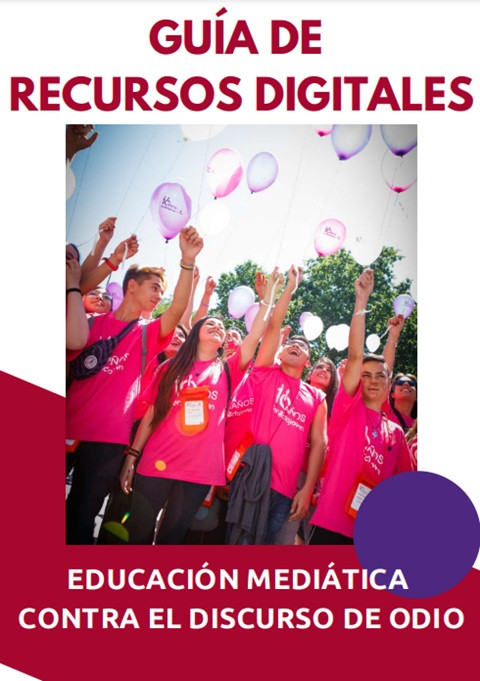 Digital Resource Guide: Media Education Against Hate Speech Año de publicación: 2022 Autor corporativo: Esplai Foundation We could define hate speech as the set of communicative actions aimed at defending, promoting or instigating hatred, humiliation or contempt of a person or group of people. Although hate speech is not something exclusive to the Internet, but is part of the reality beyond the networks, it is true that the potential of the networks facilitates the movement of communication flows, because it facilitates both the production and the creation of messages. Hate speech has also benefited from this and, in addition, has found in the networks other characteristics such as anonymity, brevity, free messaging services or legitimacy granted by the number of followers. With this guide we want to provide digital tools for the creation of this counter-discourse that allows for the creation of messages that offer a positive alternative to extremist propaganda. Guía de recursos digitales: Educación mediática contra el discurso de odio Año de publicación: 2022 Autor corporativo: Esplai Foundation Podríamos definir el discurso de odio como el conjunto de acciones comunicativas orientadas a la defensa, promoción o instigación al odio, la humillación o el menosprecio de una persona o grupo de personas. Si bien el discurso de odio no es algo exclusivo de Internet, sino que es parte de la realidad más allá de las redes, es cierto que el potencial de las redes facilita el movimiento de los flujos comunicativos, porque facilita tanto la producción como la creación de mensajes. Los discursos de odio también se han visto beneficiados por esto y, además, han encontrado en las redes otras características como el anonimato, la brevedad, los servicios gratuitos de mensajería o la legitimidad otorgada por número de seguidores. Con esta guía queremos aportar herramientas digitales para la creación de ese contradiscurso que permita realizar mensajes que ofrecen una alternativa positiva a la propaganda extremista.
  Governing AI for Humanity: Final Report Año de publicación: 2024 Autor corporativo: United Nations (UN) The United Nations Secretary-General’s High-level Advisory Body on AI’s Final Report, “Governing AI for Humanity,” builds on months of work, including extensive global consultations, and the publication of an interim report in December 2023. Proposals for Global Governance on AI This report outlines a blueprint for addressing AI-related risks and sharing its transformative potential globally, including by:• Urging the UN to lay the foundations of the first globally inclusive and distributed architecture for AI governance based on international cooperation;• Proposing seven recommendations to address gaps in current AI governance arrangements;• Calling on all governments and stakeholders to work together in governing AI to foster development and protection of all human rights. This includes light institutional mechanisms to complement existing efforts and foster inclusive global AI governance arrangements that are agile, adaptive and effective to keep pace with AI’s evolution. Extensive Global Consultations The report is the product of extensive consultations, involving more than 2,000 participants across all regions of the world, including via: • 18 deep-dive discussions on key issues with top experts• More than 50 consultation sessions across all regions• More than 250 written submissions from over 150 organizations and 100 individuals The Advisory Body also commissioned an AI Risk Global Pulse Check – the most comprehensive global horizon scanning exercise on AI risks to date – and an AI Opportunity Scan to crowdsource expert assessments of emerging AI trends.
  التربية على التسامح وتجسيد ثقافة العيش المشترك من التسامح إلى التعايش Año de publicación: 2022 Autor corporativo: Democratic Arab Center حظى مفهوم التسامح باهتمام كبير في ضوء المتغيرات المجتمعية المعاصرة من أجل ضمان استقرار المجتمع، وتعايش أفراده في وئام وسلام بالإضافة إلى أهميته على مستوى العلاقات بين الدول وبعضها. التسامح قيمة إنسانية ذات طابع عالمي، ولقد ظهر مفهوم التسامح من حاجة المجتمعات الغارقة في الحروب والاقتتال الأهلي، وهو أعطى تقدما باهرا للمجتمعات والمؤسسات في الغرب، وحرّر الإنسـان من قيود الخوف، لقد أرسى مفهوم التسامح قوانين أكثر إنسانية، وفرض على الـدول أنماطا جديدة مـن التفكير وإعمال العقل لاستنباط مخارج تجنب البشرية العنف والتعصب، وقـد التزمت الأمـم المتحدة بتدعيم التسامح من خلال تعزيز التفاهم المتبادل بين الثقافات والشعوب . وقد تنبهت منظمة اليونسكو للتربية والثقافة والعلـوم التابعة للأمم المتحدة، إلى موضوع ثقافة التسامح فأصدرت في السادس عشر من تشرين الثاني لعام 1995، إعلاناً يتضمـن الـمبـادئ الأساسية للتسامح كثقافة تربوية ونفسية و اجتماعية. وقـد أصبح هذا اليوم ومنذ المؤتمر العام لليونسكو في دورته الثامنة والعشرين، يوماً عالمياً للتسامح Tolerance Education and the Embodiment of Coexistence Culture: From Tolerance to Coexistence Año de publicación: 2022 Autor corporativo: Democratic Arab Center The concept of tolerance has received great attention in light of contemporary societal changes in order to ensure the stability of society and the coexistence of its members in harmony and peace, in addition to its importance at the level of relations between countries.Tolerance is a human value of a universal nature. The concept of tolerance emerged from the need of societies mired in war and civil strife. It gave remarkable progress to societies and institutions in the West, and liberated people from the shackles of fear. The concept of tolerance established more humane laws and imposed on countries new patterns of thinking. And using reason to devise ways to avoid violence and intolerance for humanity. The United Nations has committed to strengthening tolerance by promoting mutual understanding between cultures and peoples.The United Nations Educational, Scientific and Cultural Organization, UNESCO, became aware of the issue of the culture of tolerance and issued, on November 16, 1995, a declaration containing the basic principles of tolerance as an educational, psychological and social culture. Since the twenty-eighth session of the UNESCO General Conference, this day has become an international day for tolerance.
 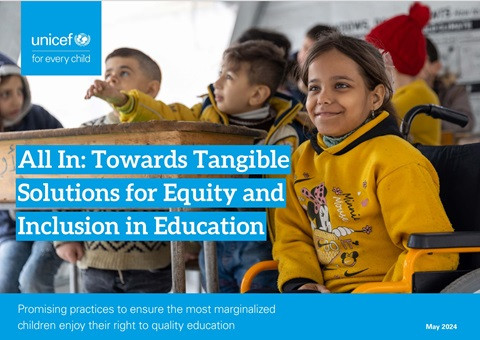 All In: Towards Tangible Solutions for Equity and Inclusion in Education Año de publicación: 2024 Autor corporativo: United Nations Children's Fund (UNICEF) All In: Towards Tangible Solutions for Equity and Inclusion in Education showcases promising practices that were successfully implemented to ensure that inclusive education really does include all children, so that the most marginalized learners – including children with disabilities, children who are out of school, children living in poverty, marginalized girls, and refugee children – have access to quality education. While many of the promising practices were initiated in response to the COVID-19 crisis, or draw upon the pandemic experience, they go beyond the immediate focus of pre- or post-COVID-19 education systems to an overall view of child well-being and the need to focus on skills for the 21st century. Many of these practices have the potential to be applied more widely within education systems and can be adapted and replicated by stakeholders in any context where innovative and inclusive approaches are needed to protect and promote children’s right to education. Ingenuity, flexibility and a commitment to true inclusion and forward-looking policies are the common thread of promising practices in this document. This publication is a complementary resource to the 2021 report: Reimagining Girls’ Education: Solutions to Keep Girls Learning in Emergencies.