
Recursos
Exploren una amplia gama de recursos valiosos en GCED para profundizar su comprensión y promover su búsqueda, incidencia, enseñanza y aprendizaje.
950 resultados encontrados
 Handout Material for the Course: The Environment and Development Año de publicación: 2016 Autor: Naif Hamoud Mohammed Al-makishah | Mohammed Al-mohanna Autor corporativo: King Abdulaziz University The document is a handout used by the teachers in teaching the environment and development course, as it contains valuable information and data for the interconnection between environment and development. The handout notes begins with the concept, types of pollution and their causes, and then discusses the foundations of development and the relationship to the environment.
  The Intersection and Division between Ideological and Political Education and Civic Education: Starting from the question of the Jewish Question (Journal of North Minzu University; No. 2) Año de publicación: 2020 Autor: Liu Yan Autor corporativo: North Minzu University Based on the analysis of Marx’s critique of western citizenship contained in On the Jewish Question, ideological and political education and citizenship education have overlaps and divergences in three aspects, core content, basic attributes and value orientation:the difference between actual and expected of citizenship, the difference between the unity and fragmentation of political personality and social personality, the difference between the authenticity and contradiction of patriotism education and the cultivation of international vision. Compared with civic education, ideological and political education does not have any regrets, but has characteristics and advantages that civic education does not have.
  Palestine & Israel: How Will There Be a Just Peace?; A Citizenship Education Resource for Transition Year and Key Stage 4 based on Human Rights and International Law Año de publicación: 2012 Autor: Mary Gannon | Elaine Murtagh Autor corporativo: City of Dublin Vocational Education Committee (CDVEC). Curriculum Development Unit | Centre for Cross Border Studies This resource is an important development in helping post-primary students throughout the island of Ireland to explore the Palestinian Israeli situation within the context of Human Rights and International Law.The resource addresses key issues underlying the origins of the conflict and current obstacles to bringing about a just peace.
 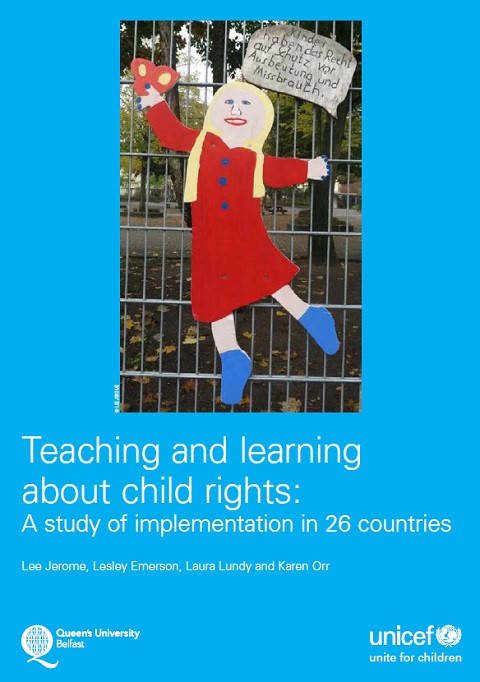 Teaching and Learning about Child Rights: A Study of Implementation in 26 Countries Año de publicación: 2015 Autor: Lee Jerome | Lesley Emerson | Laura Lundy | Karen Orr Autor corporativo: Queen’s University Belfast | United Nations Children's Fund (UNICEF) This research contributes to the global debate on child rights education (CRE). It explores implementation of CRE in early childhood education, primary and secondary schools in 26 countries with a UNICEF National Committee presence. It includes a literature review, results from an on-line survey completed by national experts, seven country case studies and a series of benchmarking statements for CRE implementation.
 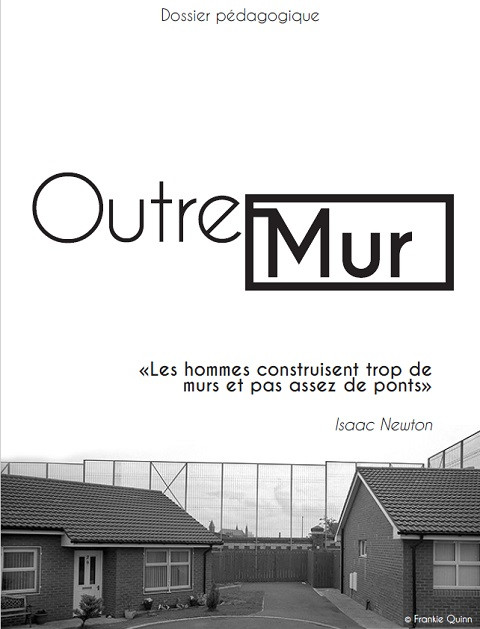 Outre-Mur: Les hommes construisent trop de murs et pas assez de ponts; Dossier pédagogique Año de publicación: 2017 Autor: Julie Bijnens | Lucie Desaubies | Fanny Gosset | Hélène Pochet Autor corporativo: Institut des Hautes Études des Communications Sociales (IHECS) | Annoncer la Couleur (ALC) Le dossier pédagogique Outre-Mur a été réalisé dans le cadre d’un mémoire médiatique de fin d’études à l’IHECS (Institut des Hautes Études des Communications Sociales); à Bruxelles|. Hélène; Lucie; Fanny et Julie sont étudiantes en dernière année dans l’option “Animation Socioculturelle et Éducation Permanente”. Leur intérêt commun pour la problématique des murs frontières les a réunies autour de ce projet ambitieux. Étant préoccupées par le respect des droits de l’homme et des libertés individuelles; la problématique les a interpellées. Cet outil a été développé en collaboration avec Annoncer la Couleur, programme fédéral d’éducation à la citoyenneté mondiale qui propose aux (futurs) enseignants des démarches pédagogiques participatives pour aborder avec les élèves des questions de citoyenneté mondiale. Riche de son expérience pédagogique, le programme vise à éveiller et former les élèves aux interdépendances mondiales et les incite à agir en citoyens responsables, conscients de l’importance de la solidarité internationale, et à contribuer à un monde plus juste et plus durable.
  تعزيز رفاه الشباب عبر الصحة والتعليم: رؤى وفرص Año de publicación: 2019 Autor: Wing Yi Chan | Jennifer Sloan | Anita Chandra Autor corporativo: RAND Corporation أضحى الرفاه، باعتباره ركيزة أساسية في عمليات التخطيط وصناعة السياسات وتخصيص الموارد، ضرورةً لا غنى عنها لتنمية المجتمعات والدول التي تسير في درب الازدهار، مما دفعنا في هذا التقرير لدراسة المؤلفات الأكاديمية وغير الأكاديمية وثيقة الصلة بالموضوع لتحديد الأطر النظرية التي تحقق التكامل بين الصحة والتعليم داخل منظومة واحدة. Promoting Youth Well-Being Through Health and Education: Insights and Opportunities Año de publicación: 2019 Autor: Wing Yi Chan | Jennifer Sloan | Anita Chandra Autor corporativo: RAND Corporation Putting well-being at the heart of planning, policy making, and resource allocation is emerging as critical to the development of thriving communities and nations. We examined the academic and grey literature to identify theoretical frameworks that integrate health and education. We identified and described policies and programs supporting well-being around the world, and interviewed experts from each location to gain a deeper understanding of them.The report found that although wellbeing frameworks that integrate education and health exist, few of them have been examined rigorously to reveal how both educational and health outcomes can be achieved together.
  المجتمع المدني وسؤال المواطنة: فرص التفعيل وحدود التأثير Año de publicación: 2017 Autor: Assia Belkhir Autor corporativo: Larbi Ben M'Hidi أدت التغيرات السريعة والمتلاحقة التي عرفتها المجتمعات المعاصرة، إلى إعادة النظر في منظومة المفاىي المرتبطة بالدولة والمجتمع، وفي طبيعة العلاقة بينيما، وفيما يربط الأفراد بمجتمعاتهم ودولهم، وأصبحت قوة الدولة لا تقاس فقط بقدراتها العسكرية، ولكن أساسا بقدرتها على تنفيذ السياسات العامة التي توفر الخدمات الاساسية للمواطنين، وقدرتها على توزيع الأدوار مع المجتمع المدني بما يزيد المشاركة ويحقق المواطنة السياسية والاجتماعية، التي يعاد التساؤل بشأنهاهي الأخرى مع بروز فكرة المواطنة العالمية. Civil Society and the Question of Citizenship : Opportunities for Activation and Limits of Influence Año de publicación: 2017 Autor: Assia Belkhir Autor corporativo: Larbi Ben M'Hidi The rapid and progressive changes that contemporary societies have undergone, have led to a reconsideration of the system of concepts associated to the state and the society, the nature of their relationship, and the connection of individuals to their societies and states. The power of the state is not only measured by its Military capabilities but mainly by its ability to implement public policies that provide essential services to the citizens, and its capacity to distribute roles within civil society, there by increasing participation and achieving the requirements of political and social citizenship, which is questioned as well, with the emergence of the idea of a global citizenship.
 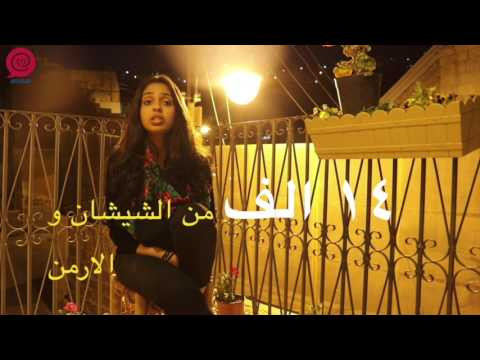 كيف نفهم التعددية الثقافية؟ Año de publicación: 2017 Autor corporativo: Team of Alternative Speech Project يستعرض الفيديو مفهوم التعددية الثقافية، ويتطرق لمفهوم تعدد الدين والطائفة والعرق، ويدعو للتعايش المشترك في ظل التعددية. ويتحدث الفيديو أيضا عن العادات والتقاليد التي تزخر بها الامم في ظل التعددية.