
Recursos
Exploren una amplia gama de recursos valiosos en GCED para profundizar su comprensión y promover su búsqueda, incidencia, enseñanza y aprendizaje.
1,447 resultados encontrados
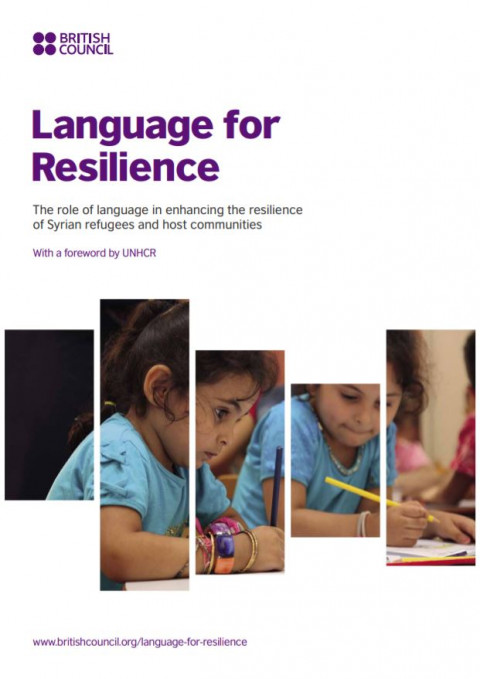 Language for Resilience: The Role of Language in Enhancing the Resilience of Syrian Refugees and Host Communities Año de publicación: 2018 Autor: Tony Capstick | Marie Delaney Autor corporativo: British Council | UN. Office of the United Nations High Commissioner for Refugees (UNHCR) The Language for Resilience report examines the impact of language on refugees and host communities affected by the Syrian crisis, identifying the different ways that language skills enhance resilience and providing suggestions for programme responses that address key needs.The report shows that for children and young people attending schools or post-school education, and for educators in host communities handling influxes of refugee students, quality language learning improves attainment and attendance and builds safer and more inclusive classrooms. It also illustrates how creative approaches to language education can support the development of life skills and help meet psycho-social needs.
  Manual for Teachers and Educators: To Empower Young People on Sdgs and Migration Año de publicación: 2018 Autor corporativo: Start the Change | European Union (EU) The Start the Change project aims to improve education provision linked to the Sustainable Development Goals (SDGs) in 12 European countries, with a special emphasis on the relationship between migration and global inequality, and contributing to the fulfilment of the 2030 Agenda for Sustainable Development.The first part of the guide (THINK) describes the educational model proposed by Start the Change. Service Learning gives an overview of a pedagogical approach that promotes a new perspective to acquiring global citizenship knowledge, skills and attitudes - not just in the classroom but also through direct experience of working on real issues in the community. MANUAL TO INSPIRE: START THE CHANGE 11 Participative methodologies are the basis of all good global citizenship education, and youth empowerment can be enhanced through peer to peer approaches. The second part of the guide (LEARN) is dedicated to enhancing teachers’ and educators’ knowledge of the contents of the project: the Sustainable Development Goals, inequality and migration issues. Storytelling can be used to develop short film storylines on Start the Change issues. Educational activities can be enriched by using ICT to promote global learning and include voices and experiences from the Global South. The third part of the guide (DO) is dedicated to activities and methodologies to help young people explore these issues and inspire them to take action in their communities.
 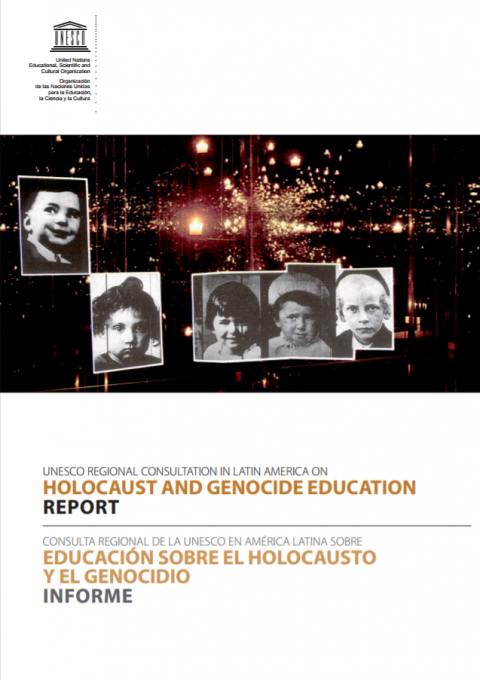 UNESCO regional consultation in Latin America on Holocaust and genocide education: report Año de publicación: 2014 Autor corporativo: UNESCO Santiago This consultation with Latin American Member States sought to raise awareness amongst policymakers and education specialists of the region about the history of the Holocaust, as it can contribute to the prevention of genocide, following United Nations General Assembly resolution 60/7 on Holocaust remembrance. The meeting also aimed at fostering concrete cooperation between UNESCO and Member States on education about the history of genocide and mass atrocities, notably the Holocaust, with a view of introducing the subject in the curriculum and of developing relevant educational programmes in the region. The overall objectives of the project were as follows:▶ Strengthen educational leaders’ awareness and support for Holocaust remembrance and education about the history of genocide and mass atrocities, in line with regional efforts to foster education for peace and human rights.▶ Increase the implementation of education programmes about the history of the Holocaust and other genocides, and support interested Ministries of Education to introduce these subjects in the curriculum.▶ Foster regional exchanges about this topic and facilitate access to good practices regarding Holocaust and genocide related issues and peace education.
  한국사회 인종차별을 말하다: 2018. 7. 20 ~ 21 인종차별 보고대회 자료집 Año de publicación: 2018 Autor corporativo: UN인종차별철폐협약 한국심의대응 시민사회 공동사무국 | 서울지방변호사회 2018년 7월 20일부터 21일까지 개최되었던 토론회 인종차별보고대회의 자료집으로 1966년 UN총회 결의로 선포된 인종차별철폐협약(The Committee on the Elimination of Racial Discrimination, CERD)과 관련하여 경과보고와 현재까지 남아 있는 한국사회 내의 인종차별의 원인과 현황을 다루고 있다. 1부 : 한국사회와 인종차별을 말하다 - 한국사회와 인종차별 역사와 배경2부 : 현실을 말하다 - 국가는 인종차별 강화에 어떻게 기여하고 있는가?3부 : 인종차별의 선긋기는 어디에서 교차되는가?4부 : 미래를 말하다 - 미래를 향한 제언
 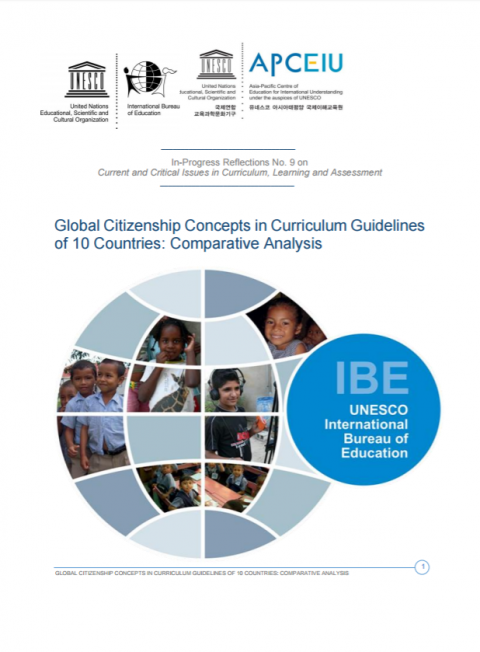 Global Citizenship Concepts in Curriculum Guidelines of 10 Countries: Comparative Analysis Año de publicación: 2017 Autor: Cristián Cox Autor corporativo: UNESCO International Bureau of Education (IBE) This paper reports on a study of concepts associated with the new construct of global citizenship education (GCED) in school curricula. We compared the national school curricula of ten countries with markedly different cultures and levels of development across different regions of the world (Africa, Asia, Europe, Latin America, and Southeast Asia) on the presence of concepts associated with GCED. The curricula of both primary and secondary education, in the areas of history and social sciences, and civics and moral education, were compared using a set of categories constructed for this study and derived from UNESCO’s definitions of GCED as well as from the International Association for the Evaluation of Educational Achievement’s (IEA) international assessment studies of civic and citizenship education. Patterns of presence/absence of GCED and related content were identified. The main finding is that only two of the ten countries’ curricula consistently included global citizenship concepts. At the same time, all ten countries, to the extent that the analysis distinguished, included content related to knowledge, values and attitudes that have the world or humanity as referent.
  Educación a la ciudadanía mundial: Marco de referencia de la AQOCI Año de publicación: 2019 Autor corporativo: Affaires mondiales Canada | Quebec Association of International Cooperation Organizations (AQOCI) La educación es parte integrante de la misión de las organizaciones de solidaridad y cooperación internacionales (OCI). En continuidad con su misión de educación y de compromiso con el público, la AQOCI adopta de ahora en adelante un enfoque de Educación para la ciudadanía mundial (ECM). Ésta se encuentra en la razón misma de ser de la asociación y de sus integrantes, ya que la solidaridad internacional supone que todas las poblaciones estén conscientes de las desigualdades y que se movilicen para la construcción de un mundo más justo e igualitario. Durante el 1er Encuentro, las OCI destacaron la importancia de ampliar el impacto de su acción en ECM y de hacer valer y reconocer sus competencias en ese ámbito ante los diversos colaboradores así como la población en general. En ese sentido, este nuevo marco de referencia es una primera herramienta para las OCI miembros de la AQOCI. En éste se propone orientación, conceptos y un repertorio conciso de nuestras prácticas comunes con el objetivo de describir, orientar y reconocer nuestra acción colectiva en ECM. Este marco expresa la visión actual de la AQOCI y valora la acción diversificada del conjunto de sus integrantes. Éducation à la citoyenneté mondiale: Cadre de référence de l’AQOCI Año de publicación: 2019 Autor corporativo: Affaires mondiales Canada | Association québécoise des organismes de coopération internationale (AQOCI) L’éducation fait partie intégrante de la mission des organismes de solidarité et de coopération internationales (OCI). En continuité avec l’éducation et l’engagement du public, l’AQOCI adopte désormais l’approche de l’Éducation à la citoyenneté mondiale (ECM). Celle-ci est au cœur de la raison d’être de l’association et de ses membres puisque la solidarité internationale suppose que toutes les populations soient conscientes des inégalités et qu’elles se mobilisent dans la construction d’un monde plus juste et égalitaire. Lors du 1er Rendez-vous, les OCI ont souligné l’importance d’accroître l’impact de leur action en ECM et de mieux faire valoir et reconnaître leur expertise dans ce domaine auprès de divers partenaires, particulièrement des milieux de l’enseignement, ainsi qu’auprès de la population en général. Dans ce sens, ce nouveau cadre de référence est un premier outil pour les OCI membres de l’AQOCI. Il propose une orientation, une terminologie et un recensement succinct de nos pratiques communes afin de décrire, orienter et reconnaître leur action collective en ECM. Ce cadre de référence exprime la vision actuelle de l’AQOCI et valorise l’action diversifiée de l’ensemble de ses membres.
 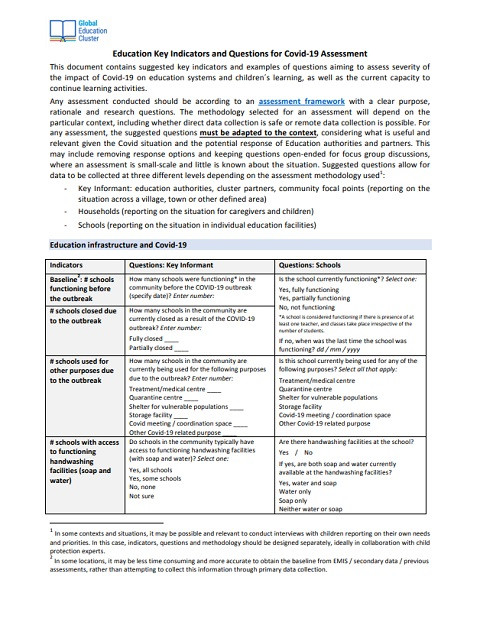 Education Key Indicators and Questions for Covid-19 Assessment Año de publicación: 2020 Autor corporativo: Global Education Cluster This document contains suggested key indicators and examples of questions aiming to acess severity of the impact of Covid-19 on education systems and children’s learning, as well as the current capacity to continue learning activities.
 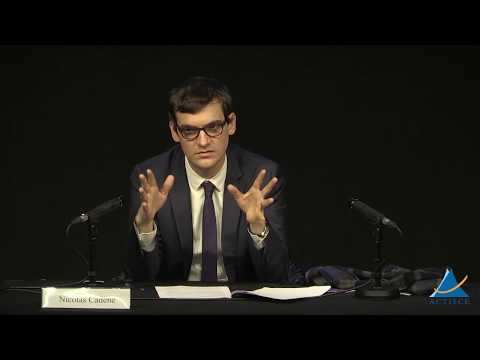 Citoyenneté mondiale et laïcité Año de publicación: 2018 Autor: Nicolas Cadène Autor corporativo: ACTISCE Patronage Laique Jules Vallès La laïcité fait, de chacune et de chacun d’entre nous, au-delà de nos appartenances ou de nos origines, des citoyennes et des citoyens à égalité de droits et de devoirs. Elle nous permet d’aller au-delà de nos différences et de les dépasser tout en les respectant. Par la volonté de vivre ensemble, notre laïcité garantit la liberté de croire ou de ne pas croire et la possibilité de l’exprimer dans les limites de la liberté d’autrui. Elle permet la pluralité dans le respect mutuel et assise sur une citoyenneté commune. Au travers de nombreux exemples dont les cas de la Belgique, la Turquie, l’Inde, le Brésil, le Mexique et le Sénégal, Nicolas Cadène nous montre en quoi la laïcité est source de liberté pour tous les peuples.
 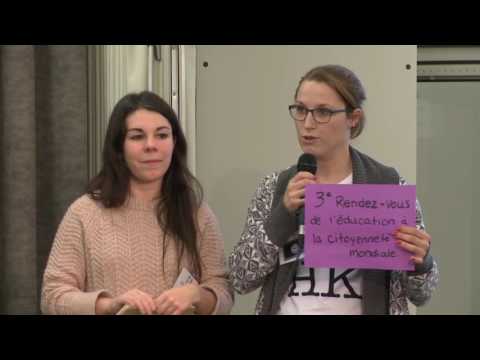 1er rendez-vous de l'éducation à la citoyenneté mondiale: Se donner une vision d'avenir en ÉCM Año de publicación: 2017 Autor corporativo: Association québécoise des organismes de coopération internationale (AQOCI) Travail en sous-groupes: « Se donner une vision d'avenir en ÉCM »