
Recursos
Exploren una amplia gama de recursos valiosos en GCED para profundizar su comprensión y promover su búsqueda, incidencia, enseñanza y aprendizaje.
2,199 resultados encontrados
 INTRAC in Central Asia 1994-2018: A Story of the Past, the Present and the Future; Special Series Paper Año de publicación: 2019 Autor: Charles Buxton | Anne Garbutt | Janice Giffen | Chynara Irisova | Konstantin Kovtunets | Anara Moldosheva | Brian Pratt | Medet Tiulegenov | Chris Wardle | Nazgul Zakiriaeva Autor corporativo: International Non-Governmental Organisation Training and Research Centre (INTRAC) This publication is a special newsletter which marks the next phase of support provided by INTRAC to civil society in Central Asia. The articles in this special bulletin describe the history of INTRAC in Central Asia from the very first days to the present, and also provide a glimpse into the future. ИНТРАК в Центральной Азии с 1994 по 2018 годы: прошлое, настоящее и будущее; Специальный выпуск Año de publicación: 2019 Autor: Charles Buxton | Anne Garbutt | Janice Giffen | Chynara Irisova | Konstantin Kovtunets | Anara Moldosheva | Brian Pratt | Medet Tiulegenov | Chris Wardle | Nazgul Zakiriaeva Autor corporativo: International Non-Governmental Organisation Training and Research Centre (INTRAC) Это издание является специальным бюллетенем, который ознаменует следующий этап поддержки, оказываемой ИНТРАК гражданскому обществу в Центральной Азии. Статьи в этом специальном бюллетене описывают историю ИНТРАК в Центральной Азии с самых первых дней и до настоящего времени, а также позволяют заглянуть в будущее.
  Information Flows and Radicalization Leading to Violent Extremism in Central Asia Año de publicación: 2019 Autor corporativo: Search for Common Ground This study was carried out as part of the regional project “Promoting Stability and Peace in Central Asia through Media Literacy, Effective Lighting and Regional Cooperation”, implemented by the Internews office and funded by the European Union. The project aims to support national and regional initiatives that help prevent radicalization in Central Asia by increasing the capacity of journalists, civic activists and media professionals in the production of high-quality media content and the level of critical media consumption of representatives of civil society, decision-makers and active citizens. Информационные потоки и радикализация, ведущая к насильственному экстремизму в Центральной Азии Año de publicación: 2019 Autor corporativo: Search for Common Ground Данное исследование проведено в рамках регионального проекта «Содействие стабильности и миру в Центральной Азии посредством медиаграмотности, эффективного освещения и регионального сотрудничества», реализуемого офисом Интерньюс и финансируемого Европейским союзом. Проект нацелен на поддержку национальных и региональных инициатив, способствующих предотвращению радикализации в Центральной Азии через повышение потенциала журналистов, гражданских активистов и медиаспециалистов в вопросах производства качественного медиаконтента и уровня критического медиапотребления представителей гражданского общества, лиц, принимающих решения, и активных граждан.
  Blended learning for quality higher education: selected case studies on implementation from Asia-Pacific Año de publicación: 2016 Autor: Lim, Cher Ping | Wang Libing Autor corporativo: UNESCO Bangkok Together with The Education University of Hong Kong, UNESCO Bangkok gathered experts from higher education institutions in the Asia-Pacific region to explore the potential of blended learning, including its impact on the role of teachers, the relationship between teachers and students, and the nature of educational institutions themselves. Issues about the quality of education are at the heart of the Sustainable Development Goals, which were adopted during the United Nations Sustainable Development Summit in September 2015.
 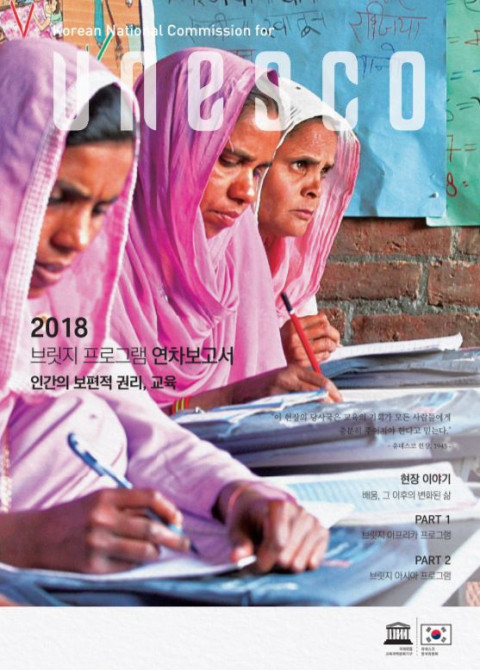 2018-2019 브릿지 프로그램 연차보고서 Año de publicación: 2019 Autor corporativo: 유네스코한국위원회 국제사회는 지속가능발전목표 4번(SDG4)를 통해 2030년까지 모든 이들에게 포용적이고 공평한 양질의 교육을 보장하고, 평생학습의 기회가 증진되도록 노력하자는 교육 기치를 내세웠다.특히 SDG4는 아동의 초등교육 강화에 중심을 둔 '새천년개발목표' 2번(MDG2)과 모든 연령대의 기초교육에 초점을 둔 '모두를위한교육'(EFA)의 미완의 목표를 포괄함은 물론, 기초교육 이후의 교육(중등, 고등) 및 훈련(직업,기술)을 평생학습 차원에서 촉진함으로써 교육의 보편성을 강조하고 있다. 유네스코한국위원회의 브릿지 사업은 이러한 국제사회의 노력에 동참하며, 교육의 보편적 기본권이 확산될 수 있도록 돕기 위해, 전 세계적으로 교육 소외자가 집중되어 있는 사하라 이남 아프리카 지역과 남아시아 지역의 모든 연련대 교육 소외자들을 대상으로 교육권 강화에 이바지하고 있다. 브릿지 사업은 나이, 성별, 종교 그리고 사회적 배경으로 인해 공교육으로부터 배제된 이들이 교육을 받음으로써 자존감을 회복하고 삶의 질을 향상시킬 수 있게 도우며, 이러한 개인의 성장만이 궁극적으로 지역사회의 변화와 발전으로 이어진다는 확신을 갖고 있다.이 보고서에서는 브릿지 아프리카 프로그램, 브릿지 아시아 프로그램과 국별 프로젝트 및 성과를 확인할 수 있다.
 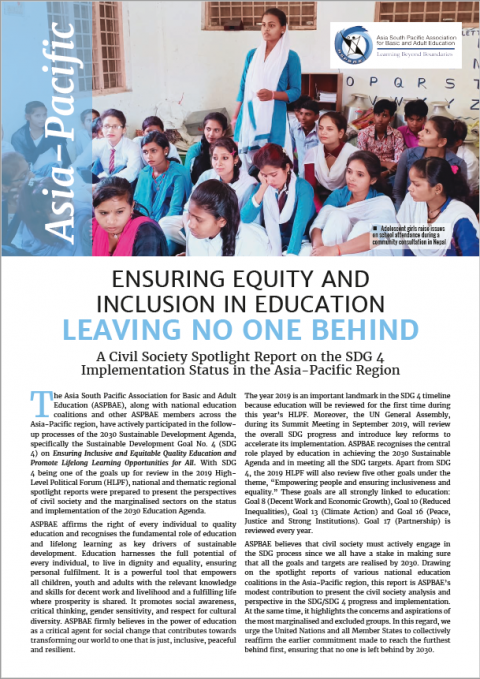 Asia-Pacific Spotlight Report on SDG 4 Año de publicación: 2019 Autor corporativo: Asia South Pacific Association for Basic and Adult Education (ASPBAE) ASPBAE believes that civil society must actively engage in the SDG process since we all have a stake in making sure that all the goals and targets are realised by 2030. Drawing on the spotlight reports of various national education coalitions in the Asia-Pacific region, this report is ASPBAE’s modest contribution to present the civil society analysis and perspective in the SDG/SDG 4 progress and implementation. At the same time, it highlights the concerns and aspirations of the most marginalised and excluded groups. In this regard, we urge the United Nations and all Member States to collectively reaffirm the earlier commitment made to reach the furthest behind first, ensuring that no one is left behind by 2030.
  Policy brief: rethinking schooling for the 21st century Año de publicación: 2018 Autor corporativo: Mahatma Gandhi Institute of Education for Peace and Sustainable Development (MGIEP) Analysing how far the ideals of SDG 4.7 are embodied in policies and curricula across 22 Asian countries, this study establishes benchmarks against which future progress can be assessed. It also argues forcefully that we must redefine the purposes of schooling, addressing the fundamental challenges to efforts to promote peace, sustainability and global citizenship through education.
 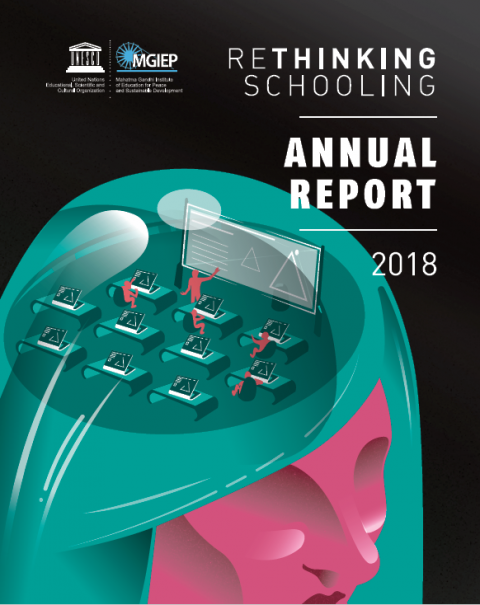 Rethinking schooling: annual report 2018 Año de publicación: 2019 Autor corporativo: Mahatma Gandhi Institute of Education for Peace and Sustainable Development (MGIEP) Calls to gear up schools for the 21st century are ubiquitous today. Some Asian education systems are held up as models for an innovation-led utopian future. Across much of Asia, however, neither the reality of schooling nor the patterns of development with which it is associated give cause for blithe optimism. This study is informed by UNESCO’s commitment to realizing the Sustainable Development Goals (SDGs) through educational reform worldwide. Since its inception, UNESCO has championed a humanistic vision of education (UNESCO, 2015)—a vision today encapsulated in SDG 4.7. These ideals need to be strongly restated and defended in an era when educational debate has come to be framed by a narrowly economistic and instrumentalist agenda. Deriving urgent significance from this broader context, the Rethinking Schooling report analyses how far the ideals of SDG 4.7 are embodied in policies and curricula across 22 Asian countries (UNESCO MGIEP, 2017a). The report seeks to develop benchmarks against which future progress can be assessed. It also argues forcefully that the fundamental purposes of schooling need to be reconfigured, if the ideals to which the global community has subscribed are actually to be realized.
  Implementation of sustainable development goals in the SPECA region Año de publicación: 2017 Autor corporativo: United Nations Economic Commission for Europe (UNECE) This study is aimed at analyzing the links between the work on achieving the Sustainable Development Goals (SDGs) in the national framework of countries participating in the UN Special Program for the Economies of Central Asia (SPECA) and identifying areas in which the cooperation of these countries in the framework of SPECA will be useful. The analysis will lead to policy recommendations on how regional cooperation within SPECA can contribute to progress in the implementation of the SDGs.