
Recursos
Exploren una amplia gama de recursos valiosos en GCED para profundizar su comprensión y promover su búsqueda, incidencia, enseñanza y aprendizaje.
1,447 resultados encontrados
 Developing Global Guidance for Child Rights Impact Assessments in Relation to the Digital Environment: Summary of Initial Project Findings Año de publicación: 2024 Autor corporativo: United Nations Development Programme (UNDP) | German Institute of Development and Sustainability (IDOS) The age of technology and the Internet have brought tremendous benefits, including for children. However, the spread of digital technologies also comes with a broad spectrum of risks and harms to which children can be particularly vulnerable. Under the UN Guiding Principles on Business and Human Rights and the Children’s Rights and Business Principles, businesses have a responsibility to identify, assess, and address relevant human rights risks, including risks to children’s rights. With respect to the digital environment, a rapidly evolving landscape and the emergence of new technologies has changed the nature and severity of actual and potential child rights risks relating to business activities. In response, UNICEF has initiated a project to assess the current child rights impact assessment (CRIA) landscape in relation to digital business activities and develop new guidance to support robust implementation going forward. A summary of initial project findings is now available here. Further project outputs including the updated guidance (currently under development) are anticipated in late 2024.
 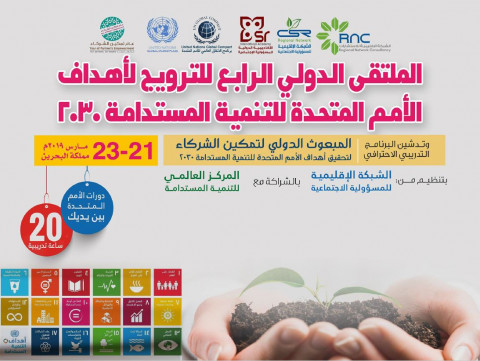 The Fourth International Forum to Promote the United Nations Sustainable Development Goals 2030 Año de publicación: 2019 Autor corporativo: Regional Network for Social Responsibility This forum was organized in the Kingdom of Bahrain with the aim of shedding light on the sustainable development goals 2030, which was launched by the United Nations in 2015. The forum is aimed to the present the principles of the SDGs. الملتقى الدولي الرابع للترويج لأهداف الأمم المتحدة للتنمية المستدامة 2030 Año de publicación: 2019 Autor corporativo: Regional Network for Social Responsibility تم تنظيم هذا الملتقى في مملكة البحرين بهدف تسليط الضوء على أهداف التنمية المستدامة 2030، والتي أطلقتها الأمم المتحدة في عام 2015. ويعرف الملتقى الحاضرين بمبادئ ومنطلقات الأهداف.
  First Voluntary National Review of the Sultanate of Oman 2019: United Nations High-Level Political Forum on Sustainable Development July 2019 Año de publicación: 2019 Autor corporativo: Supreme Council for Planning | National Committee for the Achievement of the Sustainable Development Goals This voluntary national report reviews the Sultanate of Oman's progress in achieving the seventeen sustainable development goals. The report deals with the national strategies and plans that were specially developed to advance the achievement of development goals. The report also sheds light on national practices and initiatives and monitors the challenges facing the government in order to achieve the goals. الاستعراض الوطني الطوعي الأول لسلطنة عُمان 2019 : المنتدى السياسي رفيع المستوى يوليو 2019 Año de publicación: 2019 Autor corporativo: Supreme Council for Planning | National Committee for the Achievement of the Sustainable Development Goals يستعرض هذا التقرير الوطني الطوعي التقدم الذي تحرزه سلطنة عمان في تحقيق أهداف التنمية المستدامة السبعة عشر. يتناول التقرير الاستراتيجيات والخطط الوطنية التي وضعت خصيصا للمضي في تحقيق الأهداف التنموية. والتقرير كذلك يلقي الضوء للممارسات والمبادرات الوطنية ويرصد التحديات التي تواجه الحكومة في سبيل تحقيق الاهداف.
  First National Voluntary Review on Sustainable Development Goals 2019: Iraq (The Triumph of National Will) Año de publicación: 2019 Autor corporativo: Iraq. Ministry of Planning This national review is part of the first National Voluntary Report (NVR) as a national effort and a necessary step to monitor the progress toward the SDFs, using a participatory approach and assisted by national consultations (workshops and forums) organized in various Iraqi areas to discuss the development challenges facing Iraq in the upcoming stages. The Voluntary National Reviews (VNRs) constitute a key tool to monitor the progress of the National Development Plan (NDP) and promote it locally. The VNRs also contribute to presenting the country’s experience, expertise and lessons to be shared with other countries. التقرير الطوعي الأول حول أهداف التنمية المستدامة ٢٠١٩: العراق (انتصار إرادة وطن) Año de publicación: 2019 Autor corporativo: Iraq. Ministry of Planning اداةً مهمةً في رصد التقدم المحرز على (VNRs) وتُعدُّ التقارير الوطنية الطوعية طريق تحقيق خطة التنمية الوطنية والترويج لها محلياً، فضلاً عن انها تسهم في عرض خبرة البلد والدروس التي يمكن ان يقدمها للعالم انطلاقاً من تجربته الذاتية وأنْ توفر هذه الخبرات فرصاً ودروساً للتعلم من الاخرين والافادة من تجاربه.
  The Role of Knowledge in Achieving Sustainable Development Goals Año de publicación: 2020 Autor corporativo: Mohammed Bin Rashid Al Maktoum Knowledge Foundation (MBRF) This video discusses the role of knowledge in achieving the sustainable development goals. In which the interlocutors host a group of specialists to talk about the efforts made in achieving the goals of sustainable development, and how the Arab nation can achieve the goals. دور المعرفة في تحقيق أهداف التنمية المستدامة Año de publicación: 2020 Autor corporativo: Mohammed Bin Rashid Al Maktoum Knowledge Foundation (MBRF) الفديو يناقش دور المعرفة في تحقيق أهداف التنمية المستدامة. ويستضيف فيه المحاور مجموعة من المتخصصين للحديث حول الجهود المبذولة في تحقيق أهداف التمية المستدامة، وكيف يمكن للوطن العربي تحقيق الأهداف.
  The Sustainable Development Goals Report 2024 Año de publicación: 2024 Autor corporativo: United Nations (UN) The Sustainable Development Goals Report 2024 details the significant challenges the world is facing in making substantial strides towards achieving the SDGs based on the latest data and estimates. It features areas with setbacks while also showcasing where tangible progress has been made, for instance, in reducing global child mortality, preventing HIV infection, and access to energy and mobile broadband. The report also highlights where action must accelerate, particularly in critical areas undermining SDG progress - climate change, peace and security, inequalities among and between countries, among others. According to the report, with just six years remaining, current progress falls far short of what is required to meet the SDGs. Without massive investment and scaled up action, the achievement of the SDGs — the blueprint for a more resilient and prosperous world and the roadmap out of current global crises — will remain elusive. The lingering impacts of the COVID-19 pandemic, escalating conflicts, geopolitical tensions and growing climate chaos have severely hindered progress. The report details the urgent priorities and areas needed for stronger and more effective action to ensure the 2030 promise to end poverty, protect the planet and leave no one behind.