
Recursos
Exploren una amplia gama de recursos valiosos en GCED para profundizar su comprensión y promover su búsqueda, incidencia, enseñanza y aprendizaje.
2,668 resultados encontrados
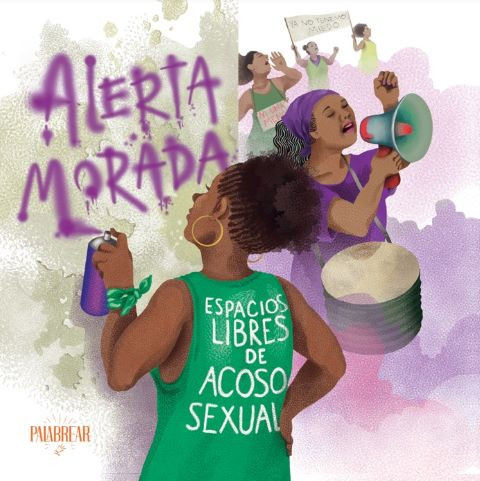 Purple Alert: Spaces Free of Sexual Harassment Año de publicación: 2021 Autor: Yohandra Iriarte | Yuliet Lopez Moreno | Adriana Moreno | Danish Market | Maria Fernanda Mace Caraballo | Natalia Torres Lopez | Veronica Fernandez | Wendy Nunez | Monica Manotas Dager | Juliet Nieto Flowers | Yarimar Melendez | Leidy Laura Diaz Rooms | Joyce Trivino | Olga Batista | Roslin Puello | Yacira Branch | Dawn Arias | Stephanny Galeano Urzola | Carmen Yepez | Judith Medina | Denis Deulufeut Flour | Ladies Guard | Johassandy Ortega Susa | Schild Julius White | Adriana of La Ossa | Leidy Laura Perneth Couple Autor corporativo: Center for Research and Popular Education / Program for Peace (CINEP/PPP) This document shares the experience of a meeting between a group of women from popular sectors of the city of Cartagena, to reflect on their right to a life free of violence. These meetings took place from the Circle of the Word of Women, developed by the Center for Research and Popular Education/Program for Peace (Cinep/Ppp) in the south of La Guajira, Sierra Nevada de Santa Marta and Cartagena, in within the framework of the project Intercultural Education for the Defense of the Rights of Ethnic Groups. Alerta morada: Espacios libres de acoso sexual Año de publicación: 2021 Autor: Yohandra Iriarte | Yuliet Lopez Moreno | Adriana Moreno | Danish Market | Maria Fernanda Mace Caraballo | Natalia Torres Lopez | Veronica Fernandez | Wendy Nunez | Monica Manotas Dager | Juliet Nieto Flowers | Yarimar Melendez | Leidy Laura Diaz Rooms | Joyce Trivino | Olga Batista | Roslin Puello | Yacira Branch | Dawn Arias | Stephanny Galeano Urzola | Carmen Yepez | Judith Medina | Denis Deulufeut Flour | Ladies Guard | Johassandy Ortega Susa | Schild Julius White | Adriana of La Ossa | Leidy Laura Perneth Couple Autor corporativo: Center for Research and Popular Education / Program for Peace (CINEP/PPP) En este documento se comparte la experiencia de juntanza entre un grupo de mujeres de sectores populares de la ciudad de Cartagena, para reflexionar sobre su derecho a una vida libre de violencias. Estos encuentros tuvieron lugar a partir del Círculo de la Palabra de las Mujeres, desarrollado por el Centro de Investigación y Educación Popular/Programa por la Paz (Cinep/Ppp) en el sur de La Guajira, Sierra Nevada de Santa Marta y Cartagena, en el marco del proyecto Educación Intercultural por la Defensa de los Derechos de los Grupos Étnicos.
  Re-enchant Education: How Does the School Develop Inclusion Strategies for Victims of the Armed Conflict? Año de publicación: 2014 Autor: Marco Fidel Vargas Julián Gómez Delgado Adriana Varela Montenegro Viviana Wilches Bautista Marcela Cadena Cruz Laura Angélica Rodríguez Silva Michelle del Pino Bustos Juan Carlos Merchán Zuleta Valentina Zarama Moreno Dillyane de Sousa Ribeiro Autor corporativo: Centro de Investigación y Educación Popular (CINEP) | Bogotá. Secretaría de Educación del Distrito (SED) Este libro es el resultado de los aprendizajes surgidos del trabajo conjunto con 22 instituciones educativas distritales de Bogotá, con las Direcciones Locales de Educación y con la Secretaría de Educación del Distrito (SED), con miras a contribuir a la garantía y restitución de los derechos de niños, niñas, adolescentes y mujeres víctimas del conflicto armado que están escolarizados en la ciudad. Reencantar la educación: ¿Cómo la escuela desarrolla estrategias de inclusión para personas víctimas del conflicto armado? Año de publicación: 2014 Autor: Marco Fidel Vargas Julián Gómez Delgado Adriana Varela Montenegro Viviana Wilches Bautista Marcela Cadena Cruz Laura Angélica Rodríguez Silva Michelle del Pino Bustos Juan Carlos Merchán Zuleta Valentina Zarama Moreno Dillyane de Sousa Ribeiro Autor corporativo: Centro de Investigación y Educación Popular (CINEP) | Bogotá. Secretaría de Educación del Distrito (SED) Este libro es el resultado de los aprendizajes surgidos del trabajo conjunto con 22 instituciones educativas distritales de Bogotá, con las Direcciones Locales de Educación y con la Secretaría de Educación del Distrito (SED), con miras a contribuir a la garantía y restitución de los derechos de niños, niñas, adolescentes y mujeres víctimas del conflicto armado que están escolarizados en la ciudad.
 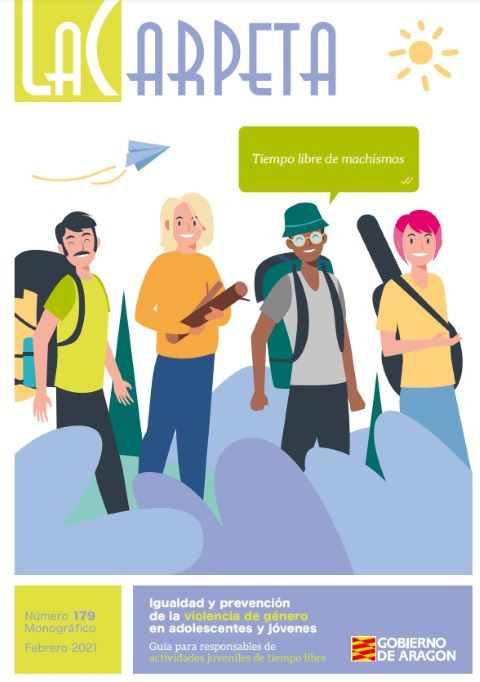 Equality and Prevention of Gender Violence in Adolescents and Young People: Guide for Those Responsible for Youth Leisure Activities Año de publicación: 2021 Autor: Santiago Boira | Isabel Ortega y Javier Cebrián Autor corporativo: Aragonese Institute of Youth The purpose of this guide is to work on equality and the prevention of gender violence with those responsible for youth leisure activities. Working with them is essential because of the impact they can have on a large number of young people and because of the special bond that is created between all the people who participate in the activities. Igualdad y prevención de la violencia de género en adolescentes y jóvenes: Guía para responsables de actividades juveniles de tiempo libre Año de publicación: 2021 Autor: Santiago Boira | Isabel Ortega y Javier Cebrián Autor corporativo: Aragonese Institute of Youth Esta guía tiene como finalidad trabajar la igualdad y la prevención de la violencia de género con responsables de actividades juveniles de tiempo libre. El trabajo con ellas y ellos es fundamental por el impacto que pueden tener en un amplio número de jóvenes y por el vínculo especial que se crea entre todas las personas que participan en las actividades.
  International Conference on Global Citizenship Education and International Solidarity Año de publicación: 2022 Autor corporativo: Quebec Association of International Cooperation Organizations (AQOCI) This material aims to share practices and reflections on education for global and solidarity citizenship. The conference was initiated by the international committee of the Festival des Solidarités (Festisol) and led by AQOCI (Quebec Association of International Cooperation Organizations). Conférence internationale sur l'Éducation à la citoyenneté mondiale et la solidarité internationale Año de publicación: 2022 Autor corporativo: Association québécoise des organismes de coopération internationale (AQOCI) Cette vidéo est pour traiter des diverses dimensions de la pauvreté ainsi que de ce qui peut être fait pour s'attaquer aux causes de la pauvreté. Partage de pratiques et de réflexions sur l'éducation à la citoyenneté mondiale et solidaire. Conférence initiée par le comité international du Festival des Solidarités (Festisol) et animée par l'AQOCI (Association québécoise des organismes de coopération internationale).
 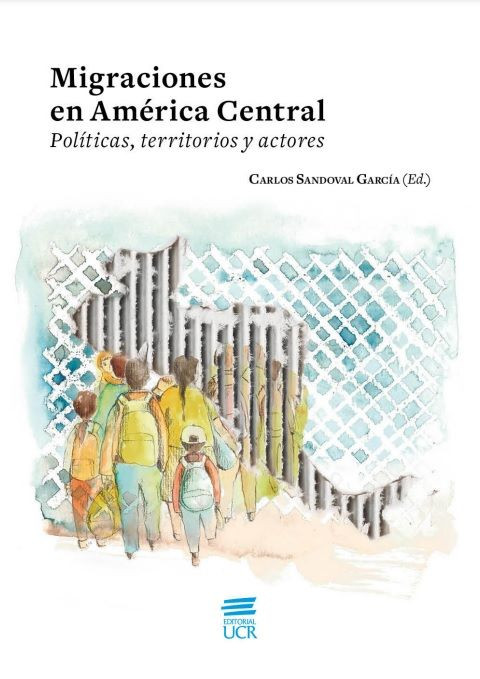 Migrations in Central America: Policies, Territories and Actors. Año de publicación: 2016 Autor: Carlos Sandival García Autor corporativo: Editorial Universidad de Costa Rica Migrations in Central America. Policies, Territories, and Actors seeks to offer an approach to the various dimensions of the migratory experience in Central America. Four starting points characterize this book: the public nature of the call, the collective dimension of the work, the regional perspective that is nourished by the contrast and comparison of cases and, fourthly, the call that gives rise to this book. This has allowed us to have a concrete task to shape the expectations of public, collective and regional work. Migraciones en América Central: Politicas, territorios y actores. Año de publicación: 2016 Autor: Carlos Sandival García Autor corporativo: Editorial Universidad de Costa Rica Migraciones en América Central. Políticas, territorios y actores procura ofrecer un acercamiento a las diversas dimensiones de la experiencia migratoria en Centroamérica. Cuatro puntos de partida caracterizan este libro: el carácter público de la convocatoria, la dimensión colectiva del trabajo, la perspectiva regional que se nutre del contraste y comparación de casos y, en cuarto lugar, la convocatoria que da origen a este libro. Lo anterior ha permitido contar con una tarea concreta para darle forma a las expectativas del trabajo público, colectivo y regional.