
Recursos
Exploren una amplia gama de recursos valiosos en GCED para profundizar su comprensión y promover su búsqueda, incidencia, enseñanza y aprendizaje.
884 resultados encontrados
 Toolkit for Urban Inclusion in Arab Cities: Cities Promoting Inclusion Through Public Participation, Access to Information, Sport, and Citizenship and Human Rights Education Año de publicación: 2020 Autor: Kareem Ibrahim | Deena Khalil | Marwa Barakat | Salwa Salman Autor corporativo: UNESCO | European Training and Research Centre for Human Rights and Democracy (Austria) | UNESCO Cairo Arab cities are witnessing an unprecedented expansion. Home to more than half of the region’s population, Arab cities have transformed into heterogeneous spaces that host diverse identities, cultures, and ethnicities. In order for this transformation to lead to prosperity, city officials must adopt a rights-based, human-centred approach, and implement inclusive policies and measures that provide equal opportunities for all.In this context, the Toolkit for Urban Inclusion in Arab Cities provides Arab city leaders and local government officials with practical tools and advice to guide their efforts towards establishing inclusive and sustainable cities. The Toolkit is based on the real experiences and practices of cities members of the Coalition of Arab Cities against Racism, Discrimination, Xenophobia and Intolerance in planning, implementing and evaluating programs and projects that promote urban inclusion and combat exclusion in all its forms.The Toolkit focuses on four topics of high priority to the Arab Coalition member cities: public participation, access to information, sport for youth inclusion, and citizenship and human rights education. Manuel des villes arabes pour l’inclusion urbaine: Promouvoir l’inclusion urbaine par la participation publique, l’accès à l’information, le sport, et l’éducation à la citoyenneté et aux droits de l’homme Año de publicación: 2020 Autor: Kareem Ibrahim | Deena Khalil | Marwa Barakat | Salwa Salman Autor corporativo: Organisation des Nations Unies pour l'éducation, la science et la culture (UNESCO) | European Training and Research Centre for Human Rights and Democracy (Austria) | UNESCO Cairo Les villes arabes connaissent un développement urbain accéléré qui les a amenées à réunir plus de la moitié de la population régionale. Une combinaison de nombreux facteurs a transformé la majorité des villes arabes en lieux de brassage où abondent les identités, les cultures et les ethnies variées. Ces transformations peuvent contribuer à la réalisation de la prospérité sociale, à condition que les responsables des villes adoptent un programme législatif centré sur les droits de l’homme, et qu’ils mettent en œuvre des politiques et des dispositions susceptibles de réaliser l’inclusion de manière à assurer l’égalité des chances à tous leurs habitants. Dans ce contexte, le Manuel des villes arabes pour l’inclusion urbaine propose un ensemble d’outils et de conseils pratiques susceptibles de servir de guide aux édiles des villes arabes et aux responsables des gouvernements locaux dans leur quête pour la mise en place de villes inclusives et durables. Le Manuel prend pour base les acquis et expériences de la Coalition des villes arabes contre le racisme, la discrimination, la xénophobie et l’intolérance dans la planification, la réalisation et l’évaluation de programmes et de projets pour favoriser l’inclusion sociale et pour s’opposer à l’exclusion sous toutes ses formes. Le Manuel est centré sur quatre questions désignées par les villes membres parmi leurs priorités : La Participation publique, l’Accès à l’information, le Sport pour l’inclusion des jeunes, l’Éducation à la citoyenneté et aux droits de l’homme.
  Addressing Antisemitism Through Education: A Survey of Teachers’ Knowledge and Understanding Año de publicación: 2026 Autor corporativo: UNESCO | OSCE. Office for Democratic Institutions and Human Rights (ODIHR) As antisemitism continues to pose an increasing threat to the security of Jewish communities and individuals worldwide, education systems have a moral imperative to address it in all its forms. Teachers are the first line of defence to prevent the spread of hatred. Listening to their experiences and understanding their needs is a first step towards equipping them with the right tools to combat this phenomenon.This unprecedented study is the first European survey of teachers on the topic of antisemitism. It includes data surveyed from 2,030 educators across the European Union, to examine their knowledge and understanding of antisemitism and explore their preparedness to address it in the classroom. Highlighting the prevalence of antisemitism in school environments, the survey outlines key areas where educational systems can support teachers, including: understanding the challenges they face, enhancing high-quality training opportunities, and developing clear policies and guidance on how to respond to antisemitic incidents.Above all, the survey provides insights into the potential for research-informed, high quality professional development courses to meaningfully support teachers in recognising and combatting antisemitism.
  Voices Against Violence: Younger Years Autor corporativo: World Association of Girl Guides and Girl Scouts | International Women's Day (IWD) This resource aims to help children and young adolescents to understand gender stereotypes and develop the mindset and strategies to challenge them.The lesson objectives are to:think about what toys and films tell us about being a girl or a boyunderstand how these stereotypes are used in play and how they limit the lives and development of girls and boysnegotiate more positive gender rules and roles in the playgroundThe Pack materials are aimed at children aged:5 - 11 years
  Voices Against Violence: Middle Years Autor corporativo: World Association of Girl Guides and Girl Scouts | International Women's Day (IWD) This resource aims to help children and young adolescents to understand gender stereotypes and develop the mindset and strategies to challenge them.The lesson objectives are to:think about gendered roles and discrimination in careersthink about our own gender assumptions and stereotypesthink about the way that we represent ourselves online and offlineThe Pack materials are aimed at children aged: 12+ years
  Prévenir la radicalisation des jeunes Año de publicación: 2015 Autor corporativo: France. Ministère de l'Education nationale, de l'Enseignement supérieur et de la Recherche This booklet is a tool to prevent youth radicalizationtargetting school administrators and other educational staff. It characterizes radicalization and guides on the identification of number of its identifiable signs. Finally, it indicates what should be done when these signs are observed. Prévenir la radicalisation des jeunes Año de publicación: 2015 Autor corporativo: France. Ministère de l'Education nationale, de l'Enseignement supérieur et de la Recherche Cette brochure est un outil de prévention de la radicalisation des jeunes, principalement destiné aux directeurs des écoles et au personnel éducatif. Il apporte une définition de la radicalisation et explique comment reconnaître les signes distinctifs. Enfin, il apporte des renseignements sur ce qui doit être fait lorsque certains de ces signes sont observés.
 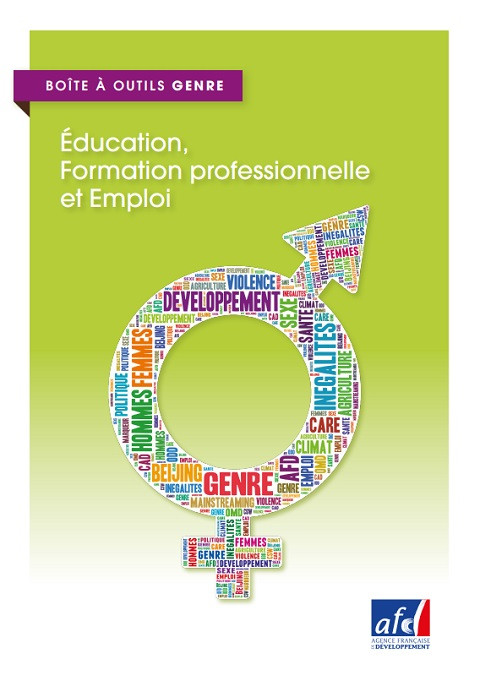 Éducation, formation professionnelle et emploi: Boîte à outils genre Año de publicación: 2015 Autor: Laetitia Antonowicz Autor corporativo: Agence Française de Développement (AFD) Le genre est à la fois un concept et un outil d’analyse. En tant que concept, il désigne ensemble deux entités : le féminin et le masculin ou encore les hommes et les femmes. Les inégalités de genre se manifestent dans tous les aspects de l’éducation, des infrastructures aux programmes, des politiques de vie scolaire aux outils didactiques, de la pédagogie au corps enseignant. Souvent les inégalités sont au détriment des filles, parfois au détriment des garçons. Les inégalités sont complexes: les filles peuvent avoir une espérance de vie scolaire supérieure aux garçons tout en ayant moins de chance que ces derniers d’accéder à l’éducation en premier lieu. Les garçons peuvent être plus nombreux à accéder au secondaire, mais également plus nombreux à ne pas terminer leur cycle d’étude ou à ne pas obtenir le niveau minimum dans certaines matières. Les inégalités se retrouvent dans l’accès, le maintien et l’achèvement. Elles se retrouvent également dans l’accès à l’emploi. Elles varient en fonction des cycles d’éducation, de l’âge des apprenants et des pays.
 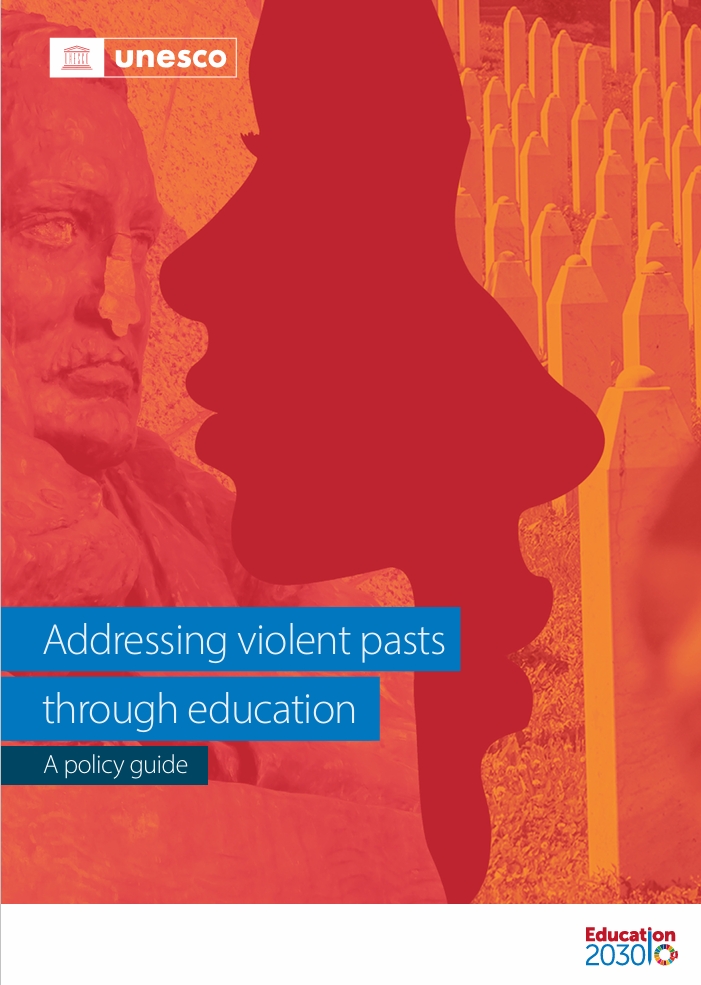 Addressing Violent Pasts Through Education: A Policy Guide Año de publicación: 2025 Autor corporativo: UNESCO Teaching about violent pasts and their legacies is a powerful way to foster sustainable peace.Education can build a nuanced understanding of complex histories, raise awareness of the roots and legacies of violence, nationally and internationally, and sensitize learners for their own agency as actors of change for reconciliation and conflict prevention.Educating about violent pasts is a challenging yet critical endeavour for policy-makers globally. It entails tailored approaches and an important support for educators to address traumatic pasts sensitively and to navigate related emotions and narratives successfully.Building on UNESCO’s programme on Global Citizenship Education, this guide offers education policy-makers a set of strategies, principles, and education practices to effectively integrate education about violent pasts into local education systems. It suggests a comprehensive approach that spans formal and informal education and aligns with the 2023 Recommendation on Education for Peace, Human Rights and Sustainable Development, opening new perspectives on history education, dialogue, and conflict transformation.
  Hate Speech, Propaganda and Disinformation in Albanian Media Año de publicación: 2020 Autor: Ilda Londo Autor corporativo: South East European Network for Professionalization of Media (SEENPM) | Peace Institute | Albanian Media Institute The purpose of this paper is to highlight the main models and elements that media in Albania manifest regarding hate speech, propaganda and disinformation and also to identify ways of countering these narratives. The research focuses mainly on online media, as they are identified as the main carriers of disinformation and hate speech, with a few exceptions, but traditional media are also present.This publication was produced within project Resilience: Civil Society for Media Free of Hate and Disinformation,run by South East European Network for Professionalization of Media (SEENPM).Reasearch is available in English and Albanian.