
Recursos
Exploren una amplia gama de recursos valiosos en GCED para profundizar su comprensión y promover su búsqueda, incidencia, enseñanza y aprendizaje.
89 resultados encontrados
 [Video] Central Asian Kids Share Their Views on Gender Inequality Año de publicación: 2020 Autor corporativo: World Bank In Central Asia, and around the world, women earn 30% less than men. In anticipation of March 8, we asked the children what they think about it. [Видео] Что говорят дети в Центральной Азии о гендерном неравенстве в оплате труда Año de publicación: 2020 Autor corporativo: World Bank В Центральной Азии, и по всему миру, женщины зарабатывают на 30% меньше, чем мужчины. В преддверии 8 марта мы спросили детей, что они думают об этом.
  Strengthening Kazakhstan's Education Systems: An Analysis of PISA 2009 and 2012 Año de publicación: 2014 Autor: Keiko Inoue | Lucas Gortazar Autor corporativo: World Bank This report is the result of the World Bank's education sector providing technical and analytical support to the Government of the Republic of Kazakhstan (RK) from 2013 to 2015 under the leadership of Keiko Inoue (Senior Education Specialist, Europe and Central Asia Region, World Bank) as part of the Joint Economic Research. This report is also part of a series of PISA country reporting programs prepared by the Education Sector for the Europe and Central Asia Region, and it is also the second World Bank report on the effectiveness of the education system in Kazakhstan based on an analysis of PISA data. Укрепление системы образования Казахстана: Анализ результатов исследования PISA, проводимого в 2009 и 2012 годах Año de publicación: 2014 Autor: Keiko Inoue | Lucas Gortazar Autor corporativo: World Bank Этот отчет является результатом работы сектора образования Всемирного банка по технической и аналитической поддержке правительства Республики Казахстан (РК) в период с 2013 по 2015 год под руководством Кейко Иноуэ (старший специалист по образованию, Регион Европы и Центральной Азии, Всемирный банк) в рамках Программы Совместных Экономических Исследований. Этот отчет также является частью серии программы страновых отчетов PISA, подготовленной Сектором образования по региону Европы и Центральной Азии, а также это второй отчет Всемирного Банка о результативности системы образования РК на основе анализа данных PISA.
  Strengthening Democracy With a Modern Civics Education Año de publicación: 2019 Autor: Ashley Jeffrey | Scott Sargrad Autor corporativo: Center for American Progress This report aims to examine the state of civic education and look deeper at promising approaches to increase civic engagement. It provides an updated state-by-state analysis of civics education requirements and civic engagement measures.
 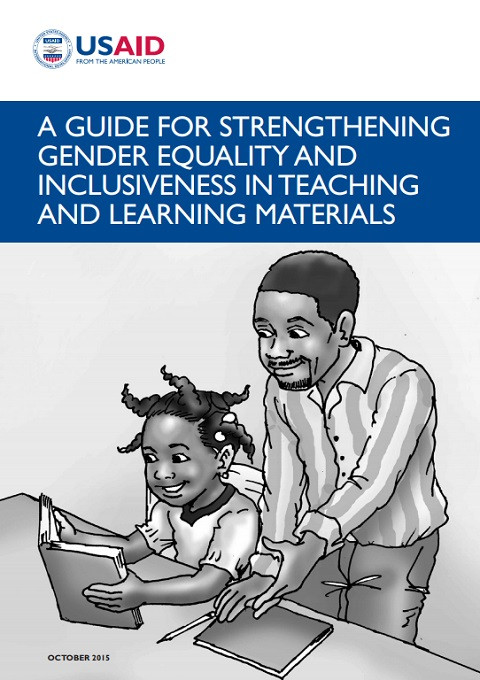 A Guide for Strengthening Gender Equality and Inclusiveness in Teaching and Learning Materials Año de publicación: 2015 Autor corporativo: RTI International | United States Agency for International Development (USAID) The purpose of this guide is to provide guidance on how to represent members of all subgroups of a society in teaching and learning materials in equitable and non-stereotypical ways. Reviewers can use the strategies proposed in this guide to evaluate existing teaching and learning materials across primary and secondary levels. Authors or developers can employ the strategies to inform the development of new materials. This guide is organized according to themes that emerged from the review of relevant literature. Each theme reflects a particular type of bias that should be considered when evaluating or developing teaching and learning materials.
 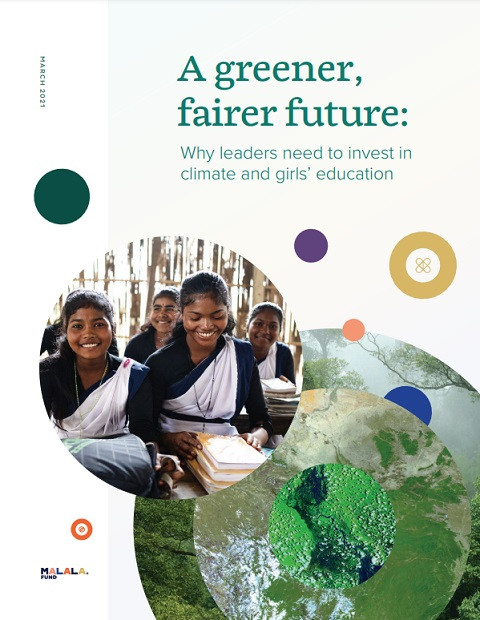 A Greener, Fairer Future: Why Leaders Need to Invest in Climate and Girls’ Education Año de publicación: 2021 Autor: Lucia Fry | Philippa Lei Autor corporativo: Malala Fund The world is on the brink of a climate catastrophe — and girls are disproportionately bearing the impact. Climate-related events like flooding, droughts and increased exposure to zoonotic diseases amplify the inequalities girls face and further limit their ability to access and complete their education. Malala Fund’s new report, A greener, fairer future: Why leaders need to invest in climate and girls' education, estimates that in 2021 climate-related events will prevent at least four million girls in low- and lower-middle-income countries from completing their education. If current trends continue, by 2025 climate change will be a contributing factor in preventing at least 12.5 million girls from completing their education each year.Yet evidence shows that closing gender gaps in education can help countries better adapt to the effects of climate change and decrease the rate and impact of global warming.“Girls in lower-income countries are the least responsible for the climate crisis, so it’s a travesty that it now threatens their very lifeline to a brighter future: quality education,” said Lucia Fry, Director of Research and Policy at Malala Fund. “Malala Fund wants leaders at COP26 to hear young people’s demands around education. They know that climate action helps girls stay in school, which in turn helps countries tackle the climate crisis. Young people are demanding an education that will prepare them to adapt to the effects of climate change and challenge the root causes of the crisis.”A greener, fairer future outlines the origins of the climate emergency and explains how confronting issues like the legacy of colonialism, racial discrimination and gender inequality through education is key to finding a sustainable solution to the crisis. The paper introduces the Gender-Equal Green Learning Agenda, a new framework to help leaders address the climate crisis through education.In this report, Malala Fund recommends how leaders can take urgent climate action at meetings this year, like COP26. This includes reducing carbon emissions, improving girls’ access to education, helping communities adapt to the realities of climate change and transforming education systems to provide all students with the knowledge, skills and values needed to challenge the social and economic inequalities fuelling the climate crisis.For more about the links between climate change and girls’ education, read the full paper below.
 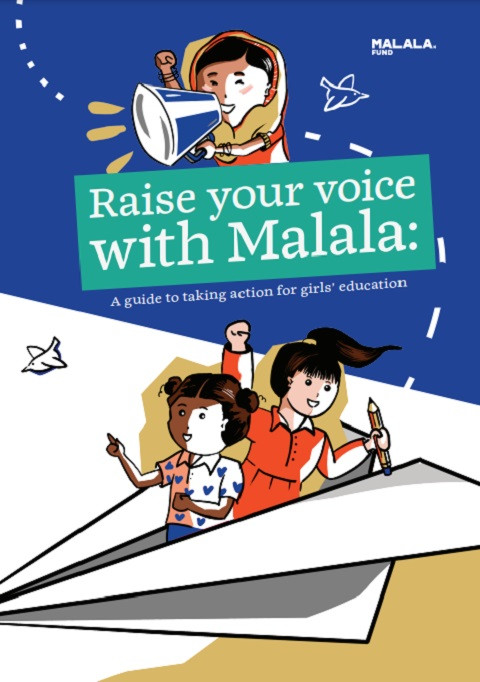 Raise Your Voice With Malala: A Guide to Taking Action for Girls’ Education Año de publicación: 2018 Autor: Emily Laurie | Eleanor Gall Autor corporativo: Malala Fund This guide gives young activists the tools to raise their voices and make change happen. Girls around the world are standing up in support of their out-of-school sisters and fighting to see every girl complete 12 years of free, safe, quality education. By taking action in their communities, girls can contribute to the peace and prosperity of our entire world. The guide includes real stories about girls around the world working to make sure all girls have the opportunity to go to school.
  Measuring Global Citizenship Education: A Collection of Practice and Tools Año de publicación: 2017 Autor corporativo: Center for Universal Education at Brookings | UNESCO | UN Global Education First Initiative - Youth Advocacy Group (YAG) The idea of global citizenship has existed for several millennia. In ancient Greece, Diogenes declared himself a citizen of the world,1 while the Mahaupanishads of ancient India spoke of the world as one family.2 Today, education for global citizenship is recognized in many countries as a strategy for helping children and youth prosper in their personal and professional lives and contribute to building a better world.This toolkit is intended to shed light on one aspect of operationalizing global citizenship education (GCED): how it can be measured. This toolkit is the result of the collective efforts of the Global Citizenship Education Working Group (GCED-WG), a collegium of 90 organizations and experts co-convened by the United Nations Educational, Scientific, and Cultural Organization (UNESCO), the Center for Universal Education (CUE) at the Brookings Institution, and the United Nations Secretary General’s Global Education First Initiative’s Youth Advocacy Group (GEFI-YAG). To gather the measurement tools in this collection, the working group surveyed GCED programs and initiatives that target youth (ages 15–24).3 For the purposes of this project, GCED was defined as any educational effort that aims to provide the skills, knowledge, and experiences and to encourage the behaviors, attitudes, and values that allow young persons to be agents of long-term, positive changes in their own lives and in the lives of people in their immediate and larger communities (with the community including the environment).This toolkit begins with a brief review of opinions on why GCED is important and the variety of definitions of GCED. We follow the report with a catalog of 50 profiles of assessment efforts, each describing practices and tools to measure GCED at the classroom, local, and national levels. Note that the survey does not represent an exhaustive list but may be regarded as a living document that will grow as the field of GCED itself grows around the world.Broadly speaking, the assessment efforts in this survey may be categorized across achieving three goals: (1) fostering the values/attitudes of being an agent of positive change; (2) building knowledge of where, why, and how to take action toward positive change; and (3) developing self-efficacy for taking effective actions toward positive change.Today, global challenges such as climate change, migration, and conflict will require people to do more than just think about solutions. They will require effective action, by both individuals and communities. Education for global citizenship is one means to help young people develop the knowledge, skills, behaviors, attitudes, and values to engage in effective individual and collective action at their local levels, with an eye toward a long-term, better future at the global level. We offer this toolkit to provide guidance for educators, policymakers, non-governmental organizations, civil society, and researchers, and to inform this conversation.