
Recursos
Exploren una amplia gama de recursos valiosos en GCED para profundizar su comprensión y promover su búsqueda, incidencia, enseñanza y aprendizaje.
1,322 resultados encontrados
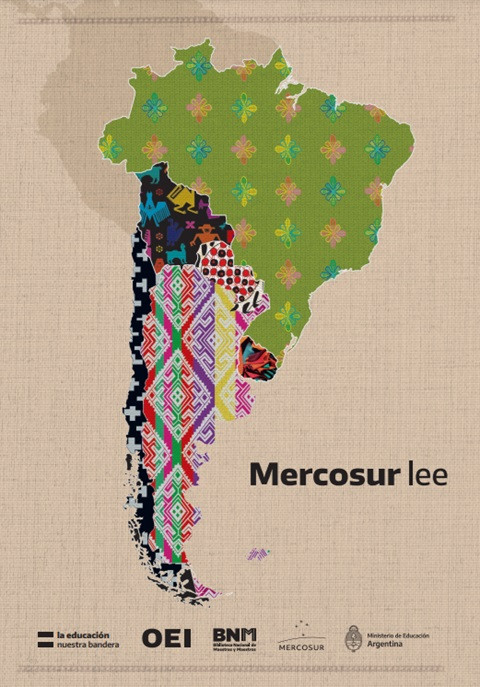 Mercosur Reads Año de publicación: 2023 Autor corporativo: Argentina. Ministry of Education | National Library of Teachers | Organization of Ibero-American States for Education, Science and Culture (OEI) This relaunch brings together stories by prominent authors from Argentina, Brazil, Bolivia, Chile, Paraguay and Uruguay. Its purpose is to contribute to the process of regional integration, encourage knowledge of the official languages (Spanish, Portuguese and Guaraní) and the development of quality education for all. Mercosur lee Año de publicación: 2023 Autor corporativo: Argentina. Ministry of Education | National Library of Teachers | Organización de Estados Iberoamericanos para la Educación, la Ciencia y la Cultura (OEI) Este relanzamiento reúne los relatos de destacadas y destacados autores de Argentina, Brasil, Bolivia, Chile, Paraguay y Uruguay. Su propósito es contribuir al proceso de integración regional, incentivar el conocimiento de las lenguas oficiales (español, portugués y guaraní) y el desarrollo de una educación de calidad para todas y todos.
 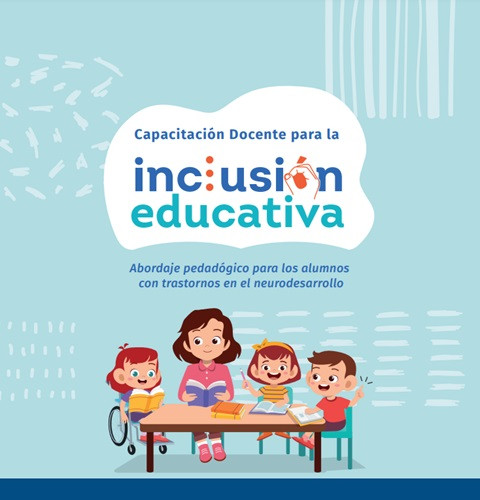 Teacher Training for Educational Inclusion: Pedagogical Approach for Students With Neurodevelopmental Disorders Año de publicación: 2024 Autor corporativo: Paraguay. Ministry of Education and Science | Organization of Ibero-American States for Education, Science and Culture (OEI) The course aims to design teacher training for educational inclusion with a specific pedagogical approach for students with neurodevelopmental disorders. This course is divided into ten modules, addressing fundamental topics such as: basic notions and concepts of inclusive education, the main paradigms and approaches, the types of accessibility necessary to eliminate barriers to learning and student participation. It also deals with the application of the dimensions of inclusive education (policy, practice and culture) and the exploration of the principles of reasonable adjustments and Universal Design for Learning (UDL). Capacitación docente para la inclusión educativa: Abordaje pedadógico para los alumnos con trastornos en el neurodesarrollo Año de publicación: 2024 Autor corporativo: Paraguay. Ministry of Education and Science | Organización de Estados Iberoamericanos para la Educación, la Ciencia y la Cultura (OEI) Con el objetivo de diseñar una capacitación docente para la inclusión educativa con un enfoque pedagógico específico para alumnos con trastornos en el neurodesarrollo. Este curso se divide en diez módulos, abordando temas fundamentales como: nociones y conceptos elementales de la educación inclusiva, los principales paradigmas y enfoques, los tipos de accesibilidad necesarios para eliminar barreras en el aprendizaje y la participación de los alumnos. Asimismo, trata de la aplicación de las dimensiones de la educación inclusiva (política, práctica y cultural) y de la exploración de los principios de los ajustes razonables y el Diseño Universal para el Aprendizaje (DUA).
  Address by Irina Bokova, Director-General of UNESCO on the occasion of the Geneva Conference on Preventing Violent Extremism – The Way Forward Año de publicación: 2016 Autor corporativo: UNESCO. Director-General, 2009-2017 (Bokova, I.G.) This address presented by Irina Bokova, Director-General of UNESCO, on the occasion of the Geneva Conference on Preventing Violent Extremism - The Way Forward. Discours de Mme Irina Bokova, Directrice générale de l'UNESCO à l'occasion de l'Genevaconférenceon Prévenir l'extrémisme violent - Aller de l'avant Año de publicación: 2016 Autor corporativo: UNESCO. Director-General, 2009-2017 (Bokova, I.G.) Cette adresse présentée par Irina Bokova, Directrice générale de l'UNESCO, à l'occasion de la conférence de Genève sur la prévention extrémisme violent - La voie à suivre
  Guidelines for education sector plan preparation Año de publicación: 2015 Autor corporativo: UNESCO International Institute for Educational Planning (IIEP) | Global Partnership for Education (GPE) At the World Education Forum, in Dakar in 2000, the international community pledged that no country with a credible plan to achieve the Education for All goals would be thwarted by a lack of resources. Since then, the development of an education sector plan (ESP) has become a priority in many countries. ESPs present the policies and strategies for national education reform, and are a powerful tool for coordinating partners and for mobilizing additional domestic and external resources. They have become a critical instrument for governments to signal to all potential investors that their education policies are credible, sustainable, and worthy of investment. The consensus on the need for credible ESPs is strong. However, what does a credible plan require in terms of government leadership, knowledge and data, institutional and human capacities, and dialogue among the education stakeholders? What are the criteria that establish the credibility of a plan?The purpose of these guidelines is to assist countries in preparing credible education sector plans. A second document, Guidelines for Education Sector Plan Appraisal, can be utilized to check whether the plan responds to the expected requirements. In certain contexts of vulnerability, confl ict, or crisis, countries may also consider the development of a transitional education plan, more short-term and action-oriented, and adjusted to the context and available capacities for situation analysis and data requirements. Specifi c guidelines are being prepared. However references to fragile contexts or vulnerability situations are streamlined in these guidelines. These guidelines are not exhaustive. They should be adapted to country contexts and needs. They present an overview of sector analysis, consultative processes, policy reform, strategy development, plan implementation, and monitoring. They do not replace technical manuals on specific tools and methodologies that are used at the various steps of the development of a plan. Guide pour la préparation d'un plan sectoriel d'éducation Año de publicación: 2015 Autor corporativo: UNESCO International Institute for Educational Planning (IIEP) | Global Partnership for Education (GPE) At the World Education Forum, in Dakar in 2000, the international community pledged that no country with a credible plan to achieve the Education for All goals would be thwarted by a lack of resources. Since then, the development of an education sector plan (ESP) has become a priority in many countries. ESPs present the policies and strategies for national education reform, and are a powerful tool for coordinating partners and for mobilizing additional domestic and external resources. They have become a critical instrument for governments to signal to all potential investors that their education policies are credible, sustainable, and worthy of investment. The consensus on the need for credible ESPs is strong. However, what does a credible plan require in terms of government leadership, knowledge and data, institutional and human capacities, and dialogue among the education stakeholders? What are the criteria that establish the credibility of a plan? The purpose of these guidelines is to assist countries in preparing credible education sector plans. A second document, Guidelines for Education Sector Plan Appraisal, can be utilized to check whether the plan responds to the expected requirements. In certain contexts of vulnerability, confl ict, or crisis, countries may also consider the development of a transitional education plan, more short-term and action-oriented, and adjusted to the context and available capacities for situation analysis and data requirements. Specifi c guidelines are being prepared. However references to fragile contexts or vulnerability situations are streamlined in these guidelines. These guidelines are not exhaustive. They should be adapted to country contexts and needs. They present an overview of sector analysis, consultative processes, policy reform, strategy development, plan implementation, and monitoring. They do not replace technical manuals on specifi c tools and methodologies that are used at the various steps of the development of a plan.
  Guidelines for education sector plan appraisal Año de publicación: 2015 Autor corporativo: UNESCO International Institute for Educational Planning (IIEP) | Global Partnership for Education (GPE) At the World Education Forum, in Dakar in 2000, the international community pledged that no country with a credible plan to achieve the Education for All goals would be thwarted by a lack of resources. Since then, the development of an education sector plan (ESP) has become a priority in many countries. ESPs present the policies and strategies for national education reform, and are a powerful tool for coordinating partners and for mobilizing additional domestic and external resources. They have become a critical instrument for governments to signal to all potential investors that their education policies are credible, sustainable, and worthy of investment.The consensus on the need for credible ESPs is strong. However, what does a credible plan require in terms of government leadership, knowledge and data, institutional and human capacities, and dialogue among the education stakeholders? What are the criteria that establish the credibility of a plan? The purpose of these guidelines is to assist education stakeholders in appraising the soundness, relevance, and coherence that form the credibility of ESPs. The primary objective of an appraisal report is to support the finalization of a credible ESP. It provides a fair review of the ESP strengths and areas in need of improvement before the endorsement by partners which signifies their commitment to support the implementation of the ESP. These guidelines are meant to be adapted to national contexts and needs. The stakeholders should discuss the scope and the methodology of the appraisal to be used, and develop a common vision of the whole process. The appraisal process should be participatory, and grounded in the political and technical dialogue for ESP development. It should involve consultations, interviews with key stakeholders, and field visits, in addition to a desk review of the ESP and any other relevant documents. It is good practice to organize a validation workshop of the appraisal report’s findings, conclusions, and recommendations to feed into the ESP finalization. The appraisal process should occur early enough in the ESP development process to allow time for decision-makers to open consultations on these conclusions and recommendations in order to improve the final version of the ESP. Guide pourl’évaluation d’un plan sectoriel d’éducation Año de publicación: 2015 Autor corporativo: UNESCO International Institute for Educational Planning (IIEP) | Global Partnership for Education (GPE) Le Partenariat mondial pour l’éducation (GPE, du sigle anglais) est le seul mécanisme mondial et multilatéral visant à ce que tous les enfants puissent aller à l’école et y recevoir une éducation de qualité. Rassemblant près de 60 gouvernements de pays en développement, ainsi que des gouvernements donateurs, des organisations de la société civile, des fondations privées, des institutions internationales, des enseignants et le secteur privé, il propose un soutien financier pour l’élaboration et la mise en œuvre de plans sectoriels d’éducation de qualité dans les pays les plus pauvres. Le GPE réunit dirigeants nationaux et mondiaux pour concevoir des stratégies coordonnées, donnant à chaque enfant l’opportunité d’apprendre dans un contexte éducatif stimulant et sûr. En soutenant des programmes de développement qui visent à atteindre les objectifs éducatifs d’un pays (parité, bons résultats d’apprentissage, accès universel à l’enseignement primaire), le Partenariat veille à ce que les investissements dans le secteur de l’éducation portent leurs fruits. Le GPE a contribué à améliorer les résultats des pays en matière d’éducation, non seulement en réunissant ses partenaires pour élaborer des plans sectoriels d’éducation, dont la qualité est quantifiable, mais aussi en investissant dans des domaines stratégiquement essentiels mais sous-financés de ces plans, et en mobilisant l’expertise des partenaires nationaux pour tirer le meilleur parti de leurs atouts respectifs. Le GPE a alloué 3,9 milliards de dollars EU au cours des dix dernières années, en soutien aux réformes éducatives dans certains des pays les plus pauvres du monde. En 2014, près de la moitié de ses financements a été attribuée à des pays fragiles ou touchés par des conflits.