
Recursos
Exploren una amplia gama de recursos valiosos en GCED para profundizar su comprensión y promover su búsqueda, incidencia, enseñanza y aprendizaje.
684 resultados encontrados
 So That Nature Lives Año de publicación: 2020 Autor: Enky Wave Autor corporativo: National Museum of Natural History | Création Collective In the face of growing environmental collapse, the National History Museum's scientists are speaking out to alert people. The central theme of So that nature lives on is nature: understanding it better to preserve it more effectively. In each 30-minute episode, a researcher shares his or her knowledge and solutions to help us better understand living things and the world around us. Pour que la nature vive Año de publicación: 2020 Autor: Enky Wave Autor corporativo: National Museum of Natural History | Création Collective Face à l’effondrement environnemental croissant, les scientifiques du Muséum National d'Histoire Naturelle prennent la parole pour alerter. Pour que nature vive a pour thème central la nature : mieux la connaître pour mieux la préserver. Dans chaque épisode de 30 minutes, une chercheuse ou un chercheur partage ses connaissances et solutions, pour mieux comprendre le vivant et le monde qui nous entoure.
 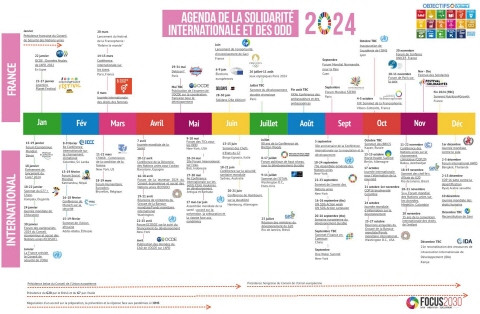 Solidarité Internationale 2024: Les grandes étapes à venir Año de publicación: 2023 Autor corporativo: Focus 2030 2024 : fin du multilatéralisme ou renouveau ? Les Objectifs de développement durable en suspens. L’année à venir sera l’occasion de mobiliser de manière régulière la communauté internationale autour de nombreux sommets internationaux et rencontres dont les résultats seront susceptibles de changer la face du monde. 2024: End of Multilateralism or Renewal? Sustainable Development Goals in Limbo. The upcoming year will provide a regular platform for mobilizing the international community through numerous international summits and meetings, the outcomes of which have the potential to reshape the world.
  Ré-inventer le Monde Año de publicación: 2023 Autor corporativo: L'Agence Française du Développement (AFD) Réinventer le Monde est un programme pédagogique créé par l’Agence française de développement pour sensibiliser les jeunes au développement durable et à la solidarité internationale et leur donner envie de s’engager. Conçu comme un voyage sonore, ce programme permet de découvrir à travers les histoires d’habitants de la planète, les Objectifs de développement durable et les interconnexions entre ici et là-bas. Il mêle éducation au développement durable (EDD) et éducation aux médias et à l’information (EMI) et propose une approche centrée sur l’apprentissage de la citoyenneté mondiale. Reinventing the World is an educational program created by the French Development Agency to raise young people's awareness of sustainable development and international solidarity, and inspire them to get involved. Conceived as an audio journey, the program uses the stories of the planet's inhabitants to discover the Sustainable Development Goals and the interconnections between here and there. It blends education for sustainable development (ESD) and media and information literacy (MIM), and offers an approach focused on learning about global citizenship.
 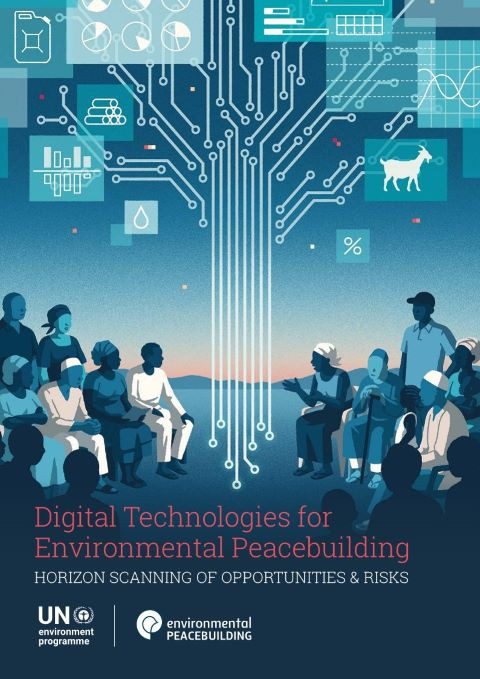 Digital Technologies for Environmental Peacebuilding : Horizon Scanning of Opportunities and Risks Año de publicación: 2024 Autor corporativo: United Nations Environment Programme (UNEP) This report specifically delves into how digital technologies can be harnessed to manage environmental and natural resource risks that contribute to insecurity and social conflict, as well as the opportunities they present for peacebuilding, cooperation, and social cohesion. It examines relevant use cases spanning the peace and security continuum and concludes with a set of important policy and governance recommendations. The report is designed to inform and contribute to significant upcoming frameworks addressing digital technologies, including the Summit of the Future and the Global Digital Compact.
 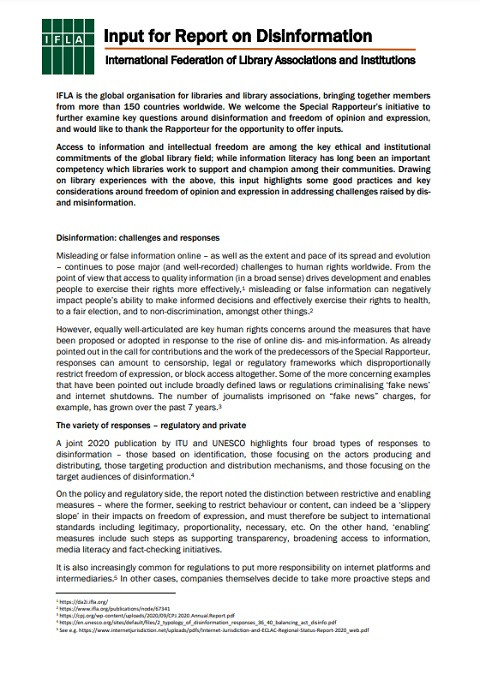 Input for Report on Disinformation Año de publicación: 2021 Autor corporativo: International Federation of Library Associations and Institutions (IFLA) IFLA responded to a call for inputs about human rights impacts of measures against disinformation, issued by the United Nations Special Rapporteur on the promotion and protection of the right to freedom of opinion and expression. Concerns over – and dialogue about ways to address – the negative impacts of false and misleading information online have remained high on the agenda over the past months, particularly in light of prominent examples of health and electoral dis- and mis-information.Disinformation, uniquely challenging in the increasingly dense and complex digital information environment, interferes with individuals’ ability to make informed decisions and realise their essential human rights. However, the new call for inputs by the UN Special Rapporteur also draws attention to the concerns about human rights impacts of measures which different stakeholders – from states to online platforms, human rights organisations and others – take to combat disinformation.These include, of course, the impacts of broadly- or vaguely-defined “fake news” laws on freedom of expression and opinion; or internet shutdowns that bear a heavy cost on people’s access to information as a driver of development and rights.In light of this, IFLA’s submission highlights the potential of media and information literacy interventions to help address the challenges of mis- and dis-information. Drawing on the global library field’s experiences, it points to some possible good practices and insights from the ongoing work and research in this field – from targeted and tailored outreach initiatives that can help reach those who are not currently in formal education, to scalability and replicability of interventions.Of course, this is an emerging field. Our understanding of how media and information literacy interventions can be effectively leveraged against disinformation, pitfalls to avoid and ways to maximise impact, continues to evolve. That’s why the submission emphasises the need for more research and cross-stakeholder collaboration – and libraries can and do offer valuable practical and theoretical insights for this ongoing discussion.
  Artificial Intelligence: Media and Information Literacy, Human Rights and Freedom of Expression Año de publicación: 2020 Autor: Igor Shnurenko | Tatiana Murovana | Ibrahim Kushchu Autor corporativo: UNESCO Institute for Information Technologies in Education (IITE) | TheNextMinds The collection of papers “Artificial Intelligence: Media and Information Literacy, Human Rights and Freedom of Expression” continues the UNESCO IITE’s series of publications entitled “Digital Transformation of Education”.The publication describes the fundamentals of artificial intelligence and AI-based technologies, their impact on the modern information and media environment, new challenges in the field of media and information literacy associated with the growing automation of the processes of creating, disseminating and accessing information, the use of AI in decision-making and control systems in various areas. There is a strong focus on the growing risks of reducing individual agency, people’s ability to interpret reality autonomously and to act according to their own agenda.These issues are more relevant now than ever before for education undergoing digital transformation. The publication seeks to contribute to a critical understanding of the digital environment in which learning and teaching unfold, and strategies and tactics for the use of new technologies and the digitalization of educational interactions.
  L’université de paix, ressources pédagogiques Autor corporativo: L'université de paix L'Université de Paix diffuse des outils pédagogiques et des articles de fond pour apprendre à mieux communiquer et développer des relations plus sereines et constructives.The University of peace distributes teaching tools and in-depth articles to help people learn to communicate better and develop calmer, more constructive relationships.
  Summit of the Future Outcome Document: Pact for the Future, Global Digital Compact, and Declaration on Future Generations Año de publicación: 2024 Autor corporativo: United Nations (UN) At the Summit of the Future on 22 September 2024, world leaders adopted a Pact for the Future that includes a Global Digital Compact and a Declaration on Future Generations. This Pact is the culmination of a years-long process to adapt international cooperation to the realities of today and the challenges of tomorrow. The hard work of implementation begins immediately. The adoption of the Pact demonstrates that countries are committed to an international system with the United Nations at its center. Leaders set out a clear vision of a multilateralism that can deliver on its promises, is more representative of today’s world and draws on the engagement and expertise of governments, civil society and other key partners.
  Summit of the Future Outcome Document: Pact for the Future, Global Digital Compact and Declarations on Future Generations Año de publicación: 2024 Autor corporativo: United Nations (UN) World leaders adopt a Pact for the Future that includes a Global Digital Compact and a Declaration on Future Generations (A/RES/79/1). The Pact covers a broad range of themes including peace and security, sustainable development, climate change, digital cooperation, human rights, gender, youth and future generations, and the transformation of global governance.