
Recursos
Exploren una amplia gama de recursos valiosos en GCED para profundizar su comprensión y promover su búsqueda, incidencia, enseñanza y aprendizaje.
3,436 resultados encontrados
 [KEI 북한환경리뷰] 2020-창간호 Año de publicación: 2020 Autor corporativo: 한국환경정책·평가연구원 최근 연구에 따르면 북한 지역도 기후변화의 영향에서 결코 예외는 아니며, 홍수, 가뭄, 수질, 수력발전, 농업용수, 상하수도, 수생태 등과 같이 북한의 물관리 전반에 미치는 기후변화 영향의 진단도 산림복원의 효과와 연계되어 검토되어야 할 중요한 연구 주제이다.위와 같은 배경에서 산림복원과 기후변화가 북한 물관리에 미치는 영향을 진단하고 그 결과를 제공하는 등 물분야 환경 협력 발전방향의 정책적 제언을 도출하는 것은 매우 중요한 정책연구 주제이다. 본 원고에서는 물 관련 문제 해소방안 마련에 기여하고, 북한의 기후변화 적응력 증대를 통한 경제 발전, 주민 삶의 질과 생태환경 개선·보전의 선순환 정책 고리를 묶을 수 있는 공동 노력을 제안하고 있다. 또한 국내에서 최초로 김정은 집권 이후 2012부터 2020년까지 신년사에 나타난 환경관련 정책 내용을 분석하여 북한의 주요 환경정책을 파악하고 이와 관련한 북한의 주요 환경문제를 진단해 보고자 한다. 본 저작물은 한국환경정책·평가연구원에서 2020년 작성하여 공공누리 제4유형으로 개방한 '[KEI 북한환경리뷰] 2020-창간호(작성자:한국환경정책·평가연구원)'을 이용하였으며, 해당 저작물은 한국환경연구원 홈페이지(https://www.kei.re.kr/)에서 무료로 내려받으실 수 있습니다.
  기후변화와 북한인권: 실태 및 협력방안 - SDGs 매개의 남북인권협력 관점에서 - Año de publicación: 2022 Autor: 이규창 | 김에스라 | 나용우 | 최현아 Autor corporativo: 통일연구원 글로벌 이슈인 기후변화는 생태계 및 환경뿐만 아니라 건강, 감염병, 경제, 주거, 식수 등 인간 삶의 상당한 영역에 영향을 미치고 있다. 기후변화는 재해‧ 재난의 빈도 및 강도의 증대로 이어져 최근에는 기후위기라는 용어가 회자되고 있으며 더 나아가 기후재앙이라는 용어도 사용되고 있다. 국제사회는 기후변화가 인권에 미치는 영향을 주목하고 이에 대응하기 위하여 노력을 기울이고 있다. 그 모습은 유엔인권최고대표사무소 (OHCHR)의 ‘기후변화와 인권의 관계에 관한 보고서’ 발표, 유엔 인권이사회의 ‘인권과 기후변화’ 결의 채택, ‘기후변화 맥락에서의 인권증진 및 보호에 관한 특별보고관’ 임명 등으로 나타나고 있다. 이 같은 배경에서 본 연구보고서는 기후문제가 북한인권에 미치는 영향과 실태 및 남북협력방안을 연구 내용으로 다루고 있다. 본 저작물은 통일연구원에서 2022년 작성하여 공공누리 제4유형으로 개방한 '기후변화와 북한인권: SDGs 매개의 남북인권협력 관점에서(작성자:이규창 외)'를 이용하였으며, 해당 저작물은 통일연구원 홈페이지(https://www.kinu.or.kr/)에서 무료로 내려받으실 수 있습니다.
  [Facts and Figures] The United Nations World Water Development Report 2020: Water and Climate Change; Facts and Figures Año de publicación: 2020 Autor: Engin Koncagül | Michael Tran | Richard Connor Autor corporativo: UNESCO World Water Assessment Programme (WWAP) Since the mid-20th century, changes in the intensity and frequency of extreme weather and climate events have been observed, including a decrease in cold temperature extremes, an increase in warm temperature extremes, an increase in extremely high sea levels and an increase in the number of heavy precipitation events in a number of regions (Min et al., 2011).Climate projections indicate with high confidence that extreme precipitation events will become more intense and frequent in many regions, but also that heatwaves will occur more often and last longer. The former will increase global flood risk (Hirabayashi et al., 2013), while the latter is expected to make droughts more intense (Trenberth et al., 2014). These risks are unevenly distributed geographically, and are generally larger for vulnerable people and communities in countries at all levels of development (IPCC, 2014a). Figure 1. Global water withdrawals throughout the previous centuryFigure 2. Climate change scenario trends in water availabilityFigure 3. Annual baseline water stressFigure 4. Seasonal variabilityFigure 5. World weather-related natural catastrophes by peril, 1980–2018Figure 6. Spatial distribution of water-related disasters (droughts, floods, landslides and storms), 2001–2018Figure 7. Spatial distribution of floods, 2001–2018Figure 8. Spatial distribution of droughts, 2001–2018Figure 9. Electricity consumption in the water sector by process, 2014–2040Figure 10. Number of people living under water stress under the Baseline Scenario [Faits et chiffres] Rapport mondial des Nations Unies sur la mise en valeur des ressources en eau 2020: l'eau et les changements climatiques, faits et chiffres Año de publicación: 2020 Autor: Engin Koncagül | Michael Tran | Richard Connor Autor corporativo: UNESCO World Water Assessment Programme (WWAP) Depuis le milieu du 20e siècle, on a observé des changements dans l’intensité et la fréquence des phénomènes météorologiques et climatiques extrêmes, notamment une diminution des extrêmes de température froide et une augmentation des extrêmes de température chaude, des niveaux de mer extrêmement élevés et du nombre de fortes précipitations dans un certain nombre de régions (Min et al., 2011).Les projections climatiques indiquent avec une grande confiance que les précipitations extrêmes deviendront plus intenses et plus fréquentes dans de nombreuses régions, mais aussi que les vagues de chaleur seront plus fréquentes et dureront plus longtemps. Les premières augmenteront le risque d’inondation au niveau mondiale (Hirabayashi et al., 2013), tandis que les dernières devraient rendre les sécheresses plus intenses (Trenberth et al., 2014). Ces risques sont répartis géographiquement de façon inégale et ils sont généralement plus importants pour les personnes et les communautés vulnérables dans les pays à tous les niveaux de développement (GIEC, 2014a). Figure 1. Préèements d’eau dans le monde au cours du 20e sièleFigure 2. Tendances des scéarios de changement climatique en matièe de disponibilitéde l’eauFigure 3. Stress hydrique annuel de référenceFigure 4. VariabilitésaisonnièeFigure 5. Catastrophes naturelles mondiales liées au climat, par risque et par nombre d’événements pertinents,1980–2018Figure 6. Réartition spatiale des catastrophes liés àl’eau (séheresses, inondations, glissements de terrain et tempêes) 2001–2018Figure 7. Répartition spatiale des inondations, 2001–2018Figure 8. Répartition spatiale de sécheresses, 2001–2018Figure 9. Consommation d’électricité dans le secteur de l’eau, par procédé, 2014–2040Figure 10. Nombre de personnes en situation de stress hydrique selon le scénario de référence
  Gender, Climate & Security: Sustaining Inclusive Peace on the Frontlines of Climate Change Año de publicación: 2020 Autor corporativo: United Nations Environment Programme (UNEP) | United Nations Entity for Gender Equality and the Empowerment of Women (UN Women) | United Nations Development Programme (UNDP) Climate change is a defining threat to peace and security in the 21st century – its impacts felt by everyone, but not equally. Gender norms and power dynamics shape how women and men of different backgrounds experience or contribute to insecurity in a changing climate. Grounded in a series of case studies from research and programming experience, this report offers a comprehensive framework for understanding how gender, climate and security are inextricably linked. The report assesses entry points for action across existing global agendas and suggests concrete recommendations for how policymakers, development practitioners and donors can advance three inter-related goals: peace and security, climate action and gender equality.
  Diagnosing and Enhancing Environmental Literacy of Citizens to Raise Green Awareness Año de publicación: 2021 Autor: Jeongyoon Yeom | Namsoo Kim | Haengwoon Jeong | Woohyeon Jeong Autor corporativo: Korea Environment Institute (KEI) 1. Research purposeA nationwide consensus on the understanding on and necessity of the environmental policy is needed in order to successfully achieve the policy objectives.The necessity of environmental education is being highlighted but in reality, there is a lack of objectives and specific indicators to verify its effect.The goal of environmental education should be the expansion of environmental literacy and indicators to measure this should be developed. 2. Research scopeSummarize the concept of environmental literacy and develop the scales for adultsMeasure the level of environmental literacy of citizensConfirm the predictors and consequences of environmental literacyUnderstand citizen types via cluster analysis 시민 인식의 녹색 전환을 위한 환경 리터러시 진단 및 강화 방안 Año de publicación: 2021 Autor: 염정윤 | 김남수 | 정행운 | 정우현 Autor corporativo: 한국환경연구원 1. 연구의 필요성 및 목적 환경 정책이 성공적으로 정책 목표를 달성하기 위해서는 정책 이해와 필요성에 대한 범국민적 공감대가 필수 환경교육의 중요성을 강조하고 있지만 실질적으로 교육의 효과를 확인할 수 있는 객관적이고 구체적인 지표가 부재함 환경교육의 목표를 환경 리터러시의 증대로 설정하고 이를 측정할 지표 개발이 필요2. 연구의 범위 환경 리터러시 개념 정리 및 성인 대상의 측정 도구 개발 일반 시민의 환경 리터러시 수준 측정 환경 리터러시의 예측 요인과 결과 요인 확인 군집 분석을 통한 시민 유형 파악* 본 저작물은 한국환경연구원에서 '2021'년에 작성하여 공공누리 제'4'유형으로 개방한 ‘시민 인식의 녹색 전환을 위한 환경 리터러시 진단 및 강화 방안(작성자: 염정윤)’을 이용하였으며 해당 저작물은 한국환경연구원 홈페이지(http://www.kei.re.kr)’에서 무료로 다운받으실 수 있습니다.
  终身学习背景下老年人群体自主参与学习活动的影响因素实证研究 (老龄化研究 第10卷 第3期) Año de publicación: 2023 Autor: 郑滢 在终身学习背景下老年人自主参与学习活动是积极老龄化的一种表现。本文基于CGSS2021年数据,对于3342份老年人群体自主参与学习的影响因素进行了实证研究。本研究采用有序逻辑回归分析模型研究,将人口特征、个体认知能力、社会保障和居住环境等纳入分析模型分析其与老年人群体是否自主参与学习的关系。结合实证研究结果与我国老年人自主参与学习的实际情况,最终可以基本了解到我国老年人群体自主参与学习的意愿与频率仍较低,而我国老年人群体自主参与学习的影响因素表现在人口特征、个体认知能力、居住环境三个方面。据此,本研究在终身学习背景的基础上提出针对性地关注不同老年人的学习需求,多元化老年人学习渠道并积极推动老年教育的普惠性发展,营造终身学习的社会氛围。
  21世纪以来我国终身教育视角下社会教育研究的回顾与反思展望 : 基于CiteSpace知识图谱分析 (运筹与模糊学 第13卷 第4期) Año de publicación: 2023 Autor: 郑滢 社会教育是终身教育体系的重要组成部分,但基于终身教育视角进行社会教育研究还存在可探讨空间,本文通过对关于终身视角下社会教育研究已有的学术性文献的发文作者分布、机构分布、突现词共现图等分析终身教育视角下社会教育的研究现状与趋势,结合知识图谱系统梳理与分析研究热点主题,发现热点主要有社区教育实践研究、国外社会教育经验比较研究、社会教育概念论证研究、终身教育与学习型社会构建研究等四个方面,最后通过研究结论对21世纪以来终身教育视角下社会教育研究从国家、学校、学术研究层面等提出展望。
 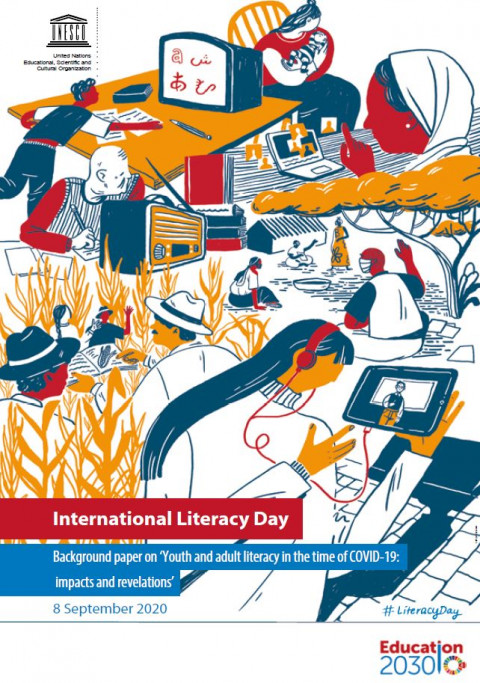 International Literacy Day: Background Paper on 'Youth and Adult Literacy in the Time of COVID-19; Impacts and Revelations' Año de publicación: 2020 Autor corporativo: UNESCO Specially prepared on the occasion of International Literacy Day 2020, this background paper illustrates the impact of the COVID-19 crisis on youth and adult literacy, based on the limited information that is currently available. It provides five regional snapshots and identifies preliminary lessons learned thus far, while aiming to inspire continued reflection and subsequent action. It also makes the case for the ongoing importance of advancing youth and adult literacy, a priority that was already neglected even before the pandemic but which deserves all our attention. ILD 2020 thus seeks to trigger reimaginations of literacy teaching and learning in the COVID-19 crisis and beyond, with a particular focus on the role of educators.