
Recursos
Exploren una amplia gama de recursos valiosos en GCED para profundizar su comprensión y promover su búsqueda, incidencia, enseñanza y aprendizaje.
1,473 resultados encontrados
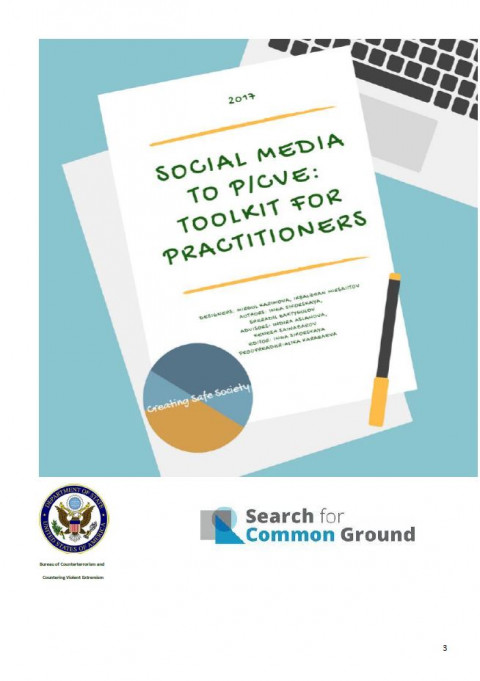 Социальные медиа для профилактики/предотвращения насильственного экстремизма: практическое руководство Año de publicación: 2017 Autor corporativo: Search for Common Ground Данный инструментарий был создан на основе ключевых результатов, полученных в рамках пилотного проекта «Поиск социальных сетей (Кыргызстан: модель для Центральной Азии)« Поиск в социальных сетях для Кыргызстана: модель для Центральной Азии », финансируемого Бюро по борьбе с терроризмом, Госдеп США. Проект основан на двух частях: совместный подход, ориентированный на Резолюцию ООН 2250, и профессиональный подход, направленный на создание и проведение кампаний в социальных сетях в Кыргызстане.Экстремистские и террористические группы используют Интернет для радикализации и вербовки молодых людей через социальные сети и приложения для обмена мгновенными сообщениями. Поэтому важно создать новые методы для борьбы с экстремистской пропагандой в Интернете, сосредоточив внимание не только на таких мерах, как блокировка и фильтрация контента, либо контррассказах, которые очень популярны и появляются естественным образом в ответ на радикализацию и насильственный экстремизм, но также предлагая Позитивная альтернатива экстремистской пропаганде, бросая вызов их идеологии и сообщениям.
  The Missing Peace: Independent Progress Study on Youth, Peace and Security Año de publicación: 2018 Autor corporativo: United Nations Population Fund (UNFPA) | UN. Peacebuilding Support Office (UN. PBSO) The process of how this study was undertaken is just as important as the outcomes it produced. The study used an inclusive and participatory research approach by undertaking regional, subregional and national consultations with young people across the globe; conducting and receiving country case studies; commissioning focus-group discussions with “hard to reach” youth; and drawing on a survey-based mapping of the work done by youth-led peacebuilding organizations. Particular effort was made to reach out beyond easily accessible and elite youth, to young people who would not ordinarily have a say in these sorts of global policy processes. Given the challenge of young people’s increasing distrust in their governments and the multilateral system, it was essential to work with credible civil society organizations with strong trust-based relationships with youth on the ground. السلام المفقود: دراسة مرحلية مستقلة حول الشباب والسلام والأمن Año de publicación: 2018 Autor corporativo: United Nations Population Fund (UNFPA) | UN. Peacebuilding Support Office (UN. PBSO) استعانت الدراسة بمنهجٍ بحثيّ شامل وتشارُكي من خلال إجراء استشارات إقليمية وشبه إقليمية ووطنية مع مجموعات من الشباب حول العالم؛ وإجراء وتلقي دراسات حالة قطُرية؛ والتكليف بعقد مناقشات جماعية مركّزة مع الشباب الذين "يصعب الوصول إليهم"؛ والاستفادة من وضع خريطة تستند إلى دراسات استقصائية في العمل الذي أجرته منظمات بناء السلام التي يقودها الشباب. وقد بُذل جهد خاص لكي تشمل الدراسة ما يتجاوز الشباب الذين يسهل الوصول إليهم والشباب النخبة، لتصل إلى الشباب الذين لا تسنح لهم الفرصة عادةً للإدلاء بآرائهم حول هذا النوع من عمليات السياسة العامة العالمية. ونظراً لما يمثّله تفاقم عدم ثقة الشباب بحكوماتهم وبالأنظمة المتعددة الأطراف من تحدٍّ، فقد كان من الضروري العمل مع منظمات المجتمع المدني ذات المصداقية التي تتمتّع بعلاقات متينة قائمة على الثقة مع الشباب على أرض الواقع.
  Global school partnerships programme impact evaluation report Año de publicación: 2011 Autor: Juliet Sizmur | Bernadetta Brzyska | Louise Cooper | Jo Morrison | Kathryn Wilkinson | David Kerr Autor corporativo: National Foundation for Educational Research The overarching aim of this evaluation is to assess the impact of DFID‟s Global School Partnerships (GSP) programme on levels of global awareness and attitudes to global issues in pupils attending GSP schools in the UK.This main aim can be broken down into four subsidiary aims, namely:1. to measure levels of global awareness and attitudes to global issues amongst pupils taking part in GSP programme activities2. to compare awareness levels and attitudes among pupils in GSP schools with those of pupils in non-GSP schools3. to evaluate whether the impact of GSP on global awareness and attitudes to global issues differs depending on pupils‟ ages and educational stages (e.g. at primary versus secondary level)4. to assess whether levels of awareness and attitudes amongst participating pupils change as the GSP programme becomes more embedded in schools (i.e. whether, over time, the programme has a positive, neutral or negative impact on pupil levels of development awareness). Programme mondial de partenariats scolaires et Rapport d'évaluation d'impact Año de publicación: 2011 Autor: Juliet Sizmur | Bernadetta Brzyska | Louise Cooper | Jo Morrison | Kathryn Wilkinson | David Kerr Autor corporativo: National Foundation for Educational Research L'objectif principal de cette évaluation est d'évaluer l'impact de partenariats scolaires internationaux(PSI) et le programme de DFID sur les niveaux de prise de conscience globale et attitudes aux enjeux mondiaux chez les élèves fréquentant les écoles PSI au Royaume-Uni. Cet objectif principal peut être décomposé en quatre objectifs subsidiaires, à savoir: 1. pour mesurer les niveaux de prise de conscience globale et attitudes à l'égard des enjeux mondiaux entre les élèves qui participent aux activités du programme PSI 2. pour comparer les niveaux de sensibilisation et les attitudes des élèves dans les écoles du PSI avec ceux des élèves des écoles non-PSI 3. afin d'évaluer si l'impact du PSI sur la sensibilisation et les attitudes envers les problèmes mondiaux global diffère selon les élèves «âges et niveaux d'enseignement (par exemple, au primaire ou au secondaire) 4. d'évaluer si les niveaux de sensibilisation et attitudes parmi les élèves participants changent à mesure que le programme PSI devient plus intégré dans les écoles (à savoir si, au fil du temps, le programme a un impact positif, neutre ou négatif sur le niveau des élèves de sensibilisation au développement). Educación para la ciudadanía y la convivencia: sintiendo y pensando; ciclo uno (primero y segundo) Año de publicación: 2014 Autor corporativo: Secretaría de Educación del Distrito (SED) | Fe y Alegría These twelve modules make reference to a series of activities that focus on how children from all the educative grades understand and live citizenship, strengthening and facilitating the learning processes based on autonomy. This educative materials, which are aimed at being implemented inside the classrooms, attempt to serve as input resources for educators and other agents that work on or are interested in working with citizenship education and coexistence. The overall objective is to provide quality education. Educación para la ciudadanía y convivencia: aprendiendo a vivir juntas y juntos, base para construir cultura de paz; ciclo uno (primero y segundo) Año de publicación: 2015 Autor corporativo: Secretaría de Educación del Distrito (SED) | Fe y Alegría These twelve modules make reference to a series of activities that focus on how children from all the educative grades understand and live citizenship, strengthening and facilitating the learning processes based on autonomy. This educative materials, which are aimed at being implemented inside the classrooms, attempt to serve as input resources for educators and other agents that work on or are interested in working with citizenship education and coexistence. The overall objective is to provide quality education. Educación para la ciudadanía y convivencia: aprendiendo a vivir en dignidad y armonía. Compartiendo la vida; ciclo dos (tercero y cuarto) Año de publicación: 2014 Autor corporativo: Secretaría de Educación del Distrito (SED) | Fe y Alegría These twelve modules make reference to a series of activities that focus on how children from all the educative grades understand and live citizenship, strengthening and facilitating the learning processes based on autonomy. This educative materials, which are aimed at being implemented inside the classrooms, attempt to serve as input resources for educators and other agents that work on or are interested in working with citizenship education and coexistence. The overall objective is to provide quality education. Educación para la ciudadanía y convivencia: somos promotores de paz, aprendiendo a actuar con justicia; ciclo dos (tercero y cuarto) Año de publicación: 2015 Autor corporativo: Secretaría de Educación del Distrito (SED) | Fe y Alegría These twelve modules make reference to a series of activities that focus on how children from all the educative grades understand and live citizenship, strengthening and facilitating the learning processes based on autonomy. This educative materials, which are aimed at being implemented inside the classrooms, attempt to serve as input resources for educators and other agents that work on or are interested in working with citizenship education and coexistence. The overall objective is to provide quality education.
  The Role of UNESCO in the Search for Peace Año de publicación: 2019 Autor: Inuk Kang | Sunghae Kim | Jihon KIM | Jieun Seong | Seongsang YOO | Dongjoon Jo | Dongju Choi | Kyungkoo Han Autor corporativo: Korean National Commission for UNESCO UNESCO's international intellectual cooperation for peace has achieved substantive tangible results in education and culture. Though some problems have been politicized and have produced limitations along the way, UNESCO has played a leading role in education and culture while setting the direction of international cooperation and activities in this regard.UNESCO has regretfully not played an active role in fostering broader, more diverse, and more extensive new research and practices related to peace, even with the international Cold War realities. While UNESCO was an international organization created explicitly for peace, it has neither led to momentous peace-related academic discourse nor does it lead to theoretical development in this regard. The concept of a "Culture of Peace," for example, was first mentioned in the Ivory Coast (Cote d'Ivoire) in 1989. However, it was not until 1997 that UNESCO started its "Toward a Culture of Peace Program" and the U.N. General Assembly declaring 2000 as the "Year of Peace."UNESCO's situation provides an opportunity for South Korea to play a more active role. South Korea needs to break with its history of taking a passive stance focused on short-term national interests and its preoccupation with "situational tracking" responses aimed at fostering national prestige when such opportunities present themselves. Instead, while prioritizing a "global community" founded on world peace and the well-being of humanity-as long-term shared benefits to all nations-and by sharing the financial burdens involved, the country can increase its international status and become a moral leader raising a "global citizenship power."