
Recursos
Exploren una amplia gama de recursos valiosos en GCED para profundizar su comprensión y promover su búsqueda, incidencia, enseñanza y aprendizaje.
1,300 resultados encontrados
 Réponses du secteur de l'éducation au harcèlement homophobe Año de publicación: 2013 Autor corporativo: Organisation des Nations Unies pour l'éducation, la science et la culture (UNESCO) This publication is part of a Good Policy and Practice series that addresses key themes of UNESCO’s work with the education sector including HIV and AIDS and safe, healthy educational environments for all learners. This volume, on the theme of homophobic bullying in educational institutions, builds on UNESCO’s work on gender, discrimination and violence in schools. Education sector responses to homophobic bullying Año de publicación: 2012 Autor corporativo: UNESCO This publication is part of a Good Policy and Practice series that addresses key themes of UNESCO’s work with the education sector including HIV and AIDS and safe, healthy educational environments for all learners. This volume, on the theme of homophobic bullying in educational institutions, builds on UNESCO’s work on gender, discrimination and violence in schools. Respuestas del sector de educación frente al bullying homofóbico Año de publicación: 2013 Autor corporativo: Organización de las Naciones Unidas para la Educación, la Ciencia y la Cultura (UNESCO) This publication is part of a Good Policy and Practice series that addresses key themes of UNESCO’s work with the education sector including HIV and AIDS and safe, healthy educational environments for all learners. This volume, on the theme of homophobic bullying in educational institutions, builds on UNESCO’s work on gender, discrimination and violence in schools.
 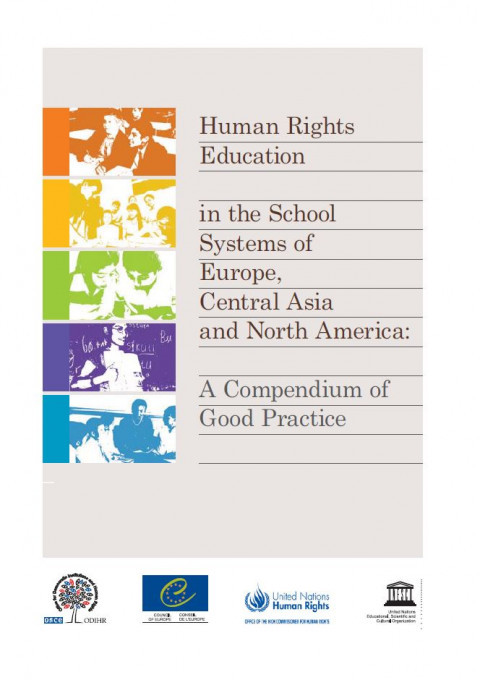 Образование в области прав человека в школьной системе Европы, Центральной Азии и Северной Америки: сборник примеров успешных практик Año de publicación: 2009 Autor corporativo: Council of Europe | Организация Объединенных Наций по вопросам образования, науки и культуры (UNESCO) | UN. Office of the United Nations High Commissioner for Human Rights (UN. OHCHR) | OSCE. Office for Democratic Institutions and Human Rights (ODIHR) Сборник примеров успешных практик «Образование в области прав человека в школьной системе Европы, Центральной Азии и Северной Америки» включает 101 пример успешных практик в сфере образования в области прав человека в начальной, средней школе и в педагогических учебных заведениях в регионе ОБСЕ, на который также распространяются полномочия ЮНЕСКО, УВКПЧ ООН и, частично, географический мандат СЕ.Настоящее издание состоит из пяти основных разделов:Раздел I. Законодательные акты, руководящие принципы и стандарты; Раздел II. Подходы и практики улучшения учебной атмосферы; Раздел III. Учебные пособия для преподавателей и учащихся; Раздел IV. Повышение квалификации преподавателей; Раздел V. Методы оценки.Образование в области прав человека определяют как образование, обучение и информирование, направленное на формирование всеобщей культуры прав человека. Комплексное образование в области прав человека дает не только знания о правах человека и действующих механизмах их защиты, но и навыки, необходимые для продвижения, защиты и реализации прав человека в повседневной жизни. Воспитание демократической гражданственности нацелено на осуществление образовательных практик и мероприятий, призванных помочь молодым людям и взрослым принимать активное участие в жизни общества, основанного на принципах демократии, а также осуществлять свои права и обязанности в обществе. Воспитание в духе взаимного уважения и понимания подчеркивает важность самоуважения, уважения других людей и улучшения отношений между людьми, представляющими различные культурные традиции.Настоящая книга задумана как средство поддержки качества обучения в этих областях, как стимул для лиц, ответственных за формирование политики в области образования (сотрудников министерств образования и местных школьных советов), директоров, учителей, преподавателей педагогических учебных заведений, преподавателей, специалистов неформальной сферы образования и всех других заинтересованных лиц, а также как инструмент, содействующий формированию сетей и обмену опытом между специалистами в сфере образования. L'éducation aux droits de l'homme dans les systèmes scolaires d'Europe, d'Asie centrale et en Amérique du Nord: un recueil de bonnes pratiques Año de publicación: 2009 Autor corporativo: Conseil de l'Europe | Organisation des Nations Unies pour l'éducation, la science et la culture (UNESCO) | UN. Office of the United Nations High Commissioner for Human Rights (UN. OHCHR) | OSCE. Office for Democratic Institutions and Human Rights (ODIHR) “L'Éducation aux Droits de l'Homme dans les systèmes scolaires de l'Europe, l'Asie centrale et en Amérique du Nord: Un Recueil de Bonnes Pratiques" est une compilation de 101 exemples de bonnes pratiques dans l'éducation aux droits de l'homme dans les écoles primaires, les écoles secondaires et les établissements de formation des enseignants de l'Organisation pour Sécurité et la Coopération dans la zone Europe (OSCE), qui est également couvert par l'Organisation des Nations Unies pour l'éducation, la science et la culture (UNESCO), le Bureau du Haut Commissariat des Nations Unies aux Droits de l'Homme (HCDH) et, en partie, la situation géographique mandat du Conseil de l'Europe (CoE). Le terme «éducation aux droits de l'homme» est souvent utilisé dans cette ressource dans un sens plus large, pour inclure également l'éducation à la citoyenneté démocratique et l'éducation pour le respect et la compréhension mutuelle, qui sont toutes basées sur les normes des droits humains internationalement convenus. Ces trois domaines sont considérés comme interconnectés et essentiel dans les systèmes éducatifs afin de préparer les jeunes à être des participants actifs, responsables et dans leur communautés, ainsi qu'aux niveaux national et mondial. L'éducation aux droits de l'homme a été défini comme l'éducation, la formation et de l'information visant à la construction d'une culture universelle des droits de l'homme. Une formation approfondie dans les droits de l'homme fournit non seulement des connaissances sur les droits humains et les mécanismes qui les protègent, mais confère également les compétences nécessaires pour promouvoir, défendre et appliquer les droits de l'homme dans la vie quotidienne. L'éducation à la citoyenneté démocratique met l'aCECnt sur les pratiques et les activités visant à aider les jeunes et les adultes à jouer un rôle actif dans la vie démocratique et à exercer leurs droits et responsabilités dans la société de l'éducation. L'éducation pour le respect et la compréhension mutuelle met en évidence le respect de soi, respect des autres, et l'amélioration des relations entre les gens de différentes traditions culturelles. Ce livre vise à soutenir l'enseignement de qualité dans ces domaines et d'inspirer les décideurs éducatifs (ceux qui travaillent dans les ministères de l'éducation et les conseils scolaires locaux) et les administrateurs, les enseignants, les formateurs d'enseignants, les éducateurs non formels et tous les autres acteurs intéressés, ainsi que pour faciliter la mise en réseau et l'échange d'expériences entre les professionnels de l'éducation. 塑造明天的教育:联合国可持续发展教育十年2012年报告,简写本 Año de publicación: 2012 Autor corporativo: 联合国教科文组织 (UNESCO) As the lead agency for the UN Decade of Education for Sustainable Development (DESD, 2005 – 2014), UNESCO is responsible for monitoring and evaluating progress during the DESD. UNESCO is publishing three reports during the DESD – in 2009, 2012 and 2014. This second report focuses specifically on processes and learning in the context of Education for Sustainable Development (ESD). What kinds of learning processes have emerged in the course of the DESD? What is the role of ESD in supporting them? What changes in ESD have occurred since the early years of the Decade? The report is informed by a broad consultation process that includes input from hundreds of policy makers, scholars and practitioners engaged in ESD around the world. Каким быть образованию завтрашнего дня Доклад 2012 года о проводимом ООН Десятилетии образования в интересах устойчивого развития Сокращенный вариант Año de publicación: 2013 Autor corporativo: Организация Объединенных Наций по вопросам образования, науки и культуры (UNESCO) As the lead agency for the UN Decade of Education for Sustainable Development (DESD, 2005 – 2014), UNESCO is responsible for monitoring and evaluating progress during the DESD. UNESCO is publishing three reports during the DESD – in 2009, 2012 and 2014. This second report focuses specifically on processes and learning in the context of Education for Sustainable Development (ESD). What kinds of learning processes have emerged in the course of the DESD? What is the role of ESD in supporting them? What changes in ESD have occurred since the early years of the Decade? The report is informed by a broad consultation process that includes input from hundreds of policy makers, scholars and practitioners engaged in ESD around the world. 내일의 교육을 그리다: 유엔 ‘지속가능발전교육 10년(DESD, 2005-2014)’의 선도기관인 유네스코가 발간하는 ‘지속가능한 세상을 위한’ DESD 모니터링 · 평가 시리즈의 두 번째 보고서 Año de publicación: 2013 Autor corporativo: 유네스코 As the lead agency for the UN Decade of Education for Sustainable Development (DESD, 2005 – 2014), UNESCO is responsible for monitoring and evaluating progress during the DESD. UNESCO is publishing three reports during the DESD – in 2009, 2012 and 2014. This second report focuses specifically on processes and learning in the context of Education for Sustainable Development (ESD). What kinds of learning processes have emerged in the course of the DESD? What is the role of ESD in supporting them? What changes in ESD have occurred since the early years of the Decade? The report is informed by a broad consultation process that includes input from hundreds of policy makers, scholars and practitioners engaged in ESD around the world. Connaissances pratiques: symbiose des programmes relatifs à l'enseignement des sciences, à l'éducation concernant l'environnement et à l'enseignement technique et professionnel Año de publicación: 2006 Autor: Saif R. Samady Autor corporativo: Organisation des Nations Unies pour l'éducation, la science et la culture (UNESCO) UNESCO’s work in science teaching began shortly after the Organization was established. After the Second World War, many schools in Europe were in great need of science equipment. To meet this need, the Organization sponsored the publication of a small volume entitled Suggestions for Science Teachers in Devastated Countries. The book was further developed to include a wide range of guidelines for simple equipment and science experiments and published in 1956 as the UNESCO Source Book for Science Teaching. Over the years, the Source Book was revised several times and translated into more than twenty-five languages. During five decades, the Organization promoted worldwide exchange of information and innovations in science education and assisted many Member States, especially the developing countries, in setting up science teacher training programmes, curriculum development centres, and projects for design and development of science equipment. Working knowledge: symbiosis of programmes in science teaching, environmental education, and technical and vocational education Año de publicación: 2006 Autor: Saif R. Samady Autor corporativo: UNESCO UNESCO’s work in science teaching began shortly after the Organization was established. After the Second World War, many schools in Europe were in great need of science equipment. To meet this need, the Organization sponsored the publication of a small volume entitled Suggestions for Science Teachers in Devastated Countries. The book was further developed to include a wide range of guidelines for simple equipment and science experiments and published in 1956 as the UNESCO Source Book for Science Teaching. Over the years, the Source Book was revised several times and translated into more than twenty-five languages. During five decades, the Organization promoted worldwide exchange of information and innovations in science education and assisted many Member States, especially the developing countries, in setting up science teacher training programmes, curriculum development centres, and projects for design and development of science equipment.