
Recursos
Exploren una amplia gama de recursos valiosos en GCED para profundizar su comprensión y promover su búsqueda, incidencia, enseñanza y aprendizaje.
950 resultados encontrados
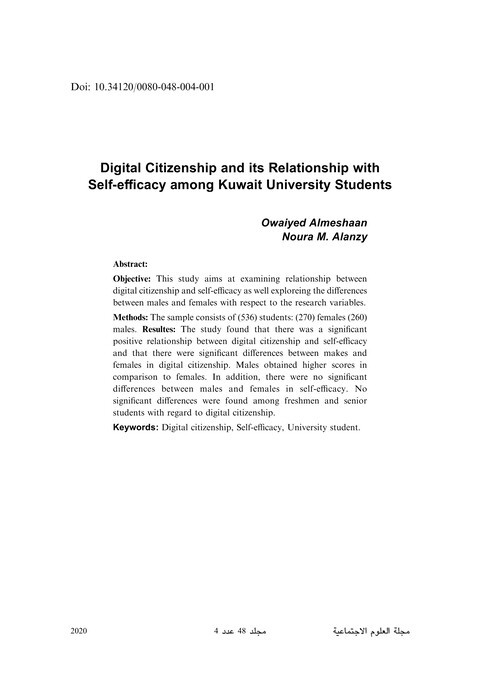 Digital Citizenship and Its Relationship With Self-Efficacy Among Kuwait University Students (Journal of Social Sciences; vol.48, no.4) Año de publicación: 2020 Autor: Owaiyed Almeshaan | Noura Alanzy Autor corporativo: Kuwait University This study aims at examining relationship between digital citizenship and self-efficacy as well exploring the differences between males and females with respect to the research variables.Methods: The sample consists of (536) students: (270) females (260) males. Results: The study found that there was a significant positive relationship between digital citizenship and self-efficacy and that there were significant differences between males and females in digital citizenship. Males obtained higher scores in comparison to females. In addition, there were no significant differences between males and females in self-efficacy. No significant differences were found among freshmen and senior students with regard to digital citizenship. المواطنة الرقمية وعلاقتها بالكفاءة الذاتية لدى طلاب جامعة الكويت وطالباتها (مجلة العلوم الاجتماعية ;no.4, vol.48) Año de publicación: 2020 Autor: Owaiyed Almeshaan | Noura Alanzy Autor corporativo: Kuwait University تهدف هذه الدراسة إلى فحص العلاقة بين المواطنة الرقمية والكفاءة الذاتية، والكشف عن الفروق بين الذكور والإناث في متغيرات الدراسة. المنهجية: تكونت عينة الدراسة من (536)؛ بواقع (266) من الذكور و(270) من الإناث. النتائج: كشفت نتائج الدراسة عن أنه توجد علاقة موجبة بين المواطنة الرقمية والكفاءة الذاتية، كما توجد فروق دالة إحصائياً بين الذكور والإناث في المواطنة الرقمية؛ إذ إن متوسط الذكور أعلى من متوسط الإناث، بينما لا توجد فروق بينهما في الكفاءة الذاتية. كما لا توجد فروق دالة إحصائياً بين الذكور والإناث وفقاً للكلية والمرحلة الدراسية.
  A Suggested Proposal for the Role of Universities in Developing Students’ Awareness of Digital Citizenship in Light of Requirements and Challenges of the Digital Age: A Case Study of Bisha University (Arts for Educational & Psychological Studies; vol.14, no.1) Año de publicación: 2022 Autor: Sheikha Abdullah Al-Briki Balabied Autor corporativo: Dhamar University The study aimed to measure the degree of students’ awareness of the digital citizenship at the University of Bisha, and to develop a proposed scenario in the light of the results of the study, which included a framework for activating the role of universities in developing their students' awareness of digital citizenship to meet the requirements and challenges of the digital age. The analytical descriptive method was used by conducting an exploratory study and designing a questionnaire to measure the degree of students' awareness of digital citizenship. The most prominent results were that the degree of students' awareness of digital citizenship was "very high" on the total digital citizenship awareness scale. There were no statistically significant differences between the average scores of males and females, nor between the average degrees of students of theoretical and practical colleges on the total digital citizenship awareness scale. تصور مقترح لدور الجامعات في تطوير وعي الطلبة بالمواطنة الرقمية في ضوء متطلبات العصر الرقمي وتحدياته جامعة بيشة أنموذجًا (مجلة الآداب للدراسات النفسية والتربوية; vol.14, no.1) Año de publicación: 2022 Autor: Sheikha Abdullah Al-Briki Balabied Autor corporativo: Dhamar University هدفت الدراسة إلى قياس درجة وعي طلبة الجامعة بالمواطنة الرقمية، ووضع تصور مقترح في ضوء نتائج الدراسة تضمن إطار عمل لتفعيل دور الجامعات في تنمية وعي الطلبة بالمواطنة الرقمية في ضوء متطلبات وتحديات العصر الرقمي. استُخدم المنهج الوصفي التحليلي من خلال تصميم استبانة لقياس درجة وعي الطلبة بالمواطنة الرقمية. ولتحقيق ذلك اتبعت الباحثة المنهج الوصفي التحليلي من خلال الدراسة الاستطلاعية وبناء استبانة لقياس درجة وعي الطلبة بالمواطنة الرقمية. وكانت أبرز النتائج أن درجة وعي الطلاب بالمواطنة الرقمية "مرتفعة جدًا"، بالإضافة إلى عدم وجود فروق ذات دلالة إحصائية بين متوسطات درجات الذكور والإناث، وكذلك بين متوسطات درجات طلاب الكليات النظرية والعملية على إجمالي مقياس الوعي بالمواطنة الرقمية.
  Do You Speak MIL?: Media and Information Literacy; A Handbook for Jordanian CSOs Año de publicación: 2020 Autor: Milica Pesic | Lucien Michael Steinberg | Anoud Al-Zou’bi Autor corporativo: Media Diversity Institute | UNESCO | UN. Office of Counter-Terrorism (UNOCT) This publication, “Do You Speak MIL?: Media and Information Literacy – A Handbook for Jordanian CSOs,” provides civil society organizations (CSOs) with practical tools to integrate Media and Information Literacy (MIL) into their training programs. Each chapter includes a technical introduction, thought-provoking questions, and real-life examples to guide trainers. Published in 2020, this handbook is a valuable resource for promoting MIL within Arab countries, intending to empower communities to navigate the evolving media landscape.
  Citizenship in the Digital Age: The Model of the Kingdom of Bahrain Año de publicación: 2017 Autor: ندى علي حسن بن شمس Autor corporativo: معهد البحرين للتنمية السياسية The research answers the following main question: What is the effectiveness of a proposed program based on the global network for developing citizenship values for students of the University of Bahrain in light of the requirements of the digital age? The main question of the research is divided into the following sub-questions: 1- What is the list of citizenship values required for a student at the University of Bahrain in light of the requirements of the digital age? 2- What is the image of the proposed program based on the global network (with dialogue activities - without the dialogue activities) to develop citizenship values for students of the University of Bahrain in light of the requirements of the digital age? 3 - What is the effectiveness of the proposed program based on the global network in its two forms (with dialogue activities - without the dialogue activities) to develop Citizenship values for a University of Bahrain student in light of the requirements of the digital age? المواطنة في العصر الرقمي: نموذج مملكة البحرين Año de publicación: 2017 Autor: ندى علي حسن بن شمس Autor corporativo: معهد البحرين للتنمية السياسية البحث يجيب عن التساؤل الرئيس التالي: ما فعالية برنامج مقترح قائم على الشبكة العالمية لتنمية قيم المواطنة لطالب جامعة البحرين في ضوء متطلبات العصر الرقمي؟ ويتفرع من التساؤل الرئيس للبحث التساؤلات الفرعية الآتية: 1 -ما قائمة قيم المواطنة اللازمة لطالب جامعة البحرين في ضوء متطلبات العصر الرقمي؟ 2 -ما صورة البرنامج المقترح القائم على الشبكة العالمية) بالأنشطة الحوارية – بدون الأنشطة الحوارية( لتنمية قيم المواطنة لطالب جامعة البحرين في ضوء متطلبات العصر الرقمي؟ 3 –ما فعالية البرنامج المقترح القائم على الشبكة العالمية بصورتيه )بالأنشطة الحوارية – بدون الأنشطة الحوارية( لتنمية قيم المواطنة لطالب جامعة البحرين في ضوء متطلبات العصر الرقمي؟
  Human Resources Development Journal Vol. 6, no. 2, 2015 Año de publicación: 2015 Autor corporativo: University Mohamed Lamine Debaghine - Setif2 A set of scientific papers for a number of researchers. These papers are published in the Human Resources Development Magazine, Issue 2, 2015. All these papers focus on citizenship, and they use different methodologies. مجلة تنمية الموارد البشرية مج. 6، ع. 2، 2015 Año de publicación: 2015 Autor corporativo: University Mohamed Lamine Debaghine - Setif2 مجموعة من الأوراق العلمية لعدد من الباحثين. هذه الاوراق منشورة في مجلة تنمية الموارد البشرية، العدد 2، 2015. هذه الاوراق جميعها تركز على المواطنة، وتستخدم منهجيات مختلفة.
 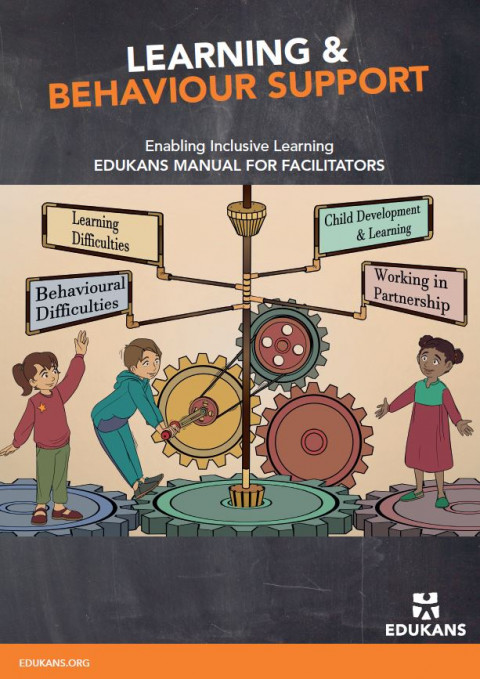 Learning & Behaviour Support: Enabling Inclusive Learning; Edukans Manual for Facilitators Año de publicación: 2021 Autor: Hendrien Maat | Judith Pietersma | Aniek Santema Autor corporativo: Edukans This Edukans training manual is intended as a guide to train people in how to respond to the needs of students with learning and behavioural problems, such as dyslexia, dyscalculia, lack of motivation, aggression and anxiety. Troubled behaviour is often a child's way of communicationg distress and, in these cases, the right kind of response can make all the difference. Behavioural and learning difficulites are well-recognized problems all over the world, and inclusive learning is on top of the educational agenda. When a person has more knowledge about learning & behavioural difficulties, he or she can understand the situation that the child is facing and offer suitable suport.This manual aims to help programme managers and trainers to give training to their staff in: understanding the diverse needs of vulnerable students, the origins of learning and behavioural problems, their implications, and a variety of effective support strategies and interventions. The manual is meant to be used by master trainers who can further train teachers, social workers, NGO staff, mentors, relief workers, government officials, mental health workers, and counselors.