
Recursos
Exploren una amplia gama de recursos valiosos en GCED para profundizar su comprensión y promover su búsqueda, incidencia, enseñanza y aprendizaje.
3,451 resultados encontrados
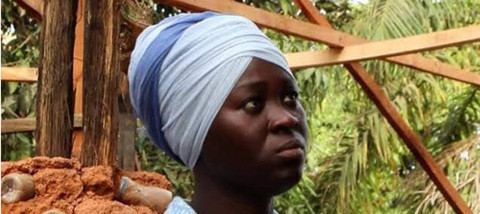 《专题报道》互联网把人口贩运受害者“救出火坑” ——一位幸存者的讲述 Año de publicación: 2022 Autor corporativo: 联合国 本专题报道中,一位曾经被贩卖的冈比亚女士讲述了自己被贩卖以及获救的经历,揭露人口贩卖问题的普遍性与严重性,并谈及互联网如何可能帮助受害者摆脱人口贩运的厄境。
  The Transforming Education Summit: A Toolkit for Education Unions Año de publicación: 2022 Autor corporativo: Education International (EI) For the first time ever, the Heads of State of the world are meeting to discuss progress in education. Convened by the UN Secretary General, the Transforming Education Summit (TES) is taking place on 19 September 2022 in New York. It is a very important opportunity for us as education unions to make our voices heard.The Summit is a crisis response: it aims to reverse the downward trends that we currently see in education, with deepened and exacerbated inequity, and cuts to education budgets. Not only is the world off track to achieve Sustainable Development Goal 4 (SDG 4), the COVID-19 pandemic has wiped out 20 years of education gains. This is why the UN Secretary-General is calling for urgent action.The Summit is the biggest international education event since the adoption of SDG4 and a significant political opportunity for all EI member organisations. There are multiple ways that education unions can engage in the lead up to the Summit.This toolkit includes EI’s key policy messages for the Summit and aims to support EI member organisations in their advocacy efforts to ensure the Summit has concrete, tangible outcomes that advance teachers’ status and rights and the fulfilment of the right to education for all.
  Delegates Handbook 2022: Seventy-seventh Session of the United Nations General Assembly Año de publicación: 2022 Autor corporativo: UN. Department for General Assembly and Conference Management (UN. DGACM) The Protocol and Liaison Service contributes to the Delegates’ Handbook, a booklet that contains information of a general nature about United Nations Headquarters and is applicable throughout the current session. Suggestions for changes to the booklet should be addressed to the General Assembly Affairs Branch (room S-30FW; email: gaab<at>un.org). This booklet is also available on the internet at the United Nations Delegates website as well as the General Assembly website, under Resources.
 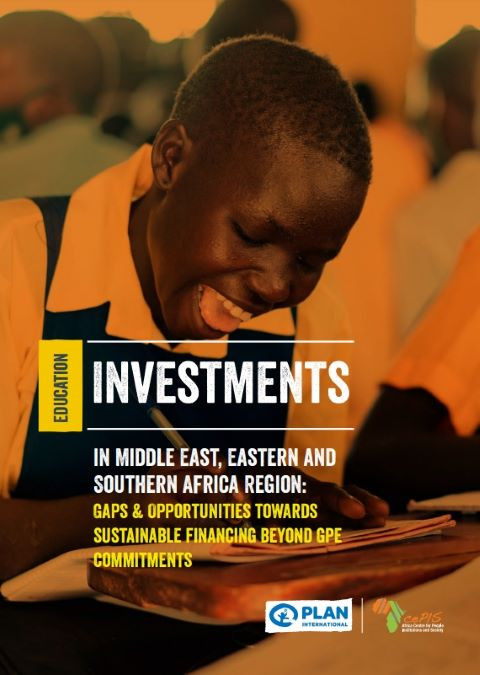 Education Investments in Middle East, Eastern and Southern Africa: Gaps & Opportunities Towards Sustainable Financing Beyond GPE Commitments Año de publicación: 2022 Autor corporativo: Plan International To achieve the goals of the global and continental agendas of repositioning access, equity, quality education and skills development as key drivers of inclusive growth and sustainable development, African governments must provide a level of predictable and sustainable investment in education. With these strategic investments, African countries can change the status quo, accelerate the pace of catching up with the developed countries and be able to compete in an increasingly technology and knowledge-based world where skills have become the “global currency of the 21st century”. Plan International in Middle East, Eastern and Southern Africa commissioned a study to assess the extent to which the Education Sector budget is adequate, gender-responsive and inclusive and to analyse education budget trends between 2019 and 2021. The focus was to generate concrete evidence regarding trends in education sector budget allocations and expenditure. Furthermore, due to the recent pandemic, the study aimed to compare current and previous allocations to detect trends/patterns in allocations and any reallocations due to COVID-19. Specifically, the study sought to: Analyse allocations (and expenditure) to the education sector with a particular focus on initiatives aimed at supporting the provision of gender-responsive and disability-inclusive education in line with the country policies; Assess the efficiency of resource allocation and use against planned expenditure; and Recommend effective strategies for CSOs and citizens to advocate for education budget increase to or above 20% of the national budget and 6% of GDP. The study focused on 10 countries in the region – Kenya, Uganda, Zambia, Malawi, Zimbabwe, South Sudan, Tanzania, Egypt, Somalia and Rwanda. With a multi-pronged research process of budget tracking and analysis, policy analysis, political economy analysis and varied data collection methods – the research findings and recommendations are ready for wider dissemination and use.
  Address by Audrey Azoulay, Director-General of UNESCO, on the occasion of ceremony launching UNESCO's contribution to the 70th anniversary of the UDHR Año de publicación: 2017 Autor corporativo: UNESCO. Director-General, 2009-2017 (Bokova, I.G.) This address was delivered by Audrey Azoulay, Director-General of UNESCO, on the occasion of ceremony launching UNESCO's contribution to the 70th anniversary of the UDHR; UNESCO, 11 December 2017.
  Message from Ms Audrey Azoulay, Director-General of UNESCO, on the occasion of International Day of Commemoration in Memory of the Victims of the Holocaust Año de publicación: 2018 Autor corporativo: UNESCO. Director-General, 2009-2017 (Bokova, I.G.) This message was delivered by Audrey Azoulay, Director-General of UNESCO, on the occasion of International Day of Commemoration in Memory of the Victims of the Holocaust, on 27 January 2018. Message de la Directrice générale de l'UNESCO, Audrey Azoulay, à l'occasion de la Journée internationale dédiée à la mémoire des victimes de l'Holocauste Año de publicación: 2018 Autor corporativo: UNESCO. Director-General, 2009-2017 (Bokova, I.G.) Ce message a été livré par la Directrice générale de l'UNESCO, Audrey Azoulay, à l'occasion de la Journée internationale dédiée à la mémoire des victimes de l'Holocauste, 27 janvier 2018.
  الأطفال وتنمية التسامح Año de publicación: 2011 Autor: حسونة، أمل محمد Autor corporativo: Kuwait Society for the Advancement of Arab Children (KSAAC) تناولت هذه الورقة موضوع ثقافة السلام وتنمية التسامح لدى الأطفال انطلاقا من فكرة أن هذه الثقافة تكتسب من خلال التنشئة الاجتماعية عبر مراحل النمو المختلفة. وقد تمّ التطرق إلى مجموعة من القيم والمفاهيم والمهارات التي تميز هذه الثقافة وتعطيها طابعها الخاص. كما تمّ التركيز على أهمية إكساب الأطفال في سن مبكر ثقافة السلام التي تعتبر حلا وقائيا يحميهم من الصراعات المستقبلية ويكسبهم مهارات التعايش الإيجابي في المجتمع ويجنبهم العنف والعدوان. ومن جهة أخرى تمّ التركيز على أهمية التسامح بحيث يجب على السياسات والبرامج التربوية الإسهام في تنمية التفاهم، والتضامن، والتسامح بين الأفراد. كل ذلك بهدف تكوين مواطنين متضامنين ومسؤولين، ومنفتحين على الثقافات الأخرى، وقادرين على اتقاء النزاعات أو حلّها بوسائل سلمية. Children and Developing Tolerance Año de publicación: 2011 Autor: حسونة، أمل محمد Autor corporativo: Kuwait Society for the Advancement of Arab Children (KSAAC) This paper dealt with the issue of peace education and the nurturing of toleration among children proceeding from the idea that this culture is acquired through social nurturing along the different stages of development. It covered a group of values, concepts and skills that distinguish this culture and give it it’s special character.The paper also focuses on the importance of children acquiring peace culture at an early age since it is considered a preventive solution that protects them from future conflicts and provides them with positive coexistence skills in society and saves them from violence and aggression. On the other side, the paper concentrates on the importance of tolerance which makes it must for education policies and programs to contribute to developing understanding, solidarity and toleration among individuals. All of this aims at creating responsible and interdependent citizens, open to other cultures and capable of preventing conflicts or solving them peacefully.
 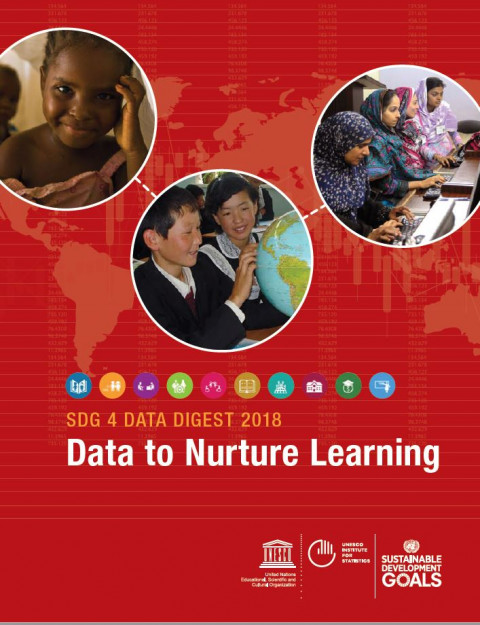 SDG 4 Data Digest 2018: Data to Nurture Learning Año de publicación: 2018 Autor corporativo: UNESCO Institute for Statistics (UIS) The world is facing a crisis of learning, with many children leaving school without the basic skills they need for a prosperous and productive adult life. Two-thirds of the estimated 617 million children and adolescents who cannot read a simple sentence or manage a basic mathematics calculation are in the classroom. Too many are waiting for a quality education that never comes.As the 2018 SDG 4 Data Digest shows, it is not enough to hope that they will stay in school and somehow acquire skills in reading and mathematics. It is critical to monitor those skills as children progress through school. That requires comparable data, over time, to ensure that children – and the education systems that serve them – are on track.Given the critical importance of learning for the achievement of all the Sustainable Development Goals (SDGs), from poverty reduction to peaceful societies, this year’s edition of the SDG 4 Data Digest is dedicated to the theme of learning outcomes. It showcases the most comprehensive and up-to-date compilation of work to inform the learning indicators of SDG 4.The Digest discusses learning evidence on early child development, mathematics and reading skills among school-aged children, and digital and work-related skills among youth and adults. It highlights the conceptual frameworks and tools developed by leading authors and institutions to understand, measure, monitor and support learning for all. It also considers the implications of reporting for SDG 4.