
Recursos
Exploren una amplia gama de recursos valiosos en GCED para profundizar su comprensión y promover su búsqueda, incidencia, enseñanza y aprendizaje.
1,405 resultados encontrados
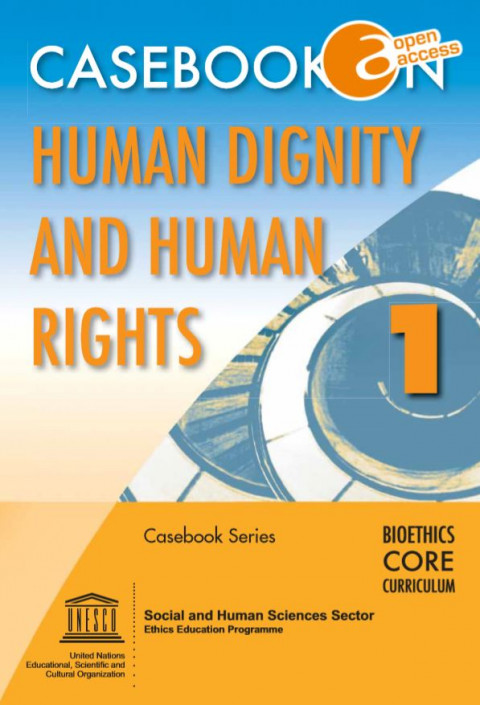 Casebook on human dignity and human rights Año de publicación: 2011 Autor corporativo: UNESCO Article 3 of the Declaration reads as follows:1. Human dignity, human rights and fundamental freedoms are to be fully respected.2. The interests and welfare of the individual should have priority over the sole interest of science or society
 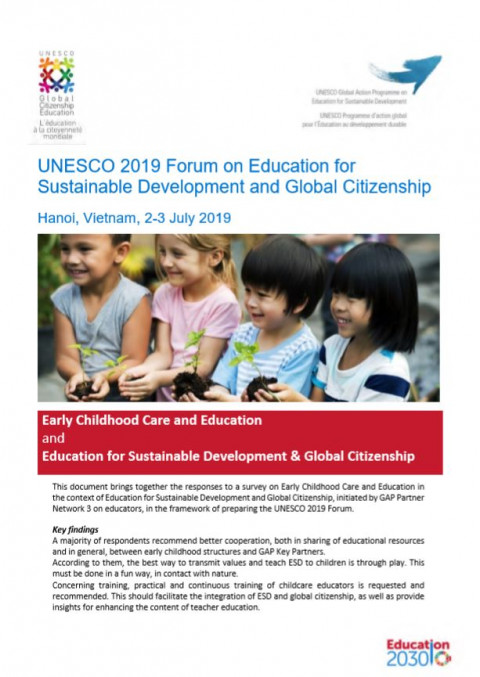 Early childhood care and education and education for sustainable development & global citizenship Año de publicación: 2019 Autor corporativo: UNESCO This document brings together the responses to a survey on Early Childhood Care and Education in the context of Education for Sustainable Development and Global Citizenship, initiated by GAP Partner Network 3 on educators, in the framework of preparing the UNESCO 2019 Forum. Key findings A majority of respondents recommend better cooperation, both in sharing of educational resources and in general, between early childhood structures and GAP Key Partners. According to them, the best way to transmit values and teach ESD to children is through play. This must be done in a fun way, in contact with nature. Concerning training, practical and continuous training of childcare educators is requested and recommended. This should facilitate the integration of ESD and global citizenship, as well as provide insights for enhancing the content of teacher education.
  Bringing it out in the open: Monitoring school violence based on sexual orientation, gender identity or gender expression in national and international surveys Año de publicación: 2019 Autor corporativo: UNESCO This technical brief has been developed by the United Nations Educational, Scientific and Cultural Organization (UNESCO) to strengthen the routine monitoring of school violence that is based on sexual orientation, gender identity or gender expression (SOGIE). It is informed by best practice from large institutional surveys that have been successfully conducted at the international or national level. The Brief provides recommendations on: • Questions to capture data on the sexual orientation or gender identity of students.• Questions to capture data on school violence that is specifically based on SOGIE. The Brief also gives guidance on: • The challenges in collecting data on school violence based on SOGIE• Identifying and fulfilling indicators on school violence based on SOGIE
 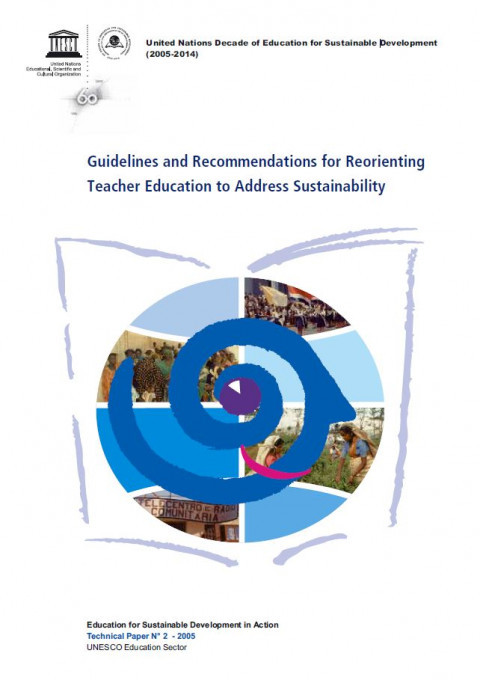 Руководство и рекомендации по переориентации педагогического образования на решение задач устойчивого развития Año de publicación: 2005 Autor corporativo: Организация Объединенных Наций по вопросам образования, науки и культуры (UNESCO) Члены международной сети разработали рекомендации, касающиеся переориентации педагогического образования на решение задач устойчивого развития. Эти рекомендации основаны на результатах проведенных экспериментов и большой работы, проделанной специалистами в области педагогического образования. Рекомендации предназначены для учреждений министерского и национального уровня, а также для местных учреждений. Они касаются учебных планов, педагогики, политики, практической деятельности, программ, вознаграждений, научных исследований, информации и компьютерной технологии, партнерских отношений, создания сетей, коммуникации и тд.
 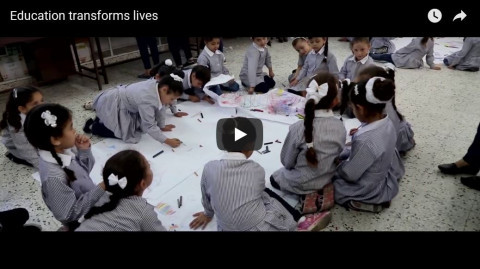 [Video] Education Transforms Lives Año de publicación: 2017 Autor corporativo: UNESCO Education transforms lives every day and in every corner of society. This video explores the power of education and UNESCO’s role in leading and coordinating the Education 2030 Agenda, which is part of a global movement to eradicate poverty through 17 Sustainable Development Goals by 2030.Education is the right of every woman, man and child. Together, we are shaping the global citizens of tomorrow, empowered on the path of education to build a more sustainable future.UNESCO's campaign "Education transforms lives" supports the effort to build peace in the minds of men and women. [Видео] Образование меняет жизни Año de publicación: 2017 Autor corporativo: Организация Объединенных Наций по вопросам образования, науки и культуры (UNESCO) Образование преображает жизнь людей каждый день во всех слоях общества. Ролик повествует о важности образования и роли ЮНЕСКО в ведении и координации Повестки дня «Образование-2030», которая является частью глобального движения для искоренения бедности посредством достижения 17 Целей устойчивого развития до 2030 года.Каждая женщина, каждый мужчина и каждый ребенок имеют право на образование. Вместе мы создаем мировых сограждан завтрашнего дня и даем им силу образования для построения более устойчивого будущего.Кампания ЮНЕСКО "Образование преображает жизнь людей" направлена на то, чтобы нести мир в сознание мужчин и женщин.
  UNESCO, UNFPA & UN Women Joint Programme: on Empowering Adolescent Girls and Young Women through Education Año de publicación: 2019 Autor corporativo: UNESCO | United Nations Population Fund (UNFPA) The Joint Programme on Empowering Adolescent Girls and Young Women through Education leverages the collective expertise, experience and networks of three United Nations agencies – UNESCO, UNFPA and UN Women.It aims to empower adolescent girls and young women aged 10 to 24 to make successful and healthy transitions into adulthood, in and through quality education.Taking a lifecycle perspective and a holistic approach, the Joint Programme strengthens the links between education, health and gender equality.
 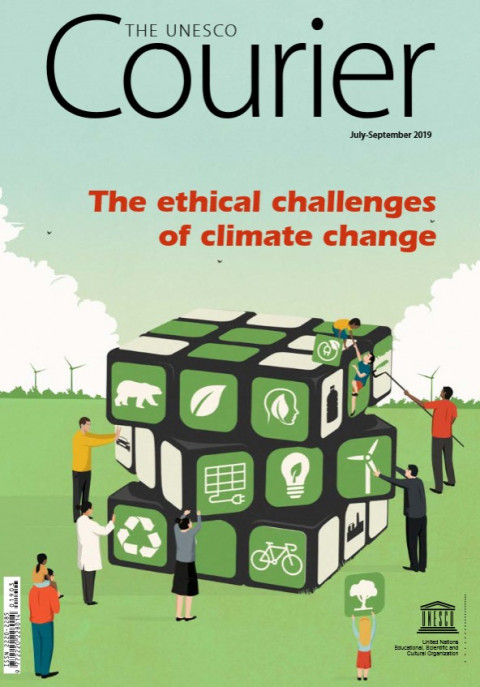 Cambio climático y desafíos éticos (El Correo de la UNESCO 3, July-September 2019) Año de publicación: 2019 Autor corporativo: UNESCO El cambio climático no solo pone en peligro nuestros ecosistemas; también quebranta los cimientos de nuestros derechos fundamentales, agrava la desigualdad y genera nuevas injusticias. La adaptación al cambio climático y la atenuación de sus efectos no es únicamente un asunto de conocimientos científicos y voluntad política, sino que exige además una perspectiva amplia sobre una situación compleja. Con el fin de ayudar a los Estados y demás entidades pertinentes en la toma de las decisiones apropiadas y la ejecución de políticas eficaces en materia de desarrollo sostenible, adaptación al cambio climático y mitigación de sus consecuencias adversas, la UNESCO aprobó en noviembre de 2017 una Declaración de principios éticos en relación con el cambio climático.La ética determina la esencia de todo compromiso. Su capacidad de movilización permite orientar la acción, establecer arbitrajes, decidir entre intereses contradictorios y fijar prioridades. La ética facilita la articulación de la teoría con la práctica, de los principios generales con la voluntad política, y de la toma de conciencia de ámbito mundial con la aplicación de medidas a escala local.
 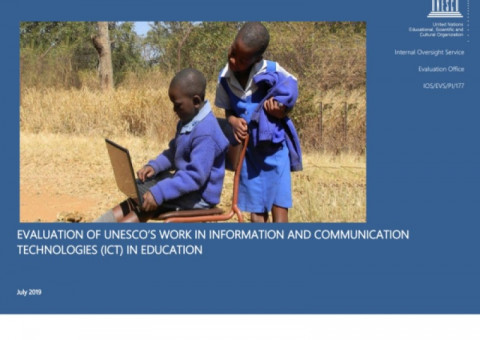 Evaluation of UNESCO's work in information and communication technologies (ICT) in education Año de publicación: 2019 Autor: Seán Ó Siochru and Graham Attwell Autor corporativo: UNESCO ICT in Education is a fast-growing area globally that offers many strategic opportunities. As the leader and coordinator of the SDG 4 – Education 2030 with the aim to “Ensure inclusive and equitable quality education and promote lifelong learning opportunities for all”, UNESCO has the mandate and expertise needed to strategically position itself as a world leader in this field. UNESCO’s work in ICT in Education aims at enhancing the quality and relevance of learning and at strengthening inclusion. While technology can facilitate wider access to education and bridge learning divides, can advance gender equality and inclusion as well as digital skills development, the rapidly changing technologies and work processes require the development of new pedagogies, both for the use of ICT for teaching and learning in the classroom and through open access and distance learning. Compared to other players, UNESCO leverages its comparative strengths in its ICT in Education interventions - especially its impartiality, convening power, and policy expertise - through an inclusive and humanistic approach to achieving quality education in coherence with Sustainable Development Agenda 2030. Its expertise across all levels of Education and its multidisciplinary potential of working across its Programme Sectors are also considered among UNESCO’s specific strengths. The evaluation revealed that UNESCO achieved important results, at the level of the learning environment, at the policy level and in institutional capacity building, but it also showed that UNESCO still needs to strengthen its positioning and visibility within the wider landscape of ICT in Education. For example, UNESCO has to continue positioning itself for producing forward-looking knowledge on ICT in Education and as a laboratory of ideas for future-oriented thinking. While the evaluation came across various specific interventions successfully addressing the needs of disadvantaged groups, the evaluation found that considerations of inclusion and gender equality were not consistently mainstreamed into policy-related and capacity building interventions. Other challenges are mainly linked to the current dispersion of resources and fragmentation of expertise across different entities within the Organization, which also leads to reduced visibility. While the key entities active in this area recognize that they are working within a common theme, collaboration and coordination still needs to be improved. The strategic measures proposed by the evaluation towards an overall organizational framework for ICT in Education aim at establishing an enabling environment for inter- and multidisciplinary approaches and greater coherence and collaboration. The ethical challenges of climate change (The UNESCO Courier no. 3, July-September 2019) Año de publicación: 2019 Autor corporativo: UNESCO Climate change not only threatens our ecosystems, it undermines the foundation of our fundamental rights, deepens inequalities and creates new forms of injustice. Adapting to climate change and trying to mitigate its impacts are not just a matter of scientific knowledge and political will; they also demand a broader view of a complex situation. In order to help Member States and other stakeholders to make appropriate decisions and implement effective policies for sustainable development, adaptation to climate change and the mitigation of its negative effects, UNESCO adopted a Declaration of Ethical Principles in relation to Climate Change in November 2017.Ethics constitute the substantial core of any commitment. As a mobilizing force, ethics can steer action, facilitate arbitration, resolve conflicting interests, and establish priorities. Ethics have the capacity to connect theory with practice, general principles with political will, and global awareness with local actions.