
Recursos
Exploren una amplia gama de recursos valiosos en GCED para profundizar su comprensión y promover su búsqueda, incidencia, enseñanza y aprendizaje.
9 resultados encontrados
 Media Literacy at Your Library: Learning and Prototyping Report Año de publicación: 2018 Autor corporativo: American Library Association (ALA) Media Literacy at Your Library was a project of the American Library Association (ALA) in collaboration with the Center for News Literacy at Stony Brook University (CNL), supported by the John S. and James L. Knight Foundation, the Democracy Fund, and the Rita Allen Foundation as part of the Knight Prototype Fund.Through this project, ALA sought to address a critical need in the field for adult media literacy education, with a focus on news literacy. The goal of the prototype project was to develop media literacy training and complementary resources designed to prepare public library professionals to educate their adult patrons to be informed media consumers.Following a one-day training led by CNL, teams from five public libraries took on the challenges of creating innovative media literacy programs serving their distinct communities. With the goal of making the CNL news literacy curriculum more broadly accessible to the library field, the teams also offered feedback on a series of online trainings based on the in-person training they attended. These five library teams guided and informed ALA and CNL’s understanding and development of prototype resources over the course of the project.
 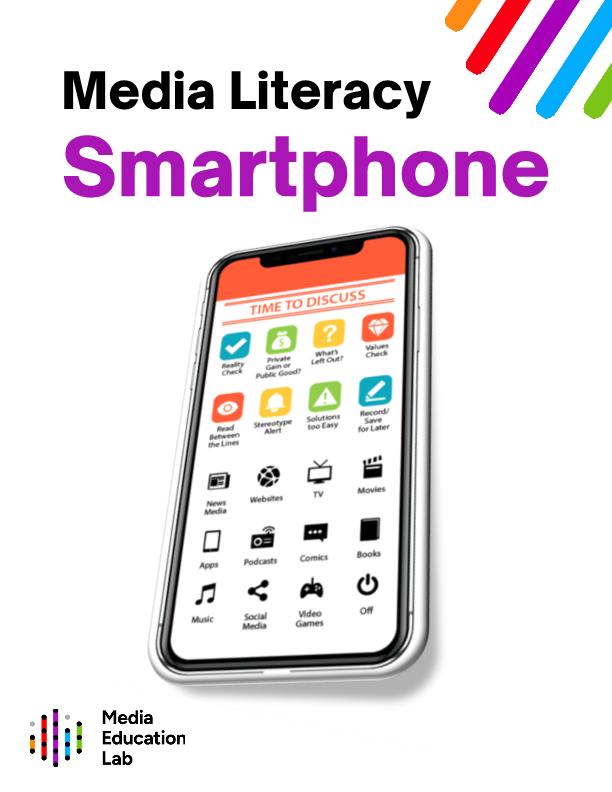 Media Literacy Smartphone Año de publicación: 2020 Autor: Renee Hobbs | Pam Steager Autor corporativo: Media Education Lab Learn how to use the Media Literacy Smartphone with learners of all ages! Download the free Learning Guide to bring the power of media literacy analysis to your learners!These easy-to-use cards, shaped exactly in the size of a smartphone, are available to educators for classroom use. You can use these simple paper cards to introduce a structured approach that helps students learn to critically analyze any media text --- web sites, books, advertising, news, TV shows, movies, video games, magazines and music. One side of the smartphone displays the various "apps" for analyzing a media text and the other side displays the "five critical questions" of media literacy developed by Renee Hobbs.Pair the smart phone with the LOVE IT OR HATE IT cards for a dynamic and fun learning experience.
 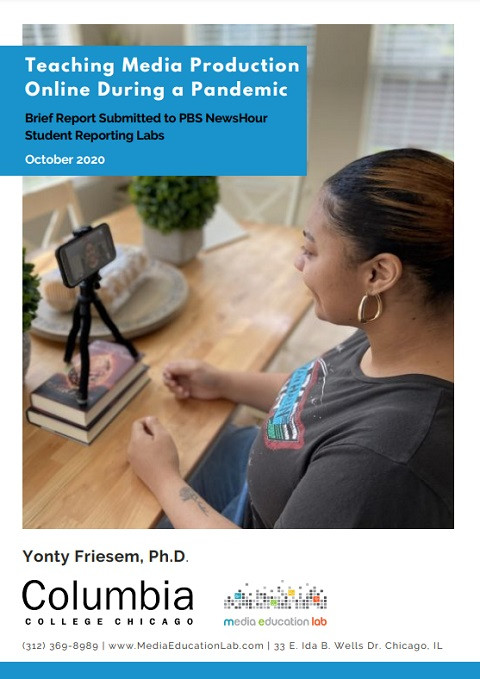 Teaching Media Production Online During a Pandemic: Brief Report Submitted to PBS NewsHour Student Reporting Labs Año de publicación: 2020 Autor: Yonty Friesem Autor corporativo: Media Education Lab How are media production teachers coping with remote video production with students?Starting in mid-March, US schools moved to remote instruction due to COVID-19 pandemic. Media production teachers had to shift their teaching to online without the possibility to use their high-end equipment in school. This report showcase the findings from Dr. Yonty Friesem’s research with media teachers who used the curriculum of PBS NewsHour Student Reporting Lab as they adapt to online and remote instruction. Dr. Friesem shared the report with PBS NewsHour Student Reporting Lab and the audience of the webinar.
 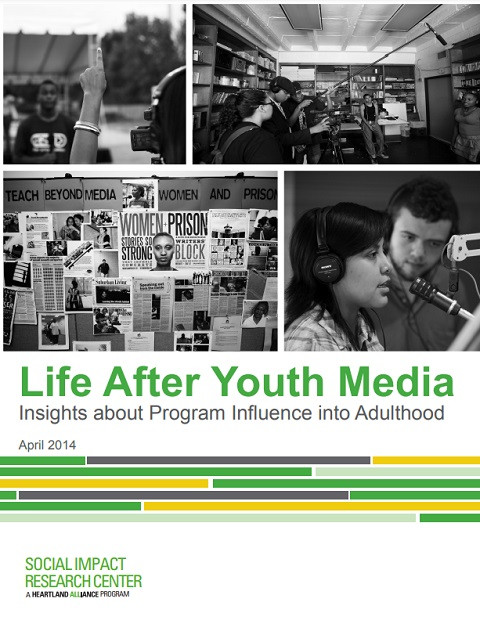 Life After Youth Media: Insights About Program Influence Into Adulthood Año de publicación: 2014 Autor: Suniya Farooqui | Amy Terpstra Autor corporativo: Social IMPACT Research Center * Do the skills, attitudes, and behaviors imparted in youth programs "stick" into adulthood? * If they do, how do they manifest in career, education, and life decisions? * How do the skills, attitudes, and behaviors that youth programs try to impart differ based on program intensity or levels of engagement? * Do these elements look different for people who went through youth media programs versus people who went through other types of youth programs? These are common questions that youth program providers, funders, public officials, and other leading thinkers regularly wrestle with. This report tells the story of a group in Chicago committed to providing quality youth media programming in the city and how, through a collective evaluation, they were able to begin to answer these critical questions.
 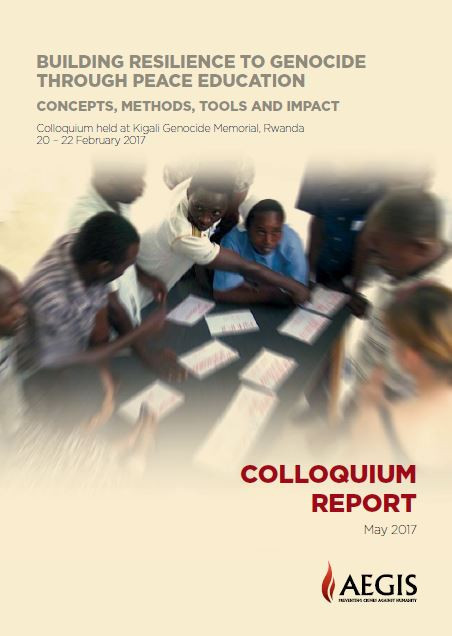 Colloquium Report: Building Resilience to Genocide through Peace Education: Concepts, Methods, Tools and Impact Año de publicación: 2017 Autor: Jonathan Bower, Mariana Goetz Autor corporativo: Aegis Trust A three-day Colloquium in Kigali in February brought together academics and practitioners in and around the field of peace education to share concepts, methods and means of measuring impact, contributing to a stronger evidence base for the effectiveness of peace education. Three interesting takeaways from the Colloquium: 1. Building resilience against genocide requires critical thinking about the process of identity-based violence and its reversal.2. The content of peace education programmes matters: interactive role-play type activities have been shown to have a longer lasting impact.3. Unhealed wounds need to be addressed to prevent a repeat of violence; psychosocial support must accompany peace education to reduce anxiety, which can be an obstacle when accessing empathy. A major achievement resulting from the consortium’s advocacy has been that the Government of Rwanda through the Ministry of Education has integrated Peace and Values education into the school curriculum. In a new phase of work Aegis is now supporting the implementation of the revised national curriculum that has integrated peace and values education (2016-19).
  Critical Media Literacy and Popular Culture in ELA Classrooms Año de publicación: 2021 Autor: Jamila Lyiscott | Nicole Mirra | Antero Garcia Autor corporativo: National Council of Teachers of English (NCTE) This publication explores key issues on the Media Literacy impacting literacy educators and their students and articulate student-centered policy recommendations.
  Racial Literacy Año de publicación: 2021 Autor: Yolanda Sealey-Ruiz Autor corporativo: National Council of Teachers of English (NCTE) This paper gives a clear definition of the racial literacy connected to the concepts of democracy and equity and presents racial literacy development model for teaching and learning.
 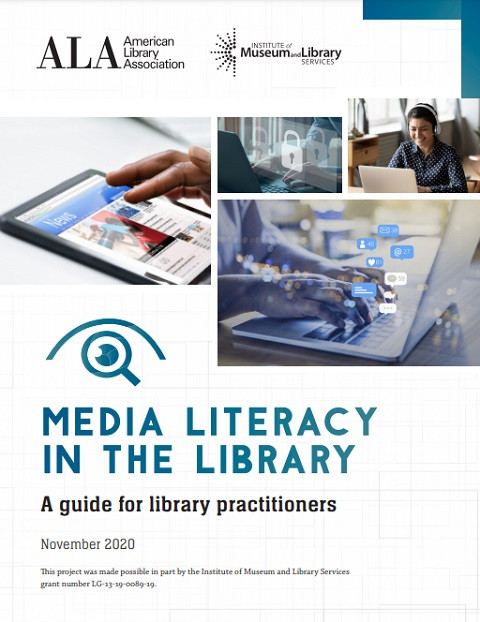 Media Literacy in the Library: A Guide for Library Practitioners Año de publicación: 2020 Autor corporativo: American Library Association (ALA) | Institute of Museum and Library Services As information providers and hubs for lifelong learning, libraries have always been resources for helping communities develop media literacy skills. Now, in the midst of a global pandemic, and in an age when we increasingly rely on digital media for information and communication, these critical thinking skills are more important than ever. The American Library Association (ALA), working with talented thought leaders across the library and media literacy sectors, has created Media Literacy in the Library: A Guide for Library Practitioners to help library workers prepare for day-to-day interactions like the imagined reference desk one above.In this guide, we offer resources and ideas to plan programs and activities to teach media literacy skills to adults and also to integrate these skills into programming you already offer at your library. This guide has been created for out-of-school adult audiences, who library workers will generally meet in a public library context.
 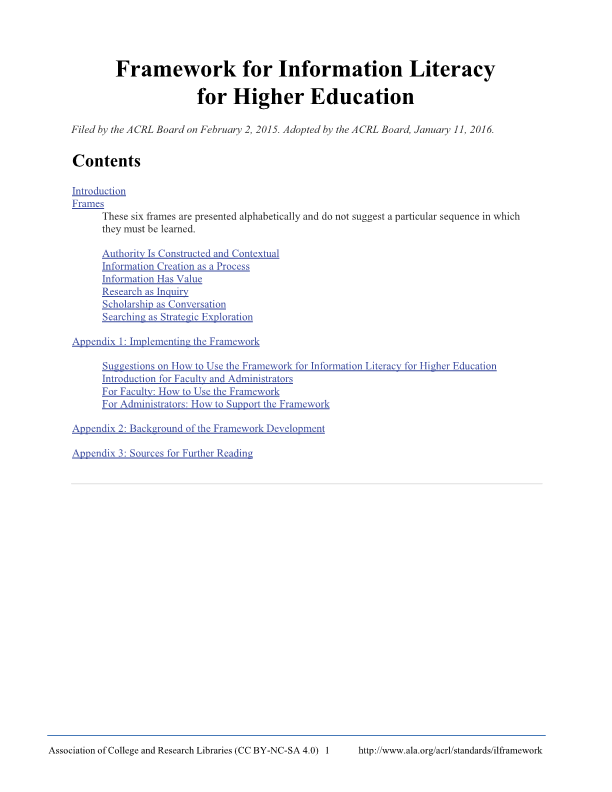 Framework for Information Literacy for Higher Education Año de publicación: 2015 Autor corporativo: Association of College and Research Libraries (ACRL) Information literacy is the set of integrated abilities encompassing the reflective discovery of information, the understanding of how information is produced and valued, and the use of information in creating new knowledge and participating ethically in communities of learning. This Framework sets forth these information literacy concepts and describes how librarians as information professionals can facilitate the development of information literacy by postsecondary students.