
Recursos
Exploren una amplia gama de recursos valiosos en GCED para profundizar su comprensión y promover su búsqueda, incidencia, enseñanza y aprendizaje.
1,471 resultados encontrados
 MDG #2: Education Año de publicación: 2014 Autor corporativo: United Nations (UN) Malala Yousafzai was shot and almost killed by Taliban militants in Pakistan on her way home from school, yet her survival only made her a greater global advocate for universal education.
 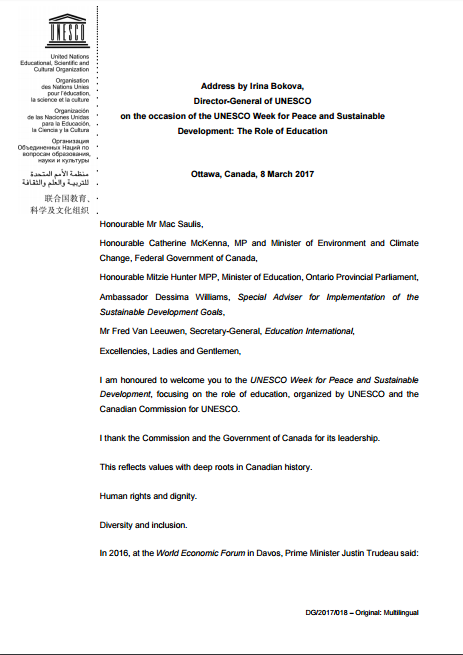 Address by Irina Bokova, Director-General of UNESCO, on the occasion of the UNESCO Week for Peace and Sustainable Development: The Role of Education; Ottawa, Canada, 8 March 2017 Año de publicación: 2017 Autor corporativo: UNESCO. Director-General, 2009-2017 (Bokova, I.G.) This address was presented by Irina Bokova, Director-General of UNESCO on the occasion of the UNESCO Week for Peace and Sustainable Development. She highlights on the role of education.
 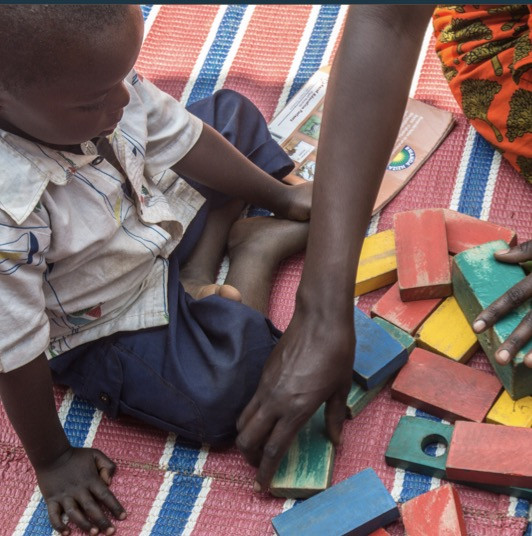 Promoting Climate-Sensitive Early Childhood Care and Education in Emergencies Año de publicación: 2023 Autor corporativo: Inter-agency Network for Education in Emergencies (INEE) This brief addresses a gap in climate change and education literature: young children who are affected by crises. Climate mitigation and adaptation efforts often exclude early childhood care and education (ECCE), especially in crises and emergencies. Therefore, the brief outlines multisectoral ECCE interventions that can serve as solutions to broader climate change mitigation and adaptation goals. These interventions look at long-term solutions that reduce children’s exposure to climate change risks. The aim of these long-term solutions is to create new climate-adapted ways of thinking, being, and doing by focusing on care – for each other and for the earth – and by building climate resilience among children and their supporting care systems. Promouvoir l’éducation et la protection de la petite enfance en situations d’urgence sensibles au climat Año de publicación: 2023 Autor corporativo: Inter-agency Network for Education in Emergencies (INEE) Ce document est destiné au secteur de l’éducation en situations d’urgence, mais il est pertinent pour toutes celles et ceux qui s’intéressent aux questions relatives aux enfants, car le changement climatique affecte le développement de l’enfant dans tous les contextes. Les approches présentées dans ce document peuvent aider les systèmes éducatifs dans des contextes non urgents à être mieux préparés et résilients face au climat. C’est pourquoi ce document décrit les interventions multisectorielles en matière d’EPPE qui peuvent servir de solutions à des objectifs plus larges d’atténuation du changement climatique et d’adaptation au changement climatique. Ces actions visent à trouver des solutions à long terme pour réduire l’exposition des enfants aux risques liés au changement climatique. L’objectif de ces solutions à long terme est de créer de nouvelles façons de penser, d’être et d’agir adaptées au climat, en se concentrant sur l’attention portée aux autres et à la Terre, et en renforçant la résilience climatique des enfants et des systèmes de prise en charge qui les soutiennent. تعزيز الرعاية والتعليم للطفولة المبكرة للتجاوب مع التغيرات المناخية في حالات الطوارئ Año de publicación: 2023 Autor corporativo: Inter-agency Network for Education in Emergencies (INEE) يتناول هذا الملخص فجوة في أدبيات تغير المناخ والتعليم: الأطفال الصغار المتأثرون بالأزمات. غالبًا ما تستبعد جهود التخفيف من آثار المناخ والتكيف معه رعاية الطفولة المبكرة والتعليم، لا سيما في الأزمات وحالات الطوارئ. لذلك، يحدد الملخص التدخلات متعددة القطاعات في مجال رعاية وتعليم الطفولة المبكرة التي يمكن أن تكون بمكانة حلول لأهداف أوسع للتخفيف من تغير المناخ والتكيف معه. يبحث هذا الملخص في الحلول طويلة الأجل التي تقلل تعرض الأطفال لأخطار تغير المناخ. ويهدف هذا بدوره إلى إنشاء طرق جديدة متكيفة مع المناخ للتفكير والوجود والعمل من خلال التركيز على الرعاية - لبعضنا البعض وللأرض -،ومن خلال ناءي المرونة المناخية بين الأطفال وأنظمة الرعاية الداعمة لهم. يتناول هذا الملخص فجوة في أدبيات تغير المناخ والتعليم: الأطفال الصغار المتأثرون بالأزمات. غالبًا ما تستبعد جهود التخفيف من آثار المناخ والتكيف معه رعاية الطفولة المبكرة والتعليم، لا سيما في الأزمات وحالات الطوارئ. لذلك، يحدد الملخص التدخلات متعددة القطاعات في مجال رعاية وتعليم الطفولة المبكرة التي يمكن أن تكون بمكانة حلول لأهداف أوسع للتخفيف من تغير المناخ والتكيف معه. يبحث هذا الملخص في الحلول طويلة الأجل التي تقلل تعرض الأطفال لأخطار تغير المناخ. ويهدف هذا بدوره إلى إنشاء طرق جديدة متكيفة مع المناخ للتفكير والوجود والعمل من خلال التركيز على الرعاية - لبعضنا البعض وللأرض -،ومن خلال ناءي المرونة المناخية بين الأطفال وأنظمة الرعاية الداعمة لهم.
 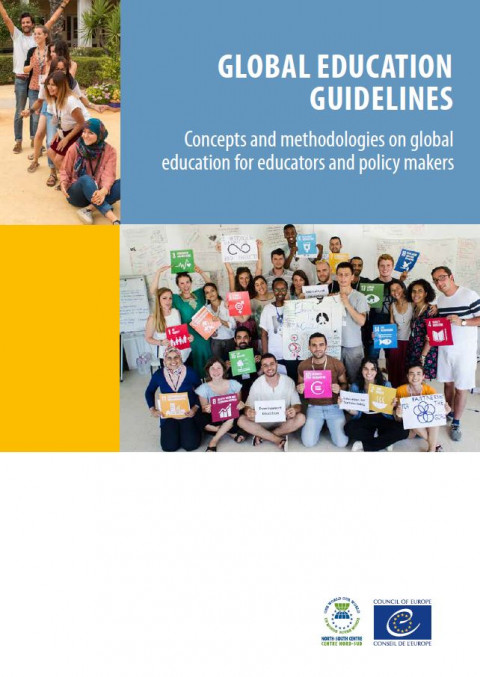 Global Education Guidelines 2019: Concepts and Methodologies on Global Education for Educators and Policy Makers Año de publicación: 2019 Autor corporativo: North-South Centre of the Council of Europe | Council of Europe The Global Education Guidelines are an initiative of the Global Education Programme of the North South Centre of the Council of Europe, and answer a need expressed by the North-South Centre’s (NSC) network of global education practitioners – the Global Education network - to have a common tool, built on experience gained by the network and other partners, to support educators to comprehend and successfully design, implement and carry out global education initiatives and learning activities. This updated edition of the Guidelines includes novelties and responds to the challenge of being a user-friendly handbook, by (i) introducing the concept of competence-based learning, with the Council of Europe Reference Framework of Competences for Democratic Culture and the OECD concept of global competences, and explains in detail and with practical examples and user friendly tools how global education can make use of competence-based learning to empower learners; (ii) has broadened the content of the chapter on methodology and methods, with step by step guides for the daily work of practitioners, educators and facilitators, and further exemplifying the competence-based learning concept; and (iii) by including a new chapter on media literacy to support practitioners and learners to navigate today’s communication and digital challenges. Guide Pratique sur l’Éducation à la Citoyenneté Mondiale 2019: Concepts et méthodologies en matière d’éducation à la citoyenneté mondiale à l’usage d’éducateurs et de responsables politiques Año de publicación: 2019 Autor corporativo: North-South Centre of the Council of Europe | Conseil de l'Europe Ce guide pratique sur l’éducation à la citoyenneté mondiale répond à un besoin exprimé par les praticiens du réseau de la Semaine de l’éducation à la citoyenneté mondiale du Centre Nord-Sud du Conseil de l’Europe (CNS), lesquels ont manifesté leur désir de disposer d’un instrument commun, façonné à la lumière de l’expérience acquise par le réseau et d’autres partenaires, susceptibles d’aider les éducateurs à concevoir et à mener à bien des initiatives en matière d’ECM. La présente édition mise à jour du Guide inclut des nouveautés et répond aux défis inhérents à la rédaction d’un manuel facile à utiliser en : (i) introduisant le concept d’apprentissage fondé sur les compétences, conformément au Cadre de référence des compétences pour une culture démocratique du Conseil de l’Europe et au concept de compétence globale de l’OCDE, et en recourant à des exemples pratiques détaillés et à des outils conviviaux pour expliquer comment l’éducation à la citoyenneté mondiale peut utiliser l’apprentissage fondé sur les compétences pour autonomiser les apprenants; (ii) élargissant le contenu du chapitre sur la méthodologie et les méthodes par le biais d’un guide étape par étape conçu pour aider les praticiens, les éducateurs et les facilitateurs dans leur travail quotidien et d’une meilleure illustration des avantages inhérents au concept d’apprentissage fondé sur les compétences; et (iii) en incluant un nouveau chapitre sur l’éducation aux médias pour aider les praticiens et les apprenants à relever les défis actuels associés à la communication et au numérique.
  UNESCO Framework for Culture and Arts Education: Implementation Guidance Año de publicación: 2025 Autor corporativo: UNESCO Culture and the arts are integral to inclusive, equitable and quality education. They nurture creativity, critical thinking, and respect for cultural diversity, empowering learners to engage meaningfully with the world and to build more just, sustainable and peaceful societies. Yet, countries have not systematically incorporated culture and arts education across all levels of education. This Implementation guidance for the UNESCO Framework for Culture and Arts Education is a collective invitation to reimagine education by placing culture and the arts at its heart and advancing a transformative vision of education for all.Through a holistic approach, the Guidance supports the integration of culture and the arts across formal, non-formal and informal education, throughout life. It offers practical orientations to help Member States fulfil the commitment enshrined in the UNESCO Framework for Culture and Arts Education, adopted by Ministers of Culture and Education in 2024. With a global perspective, this Guidance will equip policy-makers, educators and cultural actors in developing inclusive, context-relevant policies, curricula and learning environments.The Guidance is a milestone on a shared journey, inviting countries to harness their cultural strengths, respond to emerging challenges, and work together towards a more inclusive education for all. Pautas para una Educación Global: Manual para que las y los educadores entiendan e implementen una educación global Año de publicación: 2019 Autor corporativo: North-South Centre of the Council of Europe | Council of Europe Esta guía práctica para la educación para la ciudadanía mundial responde a una necesidad expresada por los profesionales de la red de la Semana de Educación para la Ciudadanía Mundial del Centro Norte-Sur (CNS) del Consejo de Europa, quienes expresaron su deseo de tener un instrumento común, configurado a la luz de la experiencia adquirida por la red y otros socios, que pueden ayudar a los educadores a diseñar y llevar a cabo iniciativas en GCED. Esta guía práctica para la educación para la ciudadanía mundial responde a una necesidad expresada por los profesionales de la red de la Semana de Educación para la Ciudadanía Mundial del Centro Norte-Sur (CNS) del Consejo de Europa, quienes expresaron su deseo de tener un instrumento común, configurado a la luz de la experiencia adquirida por la red y otros socios, que pueden ayudar a los educadores a diseñar y llevar a cabo iniciativas en GCED.
 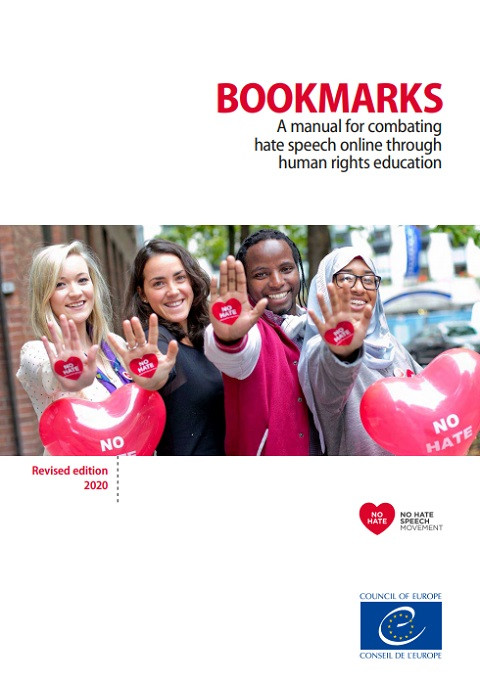 Bookmarks: A Manual for Combating Hate Speech Online Through Human Rights Education Año de publicación: 2020 Autor: Ellie Keen | Mara Georgescu Autor corporativo: Council of Europe The work of the Council of Europe for democracy is strongly based on education: education in schools, and education as a lifelong learning process of practising democracy, such as in non-formal learning activities. Human rights education and education for democratic citizenship form an integral part of what we have to secure to make democracy sustainable. Hate speech is one of the most worrying forms of racism and discrimination prevailing across Europe and amplified by the Internet and social media.Hate speech online is the visible tip of the iceberg of intolerance and ethnocentrism. Young people are directly concerned as agents and victims of online abuse of human rights; Europe needs young people to care and look after human rights, the life insurance for democracy.Bookmarks was originally published to support the No Hate Speech Movement youth campaign of the Council of Europe for human rights online. Bookmarks is useful for educators wanting to address hate speech online from a human rights perspective, both inside and outside the formal education system. The manual is designed for working with learners aged 13 to 18 but the activities can be adapted to other age ranges.This edition of Bookmarks reflects the end of the coordination of the youth campaign by the Council Europe. The campaign may be officially over, but the education and awarenessraising to counter hate speech and promote human rights values remain an urgent task for young people of all ages.