
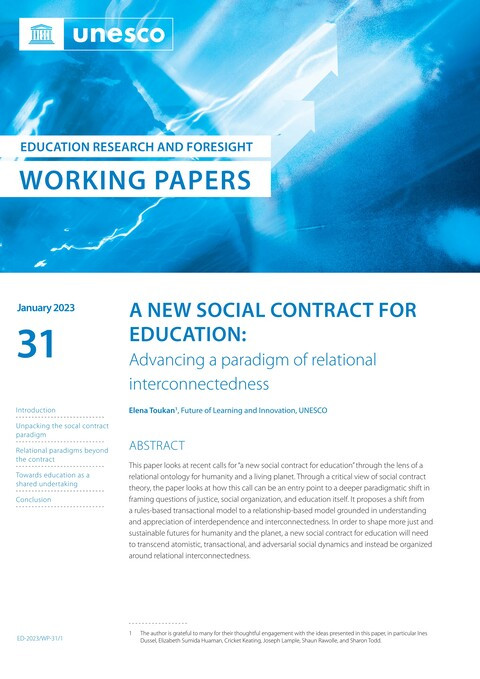
A New Social Contract for Education: Advancing a Paradigm of Relational Interconnectedness
- 저자
- Elena Toukan
- 단체 저자
- 유네스코
- 형태사항
- 13 p.
- 원래 언어
- 영어프랑스어스페인어아랍어
- 발행 연도
- 2023
- 키워드
- Educational philosophyInterpersonal relationsPhilosophie de l'éducationRelations interpersonnellesFilosofía de la educaciónRelaciones interpersonalesفلسفة تربويةعلاقات بين الاشخاص
This paper looks at recent calls for “a new social contract for education” through the lens of a relational ontology for humanity and a living planet. Through a critical view of social contract theory, the paper looks at how this call can be an entry point to a deeper paradigmatic shift in framing questions of justice, social organization, and education itself. It proposes a shift from a rules-based transactional model to a relationship-based model grounded in understanding and appreciation of interdependence and interconnectedness. In order to shape more just and sustainable futures for humanity and the planet, a new social contract for education will need to transcend atomistic, transactional, and adversarial social dynamics and instead be organized around relational interconnectedness.
관련 자료
-
 IIEP-UNESCO 12th Medium-Term Strategy: 2026–2029
 -
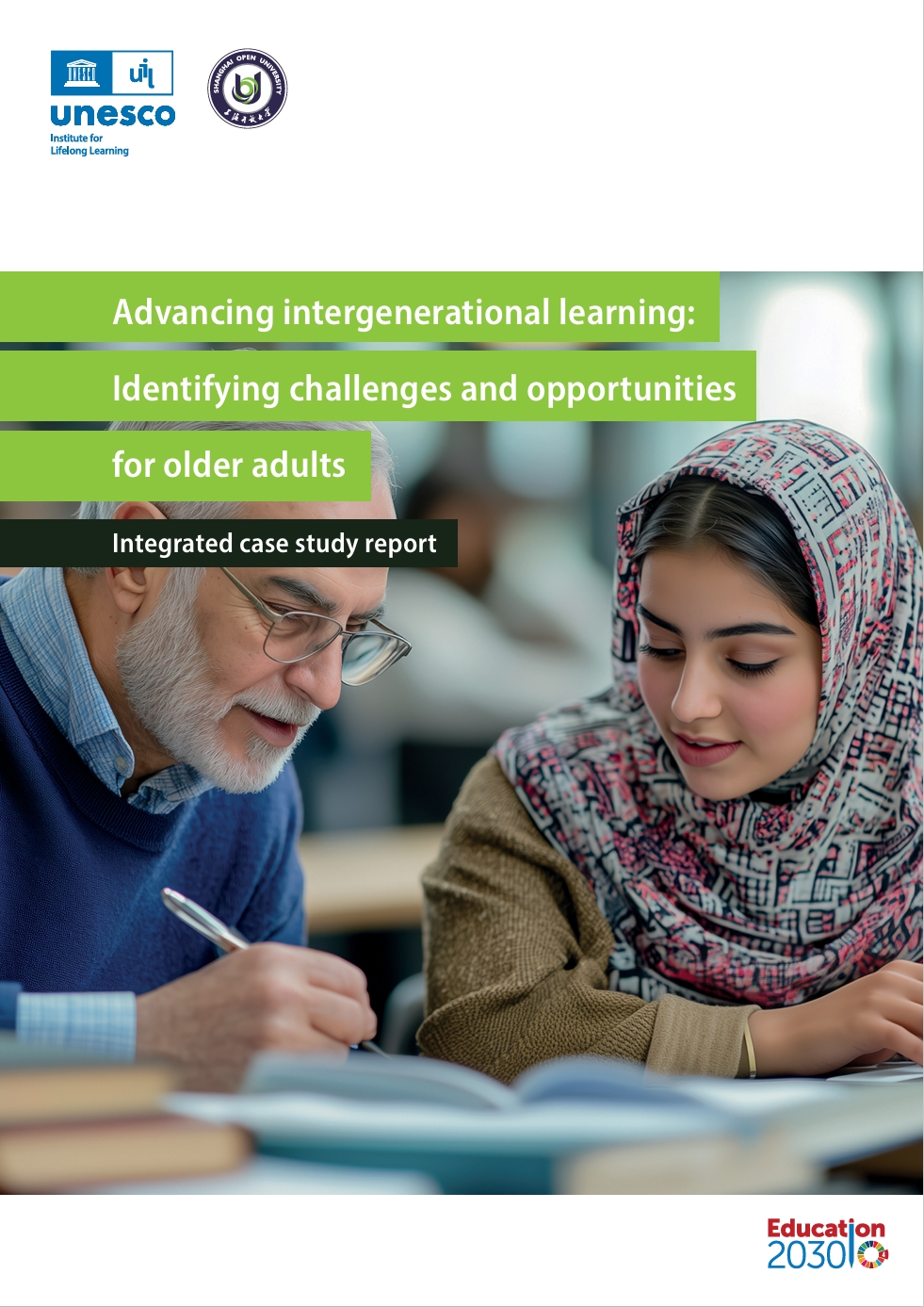 Advancing Intergenerational Learning: Identifying Challenges and Opportunities for Older Adults; Integrated Case Study Report
 -
 Digital Empowerment for Lifelong Learning and Transformative Andragogy (DELTA) for Adult Educators: Introduction to the DELTA Framework and Resources
 -
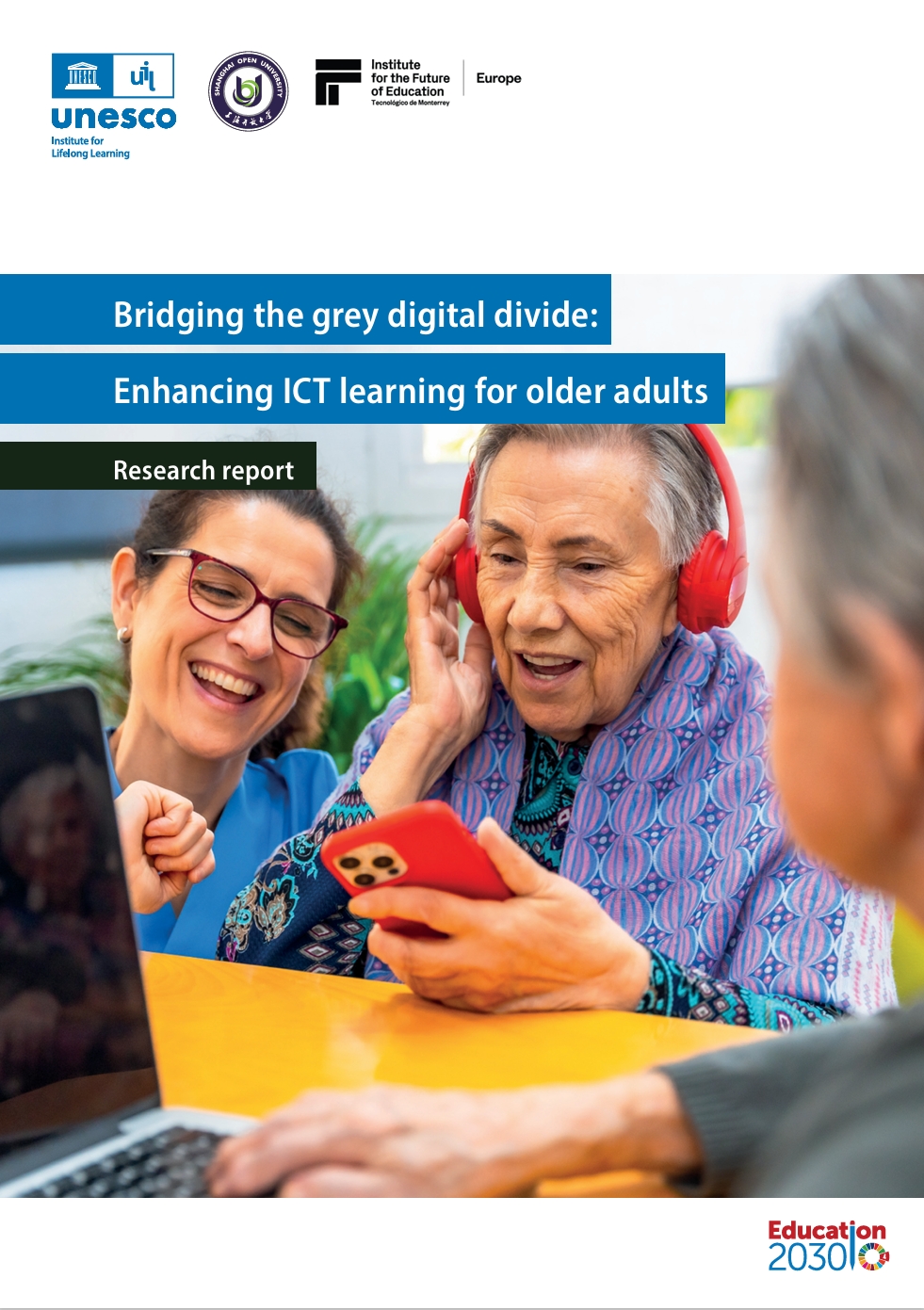 Bridging the Grey Digital Divide: Enhancing ICT Learning for Older Adults; Research Report