
A Call from Youth for Gender-transformative Education: Insights from the 2024 Global Education Meeting
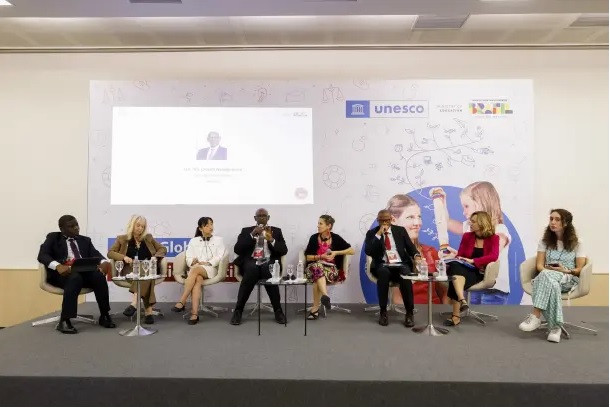
© UNESCO/Aurélio Alves
The 2024 Global Education Meeting (GEM) highlighted the urgent need for system-wide transformation to achieve gender equality as a guiding principle and prerequisite for the realization of SDG 4 on inclusive and equitable quality education and learning. Ms Maria Nguyen, youth advocate for gender equality and comprehensive sexuality education, was one of the SDG 4 Youth & Student Network representatives at the 2024 GEM. In this article, she shares her views on this topic.
8 January 2025 - Last update:9 January 2025
Imagine a world where all children — regardless of their gender, background, or identity — have the opportunity to thrive through quality education. A world where girls don’t miss school because of their periods; where comprehensive sexuality education prevents early marriages and unintended pregnancies; where boys aren’t pressured to leave school to financially support their families; and where students feel safe, regardless of their gender expression or sexual orientation. A world where every student, whether they’re a boy or a girl, can dream big and pursue the subjects and careers they’re passionate about.
This vision may sound idealistic, but education is about hope. It holds the power to unlock potential, drive social change, and, crucially, break the cycle of gender-based violence. If we are serious about achieving gender equality, the classroom is the place to start.
Why gender-transformative education is more important than ever
Gender-transformative education isn’t just about equal access to schooling; it’s about transforming the structures that perpetuate gender-based violence. This approach challenges harmful gender norms, addresses power imbalances, and ensures education fosters respect, equality and empowerment for all students.
In a world where gender-based violence is widespread, addressing the root causes is crucial. Violence—including family, domestic and sexual violence—often stems from deeply ingrained gender norms and power structures. But it’s not just women and girls who are affected; boys and men are also impacted by the societal expectations that define masculinity, often leading to violence and repression.
The urgency of gender-transformative education is even more pressing in the current global context. The climate crisis disproportionately impacts women and girls, who are more vulnerable to natural disasters, displacement, and food insecurity. Additionally, conflicts and crises often exacerbate the risks women and girls face, subjecting them to sexual violence, exploitation, and displacement.
Gender-transformative education, which teaches both boys and girls, men and women, about their rights, respectful relationships and equality, can help end these cycles of violence. While gender-transformative education won’t act as a ‘magic bullet’ that ends all violence, it is a necessary step we need to take if we want to foster more peaceful, equitable societies.
Global youth call for more gender-transformative education
The SDG 4 Youth & Student Network published policy briefs, contributed articles, participated in global campaigns, and advocated for gender equality and education at regional and global fora. Together, we are not just dreamers; we are doers. We are shaping the future of education and gender equality, and in doing so, shaping the kind of world we want to see.
The Youth Declaration on Transforming Education, which captures the voices of nearly half a million young people from over 170 countries, calls for three key enablers for gender equality in and through education:
- Meaningful engagement. “We urge decision-makers to engage with young people as true partners in shaping education policies.”
- A safe learning environment for all. “We call for more education and policies that target the prevention of gender-based violence in and around schools.”
- Gender-transformative curricula: “We advocate for education materials that empower students to challenge gender stereotypes.”
These principles should be used as a reference by all countries and education stakeholders in their policies and programmes.
The Fortaleza Declaration: A Call to Action
The 2024 Global Education Meeting culminated in the adoption of the Fortaleza Declaration, a strong call to action towards inclusive and equitable quality education. It emphasizes the need to “establish integrated and inter-generational mechanisms across ministries, civil society and youth organizations to create inclusive, safe and equitable learning spaces free from gender-based violence and remove barriers to gender equality in and through education”.
Now is the time for a new approach to education—one that prioritizes gender equality, inclusion and respect. The change we seek begins in the classroom. Education has the power to transform societies, and it’s through this transformation that we will create a safer, more equitable world for everyone.
<Fortaleza Declaration: Insights from the SDG4 High-Level Steering Committee>
The 2024 Global Education Meeting (GEM), held in Fortaleza, Brazil, marked a significant milestone in the global pursuit of education equity and financing, with the adoption of the powerful Fortaleza Declaration by over 650 participants including over 50 Ministers from across the globe.
The SDG4-Education 2030 High-Level Steering Committee (HLSC), the apex body for global education cooperation, has shared its reflections on the Declaration.