
Regional Workshop in Saudi Arabia to Strengthen the Capacity of Arab Statisticians to Monitor SDG 4 Indicators
@ UNESCO
26 February 2026
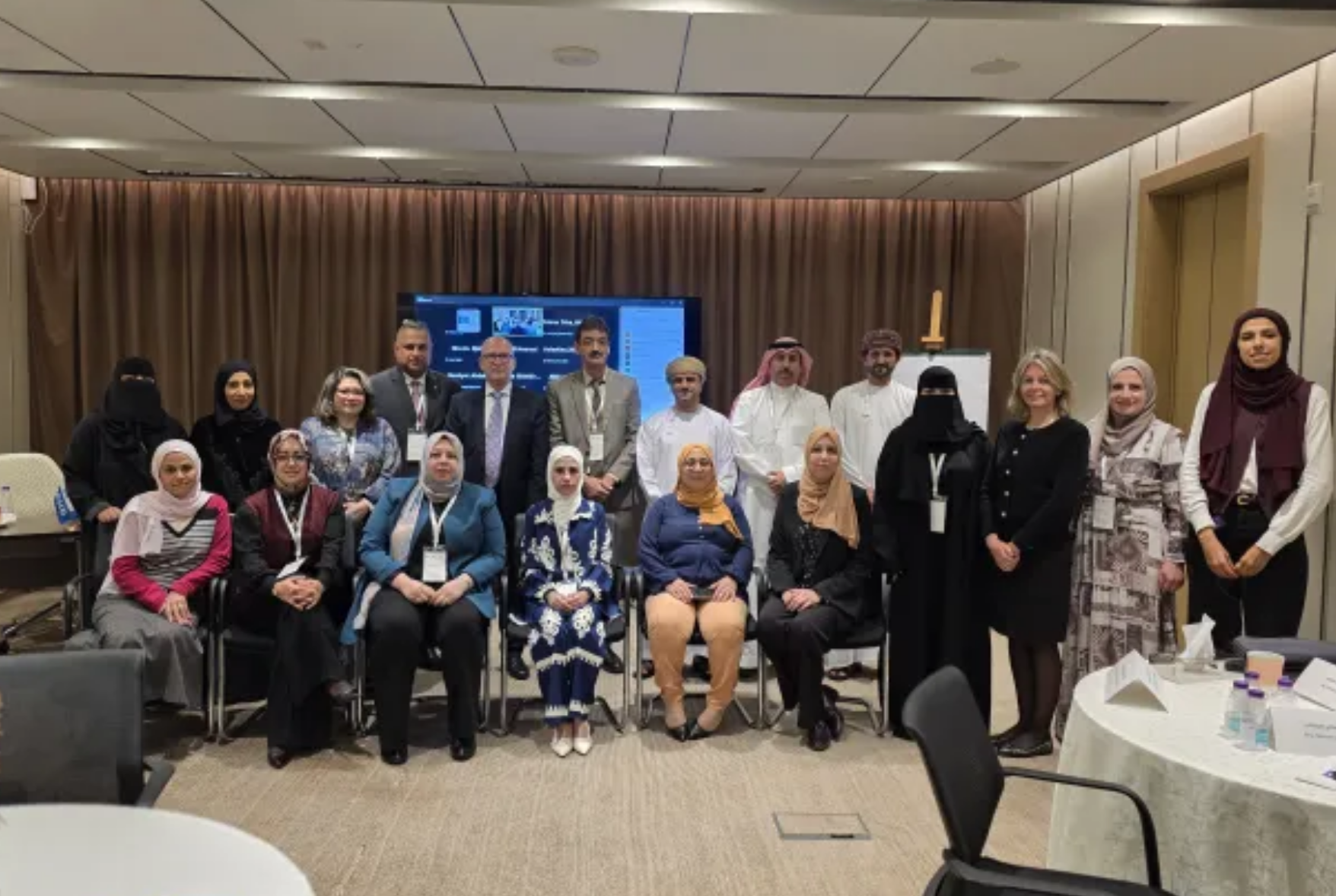
The regional workshop on capacity building for Arab statisticians on SDG 4 indicators was concluded in Dammam. The workshop was organized by the UNESCO Regional Office in Beirut in collaboration with the UNESCO Regional Center for Quality and Excellence in Education (RCQE) and the UNESCO Institute for Statistics (UIS). Representatives from Ministries of Education and National Statistical Offices across Arab countries participated, as part of ongoing regional efforts to improve the quality of education data and ensure its alignment with international standards.
The workshop was convened in response to a growing need to strengthen Arab countries’ capacities to monitor progress in education, particularly in light of challenges related to fragmented data sources, inconsistencies in national methodologies, and gaps in aligning local frameworks with global requirements. The workshop adopted an interactive training methodology that combined practical exercises, peer learning, and direct dialogue with experts from the UNESCO Institute for Statistics.
The workshop represented a pivotal opportunity to acquire in-depth expertise in analyzing education data and applying rigorous methodologies for calculating SDG 4 indicators. This included strengthening participants’ understanding of the application of the International Standard Classification of Education (ISCED 2011) and improving its alignment with national programmes. Participants were also introduced to tools for measuring learning outcomes and education expenditure statistics, in addition to discussing the optimal use of household surveys in monitoring processes.
Beyond the technical sessions, bilateral meetings between national statisticians and the UNESCO Institute for Statistics provided space to address country-specific challenges, including those faced by countries experiencing exceptional circumstances that affect their capacity to collect education data. These discussions contributed to developing realistic approaches to support such countries and strengthen national coordination mechanisms.
The workshop also reinforced regional cooperation, with participants agreeing on a set of steps aimed at improving the education data architecture in the Arab region. Key directions and agreed recommendations included:
Establishing national task forces that include all stakeholders involved in education data, in order to strengthen coordination and ensure regular data flow.
Updating education programme lists in accordance with ISCED to ensure accurate regional and international comparisons.
Strengthening communication with the UNESCO Institute for Statistics to ensure the timely submission of required data through annual survey questionnaires.
Engaging Ministers of Education and Ministers of Finance through regional advocacy to lay the foundation for a shared commitment to improving education financing data management.
Participants also agreed to enhance joint Arab coordination in preparation for the meeting of the Education Data and Statistics Commission to be held in Montreal in April 2026. This will include convening a unified Arab consultative meeting to discuss the agenda and coordinate a regional position, followed by a subsequent meeting to present outcomes to national statisticians.
This workshop, the second in a series of regional training workshops, marked an important step toward empowering Arab countries to improve the quality of their education data and leverage it for policymaking, thereby advancing progress toward achieving SDG 4 by 2030. At the close of the workshop, participants emphasized the importance of sustaining such initiatives, given their direct impact on strengthening data systems and guiding education-related decision-making at both national and regional levels.