
Quality Education for All – “It always seems impossible until it is done”
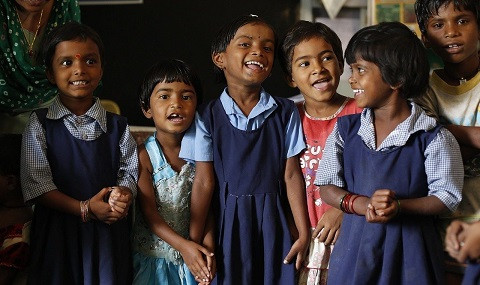
© WISE Qatar
By Jo Besford (Director, Green Shoots)
Stark inequalities continue to confront South Africa. According to the World Bank, it is currently one of the most economically unequal countries in the world.
There is universal agreement that QUALITY education for ALL is one of the major strategies to break the vicious cycle of poverty and inequality! But actually delivering QUALITY education to the ALL is monumentally challenging in practice.
The complexity of achieving both QUALITY and ALL is shown in the 2020 Amnesty International report ‘Broken and Unequal: The State of Education in South Africa’. The report highlights that although major progress has been made in improving access to education (ALL), access to QUALITY EDUCATION still eludes many South African children.
The road to ‘quality education for all’ can be filled with potholes, diversions and many flat tires. So how do we, as a South African based education organization, plan and then navigate our part of the route in providing QUALITY education for ALL?
- Do not dilute the quality. In trying to stretch to reach the ALL, the temptation is to dilute the quality of the offering to ‘good enough’ to make it more achievable. This approach can penalize those who are currently succeeding by not stretching them to achieve even more. The fact the journey to quality education (see point below) may be longer or need more support for many, should not lead to us reducing our expectations of what quality education looks like.
- WITH not FOR. Delivering ‘Quality education for all’ requires supporting stakeholders to overcome the (many) barriers that are currently preventing QUALITY reaching the ALL. For example, barriers can be socio-economic or contextual; infrastructure; lack of resources; staffing availability; or required capacity building. Often programs at a local, provincial or even national level determine the barriers and decide on the solutions FOR the stakeholders who are facing these issues day in and day out. As mentioned below, the impact of quality education is not seen in the access but in the adoption. Engaging WITH stakeholders in the prioritization of resources or in the design of new practices often produces greater innovation, improved insight into those barriers and their solutions, and ultimately in greater levels of ownership.
- Building the pool is not enough; you need swimming lessons. When aiming to produce gold medal-winning swimmers from novices, it is not enough to build a pool and hand over the keys! A comprehensive and ongoing program of training is needed to reach that gold. Plus, the pool needs to be maintained. Too often, the focus of delivering ‘Quality education for all’ is in providing the access to new infrastructure, resources, curricula, technology or provision of new staff. But this approach totally misses that ‘new’ must be ‘adopted’ in order for such access to quality education to show impact in the lives of learners (and schools). Planned support pathways and robust processes ensure ‘new’ becomes ‘adopted’ as accepted practice and is sustainable. ‘Quality education for all’ cannot stop with simply providing the keys.
- It’s a journey, not a race. The urgency, rightly so, with which inequality needs to be tackled in South Africa, unfortunately, can translate into unrealistic, uniform timescales for achieving quality education in ALL contexts. Although we do not dilute the quality of education expected for ALL contexts, we do understand the length of the journey to get there is not the same for all. To see quality education being delivered in ALL contexts will mean that some will need more support and will take longer to get there.
- Understanding that money is not THE solution. For many years South Africa has spent a sizable amount of its budget on education. Currently, the spending on education is at 6.2% of its GDP (Kenya 5.2%, US 5.0%). But allocating more money does not automatically equate to the wider delivery of higher quality education at any level, national or local. Yes, there needs to be sufficient funding to address previous barriers, but as shown above, money alone is not the solution!
The road to ‘Quality education for all’ is still challenging. But the cumulative successes in achieving both QUALITY and ALL along the route ensure that the journey itself, not just reaching the destination, can change lives in an unequal society.
“It is through education that the daughter of a peasant can become a doctor, that the son of a mine worker can become the head of the mine, that a child of farm workers can become the president of a great nation.” – Nelson Mandela
URL:
https://www.wise-qatar.org/quality-education-for-all-it-always-seems-impossible-until-it-is-done/