
자료
세계시민교육에 대한 이해를 넓히고 연구, 옹호 활동, 교수, 학습 등을 향상시킬 수 있는 다양하고 유용한 자료를 찾아보세요.
3 건의 결과가 검색되었습니다
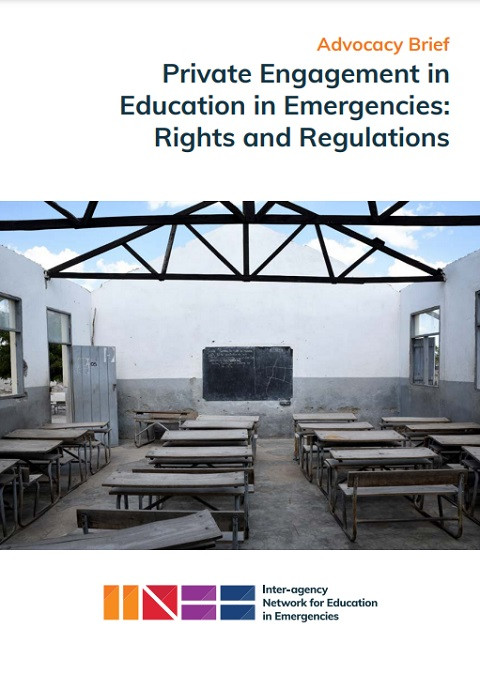 Private Engagement in Education in Emergencies: Rights and Regulations 발행 연도: 2021 저자: Francine Sara Menashy | Zeena Zhakaria 단체 저자: Inter-agency Network for Education in Emergencies (INEE) Efforts to secure inclusive and equitable education for all have prompted calls for greater engagement by the private sector, asserting that businesses and foundations can play significant roles as partners in achieving Sustainable Development Goal 4 (SDG4).In recent years, given shortfalls in public financing and the need for urgent responses, private actors have increasingly become involved in various aspects of educational programming for education in emergencies (EiE). This arrangement, however, can produce tensions between private engagement and humanitarian response in education, which need to be addressed and in turn require extra coordination, advocacy and attention. This brief explores some of these tensions and makes recommendations to support the prioritization of safe, equitable, and quality public education for all children and young people affected by crises.INEE supports every young person’s right to education and recognizes the State as the primary duty-bearer of schooling, in alignment with international declarations, frameworks, and legal instruments that assert and protect the right to education. Participación del sector privado en la Educación en situaciones de emergencia: Derechos y regulaciones 발행 연도: 2021 저자: Francine Sara Menashy | Zeena Zhakaria 단체 저자: Inter-agency Network for Education in Emergencies (INEE) Las iniciativas que buscan garantizar una educación inclusiva y equitativa para todos han generado peticiones para una mayor involucramiento del sector privado, afirmando que las empresas y las fundaciones pueden jugar un papel importante como socios para alcanzar el Objetivo de Desarrollo Sostenible 4 (ODS4). En los últimos años, debido a la falta de financiamiento público y a la necesidad de respuestas urgentes, ha crecido la participación del sector privado en diversos aspectos de la programación educativa para la educación en situaciones de emergencia (EeE). Esta forma de trabajar, sin embargo, puede causar tensiones entre la participación del sector privado y la respuesta humanitaria en materia de educación. Es necesario resolver estas tensiones, lo cual requiere una mayor coordinación, abogacía y atención. Este informe explora algunas de estas tensiones y ofrece recomendaciones para apoyar la priorización de una educación pública segura, equitativa y de calidad para todos los niños, niñas y jóvenes afectados por crisis. La INEE apoya el derecho que tienen todas las personas jóvenes a la educación y reconoce al Estado como el principal responsable de la escolarización, en línea con declaraciones, marcos e instrumentos legales internacionales que reconocen y protegen el derecho a la educación.
 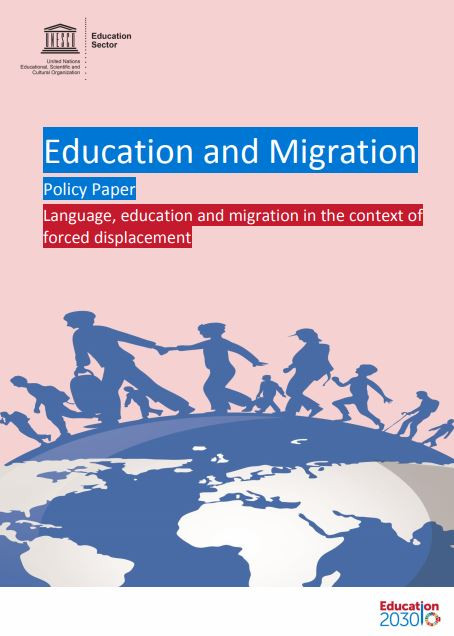 Education and Migration Policy Paper: Language, Education and Migration in the Context of Forced Displacement (Policy Brief Series, no 1) 발행 연도: 2018 저자: Francine Sara Menashy | Zeena Zhakaria A surge in global migration, spurred in part by conflict, emergency, and fragility, has elicited increased attention to the specific needs of migrant and refugee learners. The international community faces an urgent global challenge: more people are now displaced than since the end of the Second World War. Half of those displaced are under the age of 18. Further, while two-thirds of international migrants are in high-income countries, 85% of those displaced by conflict and natural disaster now live in low-income countries. Forced displacement creates particular vulnerabilities, including access to education free from discrimination. Meeting Sustainable Development Goal 4 by 2030 demands that all children, youth, and adults receive an inclusive and equitable quality education. Education is a right that plays a critical role in advancing both sustainable development and peace. Yet refugees, migrants, and asylum seekers encounter numerous barriers to an inclusive andequitable quality education in host countries worldwide.