
자료
세계시민교육에 대한 이해를 넓히고 연구, 옹호 활동, 교수, 학습 등을 향상시킬 수 있는 다양하고 유용한 자료를 찾아보세요.
1,583 건의 결과가 검색되었습니다
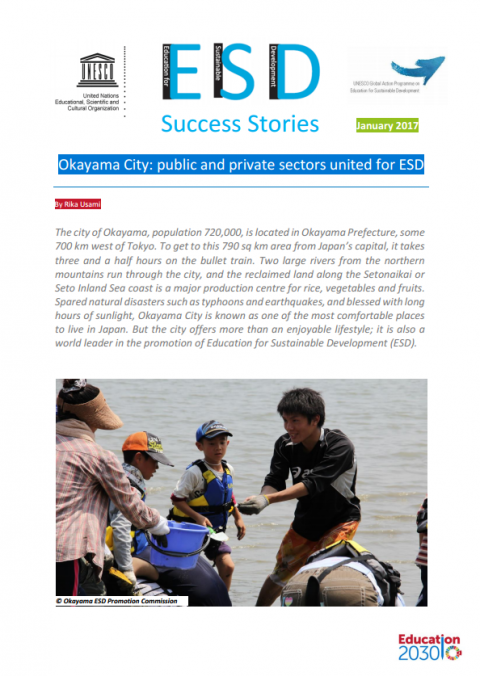 Okayama: les secteurs public et privé unis pour l'EDD 발행 연도: 2017 저자: Rika Usami 단체 저자: UNESCO Okayama City: public and private sectors united for ESD 발행 연도: 2017 저자: Rika Usami 단체 저자: UNESCO ESD Success Stories are showcasing compelling stories with a personal/human dimension from all five UNESCO regions (Africa, Arab States, Asia and Pacific, Europe & North America and Latin America & the Caribbean). The stories illustrate the wide diversity of ESD approaches and initiatives taking place in different parts of the world. They show how involvement with ESD has changed the lives of specific individual persons and how they have become more active in their community. Each story centers on one individual or a group of individuals.Okayama City is known as one of the most comfortable places to live in Japan.The city offers more than an enjoyable lifestyle; it is also a world leader in the promotion of Education for Sustainable Development (ESD).
 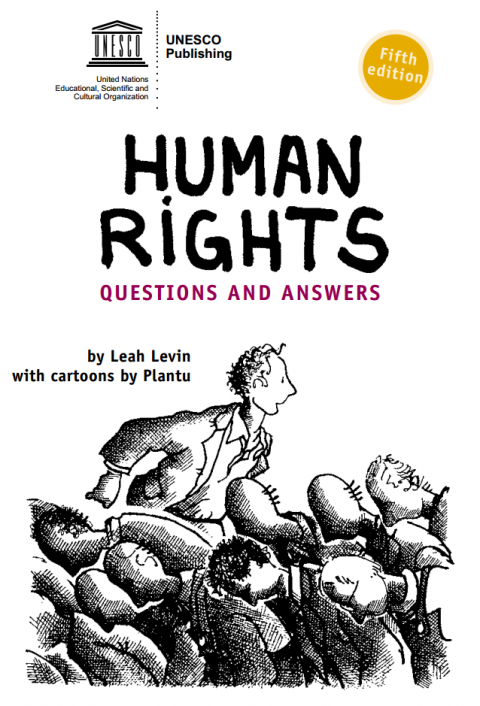 حقوق الإنسان ـ أسئلة و إجابات 발행 연도: 2009 저자: Leah Levin 단체 저자: UNESCO This 5th edition presents an overview of the scope and content of international human rights law, procedures to monitor its implementation, organizations and institutions working for human rights, major international events, as well as new developments and challenges. It also offers a brief commentary on the articles of the Universal Declaration of Human Rights explaining their meaning and providing examples on their practical implications. A permanent feature of this publication, and one of the reasons of its success, are the cartoons of Plantu, a well-known French political cartoonist and a devoted human rights activist.
  UNESCO GCED eNewsletter Issue 3 발행 연도: 2016 단체 저자: UNESCO Feature: Expanding partenrships around Global Citizenship EducationUNESCO – IEA partnershipPresident Park Geun-hye announces initiatives to widen prtnership with UNESCOUNESCO and the United States promote education to prevent violent extremismUNESCO signs partnership with Asia Society to advance Global Citizenship EducationInternational Mother Language DayUNESCO Category 2 Institute on mother languages established in BangladeshUCLA establishes new UNESCO Chair in Global Learning and Global Citizenship EducationWorkshop in Abidjan focuses on learning to live together through history educationLeading French network of rural vocational institutions puts Global Citizenship Education firstSub-regional Workshop on Global Citizenship Education in Central AsiaRabat Conference on Democratic Citizenship and Human Rights Education: Trends and Innovation from CSOsConference on Global Citizenship Education in SudanConference on Global Citizenship Education in SharjahFocus on: ongoing UNESCO school initiative: the Happy Schools ProjectCurriculum development and review for democratic citizenship and human rights educationKey TweetsUpcoming Events
 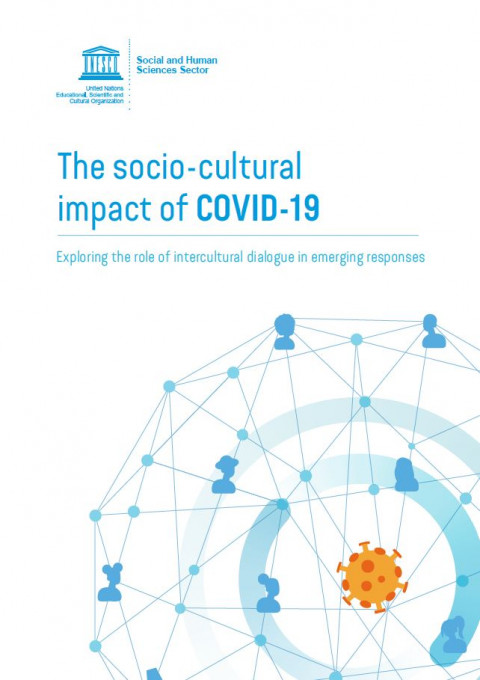 The Socio-Cultural Impact of COVID-19: Exploring the Role of Intercultural Dialogue in Emerging Responses 발행 연도: 2020 저자: Fethi Mansouri 단체 저자: UNESCO This brief illustrates, proponents and practitioners of ICD were quick to adapt to this crisis situation and shifted much of their activities online in order to mitigate the negative impacts of the pandemic. The shift has ensured that cross-cultural exchange, mutual support and intergroup solidarity, all key dimensions of the ICD approach, can be maintained in safe online contexts and thus continue to play a key role within the socio-cultural response to COVID-19.Through inductive exploration of authentic, local, community responses to the COVID-19 crisis, this brief aims to shed light on the new context in which the ICD agenda is being pursued, complementing the many existing quantitative analyses of the socio-cultural impact of the pandemic.
 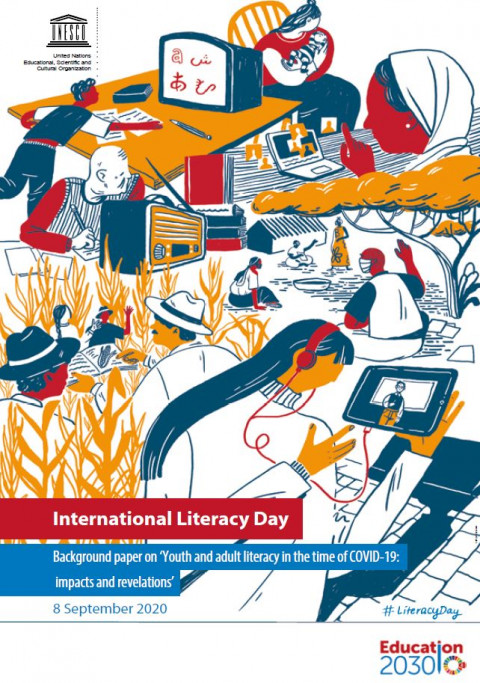 International Literacy Day: Background Paper on 'Youth and Adult Literacy in the Time of COVID-19; Impacts and Revelations' 발행 연도: 2020 단체 저자: UNESCO Specially prepared on the occasion of International Literacy Day 2020, this background paper illustrates the impact of the COVID-19 crisis on youth and adult literacy, based on the limited information that is currently available. It provides five regional snapshots and identifies preliminary lessons learned thus far, while aiming to inspire continued reflection and subsequent action. It also makes the case for the ongoing importance of advancing youth and adult literacy, a priority that was already neglected even before the pandemic but which deserves all our attention. ILD 2020 thus seeks to trigger reimaginations of literacy teaching and learning in the COVID-19 crisis and beyond, with a particular focus on the role of educators.
 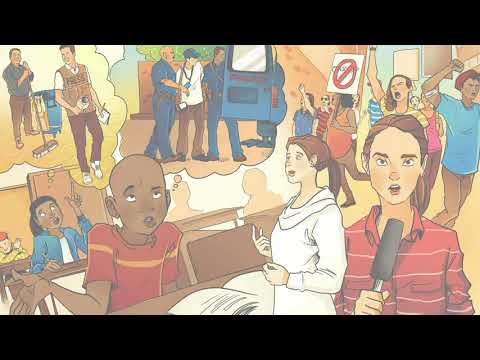 What Does the Rule of Law Have to Do With Me? 발행 연도: 2020 단체 저자: UNESCO Using fun, interactive pedagogical tools and a classroom setting, this video explains to young people the basic concept of the rule of law and how they can engage in building a society on just laws which protect the fundamental rights of the individual and promote citizenship (https://en.unesco.org/themes/gced).In simple engaging language with real life examples and interaction with pupils, it explains 'accountability', 'freedom of expression', the characteristics of good law and equality before the law.The video describes the UNESCO-UNODC partnership on education for the rule of law (https://en.unesco.org/themes/gced/rul...) which works to bridge the gap between education and justice and supports Sustainable Development Goals 4 (in particular target 4.7) and 16. The partnership has developed interactive handbooks for schools and guidance for policy-makers.
  The United Nations world water development report 2016: water and jobs 발행 연도: 2016 단체 저자: UNESCO Three out of four jobs worldwide rely on water. As such, water shortages and lack of access may limit economic growth in the years to come, according to the World Water Development Report 2016. From its collection, through various uses, to its ultimate return to the natural environment, water is a key factor in the development of job opportunities either directly related to its management (supply, infrastructure, wastewater treatment, etc.) or in economic sectors that are heavily water-dependent such as agriculture, fishing, power, industry and health. In its analysis of the economic impact of access to water, the report cites numerous studies that show a positive correlation between investments in the water sector and economic growth. It also highlights the key role of water in the transition to a green economy. Informe de las Naciones Unidas sobre el desarrollo de los recursos hídricos en el mundo 2016: agua y empleo 발행 연도: 2016 단체 저자: UNESCO Three out of four jobs worldwide rely on water. As such, water shortages and lack of access may limit economic growth in the years to come, according to the World Water Development Report 2016. From its collection, through various uses, to its ultimate return to the natural environment, water is a key factor in the development of job opportunities either directly related to its management (supply, infrastructure, wastewater treatment, etc.) or in economic sectors that are heavily water-dependent such as agriculture, fishing, power, industry and health. In its analysis of the economic impact of access to water, the report cites numerous studies that show a positive correlation between investments in the water sector and economic growth. It also highlights the key role of water in the transition to a green economy.
  Balancing Act: Countering Digital Disinformation While Respecting Freedom of Expression 발행 연도: 2020 저자: Kalina Bontcheva | Julie Posetti 단체 저자: UNESCO | Broadband Commission for Sustainable Development. Working Group on AI Capacity Building | International Telecommunication Union (ITU) This report provides stakeholders with a rich suite of sector-specific recommendations, as well as a helpful 23-point framework that can be used for assessing any particular response to disinformation in the context of freedom of expression challenges. This research will help the widest range of key actors to better understand this phenomenon, and especially the way the world is responding to it, and where the gaps are.At the heart of this knowledge product is the need to balance responses to disinformation with respect for freedom of expression. The research shows us that this can be done.