
자료
세계시민교육에 대한 이해를 넓히고 연구, 옹호 활동, 교수, 학습 등을 향상시킬 수 있는 다양하고 유용한 자료를 찾아보세요.
1,583 건의 결과가 검색되었습니다
 教科文组织在实施全球公民教育以及促进和平与人权教育和可持续发展教育中的作用和责任 발행 연도: 2015 단체 저자: UNESCO This document is an addendum to document 196 EX/32. This item was included in the provisional agenda of the 196th session of the Executive Board at the request of Austria and Italy
 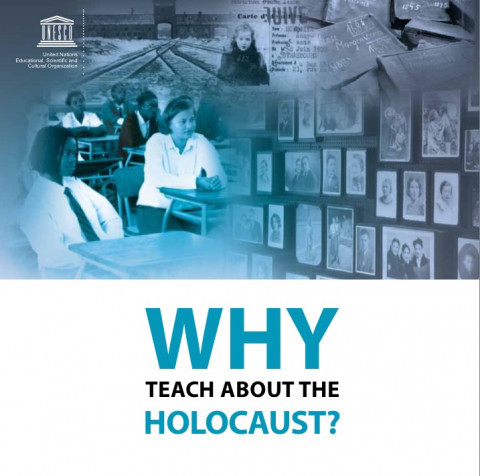 Зачем преподавать историю Холокоста? 발행 연도: 2014 단체 저자: UNESCO The Holocaust was a turning point in human history. Understanding the genocide of the Jewish people and other crimes perpetrated by the Nazi regime remains of great signi cance in the modern world.Regardless of where we live or who we are, learning about this universal history can help engage students in a critical re action about the roots of genocide and the necessity to nurture peace and human rights to prevent such atrocities in the future.This short introduction provides an essential overview on education about the Holocaust that can support policymakers, educators and students alike in their understanding of genocide and why it is vital that we continue to teach about the Holocaust today. 为什么要进行关于反犹大屠杀的教育? 발행 연도: 2014 단체 저자: UNESCO The Holocaust was a turning point in human history. Understanding the genocide of the Jewish people and other crimes perpetrated by the Nazi regime remains of great signi cance in the modern world.Regardless of where we live or who we are, learning about this universal history can help engage students in a critical re action about the roots of genocide and the necessity to nurture peace and human rights to prevent such atrocities in the future.This short introduction provides an essential overview on education about the Holocaust that can support policymakers, educators and students alike in their understanding of genocide and why it is vital that we continue to teach about the Holocaust today.
  Educação para a cidadania global: preparando alunos para os desafios do século XXI 발행 연도: 2014 단체 저자: UNESCO The United Nations Secretary-General’s Global Education First Initiative (GEFI) has established education as a means to ‘foster global citizenship’ – one of its three priority areas. To support this, UNESCO organized two landmark meetings on GCE in 2013. This publication aims to define the parameters of GCE by using the collective expertise, experience and wisdom of those participants who gathered at these landmark events, and to plan for future action in line with emerging thinking and other ongoing work. The review establishes that GCE has a critical role to play in equipping learners with competencies to deal with the dynamic and interdependent world of the twenty-first century. While GCE has been applied in different ways in different contexts, regions and communities, it has a number of common elements, which include fostering in learners. In formal settings, GCE can be delivered as an integral part of an existing subject (such as civic or citizenship education, social studies, environmental studies, geography or culture), or as an independent subject area. Integrated models appear to be more common. Some less traditional, but at least as effective, pathways for GCE have included the following: the use of information and communication technologies and social media, sport competitions and the use of art and music, and youth-led initiatives employing a wide variety of approaches. Both traditional and new horizons for GCE are profiled in this review. This publication also explores a number of enabling conditions for the promotion and implementation of GCE. These include: the existence of an open environment for universal values, the implementation of transformative pedagogy and support for youth-led initiatives. The review acknowledges that there are a number of ongoing tensions with the concepts of global citizenship and global citizenship education. While these tensions vary, they all point to the fundamental question of how to promote universality (e.g. common and collective identity, interest, participation, duty), while respecting singularity (e.g. individual rights, self-improvement). Some ways forward to resolve these tensions are suggested, whilst maintaining that challenges around theoretical elements of GCE should not undermine its practice. The processes documented in this publication have strengthened partnerships, built coalitions and contributed to improving the evidence base on the theory and practice of global citizenship education. While there are tasks that remain, this foundation bodes well for improving the enabling conditions and the practices highlighted in this review. By preparing learners to fulfil their potential in an increasingly globalized world, we are promoting transformed societies that are also better equipped to deal with the twenty-first century challenges and to seize twenty-first century opportunities.
 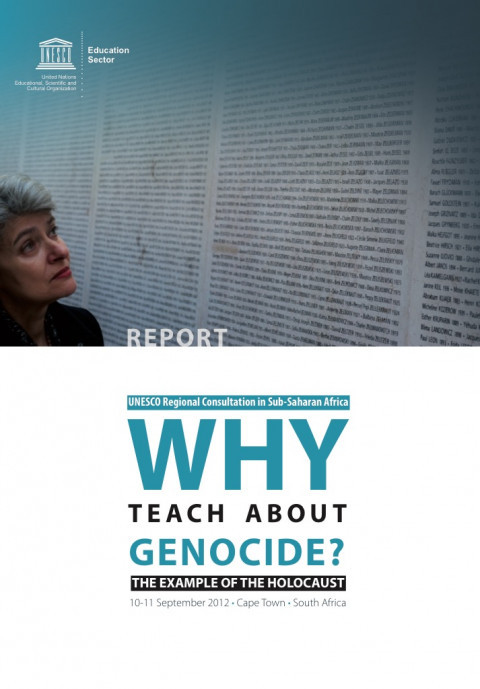 UNESCO Regional consultation in sub-saharan Africa: Why teach about genocide? The example of the Holocaust, 10-11 Septembre 2012, Cape Town, South Africa: report 발행 연도: 2013 단체 저자: UNESCO The rst UNESCO consultation on « Why Teach about Genocide? The Example of the Holocaust » was organized following the UNESCO General Conference resolution 34C/61 on Holocaust Remembrance. The consultation of Member States is part of a series of initiatives launched by UNESCO to promote education about the Holocaust and other genocides, in particular with a view to contributing to the prevention of genocide and mass atrocities and promoting education for peace.The consultation took place in Cape Town, South Africa, on 10-11 September 2012 in the presence of senior representatives from the Ministries of Education of 14 countries in Sub-Saharan Africa. The following countries were represented: BENIN, BURUNDI, DEMOCRATIC REPUBLIC OF THE CONGO, CÔTE D’IVOIRE, ETHIOPIA, REPUBLIC OF MAURITIUS, NAMIBIA, KENYA, RWANDA, SENEGAL, SOUTH AFRICA, TANZANIA, TOGO and ZAMBIA. Experts in Holocaust and genocide studies from various countries and institutions were invited to present key issues throughout the consultation and participate in the discussions. The consultation was supervised by the Education Sector of UNESCO/Division of Education for Peace and Sustainable Development/Section of Education for Peace and Human Rights and UNESCO Regional Bureau for Education in Africa (BREDA, Dakar, Senegal)The main purpose of the meeting was to discuss how the history of the Holocaust, and more generally the history of genocide, could be included in the curricula of participating countries. The meeting also clari ed various conceptual and pedagogical issues, and paved the way for further cooperation between UNESCO and participating Ministries of Education on how to launch new educational programmes in interested countries.
  دليل المعلم حول منع التطرف العنيف 발행 연도: 2016 단체 저자: UNESCO إنه دليل اليونسكو الأول للمعلم حول منع التطرف العنيف من خلال التعليم. جرى تطوير هذه الوثيقة استجابة فورية لحاجات الدول الأعضاء في اليونسكو، كما جاء في القرار التاريخي،20151 EX/197 رقم 46 الذي اتخذه المجلس التنفيذي لليونسكو في تشرين الأول/أكتوبر ويدعو فيه المنظمة إلى تعزيز قدرتها لتوفير المساعدة للبلدان الساعية إلى تقوية استجابة قطاعها التربوي للتطرف العنيف، بما فيه بواسطة برامج التربية العالمية على المواطنة القائمة على حقوق الإنسان، مع مراعاة السياقات الوطنية...بغية ضمان انطباق دليل المعلمين هذا على مختلف السياقات الجغرافية والاجتماعية والثقافية، فقد جرى وضعه بعد عملية تشاورية موسعة مع خبراء ومعلمين من المناطق المختلفة، كما اختبرته ميدانياً الأطراف التربوية المعنية في البلدان المختلفة بالتالي، و يمكن استخدامه كما هو، أو اعتباره نموذجاً يحتاج إلى أن يوضع في سياقه، ويترجم بغية تلبية حاجات المتعلمين المحددة.... في المرحلة العليا من التعليم آخذين هذا في الاعتبار، جرى وضع هذا الدليل للمعلمين في المرحلة العليا من التعليم الابتدائي، والمرحلة الدنيا والمرحلة العليا من التعليم الثانوي. كما تم تطويره مع الأمل بتمكنه من من دعم جهود المعلمين في الأطر التربوية النظامية وغير النظامية....ويسعى هذا الدليل بشكل خاص إلى: تقديم النصائح العملية حول متى وكيف تُناقش مسألة التطرف العنيف مع المتعلمين... ومساعدة المعلمين في تأمين مناخ عام في الصف الدراسي يفضي إلى الحوار المحترم والنقاش المفتوح والتفكير النقدي. عناوينه الرئيسة: حول التطرف العنيف، إدارة المناقشات في قاعة الصف، الرسائل الأساسية الواجب إيصالها، الأسئلة الأكثر طرحا ومراجع. A Teacher's Guide on the Prevention of Violent Extremism 발행 연도: 2016 단체 저자: UNESCO The Guide aims to support teachers in offering young people relevant and timely learning opportunities to develop knowledge, skills and attitudes that build their resilience to violent extremist propaganda. It focuses on providing practical advice on when and how to discuss the issue of violent extremism and on creating a classroom climate that is inclusive and conducive to respectful dialogue, open discussions and critical thinking. Guide du personnel enseignant pour la prévention de l’extrémisme violent 발행 연도: 2016 단체 저자: UNESCO Ce Guide a pour objectif d’aider les enseignants à offrir aux jeunes des possibilités d’apprentissage pertinentes et opportunes pour développer les connaissances, compétences et attitudes nécessaires pour renforcer leur résilience face à la propagande violente extrémiste. Il contient des conseils pratiques pour aborder la question de l'extrémisme en classe de manière pertinente et au moment adéquat, ainsi que sur les conditions à mettre en place pour créer un climat inclusif et propice au respect mutuel, à des discussions ouvertes et à l'exercice d'une pensée critique. 폭력적 극단주의 예방을 위한 교사 지침서 발행 연도: 2016 단체 저자: UNESCO 이것은 유네스코 최초의 교육을 통한 ‘폭력적 극단주의 예방을 위한 교사지침서(Teacher's Guide on the Prevention of Violent Extremism)’이다. 이 문서는 2015년 10월 유네스코 집행이사회가 채택한 결정문(197/EX Decision 46)안에 언급된 것으로서 유네스코 회원국의 요구에 직접 반응하기 위하여 개발되었으며, 국제 기구가 인권 중심의 글로벌시민교육(GCED) 프로그램을 통해 폭력적 극단주의에 대한 교육 부분에서의 대응을 강화하고, 각국의 상황을 염두하여 국가적인 지원과 도움을 제공하는 능력을 향상시킬 것을 요구하고 있다. 따라서 본 지침서는 교육 부문과 관련하여 유네스코가 유엔 사무 총장의 폭력적 극단주의를 예방하기 위한 행동 계획을 실행하는 데에 있어서 처음으로 기여한 것으로 여겨진다. 그리고 이 지침서와 더불어 현재 교육부 내의 교육 정책 결정자를 위한 기구(Organization for Education Policy-Makers)에서는 기술적 지침을 개발 중이다. 이 지침은 포괄적이고 실용적인 교육 부문 차원의 대응을 통해 폭력적 극단주의의 동인(動因)이 되는 것들을 다루기 위한 국가적 역량을 구축하고 강화시키는 데 도움을 줄 수 있는 일련의 자원들을 국가에 제공하고자 한다. 각양 각색의 지리학적 및 사회 문화적 맥락 안에서 본 교사지침서가 타당성을 갖추기 위하여 여러 지역의 전문가와 교사, 그리고 선택된 국가의 교육 분야 이해 관계자들이 현장에서 실시한 광범위한 상담 과정을 거쳐 개발되었다. 그러므로 이 지침서는 학습자의 특정 요구에 부응하기 위해서, 더욱 맥락화 시키고, 적용시키고, 번역하는 프로토타입으로 간주하거나 이 자체를 그대로 사용할 수 있다.
  Water and peace for the people: possible solutions to water disputes in the Middle East 발행 연도: 2008 단체 저자: UNESCO This book proposes practical and objective solutions to the entrenched water conflicts in the Middle East. The author reveals and clarifies the complexity of the water conflicts, drawing on years of experience facilitating and chairing water negotiations in the region. The bottom line is: Unless the countries involved co-operate, the consequences will be devastating. The lack of plentiful and clean water for the people will not only result in severe human suffering, but could also have grave geopolitical consequences.