
자료
세계시민교육에 대한 이해를 넓히고 연구, 옹호 활동, 교수, 학습 등을 향상시킬 수 있는 다양하고 유용한 자료를 찾아보세요.
795 건의 결과가 검색되었습니다
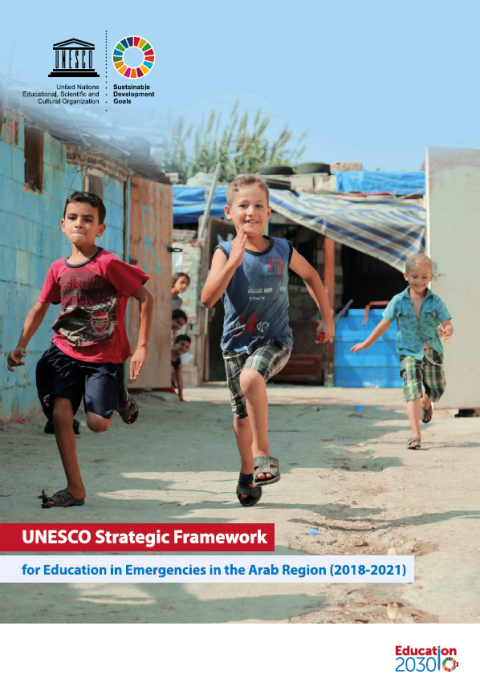 UNESCO Strategic Framework for Education in Emergencies in the Arab Region (2018-2021) 발행 연도: 2017 단체 저자: UNESCO The Strategic Framework consists of four strategic goals that are anchored in the three pillars of education (Access, Quality and System Strengthening) and which emphasize the importance of relevant and inclusive education to meet the challenges confronting learners, educators, and education systems in both crisis and post-crisis settings. The strategic goals are: Strategic Goal 1: Children and youth affected by crisis access inclusive and quality learning opportunitiesStrategic Goal 2: Learners affected by crisis are empowered with values, knowledge, and skills for life and workStrategic Goal 3: Education actors provide quality education for better learning outcomesStrategic Goal 4: Education systems are responsive and resilient to crisis
  Inclusive early childhood care and education: background paper prepared for the International Forum on inclusion and equity in education, every learner matters 발행 연도: 2019 저자: Sheldon Shaeffer 단체 저자: UNESCO | Open Society Foundation Experiences around the world show that it is necessary to respond to the specific needs of each category of exclusion (sex, poverty, remoteness, ethnicity, language, legal status,and developmental delay anddisability) and to each excluded child–without further marginalizing or labelling them. The overall focus should be on inclusive ECCE policies, strategies, and practicesto remove all barriers, and promote optimal development and learning for all children, build ramps for participation and inclusion, and thereby help all relevant ministriesto become fully inclusive, both in vision and in practices. Only then can we really achieve the goal of good quality education for all.
 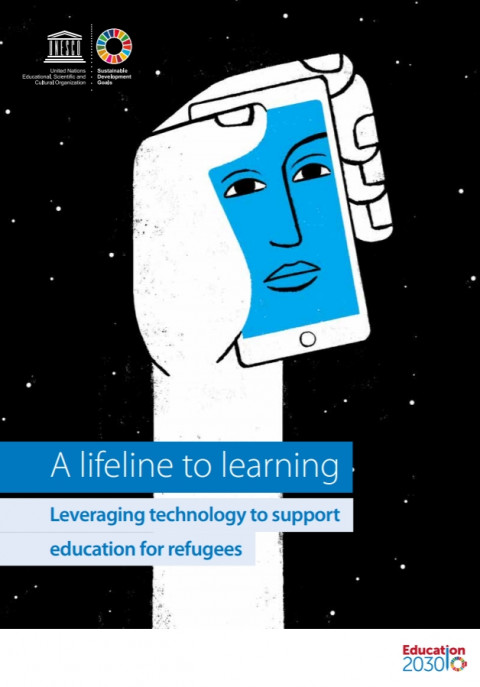 A Lifeline to Learning: Leveraging Mobile Technology to Support Education for Refugees 발행 연도: 2018 단체 저자: UNESCO This publication examines the evidence base for key assumptions on using mobile technology to address individual refugees’ learning challenges, broader education system challenges, and challenges to providing refugees with specific levels and types of education. The report presents findings from a review of 117 relevant papers and reports, and lessons drawn from the implementation of 52 projects that use mobile learning for refugees and the actual use of 35 digital apps or platforms. While acknowledging a limited reach, the report identifies effective mobile solutions and organizational strategies that should be scaled up.
  Strengthening accountability in the implementation of SDG4 - Education 2030 발행 연도: 2017 단체 저자: UNESCO SDG4-Education 2030 is a renewed commitment to ensure the right to quality education and the promotion of lifelong learning opportunities, as the foundation for sustainable development. As outlined in the 2015 Incheon Declaration and the 2030 Framework for Action (FfA), strengthened governance, partnerships and accountability are essential in translating global education targets and commitments into effective policy and practice at the national level. The range of partners engaged in education - whether government, schools and teachers, families and communities, civil society organizations, or the business sector – have important roles in this collective societal endeavor. They also each have important responsibilities for which they must be accountable in the collective effort to realize the global commitment to ensure the right to quality education for all. As duty bearers, governments have the primary responsibility to deliver on the right to education, and a central role as custodians of efficient, equitable and effective management and financing of public education.
  Inclusive Education for Persons with Disabilities - Are We Making Progress? 발행 연도: 2019 단체 저자: UNESCO | Leonard Cheshire (UK) The paper ‘Inclusive education for persons with disabilities – Are we making progress?’ has been developed as a background paper for the UNESCO International Forum on inclusion and equity in education – Every learner matters, being held in Cali, Colombia from 11-13 September 2019. The Forum is being organised in commemoration of the 25th anniversary of the passing of the Salamanca Statement and Framework for Action. The paper will explore the global progress towards inclusive education, the successes achieved and learnings observed specifically in countries of the global South. In these countries the concerns of universal access to and retention in education is still a concern for many governments, but large-scale exclusion of children with disabilities (an estimated 32 million or 1 out of 3 are out of school) remains the order of the day and is not always high on government agendas.
  UNESCO, Climate Change Education and COP22 발행 연도: 2016 단체 저자: UNESCO Education is a key vector to prepare societies for global changes. It plays a critical role in achieving sustainable development goals and putting into practice a global agreement on climate change. Education plays a paramount role in raising awareness and promoting behavioural change for climate change mitigation and adaption. It helps increase the climate change mitigation and adaptation capacity of communities by enabling individuals to make informed decisions.
  Futures of Education: learning to become 발행 연도: 2019 단체 저자: UNESCO UNESCO’s Futures of Education initiative aims to rethink education and shape the future. The initiative is catalyzing a global debate on how knowledge, education and learning need to be reimagined in a world of increasing complexity, uncertainty, and precarity. Looking to 2050 and beyond, the Futures of Education initiative seeks to reimagine how education and knowledge can contribute to the global common good. The initiative will catalyze a global debate on how knowledge and learning can shape the future of humanity and the planet.
 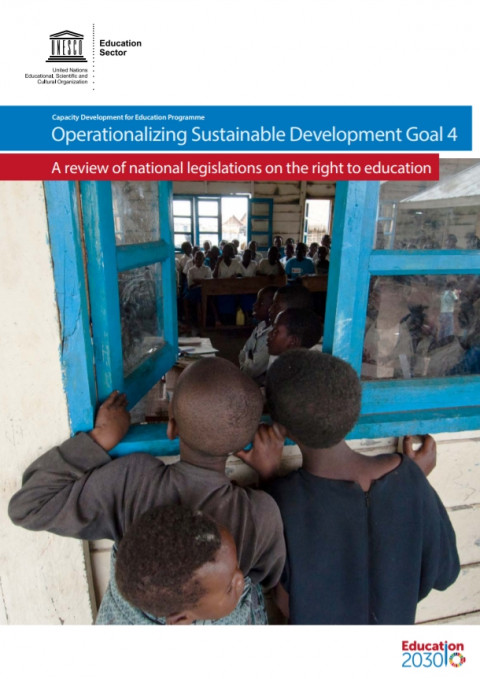 Operationalizing Sustainable Development Goal 4: a review of national legislations on the right to education 발행 연도: 2017 저자: Santini, Delphine 단체 저자: UNESCO As part of a wider Capacity Development for Education (CapED) Programme on operationalizing SDG4 at the country level, this paper examines the instrumental role that legislation on the right to education can play in view of achieving the SDG4 targets in Least Developed Countries. It does it by reviewing national legal frameworks relating to the right to education in 11 countries, suggesting some lessons of global interest, both for policy-making and normative work.
 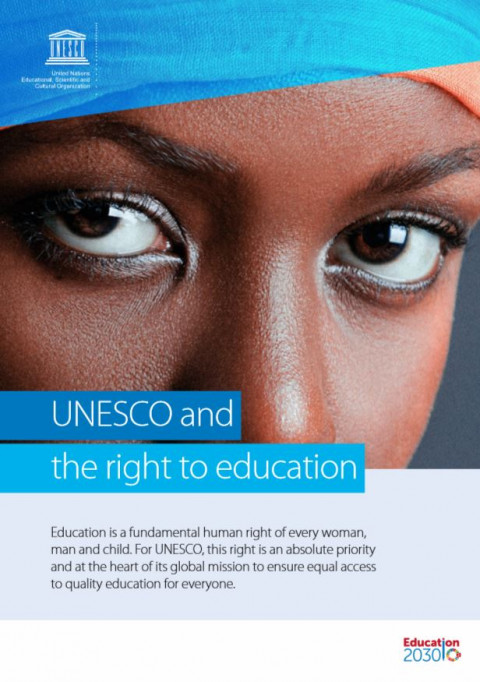 UNESCO and the right to education 발행 연도: 2018 단체 저자: UNESCO Education is a fundamental human right of every woman, man and child. For UNESCO, this right is an absolute priority and at the heart of its global mission to ensure equal access to quality education for everyone.
 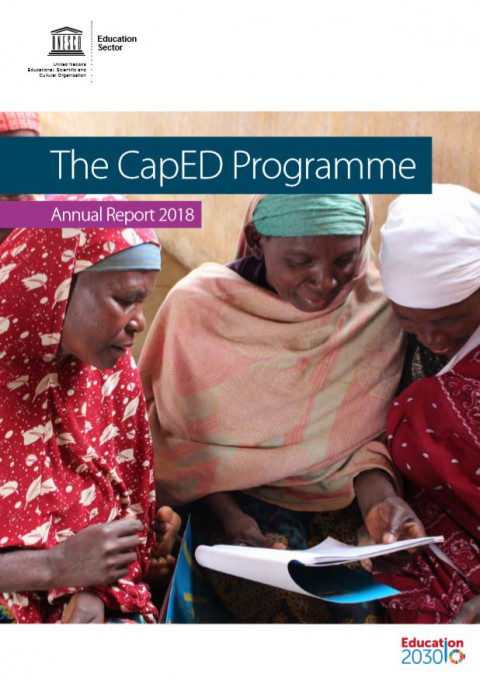 The CapED Programme: annual report 2018 발행 연도: 2019 단체 저자: UNESCO UNESCO is the United Nation’s specialized agency for education and is mandated to lead and coordinate progress towards Sustainable Development Goal 4 – “Ensure inclusive and equitable quality education and promote lifelong learning opportunities for all”. The CapED Programme is central to delivering on this mandate through capacity development. It mobilizes UNESCO’s worldwide network of specialized Institutes and offices and works with partners to assist countries as they develop and implement national plans to deliver on SDG4 commitments. The Annual Report 2018 provides information on achievements and progress made in the 25 countries where CapED is operational.