
자료
세계시민교육에 대한 이해를 넓히고 연구, 옹호 활동, 교수, 학습 등을 향상시킬 수 있는 다양하고 유용한 자료를 찾아보세요.
795 건의 결과가 검색되었습니다
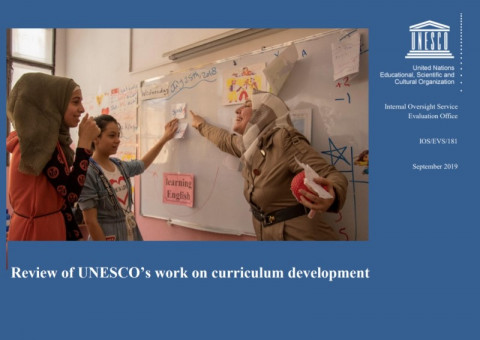 Review of UNESCO’s work on curriculum development 발행 연도: 2019 단체 저자: UNESCO In response to a request from the UNESCO Executive Board in Spring 2019, the UNESCO Internal Oversight Service (IOS) Evaluation Office has undertaken this Review to provide a mapping and analysis of UNESCO’s activities in curriculum; to provide an overview of the roles typically played by other national, regional and international actors in the field of curriculum, and to assess the demand for services from UNESCO Member States and donors in the area of curriculum. The review found that curriculum is widely considered as the foundational building block of the education system, resulting from a pedagogical and political consensus with regard to what is important in learning and why, according to both the learner’s needs and societal visions. In light of challenges of the 21st century and the need to strengthen the role of the humanities in a context dominated by technology and data, the redefinition of curriculum has become one of the main concerns of national education authorities around the world. It is also widely accepted that quality curricula can support the attainment of Sustainable Development Goal 4 (SDG 4). The review concluded that curriculum, particularly curriculum development and reform processes, should remain an area of UNESCO’s education programme as it addresses a clear need from Member States. As curriculum implies both technical and political dimensions, UNESCO can act as a neutral broker, to facilitate informed and inclusive policy dialogue. It also has a long-term tradition in facilitating complex curriculum processes in often difficult and sensitive contexts. In addition, UNESCO has the capacity to serve as a platform for international exchanges and comparative research, including through networks such as UNESCO Chairs, and coordinating knowledge hubs and communities of practice. To address curriculum with added value in the future, UNESCO should focus on providing methodological technical assistance, capacity development, standard-setting and policy advice to support the curriculum processes, products and competences in Member States while ensuring a coordinated and holistic perspective. Complementary to work on curriculum from a methodological point of view, thematic Sections at Headquarters should continue elaborating content on specific crosscutting topics. Looking to the future, the review recommends (i) maintaining a specialized category 1 institute as a lead entity on curriculum development; (ii) refining the offer of technical assistance and capacity development to Member States on curriculum development and reform; (iii) developing and maintaining a knowledge base of materials and a roster of experts on curriculum; (iv) providing a platform for policy dialogue and exchange of experience among Member States; and (v) systematizing the inclusion of curriculum in standard-setting and normative work.
  #CommitToEducation 발행 연도: 2019 단체 저자: UNESCO In December 2018, building on a series of regional consultations, the education community struck a common chord at the Global Education Meeting in Brussels, the first gathering of its kind since the adoption of the 2030 Agenda. Ministers, representatives of government, multilateral organizations, civil society and other stakeholders agreed on a set of priorities for collective action. These include an overarching focus on the right to inclusive quality education; eradicating illiteracy; including migrants, displaced persons, refugees and stateless persons in education; quality gender-responsive education and training; strengthened education for global citizenship and sustainable development; more flexible and open learning systems providing a broader range of knowledge, skills and competences at all levels; qualified teachers and domestic and international resource mobilization. This set the ground for the first review of SDG 4 by the July 2019 High level Political Forum, the UN apex platform for the follow-up and review of Agenda 2030. As the UN agency responsible for the coordination of SDG 4, mandated by the World Education Forum in Incheon (Republic of Korea, 2015), UNESCO provided an analysis of where the world stands on SDG 4, how countries have taken up the goal in their policies, and made recommendations to act better, differently and collaboratively.
  Literacy for Empowerment and Transformation: Report of the Secretary-General 발행 연도: 2024 단체 저자: United Nations (UN) | UNESCO The present report is submitted in fulfilment of the request made by the General Assembly, in its resolution 77/192, that the Secretary-General, in cooperation with the Director General of the United Nations Educational, Scientific and Cultural Organization (UNESCO), submit to the Assembly at its seventy-ninth session a report on the implementation of the resolution. The Assembly also invited UNESCO to continue its mandated role to lead and coordinate the Education 2030 Agenda and requested UNESCO to continue its coordinating and catalysing role through the implementation of the strategy of the Global Alliance for Liter acy and by continuing to provide support to Member States. The present report provides an overview of the global literacy landscape, highlighting progress, key challenges and recommendations for further promotion of literacy as part of the 2030 Agenda for Sustainable Development, the follow-up to the Transforming Education Summit and beyond.
 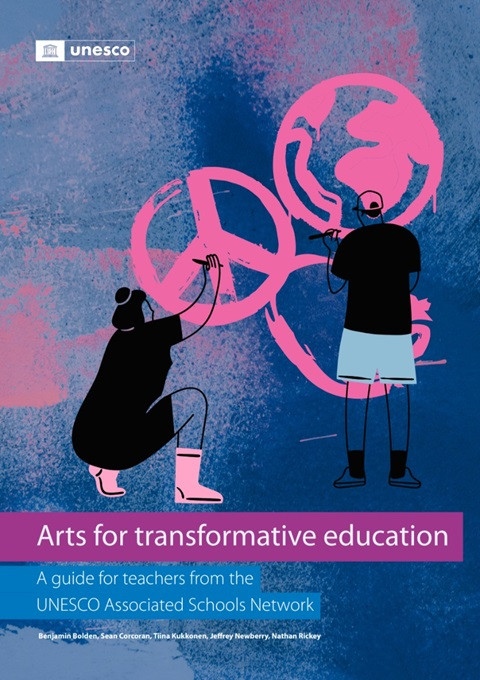 Arts for Transformative Education: A Guide for Teachers from the UNESCO Associated Schools Network 발행 연도: 2024 저자: Benjamin Bolden | Sean Corcoran | Tiina Kukkonen | Jeffrey Newberry | Nathan Rickey 단체 저자: UNESCO | Canadian Commission for UNESCO UNESCO’s vision of transformative education involves building learners’ capacities and empowering them to take action for a more peaceful and sustainable world. The arts offer tremendous potential for supporting learning that transforms individuals and communities. To fully realize that potential, teachers need to structure and support educational experiences that optimize what students will take away from them. This guide presents the research-informed Arts for Transformative Education model, a pioneering approach and thinking tool for teachers. The model was developed from data provided by over 600 teachers of the UNESCO Associated Schools network from 39 countries. The publication presents Learning Experience Descriptions and Snapshots illustrating how the model functions in real-world projects from around the globe, as well as Guidelines for Teachers outlining a step-by-step process for activating arts learning to empower transformative education.
  Global Inventory of Regional and National Qualifications Frameworks 2017, Vol. I: Thematic Chapters 발행 연도: 2017 단체 저자: European Centre for the Development of Vocational Training (CEDEFOP) | European Training Foundation (ETF) | UNESCO | UNESCO Institute for Lifelong Learning (UIL) The global inventory 2017 further strengthens the knowledge base on developments in national and regional qualifications frameworks, as implemented by countries and regions, by end of 2016. It acts as an observatory of progress in establishing NQFs, as well as the challenges and success factors in implementation. The thematic chapters (Volume I) discuss key trends and policy issues emerging from qualifications frameworks and learning outcomes reforms and developments. Volume II consists of NQF case studies of 100 countries from all continents and seven regional qualifications frameworks (RQF). The case studies look at the educational, social, economic and political context in which an NQF is embedded, main policy objectives, implementation of learning outcomes, stakeholder involvement and institutional arrangements. They also show how NQFs open for and link to validation arrangements, support recognition and learning pathways. They conclude with important lessons and future plans.The global inventory draws on inventories from four agencies: the European Centre for the Development of Vocational Training (Cedefop), the European Training Foundation (ETF), the United Nations Educational, Scientific and Cultural Organisation (UNESCO) and the UNESCO Institute for Lifelong Learning (UIL), working and communicating with country officials and experts. It also draws on extensive international research in qualifications reforms, comparability of qualifications, and use of learning outcomes.
  Global Inventory of Regional and National Qualifications Frameworks 2017, Vol. II: National and Regional Cases 발행 연도: 2017 단체 저자: European Centre for the Development of Vocational Training (CEDEFOP) | European Training Foundation (ETF) | UNESCO | UNESCO Institute for Lifelong Learning (UIL) The global inventory 2017 further strengthens the knowledge base on developments in national and regional qualifications frameworks, as implemented by countries and regions, by end of 2016. It acts as an observatory of progress in establishing NQFs, as well as the challenges and success factors in implementation. The thematic chapters (Volume I) discuss key trends and policy issues emerging from qualifications frameworks and learning outcomes reforms and developments. Volume II consists of NQF case studies of 100 countries from all continents and seven regional qualifications frameworks (RQF). The case studies look at the educational, social, economic and political context in which an NQF is embedded, main policy objectives, implementation of learning outcomes, stakeholder involvement and institutional arrangements. They also show how NQFs open for and link to validation arrangements, support recognition and learning pathways. They conclude with important lessons and future plans.The global inventory draws on inventories from four agencies: the European Centre for the Development of Vocational Training (Cedefop), the European Training Foundation (ETF), the United Nations Educational, Scientific and Cultural Organisation (UNESCO) and the UNESCO Institute for Lifelong Learning (UIL), working and communicating with country officials and experts. It also draws on extensive international research in qualifications reforms, comparability of qualifications, and use of learning outcomes.
  Recommendation on Adult Learning and Education, 2015 발행 연도: 2016 단체 저자: UNESCO | UNESCO Institute for Lifelong Learning (UIL) The Recommendation on Adult Learning and Education was adopted at the 38th Session of the UNESCO General Conference in November 2015. The Recommendation supports the Education 2030 Framework for Action, reflects global trends, and will guide the transformation and expansion of equitable learning opportunities for youth and adults. The 2015 Recommendation takes a comprehensive and systematic approach to ALE, defining three key domains of learning and skills: literacy and basic skills; continuing education and vocational skills; as well as liberal, popular and community education and citizenship skills.It also describes five transversal areas of action: policy; governance; financing; participation, inclusion and equity; and quality. These areas of action were already introduced to the international community in the Belém Framework for Action, adopted at CONFINTEA in 2009 as a means of guiding Member States in improving ALE. This integrative and consistent approach to ALE will help Member States to ensure inclusive and equitable quality education and promote lifelong learning opportunities for all (Sustainable Development Goal 4).
  World Heritage Forests: Carbon Sinks Under Pressure 발행 연도: 2021 저자: Tales Carvalho Resende | David Gibbs | Nancy Harris | Elena Osipova 단체 저자: UNESCO | International Union for Conservation of Nature (IUCN) | World Resources Institute This report provides the first global scientific assessment of greenhouse gas emissions and sequestration in forests found in UNESCO World Heritage sites.World Heritage forests, whose combined area of 69 million hectares is roughly twice the size of Germany, are some of the most biodiversity-rich habitats on Earth and play a crucial role in climate regulation by absorbing carbon dioxide (CO2) from the atmosphere. However, these forests are under increasing anthropogenic pressures, including climate change.By combining remote sensing data with site-level monitoring, this report has quantified the climate benefits of World Heritage forests for the first time, assessed the impacts on carbon of common threats to World Heritage forests and identified sites that are net carbon sources. It therefore provides information to facilitate dialogues between policymakers and local stakeholders for the development of effective solutions aimed at maintaining the continuing role of World Heritage forests as sinks and stable carbon stores for future generations.
  Getting Every School Climate-ready: How Countries are Integrating Climate Change Issues in Education 발행 연도: 2021 단체 저자: UNESCO This document summarizes the findings of selected studies by UNESCO and its partners on how climate change issues are integrated in education.These findings shed light on four key questions: where do we stand on climate change education; what do teachers say; what are the examples of country good practices on climate change education; and what does inter-ministerial collaboration on education for sustainable development look like?
  [Summary] Reimagining Our Futures Together: A New Social Contract for Education 발행 연도: 2021 단체 저자: International Commission on the Futures of Education | UNESCO Our humanity and planet Earth are under threat. Urgent action, taken together, is needed to change course and reimagine our futures. Education, long acknowledged as a powerful force for positive change, has new, urgent and important work to do. Informed by a global consultation process engaging about one million people, this report of the International Commission on the Futures of Education invites governments, institutions, organizations, and citizens around the world to forge a new social contract for education that will help us build peaceful, just, and sustainable futures together and for all.The report features in-depth looks at digital technologies, climate change, democratic slippage and societal polarization and the uncertain future of work. It aims not only to open the conversation about education to everyone and provoke thought, but to spur each of us on to action. It argues, above all, that it is through millions of individual and collective acts of courage, leadership, resistance, creativity and care that we will change course and transform education to build just, equitable and sustainable futures.