
자료
세계시민교육에 대한 이해를 넓히고 연구, 옹호 활동, 교수, 학습 등을 향상시킬 수 있는 다양하고 유용한 자료를 찾아보세요.
795 건의 결과가 검색되었습니다
 Caribbean Sheroes Initiative: Civil Society Organizations Advancing Gender Equality; Methods & Tools 발행 연도: 2021 저자: Joan Andrea Hutchinson 단체 저자: Institute for Gender and Development Studies (IGDS) | UNESCO This Toolkit recognizes the achievements and commitment of women activists that engage in Civil Society Organizations (CSOs). It documents the practice and lessons learned of twelve Jamaican Civil Society Organizations that have worked relentlessly to advance women’s rights and social justice, fostering a less violent society and more equal gender relations grounded on human rights.
 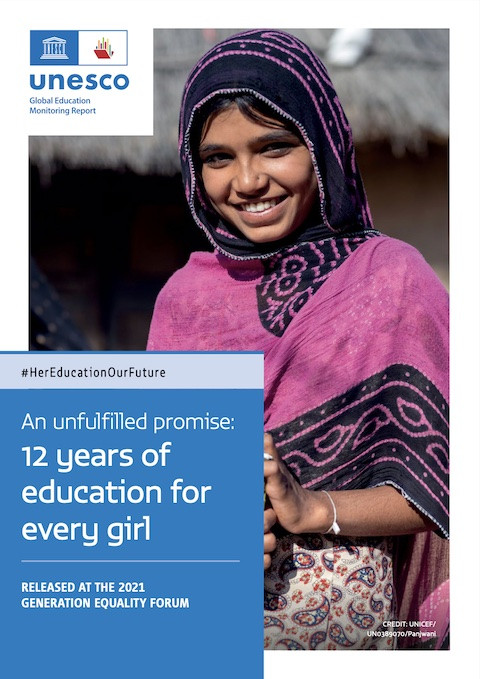 An Unfulfilled Promise: 12 Years of Education for Every Girl 발행 연도: 2021 단체 저자: Global Education Monitoring Report Team | UNESCO Just over 25 years ago in 1995, 189 governments adopted the Beijing Declaration and Platform for Action – a visionary agenda for women’s empowerment and the most comprehensive global policy framework to advance gender equality to date. Girls’ and women’s education and training featured in the document as one of 12 key areas where urgent action was needed to ensure greater equality.Since Beijing, the international community has emphasized the transformative power of girls’ and women’s education and its benefits – not only for girls and women, but for entire societies and even future generations. Under the 2030 Agenda for Sustainable Development, Sustainable Development Goal (SDG) 4 on inclusive, equitable quality education and lifelong learning sets ambitious targets to ensure equality of opportunity – including a target aiming to ensure that all girls and boys complete 12 years of education by 2030.This short paper explores the evolution of girls’ and boys’ completion rates in primary and secondary education since 1995 – and calls for action to deliver on our commitments to leaving no one behind.
  Roadmap for Integrating Global Citizenship and Liberation History in Teaching and Learning in SADC Member States 발행 연도: 2021 단체 저자: UNESCO The Roadmap for integrating GCED and SALH in teaching and learning in SADC member states is grounded in two visions: Identify common values and learning outcomes that can be advanced by GCED and SALH, with a view of promoting the sense of belonging, solidarity, and regional identity and integration. Guide education planners and practitioners to mobilize the GCED and SALH contents to contribute to the SADC vision of reconciliation, social cohesion, resilience, peace, solidarity, development, and freedom for future generations through promoting an education that equips young people with skills, values, knowledge, behaviours, and attitudes that critically and creatively address today’s local, national, regional, and global challenges through an inclusive lens. The objectives of this Roadmap are to: Provide general guidance and steps for the integration of SALH and GCED in curricula and teaching and learning practices in SADC member states; Provide articulations between the regional and local philosophical concepts and the GCED core values, such as ubuntu, to support a contextualized teaching of GCED values; Support countries to identify priority topics and steps towards integrating GCED and SALH in education policies in a manner that highlights the regional dimensions of liberation history, as well as universal values; Propose learning outcomes and competencies as well as teaching and learning approaches for GCED and SALH; Provide guidance on integration of GCED and SALH in teacher education programmes, as well as possible assessment methods.
 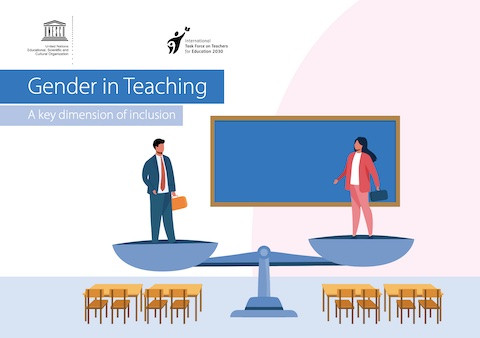 Gender in Teaching: A Key Dimension of Inclusion 발행 연도: 2020 단체 저자: UNESCO | International Task Force on Teachers for Education 2030 Without teachers, Sustainable Development Goal 4 to ensure inclusive and equitable, quality education for all by 2030 will not be achieved.Since teachers act as role models for students, inclusion in education means that the teaching workforce mirror the diversity of the classroom. As countries look to recruit more teachers to meet SDGs, one significant factor important to creating inclusive classrooms is gender.This document has been prepared for the 2020 World Teachers’ Day celebrated by UNESCO and the Teacher Task Force with the theme Teachers: Leading in crisis, reimagining the future.
  Communication and Information Programme 발행 연도: 2021 단체 저자: UNESCO UNESCO is the UN specialized agency building peace in the minds of people through education, the sciences, culture, communication and information. Our mission is to foster intercultural dialogue and sustainable development, by promoting the free flow of ideas.By adopting a multi-disciplinary and inclusive approach, UNESCO works with both duty-bearers and rights-holders across the world to develop and implement targeted actions that are born out of local needs, which ensures a holistic and results-based approach for sustainable change.In the field of communication and information, UNESCO defends and promotes freedom of expression, media independence and pluralism, and the building of inclusive knowledge societies underpinned by universal access to information and the innovative use of digital technologies.Through capacity-building, policy advice, international cooperation, monitoring and foresight in the fields of freedom of expression, access to information, and digital transformation, UNESCO will continue to empower key actors with a view to ensuring that fundamental freedoms are guaranteed online and offline, in line with international standards.This is all the more relevant to ensure the ethical development and use of emerging technologies, which have a growing impact on all aspects of the world’s societies. Citizens will also be empowered to enjoy these fundamental freedoms through the development of 21st century skills and the fostering of enabling environments for media pluralism and diversity.
  Getting the Message Across: Reporting on Climate Change and Sustainable Development in Asia and the Pacific; A Handbook for Journalists 발행 연도: 2018 단체 저자: UNESCO Getting the Message Across, Reporting on Climate Change and Sustainable Development in Asia and the Pacific: A Handbook for Journalists has been customized for journalists to tell the climate change story specific to the region. It explores the essential aspects of climate change, including its injustices to vulnerable communities, especially women and girls and least developed countries, and provides examples of best practices and stories of hope unique to the region. It can be used as a resource for journalists to understand the science of climate change, as well as helping journalists to improve their reporting of the environmental, social, economic ̧ political, technological and other angles of the story.
  Not Just Hot Air: Putting Climate Change Education Into Practice 발행 연도: 2015 단체 저자: UNESCO This publication presents UNESCO’s work on Climate Change Education for Sustainable Development in 2012/2013, and intends to serve as a reference for similar work in the future.It provides: National case studies on five CCESD country pilots conducted by UNESCO in 2012/2013 in: Dominican Republic, Guyana, Mauritius, South Africa and Tuvalu. The case studies include an analysis and assessment of the undertaken CCESD capacity-building work for policy makers and teacher educators, lessons learnt about the implementation of the programme, and conclusions. 16 short country profiles from around the world on policy development regarding ESD and Climate Change Education. Recommendations on Climate Change Education in the context of Education for Sustainable Development, developed by UNESCO in order to establish a common understanding of what needs to be done to enhance education responses to climate change. This publication is intended to provide policy makers and teacher educators with a compact source of information on how to mobilize education to address climate change.
  The Right to Education: What’s at Stake in Afghanistan?; A 20-Year Review 발행 연도: 2021 단체 저자: UNESCO This report takes stock of the achievements in education made by Afghanistan over the past 20 years and sets out immediate action to safeguard the right to education for all learners following deep political change in the country in 2021.Although Afghanistan lags far behind countries across South and West Asia on most development indicators, it has made impressive progress in education over two decades. Enrolment has increased ten-fold, with substantial gains for girls and female literacy. Female teachers have been hired. Steady efforts have been made to expand the school network across the country.The country has ratified key international normative instruments relating to the right to education; enshrined this right in the Constitution and adopted a wide range of policy measures to increase access, improve education quality and reduce gender, socio- economic and rural/urban disparities.But the challenges remain colossal, with half the primary school-aged children not enrolled in school and very low learning outcomes. The country is highly dependent on external aid to sustain its education system. It needs to uphold state obligations on the right to education without any discrimination and continue removing barriers that impede progress towards the Sustainable Development Goal on education to build the country’s future.
  Inclusion in Early Childhood Care and Education in High-Income Countries 발행 연도: 2021 단체 저자: Global Education Monitoring Report Team | UNESCO | Deloitte Access Economics This report reviews the international research and policy literature concerning approaches to inclusion in early childhood care and education (ECCE) in different high-income jurisdictions globally. Each chapter highlights examples of policies and practices which can foster inclusion in ECCE across the themes set out in the Global Education Monitoring (GEM) Report in 2020.As a critical period for children’s intellectual, emotional, social, physical and moral development, supporting inclusion in ECCE is of particular importance for supporting lifelong learning and equitable opportunities for all children. A number of key messages emerging from this review that are instructive to designing policies to promote inclusion in ECCE are summarised below. Inclusion in ECCE is fostered through complementary universal and targeted approaches to most aspects of ECCE governance, financing, policy and service delivery. The implementation of ECCE laws and policies is key to supporting inclusion. As the central actors delivering ECCE services, collaboration within the ECCE workforce is crucial to supporting a community of practice which leads and shares inclusion, while avoiding risks of specialisation. Finally, while many existing ECCE policies, resources and tools are grounded in a deficits-based approach to understanding need, inclusion may be better supported through an approach which focusses on child learning needs and strengths.
  Media and Information Literacy for Building Culture of Open Government: Proceedings of the International Conference (Khanty-Mansiysk, Russian Federation, 7–10 June 2016) 발행 연도: 2017 단체 저자: Interregional Library Cooperation Centre | UNESCO The International Conference on Media and Information Literacy for Building a Culture of Open Government was convened in Khanty-Mansiysk, Russian Federation, on 6 to 10 June 2016. The objectives of this pioneering forum were as follows: define the conceptual framework of open government/open government culture exchange innovative and creative experiences and best practices in open government; (3) discuss how MIL competencies of different governance stakeholders can foster (or facilitate) open government practice promote the adoption of MIL educational programmes as a requirement in open government adoption.