
자료
세계시민교육에 대한 이해를 넓히고 연구, 옹호 활동, 교수, 학습 등을 향상시킬 수 있는 다양하고 유용한 자료를 찾아보세요.
795 건의 결과가 검색되었습니다
 Education for Sustainable Development: A Roadmap 발행 연도: 2022 단체 저자: UNESCO This roadmap sets out the urgent challenges facing the planet and underlines the implementation of the new Education for Sustainable Development: Towards achieving the SDGs (ESD for 2030) framework, which was adopted with the aim of increasing the contribution of education to building a more just and sustainable world. ESD for 2030 will step up actions on five priority action areas on policy, education environments, building capacities of educators, youth and local level action, stressing further ESD’s key role for the successful achievement of the 17 SDGs and the great individual and societal transformation required to address the urgent sustainability challenges. The roadmap also underlines the key areas of implementation of the ESD for 2030 framework. ESD is widely recognized as an integral element of Agenda 2030, in particular Sustainable Development Goal 4 (SDG 4), and a key enabler of all the other SDGs.
  Reflect–Share–Act: A Guide to Community-based Education for Sustainable Development 발행 연도: 2021 단체 저자: UNESCO | UNESCO Bangkok This guidebook aspires to build a community where learning for sustainable development takes place everywhere for everyone as an ongoing practice. It introduces you to Reflect-Share-Act, a process to discover and define sustainable development in your own contexts together with others in your community. The guide compiles resources that can support this learning process, including stories of various communities’ actual experiences of Reflect-Share-Act.
 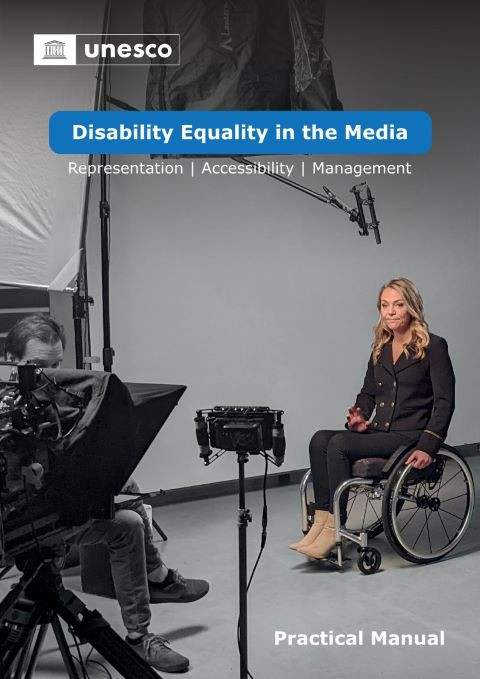 Disability Equality in the Media: Representation, Accessibility, Management; Practical Manual 발행 연도: 2025 단체 저자: UNESCO Promoting Disability Equality in the Media Despite all the positive changes happening in newsrooms and leadership roles, diversity in the media remains a challenge.When certain groups are left out, the media fails to present all angles of a story, missing diverse perspectives and innovative ideas. Consequently, audiences do not receive the full picture, and promises of fair and accurate representation often fall short, affecting our perceptions of each other in society. It is the case of persons with disabilities, who make up 16 percent of the global population but remain one of the most marginalized groups. Media coverage frequently overlooks them, and when their stories are told, they are often framed through stereotypes. This not only creates barriers but also denies them their rights. To address this, media organizations should enhance editorial policies and representation, improve employment conditions, and foster a more inclusive environment for professionals with disabilities.The Practical Manual and Master Class provide hands-on advice to editorial teams on how to ensure fair and unbiased coverage of disability. For content producers, it details how to make media content and services accessible. To managers and decision makers, the material inspires change, demonstrating how disability equality can contribute to media industry growth and create new revenue streams.This work contributes to the implementation of the United Nations Convention on the Rights of Persons with Disabilities (2006) and promotes freedom of expression, media development, and access to information for the meaningful participation of persons with disabilities in public debate.
  Seoul Declaration on Media and Information Literacy for Everyone and by Everyone: A Defence Against Disinfodemics 발행 연도: 2020 단체 저자: UNESCO On the 10th anniversary of Global Media and Information Literacy Week, stakeholders from all over the world gave a resounding affirmation as to the urgency to strengthen people’s media and information literacy competencies. The number of celebratory events increased from one hundred events in 2019 to over three hundred events in 2020.The outcomes of the deliberations in the Feature Conference and Youth Agenda Forum have been immortalized in the Seoul Declaration on Media and Information Literacy for Everyone and by Everyone: A Defence against Disinfodemics. This Seoul Declaration benefited from a consultation with close to one thousand registered participants.Through the Seoul Declaration, partners and participants called for media and information literacy for all. They:Emphasized that “media and information literacy (MIL) is a core competency for addressing the disinfodemic, and that MIL also contributes to access to information, freedom of expression, protection of privacy, prevention of violent extremism, promotion of digital security and combating hate speech and inequality”.Recognized “UNESCO’s effort to promote a Global MIL Cities Framework to stimulate creative learning about MIL in city spaces and the involvement of non-traditional actors in promoting MIL”.Called on duty bearers at the national to city levels to “commit to advancing ‘Media and Information Literacy for Everyone and by Everyone’ through policy and resource allocation across all relevant areas, including education, health, elections, child protection, climate, gender equality, governance and regulation, to mention some examples”.Urged technological intermediaries to “play an accountable role, through institutionalized multi-stakeholder systems, as part of the social endeavor to tackle disinformation and to build communities that are media and information literate”.Requested UNESCO, in cooperation with other UN Agencies, to “maintain a focus on inclusion of disadvantaged groups in MIL engagements, and to continue to foster gender equality in relation to MIL.”
 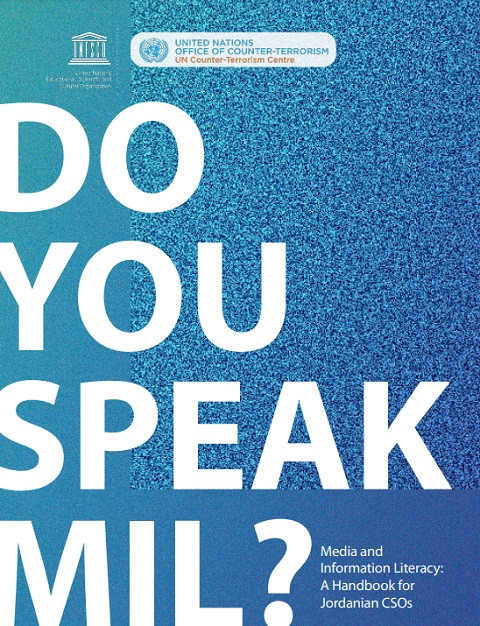 Do You Speak MIL?: Media and Information Literacy; A Handbook for Jordanian CSOs 발행 연도: 2020 저자: Milica Pesic | Lucien Michael Steinberg | Anoud Al-Zou’bi 단체 저자: Media Diversity Institute | UNESCO | UN. Office of Counter-Terrorism (UNOCT) This publication, “Do You Speak MIL?: Media and Information Literacy – A Handbook for Jordanian CSOs,” provides civil society organizations (CSOs) with practical tools to integrate Media and Information Literacy (MIL) into their training programs. Each chapter includes a technical introduction, thought-provoking questions, and real-life examples to guide trainers. Published in 2020, this handbook is a valuable resource for promoting MIL within Arab countries, intending to empower communities to navigate the evolving media landscape.
 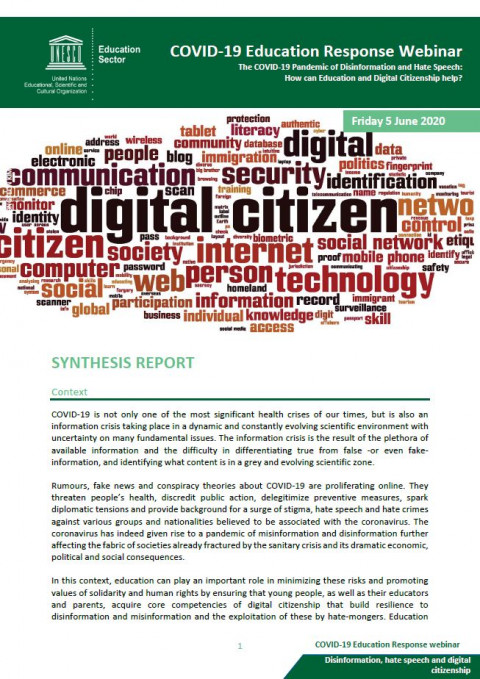 The COVID-19 Pandemic of Disinformation and Hate Speech: How can Education and Digital Citizenship Help? ; Synthesis Report 발행 연도: 2020 단체 저자: UNESCO COVID-19 is not only one of the most significant health crises of our times, but is also an information crisis taking place in a dynamic and constantly evolving scientific environment with uncertainty on many fundamental issues. The information crisis is the result of the plethora of available information and the difficulty in differentiating true from false -or even fake- information, and identifying what content is in a grey and evolving scientific zone.In this context, education can play an important role in minimizing these risks and promoting values of solidarity and human rights by ensuring that young people, as well as their educators and parents, acquire core competencies of digital citizenship that build resilience to disinformation and misinformation and the exploitation of these by hate-mongers. Education can also help young people engage in the online environment in a safe, sensitive, critical, ethical and accountable way as well as encourage them to play a role in pioneering educational initiatives that contribute to promoting digital citizenship.
 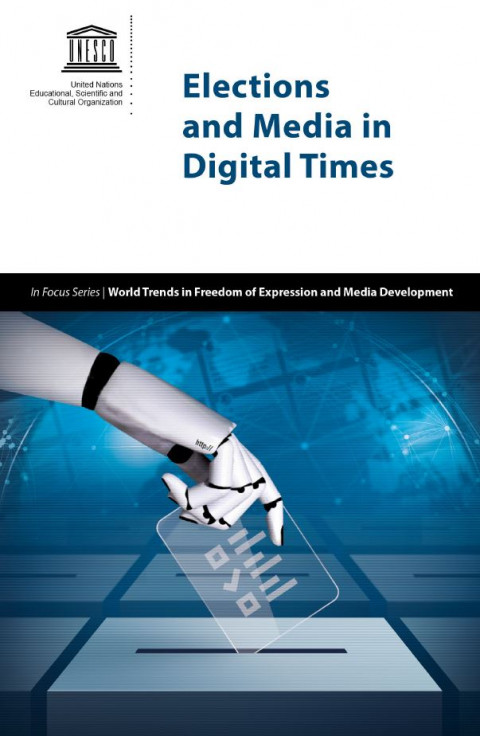 Elections and Media in Digital Times (In Focus Series: Global Trends in Freedom of Expression and Media Development, 2019) 발행 연도: 2019 저자: Tarlach McGonagle | Maciek Bednarski | Mariana Francese Coutinho | Arthur Zimin 단체 저자: UNESCO Digital companies are enabling politicians, political parties and voters to communicate in unprecedented ways, and expanding opportunities for seeking, receiving and imparting political information and ideas. Alongside positive developments, there also growing concerns about emerging and increasing threats to the integrity and credibility of elections, as well as the media's contribution to free, fair, transparent and peaceful electoral processes.This report highlights three converging trends in media and elections in digital times: the rise of disinformation, intensifying attacks on journalists, and disruptions linked to the use of information and communication technology in electoral arrangements. Offering possible responses to the challenges at hand, this study is a tool for governments, election practitioners, media organizations, journalists, civil society, the private sector, academia and individuals.
  Making the Case For Inclusive Quality Physical Education Policy Development: A Policy Brief 발행 연도: 2021 저자: Nancy McLennan 단체 저자: UNESCO This evidence-based policy brief presents the benefits of investing in inclusive quality physical education (QPE) policy development. Content draws directly on findings from in-country interventions which demonstrate the value of inter-sectoral partnerships in QPE policy development and the delivery of low cost/high impact QPE programming which stands to accelerate post-COVID recovery efforts. A series of practical recommendations are included for public and private stakeholders in the sport-education ecosystem, alongside resources to support the implementation of recommendations.
 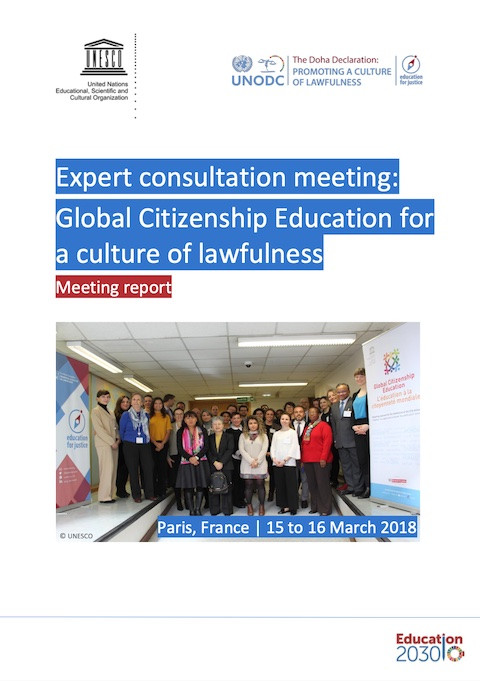 Expert Consultation Meeting: Global Citizenship Education for a Culture of Lawfulness, Paris, France, 15 to 16 March 2018; Meeting Report 발행 연도: 2018 단체 저자: UNESCO | UN. Office on Drugs and Crime (UNODC) In the context of a UNESCO/UNODC partnership on “Global Citizenship Education for a Culture of Lawfulness”, an expert consultation meeting was held in Paris on March 15 and 16 of 2018. The purpose of the partnership is to strengthen the capacities of educational systems to promote the rule of law. To this end, the partnership aims to empower and equip learners to act and engage in society as constructive and ethically responsible agents of change, supporting peace, justice, and strong institutions. This notably contributes to the achievement of the 2030 Agenda for Sustainable Development, and in particular Sustainable Development Goals 4 and 16. Additionally, the partnership intends to enable learners to be both motivated and capable to respond resiliently to crime and violence. The meeting had three broad objectives:To help clarify the conceptual foundation of the partnership;to identify the measures that can be taken in the education sector to promote a culture of lawfulness;and to identify effective educational approaches. Thus, the meeting is meant to elucidate core concepts and identify promising educational approaches in the promotion of a culture of lawfulness by asking fundamental questions, including: What constitutes the rule of law and a culture of lawfulness? How do we create demand for the rule of law? How do we ensure learners apply these principles? How do we ensure they survive in a context where there is no rule of law?
  Social Contract Pedagogy: A Dialogical and Deliberative Model for Global Citizenship Education; Background Paper for the Futures of Education Initiatives 발행 연도: 2020 저자: Richard Desjardins | Carlos Alberto Torres | Susan Wiksten 단체 저자: UNESCO We propose that together Social Contract Pedagogy (SCP) and Global Citizenship Education (GCE) offer a comprehensive vision including key principles and core elements that are important for rethinking education and shaping the future of the world. We introduce the novel concept of Social Contract Pedagogy (SCP) as a means to adapt the social contract in liberal democracies which has been (conceptually) located at the level of the state, to the level of the classroom and other pedagogically relevant contexts. A key feature of this pedagogy is the negotiation of values and norms in ways that maintain cohesion and inclusion and avoids too much power in the hands of sectarian extremes (of any kind) which tend to impose their views on others, oppress and exclude. This includes using fake news, denying scientific debates and/or any extremely politicized interpretations of evidence and facts to obfuscate or deny consequences of individual and group choices and behavior, but also ‘othering’ of any kind whether from the political right or the political left. In our view, this is an essential premise for the education of democratic citizens. Citizenship education of this kind is seen as essential for the survival and growth of liberal democracies in the future.