
자료
세계시민교육에 대한 이해를 넓히고 연구, 옹호 활동, 교수, 학습 등을 향상시킬 수 있는 다양하고 유용한 자료를 찾아보세요.
1,583 건의 결과가 검색되었습니다
 Décennie des Nations Unies pour l'Education en vue du Développement Durable, 2005-2014: la DEDD en bref 발행 연도: 2005 단체 저자: UNESCO This document briefs on the Decade of Education for Sustainable Development (DESD), detailing its objectives, the implementation plans, good practices, and challenges that DESD faces. Decenio de las Naciones Unidas de la Educación para el Desarrollo Sostenible, 2005-2014: el Decenio en pocas palabras 발행 연도: 2005 단체 저자: UNESCO This document briefs on the Decade of Education for Sustainable Development (DESD), detailing its objectives, the implementation plans, good practices, and challenges that DESD faces.
 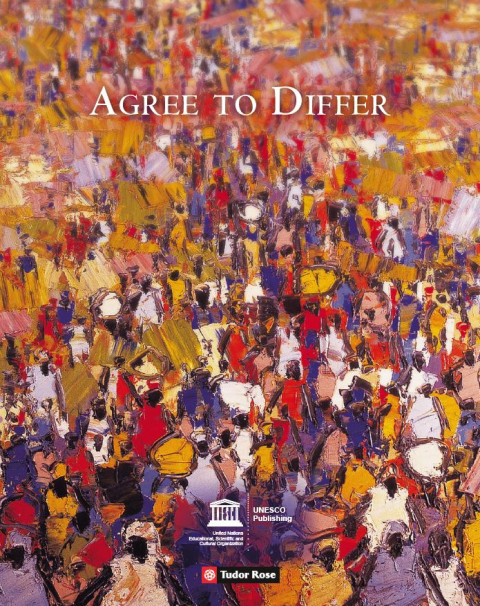 Agree to Differ 발행 연도: 2015 단체 저자: UNESCO Dialogue on the basis of respect, tolerance, human rights and dignity has never been so important. This is the spirit of the International Decade for the Rapprochement of Cultures (2013-2022). The International Decade originates in the United Nations General Assembly Resolution 67/104 adopted in December 2012, co-sponsored by Kazakhstan and designating UNESCO as lead agency. This drew on a Resolution of the UNESCO General Conference and the experience of the 2010 International Year for the Rapprochement of Cultures which UNESCO led forward with activities across the world.The objective of the International Decade is to promote mutual understanding and respect for diversity, rights and equal dignity between peoples, through intercultural dialogue and concrete initiatives. This is essential for all societies today, undergoing deep transformation. The surge of conflict, acts of violence, extremism and intolerance pose a threat to peace, undermining the unity of humanity and calling on us all to redouble our efforts to advance a culture of peace, through dialogue, the safeguarding of cultural heritage, and the promotion of global citizenship education.The International Decade for the Rapprochement of Cultures embodies a commitment to explore new articulations between cultural diversity and universal values. The rapprochement of cultures calls for a commitment to the principles of human dignity and solidarity as the corner stones of living together within and between societies, making the most of all sources of diversity.This publication bears testimony to the urgency of addressing contemporary challenges through intercultural and interreligious dialogue in order to deepen understanding and cooperation for peace. Through concrete examples, including experiences at the community level from across the world, the publication showcases why cultural diversity, intercultural dialogue and responsive democratic governance are vital for the enhancement of mutual understanding, the growth of tolerance, and the building of bridges of mutual respect and dignity.
  UN Decade of Education for Sustainable Development, 2005-2014: the DESD at a glance 발행 연도: 2005 단체 저자: UNESCO This document briefs on the Decade of Education for Sustainable Development (DESD), detailing its objectives, the implementation plans, good practices, and challenges that DESD faces. Décennie des Nations Unies pour l'Éducation au Développement Durable, 2005-2014: l'DEED un coup d'oeil 발행 연도: 2005 단체 저자: UNESCO Ce document mémoires sur la Décennie de l'Éducation pour le Développement Durable (DEDD), détaillant ses objectifs, les plans de mise en œuvre, les bonnes pratiques et les défis auxquels fait face DEDD. Sandwatch: adaptar-se à mudança climática e educar para o desenvolvimento sustentável 발행 연도: 2012 저자: Gillian Cambers | Paul Diamond 단체 저자: UNESCO Sandwatch provides a framework for children, youth and adults, with the help of teachers and local communities, to work together to critically evaluate the problems and conflicts facing their beach environments, and to develop sustainable approaches to address these issues. It also helps beaches become more resilient to climate change. The preliminary chapters of this publication focus on how to get started with Sandwatch activities and examine ways to address climate change impacts. The principle aim of this publication is to document the Sandwatch methodology: monitoring, analysing, sharing and taking action. An activities-orientated approach is used to provide step-by-step instructions to cover monitoring methods and data analysis, including observation and recording, erosion and accretion, beach composition, human activities, beach debris, water quality, waves, longshore currents, plants and animals. The activities are related to (a) sustainable development issues, including: beach ownership, mining beaches for construction material, conflict resolution between different beach users, pollution, conservation of endangered species, and (b) climate change adaptation issues: sea level rise, rising temperatures, ocean acidification and increased extreme events. Ways to share findings and create a Sandwatch network are detailed including methods such as the use of local media, websites, social networking and video production. Finally, ways are discussed to design, plan and implement a Sandwatch project to fulfill one or all of the following criteria: (a) addressing a particular beach-related issue, (b) enhancing the beach, and (c) promoting climate change adaptation. Sandwatch stands as an example of Education for Sustainable Development in action, and is being targeted as one of several flagship projects for the United Nations Decade of Education for Sustainable Development (2005–2014). As the world confronts the growing threat of climate change, Sandwatch presents an opportunity to help people and ecosystems respond to present and future changes in a practical manner. Beaches are among the ecosystems most at risk from climate change as they face rising sea levels and increased more intense storms. By contributing to ecosystem health and resilience, Sandwatch can help people from all walks of life learn about climate change and how their actions can contribute to the adaptation process. Sandwatch: adapting to climate change and educating for sustainable development 발행 연도: 2010 저자: Gillian Cambers | Paul Diamond 단체 저자: UNESCO Sandwatch provides a framework for children, youth and adults, with the help of teachers and local communities, to work together to critically evaluate the problems and conflicts facing their beach environments, and to develop sustainable approaches to address these issues. It also helps beaches become more resilient to climate change. The preliminary chapters of this publication focus on how to get started with Sandwatch activities and examine ways to address climate change impacts. The principle aim of this publication is to document the Sandwatch methodology: monitoring, analysing, sharing and taking action. An activities-orientated approach is used to provide step-by-step instructions to cover monitoring methods and data analysis, including observation and recording, erosion and accretion, beach composition, human activities, beach debris, water quality, waves, longshore currents, plants and animals. The activities are related to (a) sustainable development issues, including: beach ownership, mining beaches for construction material, conflict resolution between different beach users, pollution, conservation of endangered species, and (b) climate change adaptation issues: sea level rise, rising temperatures, ocean acidification and increased extreme events. Ways to share findings and create a Sandwatch network are detailed including methods such as the use of local media, websites, social networking and video production. Finally, ways are discussed to design, plan and implement a Sandwatch project to fulfill one or all of the following criteria: (a) addressing a particular beach-related issue, (b) enhancing the beach, and (c) promoting climate change adaptation. Sandwatch stands as an example of Education for Sustainable Development in action, and is being targeted as one of several flagship projects for the United Nations Decade of Education for Sustainable Development (2005–2014). As the world confronts the growing threat of climate change, Sandwatch presents an opportunity to help people and ecosystems respond to present and future changes in a practical manner. Beaches are among the ecosystems most at risk from climate change as they face rising sea levels and increased more intense storms. By contributing to ecosystem health and resilience, Sandwatch can help people from all walks of life learn about climate change and how their actions can contribute to the adaptation process.
  Preventing Violent Extremism through Education: Effective Activities and Impact; Policy Brief 발행 연도: 2018 단체 저자: UNESCO Since 2015, UNESCO has driven forward the importance of education in preventing violent extremism (PVE-E) in the framework of its efforts to advance Global Citizenship Education (GCED). Despite the growing number of PVE-E activities globally, there is a lack of evidence on their effectiveness and impact.This Policy Brief seeks to provide answers to two questions: (i) What types of PVE-E activities tend to be more effective in having impact? and (ii) What is the proven impact of PVE-E activities?The aim is to help education stakeholders undertake programmes with stronger positive impact and take evidenced-informed decisions on spending priorities.The Policy Brief shows that PVE-E does work, highlighting various kinds of activities proven to be particularly effective, and recommending ways forward to develop stronger evidence on what works and does not. La Prévention de l’extrémisme violent par l’éducation: activités efficaces et impact; note d’orientation 발행 연도: 2018 단체 저자: UNESCO Depuis 2015, l’UNESCO a mis en avant l’importance de l’éducation dans la prévention de l’extrémisme violent (PEV-E), dans le cadre de ses efforts pour faire progresser l’éducation à la citoyenneté mondiale (ECM). Malgré le nombre croissant d’activités de PEV-E à travers le monde, il manque des preuves de leur efficacité et leur impact.Ce document d’orientation a pour objectif de répondre à deux questions : (i) Quels types d’activités de PEV-E paraissent plus efficaces ? et (ii) Quel est l’impact prouvé des activités de PEV-E ?L’objectif est d’aider les acteurs de l’éducation à entreprendre des programmes ayant un plus grand impact et à prendre des décisions éclairées sur les priorités en matière de dépenses.Le document d’orientation montre que la PEV-E fonctionne, mettant en évidence divers types d’activités qui se sont avérées particulièrement efficaces. Il recommande enfin des actions à entreprendre pour obtenir davantage de preuves sur ce qui fonctionne ou pas. Guardarenas Sandwatch: adaptarse al cambio climático y educar para el desarollo sostenible 발행 연도: 2012 저자: Gillian Cambers | Paul Diamond 단체 저자: UNESCO Sandwatch provides a framework for children, youth and adults, with the help of teachers and local communities, to work together to critically evaluate the problems and conflicts facing their beach environments, and to develop sustainable approaches to address these issues. It also helps beaches become more resilient to climate change. The preliminary chapters of this publication focus on how to get started with Sandwatch activities and examine ways to address climate change impacts. The principle aim of this publication is to document the Sandwatch methodology: monitoring, analysing, sharing and taking action. An activities-orientated approach is used to provide step-by-step instructions to cover monitoring methods and data analysis, including observation and recording, erosion and accretion, beach composition, human activities, beach debris, water quality, waves, longshore currents, plants and animals. The activities are related to (a) sustainable development issues, including: beach ownership, mining beaches for construction material, conflict resolution between different beach users, pollution, conservation of endangered species, and (b) climate change adaptation issues: sea level rise, rising temperatures, ocean acidification and increased extreme events. Ways to share findings and create a Sandwatch network are detailed including methods such as the use of local media, websites, social networking and video production. Finally, ways are discussed to design, plan and implement a Sandwatch project to fulfill one or all of the following criteria: (a) addressing a particular beach-related issue, (b) enhancing the beach, and (c) promoting climate change adaptation. Sandwatch stands as an example of Education for Sustainable Development in action, and is being targeted as one of several flagship projects for the United Nations Decade of Education for Sustainable Development (2005–2014). As the world confronts the growing threat of climate change, Sandwatch presents an opportunity to help people and ecosystems respond to present and future changes in a practical manner. Beaches are among the ecosystems most at risk from climate change as they face rising sea levels and increased more intense storms. By contributing to ecosystem health and resilience, Sandwatch can help people from all walks of life learn about climate change and how their actions can contribute to the adaptation process.