
자료
세계시민교육에 대한 이해를 넓히고 연구, 옹호 활동, 교수, 학습 등을 향상시킬 수 있는 다양하고 유용한 자료를 찾아보세요.
51 건의 결과가 검색되었습니다
 From Justice for the Past to Peace and Inclusion for the Future: A Development Approach to Transitional Justice 발행 연도: 2020 저자: Lorena Mellado | Chelsea Shelton | Aparna Basnyat | Krishna Velupillai | Chris Mahoney | Djordje Djordjević 단체 저자: United Nations Development Programme (UNDP) Comprehensive transitional justice processes supports the achievement of Agenda 2030, by promoting justice, peace, quality education and gender equality as a vehicle towards for more inclusive justice systems.Through more than 10 years, UNDP has been supporting transitional justice processes with an integrated approach to support sustaining peace. This strategic report covers a wide range of UNDP’s support to transitional justice processes providing good practices, country cases and key strategic alliances with UN partners, such as OHCHR, UN Women, and UN peace missions.The report looks to: Outline the main areas of UNDP’s work in transitional justice Share successful experiences and current challenges from countries around the world Offer recommendations for strategic transitional justice programmingThe key areas highlighted in the report are participatory processes, institutional transformation for proper accountability, reparations programmes and conflict prevention and sustaining peace to promote resilience and social cohesion for affected communities.Key lessons and recommendations are also outlined for practitioners to consider when designing and implementing transitional justice programmes and to draw out key findings and recommendations as well as identifies opportunities for more investment in transitional justice moving forward.
  تحسين أثر منع التطرف العنيف: حقيبة أدوات للتصميم والرصد والتقييم 발행 연도: 2018 저자: Lucy Holdaway & Ruth Simpson 단체 저자: United Nations Development Programme (UNDP) ان الهدف من مجموعة الأدوات هذه هو المساعدة في تجسير هذه الفجوة التي تم تصميمها لتكون وثيقة حية للممارسين في برنامج الأمم المتحدة الإنمائي والشركاء الذين يعملون على برامج تركز بشكل خاص على منع التطرف العنيف أو تحتوي على عناصر لها صلة بمنع التطرف العنيف. تعتمد المجموعة على الممارسات الفضلى في التصميم والمراقبة والتقييم في سياقات معقدة وتعاني من النزاع وتساعد في تكييف برامج منع التطرف العنيف حسب السياق. تشتمل مجموعة الأدوات على نماذج وعمليات وأساليب بالإضافة الى بنك مؤشرات يمكن استخدامه ضمن برنامج الأمم المتحدة الإنمائي من خلال شركاء على المستوى الوطني والمحلي وكجزء من نهج بناء القدرات حول المراقبة. Improving the Impact of Preventing Violent Extremism Programming A Toolkit for Design, Monitoring and Evaluation 발행 연도: 2018 저자: Lucy Holdaway & Ruth Simpson 단체 저자: United Nations Development Programme (UNDP) The objective of this toolkit is to help close this gap. It is designed as a living document for UNDP practitioners and partners who are working on programmes that are either specifically focused on PVE, or have PVE-relevant elements to them. It draws on best practice for design, monitoring and evaluation in complex, conflict contexts adapting these for PVE programming. The toolkit includes modules, processes and approaches as well as an indicator bank that can be used within UNDP, with national and community level partners and as part of a capacity-building approach around monitoring.
  الشباب والسلام والأمن: كتيب إعداد البرامج 발행 연도: 2021 단체 저자: United Nations Population Fund (UNFPA) | United Nations Development Programme (UNDP) | UN. Peacebuilding Support Office (UN. PBSO) | Folke Bernadotte Academy (FBA) الشباب والسلام والأمن: يسعى دليل البرمجة إلى المساهمة في الاستعداد التشغيلي وقدرة ممارسي الأمم المتحدة على تنفيذ أجندة الشباب والسلام والأمن.الغرض من الكتيب هو أن تستخدمه الأفرقة القطرية والإقليمية والعالمية في منظومة الأمم المتحدة، ولكنه يمكن أن يوفر أيضًا رؤى وإرشادات للممارسين الميدانيين خارج الأمم المتحدة، بما في ذلك المنظمات الدولية أو الإقليمية الأخرى، والنظراء الوطنيون، والشباب الذين يقودهم الشباب. المنظمات والحركات والشبكات التي تركز على الشباب ومنظمات بناء السلام.يعتمد الكتيب على الأدلة الحديثة والزخم المتزايد لإعطاء الأولوية لبرامج السلام والأمن الشاملة للشباب والتي تراعي الشباب، كعنصر أساسي في جهود بناء السلام الأكثر استدامة وطويلة الأمد. Youth, Peace and Security: A Programming Handbook 발행 연도: 2021 단체 저자: United Nations Population Fund (UNFPA) | United Nations Development Programme (UNDP) | UN. Peacebuilding Support Office (UN. PBSO) | Folke Bernadotte Academy (FBA) Youth, Peace and Security: A Programming Handbook seeks to contribute to the operational readiness and capacity of United Nations practitioners to implement the youth, peace and security (YPS) agenda.The handbook is intended to be used by country, regional and global teams in the United Nations system, but it can also provide insights and guidance to field practitioners beyond the United Nations, including other international or regional organizations, national counterparts, youth-led and youth-focused organizations, movements and networks, and peacebuilding organizations.The handbook builds on recent evidence and increasing momentum to prioritize youth-inclusive and youth-sensitive peace and security programming, as a core element of more sustainable and long-lasting peacebuilding efforts.
 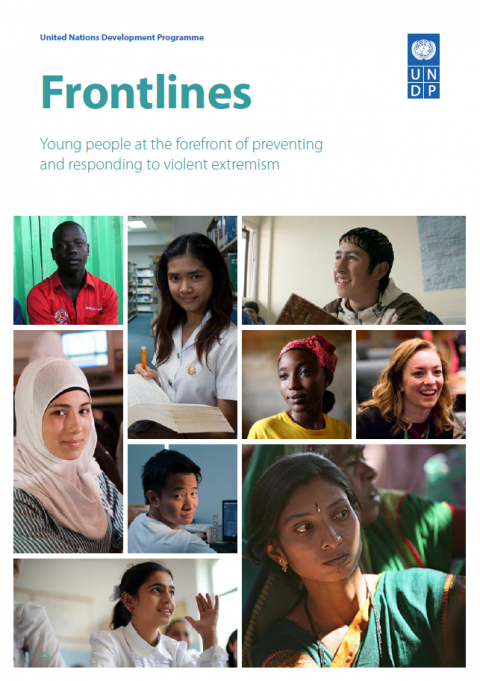 Frontlines - Young people at the forefront of preventing and responding to violent extremism 발행 연도: 2019 단체 저자: United Nations Development Programme (UNDP) The Frontlines global report was developed by the United Nations Development Programme (UNDP), under the umbrella of the UNDP Youth Global Programme for Sustainable Development and Peace (Youth-GPS 2016–2020), and in collaboration with the Oslo Governance Centre (OGC). This new global research initiative was made possible with generous support by the Government of Norway. The report puts forward and synthesizes data from field case studies/focus group discussions, a mapping of youth-led actions in the five regions, a global literature review, and a global survey on Youth and countering and preventing violent extremism for practitioners, to better understand young people’s aspirations and perceptions and improve programming. It is titled “Frontlines” in recognition of the fact that young people are already at the forefront of efforts to address and prevent violent extremism (PVE). Effective and long-term prevention approaches require the active support of, and investment in, young people’s holistic development priorities, their initiatives and their participation in decision-making.
  UN and SDGs: A Handbook for Youth 발행 연도: 2017 저자: Sunyoung Hwang | Jiwon Kim 단체 저자: UN. Economic and Social Commission for Asia and the Pacific (UN. ESCAP) | Asian Development Bank (ADB) | United Nations Development Programme (UNDP) "UN and SDGs: A Handbook for Youth" is an outcome of ESCAP East and North-East Asia’s internship program that brings young people closer to the work of the United Nations, as well as to the achievement of the ambitious set of Sustainable Development Goals (SDGs). As young leaders of tomorrow, it is pivotal that youth are informed and engaged with the global vision for the future. Over the next fifteen years, youth will not only directly experience the outcome of SDGs and plans, but will also be the key driver for their successful implementation. For this reason, it is vital to raise awareness about the recently adopted 17 SDGs and the 2030 Agenda for Sustainable Development among youth, build a platform for discussion, and create the conditions for active engagement. This Handbook explores SDGs and the 2030 Agenda from a youth perspective. In the first chapter, it introduces the concept of sustainable development and outlines its historical development through the transition from Millennium Development Goals (MDGs) to SDGs. The second chapter discusses how youth can be harnessed as a major agent of change in achieving sustainable development, focusing on several pertinent youth issues in Asia and the Pacific. The final chapter introduces the UN system and its regional arm, ESCAP, explaining their role in the successful implementation of SDGs. 청년을 위한 UN과 SDGs 핸드북 발행 연도: 2017 저자: Sunyoung Hwang | Jiwon Kim 단체 저자: UN. Economic and Social Commission for Asia and the Pacific (UN. ESCAP) | Asian Development Bank (ADB) | United Nations Development Programme (UNDP) 이 핸드북은 유엔의 업무와 지속가능발전목표(SDGs)에 대해 배울 수 있는 유엔 인턴십 프로그램을 통해 만들어졌습니다. 청년들이 내일의 리더로써 미래 글로벌 비전을 인식하고, 이에 적극 동참하는 일은 매우 중요합니다. 그들은 향후 15년간 SDGs의 결과를 체험하고, 목표를 성공적으로 이행할 핵심 주체가 될 것입니다. 그러므로 지속가능발전을 위한 2030 의제와 SDGs에 대한 청년들의 인식을 함양하고, 논의의 장을 늘리고, 적극적인 참여를 유도하기 위한 환경을 조성하는 것이 중요합니다. '청년을 위한 UN과 SDGs 핸드북'은 청년들의 관점에서 2030 의제와 SDGs를 개괄합니다. 제1장에서는 지속가능발전에 대한 개념을 소개하고 새천년개발목표 (MDGs)에서 SDGs로의 이행을 통한 역사적인 발전에 대해 알아보며, 제2장에서는 아시아태평양지역 내 청년과 관련된 여러가지 사안에 초점을 맞춰 청년들이 지속가능발전을 실현하기 위해 어떤 역할을 할 수 있는지에 대해 논의합니다. 제3장에서는 유엔 시스템과 지역기구인 ESCAP에 대해 소개하면서 SDGs의 성공적 이행 과정에 있어서의 청년들의 역할에 대해 알아봅니다.
  Accelerating Progress: An Empowered, Inclusive and Equal Asia and the Pacific 발행 연도: 2019 단체 저자: UN. Economic and Social Commission for Asia and the Pacific (UN. ESCAP) | Asian Development Bank (ADB) | United Nations Development Programme (UNDP) Accelerating progress: An empowered, inclusive and equal Asia and the Pacific responds to the theme of the 6th Asia Pacific Forum on Sustainable Development and the 2019 session of the high-level political forum on sustainable development.The report proposes a framework of four synergistic elements necessary to advance inclusion, empowerment and equality: rights and justice; norms and institutions; resources and capabilities; participation and voice. The need for action on all four fronts is illustrated by a deeper look at three pivotal challenges confronted by the region – (1) climate change and its potential to deepen inequality; (2) the urgent need to boost domestic resource mobilization; and (3) the need to strengthen social accountability and civic engagement. It draws out policy messages on how an empowerment-and-inclusion approach to policymaking can be fostered, including on addressing violence against women and girls. The report provides strong evidence that promoting empowerment and inclusion are necessary approaches to reduce inequality and accelerate progress towards a broad array of Sustainable Development Goals. It is a contribution to the ongoing national, regional and global dialogues on opportunities to empower people, ensure their inclusion and advance equality.The report is produced by the Asia-Pacific SDG partnership, comprising of the United Nations Economic and Social Commission for Asia and the Pacific (ESCAP), the Asian Development Bank, and the United Nations Development Programme.
  Regional Consultations of the National Human Rights Institutions of Central Asia: Conference Proceedings 발행 연도: 2016 단체 저자: UN. Office of the United Nations High Commissioner for Human Rights (UN. OHCHR) | United Nations Development Programme (UNDP) For the first time, the conference became a platform for consultations of national human rights institutions (NHRIs) of Central Asia to help strengthen partnerships and provide opportunities for mutual support and exchange of expertise. Special attention the role of NHRIs in their interaction with the government and other partners in the country, as well as the role of NHRIs in terms of achieving the Sustainable Development Goals (SDGs).