
자료
세계시민교육에 대한 이해를 넓히고 연구, 옹호 활동, 교수, 학습 등을 향상시킬 수 있는 다양하고 유용한 자료를 찾아보세요.
29 건의 결과가 검색되었습니다
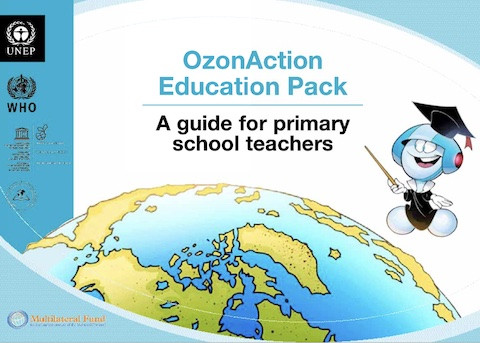 OzonAction Education Pack: A Guide for Primary School Teachers 발행 연도: 2006 저자: Fabienne Pierre 단체 저자: United Nations Environment Programme (UNEP) This education pack contains an entire teaching and learning programme, based on basic knowledge, practical skills and participation, for students to learn about concrete and simple solutions to protect the ozone layer and safely enjoy the sun.
 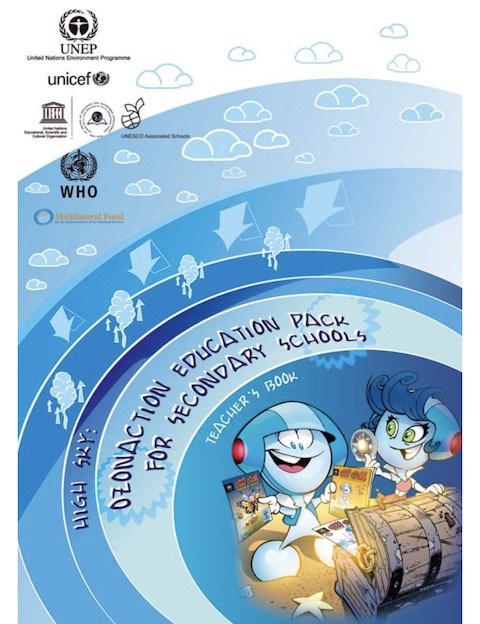 OzonAction Education Pack for Secondary School Teachers: Teacher’s Book 발행 연도: 2008 저자: Wayne Talbot 단체 저자: United Nations Environment Programme (UNEP) The education pack aims to raise awareness and encourage the active participation of young people in the debate on ozone depletion, its potential effects on them, the place in which they live and the planet. It also offers them a chance to design their own projects for taking action. These materials build upon ideas and activities in our OzonAction Education Pack for Primary Schools and other Ozzy Ozone materials. Education à la Couche d’Ozone: Guide de l’enseignant 발행 연도: 2008 저자: Wayne Talbot 단체 저자: United Nations Environment Programme (UNEP) Ce pack éducatif vise à sensibiliser les jeunes et à encourager leur participation active au débat sur la réduction de la couche d’ozone, les effets potentiels qu’elle peut avoir sur eux, sur leur lieu de vie et sur la planète. Il leur offre également l’opportunité d’élaborer leur propre projet d’action. Ce matériel pédagogique s’inspire des idées et des activités présentées dans le Pack Educatif pour les écoles primaires et autres productions Ozzy Ozone.
 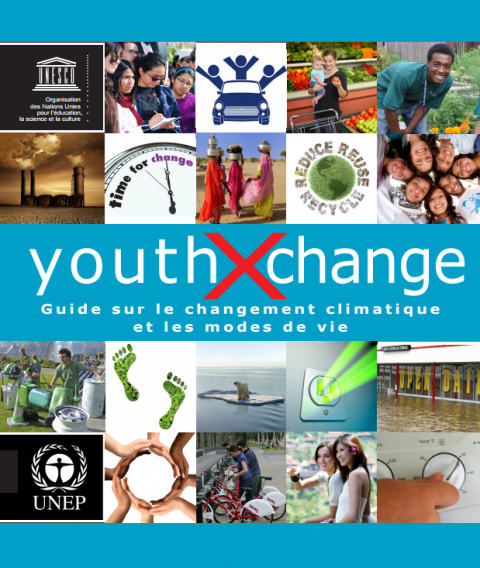 YouthXchange: guide sur le changement climatique et les modes de vie 발행 연도: 2015 저자: Adam Cade | Rob Bowden 단체 저자: UNESCO | United Nations Environment Programme (UNEP) Climate Change and Lifestyles is the first in a series of guidebooks supporting the UNESCO/ UNEP YouthXchange (YXC) Initiative, which was created in 2001 to promote sustainable lifestyles among youth (15-24 years) through education, dialogue, awareness raising and capacity building. The series is being produced for young people and people working with youth, such as educators, teachers, trainers and youth leaders in both developed and developing countries. Almost half of the world’s population is under the age of 25, and nearly 90 per cent of them live in developing countries. Youth is a critical stakeholder in the global economy and will be the main actor and motor for change in the near future. Thus, the energy, motivation and creativity of youth are essential assets to stimulating change. Aims of the YXC Guidebook on Climate Change and Lifestyles:• Explore the links between lifestyles and climate change; • Help young people consider the actions they should take towards more sustainable lifestyles;• Support courses and actions that promote greater understanding of climate change and lifestyles among youth. The guidebook:• Considers the causes and effects of climate change and its human impacts and responses, while connecting them to lifestyle choices and the technical and social infrastructures of a society;• Provides scientific, political, economic, social, ethical and cultural perspectives on climate change;• Explains complex issues in accessible language supported by facts, graphics, images, examples and web links;• Develops the critical skills young people need to make personal choices to address the challenges of climate change.
 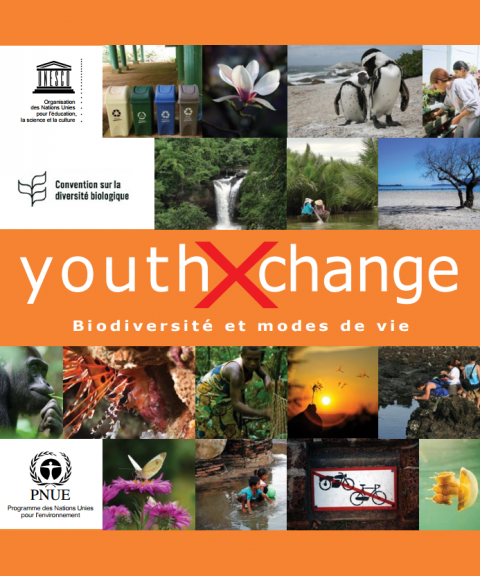 Série de guides youthXchange: biodiversité et modes de vie 발행 연도: 2015 단체 저자: UNESCO | United Nations Environment Programme (UNEP) The YouthXchange Biodiversity and LifestylesGuidebook is designed to help young people familiarize themselves with the dimensions of global biological and cultural diversity, as well as help them to develop essential skills whileengaging with biodiversity.The guidebook aims to:• Explore the interactions between biodiversity and lifestyle choices by explaining the interrelatedness of food, consumption, culture and biodiversity conservation;• Help young people familiarize themselves with the dimensions of global biological and cultural diversity, as well as help them to develop essential skills while engaging with biodiversity; and• Help young people consider how they can preserve biodiversity though responsible lifestyle choices, engagement and action.
  YouthXchange guidebook series: climate change and lifestyles 발행 연도: 2011 저자: Adam Cade | Rob Bowden 단체 저자: UNESCO | United Nations Environment Programme (UNEP) Climate Change and Lifestyles is the first in a series of guidebooks supporting the UNESCO/ UNEP YouthXchange (YXC) Initiative, which was created in 2001 to promote sustainable lifestyles among youth (15-24 years) through education, dialogue, awareness raising and capacity building. The series is being produced for young people and people working with youth, such as educators, teachers, trainers and youth leaders in both developed and developing countries. Almost half of the world’s population is under the age of 25, and nearly 90 per cent of them live in developing countries. Youth is a critical stakeholder in the global economy and will be the main actor and motor for change in the near future. Thus, the energy, motivation and creativity of youth are essential assets to stimulating change. Aims of the YXC Guidebook on Climate Change and Lifestyles: • Explore the links between lifestyles and climate change; • Help young people consider the actions they should take towards more sustainable lifestyles; • Support courses and actions that promote greater understanding of climate change and lifestyles among youth. The guidebook: • Considers the causes and effects of climate change and its human impacts and responses, while connecting them to lifestyle choices and the technical and social infrastructures of a society; • Provides scientific, political, economic, social, ethical and cultural perspectives on climate change; • Explains complex issues in accessible language supported by facts, graphics, images, examples and web links; • Develops the critical skills young people need to make personal choices to address the challenges of climate change. Série de guides YouthXchange: le changement climatique et les modes de vie 발행 연도: 2011 저자: Adam Cade | Rob Bowden 단체 저자: UNESCO | United Nations Environment Programme (UNEP) Le Changement climatique et modes de vie est la première d'une série de guides qui soutiennent le YouthXchange (YXC) Initiative UNESCO / PNUE, qui a été créé en 2001 pour promouvoir les modes de vie durables chez les jeunes (15-24 ans) par l'éducation, le dialogue, la sensibilisation et le renforcement des capacités . La série est en cours de production pour les jeunes et les personnes qui travaillent avec les jeunes, tels que les éducateurs, les enseignants, les formateurs et les leaders de la jeunesse dans les pays développés et en développement. Près de la moitié de la population mondiale est âgée de moins de 25 ans, et près de 90 pour cent d'entre eux vivent dans des pays en développement. La jeunesse est un acteur essentiel dans l'économie mondiale et sera le principal acteur et moteur de changement dans un proche avenir. Ainsi, l'énergie, la motivation et la créativité des jeunes sont des atouts essentiels pour stimuler le changement. Objectifs du YXC Guide sur les changements climatiques et styles de vie: • Explorer les liens entre les modes de vie et les changements climatiques; • Aider les jeunes gens considèrent les actions qu'ils doivent prendre vers des modes de vie plus durables; • des cours et des actions qui favorisent une meilleure compréhension des changements climatiques et des modes de vie chez les jeunes de soutien. Le guide: • considère les causes et les effets du changement climatique et de ses impacts humains et les réponses, tout en les reliant à des choix de vie et les infrastructures techniques et sociales d'une société; • Fournit scientifique, politique, économique, social, éthique et perspectives culturelles sur le changement climatique; • Explique les questions complexes dans un langage aCECssible étayée par des faits, des graphiques, des images, des exemples et des liens Web; • Développe les compétences essentielles les jeunes ont besoin de faire des choix personnels pour relever les défis du changement climatique.
  YouthXchange: green skills and lifestyles guidebook 발행 연도: 2016 저자: Ryder. Guy, Steiner. Achim 단체 저자: UNESCO | United Nations Environment Programme (UNEP) | UNESCO. Director-General, 2009-2017 (Bokova, I.G.) The YouthXchange Green Skills and Lifestyles Guidebook fills this gap. Developed by UNEP and UNESCO, in collaboration with the International Labour Organization (ILO), this Guidebook helps young people connect the talk about the green economy, green societies and green jobs to theirlifestyles. It focuses on the skills required to make these transitions – providing case studies and insight on green jobs and the skills they will require in terms of social innovation and entrepreneurship, the role of different stakeholders (government and private sector) and life skills. Young men and women are already driving change across the world. We must provide them with the skills they need to create new lifestyles and develop green jobs. Building a green future must start with training and education. It must start by listening to young people, by engaging their creativity and acting together.
  YouthXchange Training Kit on Responsible Consumption for Africa 발행 연도: 2017 저자: Carme Martinez-Roca | Victoria Thoresen 단체 저자: UNESCO | United Nations Environment Programme (UNEP) Young people from all walks of life play a critical role in delivering the 17 goals of the 2030 Agenda for Sustainable Development, particularly in areas like education, lifestyle and responsible consumption and production. As the consumers of today and decision-makers of tomorrow, they define the demand for goods and services and have the power to drive economic prosperity, environmental sustainability and social equality.This approach underpins the YouthXchange Initiative, which contributes to the Global Action Programme on Education for Sustainable Development and aligns with the goals of the 2030 Agenda. The initiative promotes equitable, informed and efficient consumption, while the training kit supports that effort with clear, reliable and compelling information. As well as outlining the relationship between the environment, the economy and social justice, the kit uses case studies to showcase the available opportunities and encourage readers to take shared responsibility for their future, starting with their own attitudes and behaviours.