
자료
세계시민교육에 대한 이해를 넓히고 연구, 옹호 활동, 교수, 학습 등을 향상시킬 수 있는 다양하고 유용한 자료를 찾아보세요.
178 건의 결과가 검색되었습니다
 Asia-Pacific Teacher Exchange for Global Education 2022: Final Report 발행 연도: 2022 단체 저자: APCEIU | Korea R. Ministry of Education The Asia-Pacific Teacher Exchange for Global Education (APTE), which has been in place since 2012, marks its 10th anniversary this year. APTE had been conducted according to the existing programme execution system and flow chart until 2019. However, the Office of International Teacher Exchange (ITE) focused on online exchange due to the pandemic crisis. This year’s APTE programme followed last year’s online formula and presented a new direction for utilization even post-pandemic. These efforts are expected to enhance global educational competencies for a more sustainable Global Citizenship Education. 다문화가정 대상국가와의 교육교류사업 2022년도 사업: 최종보고서 발행 연도: 2022 단체 저자: 유네스코 아시아태평양 국제이해교육원 | Korea R. Ministry of Education 2012년부터 시작되어 2022년에 11년 차를 맞이한 「다문화가정 대상국가와의 교육교류사업」 은, 2020년도 팬데믹으로 인해 물리적 교류가 불가능한 상황에서 비대면 온라인 교육교류의 형태로 진행되었다. 2022년도 교육교류 추진 실적 및 결과, 교육활동 결과물 등이 수록되어있다.
 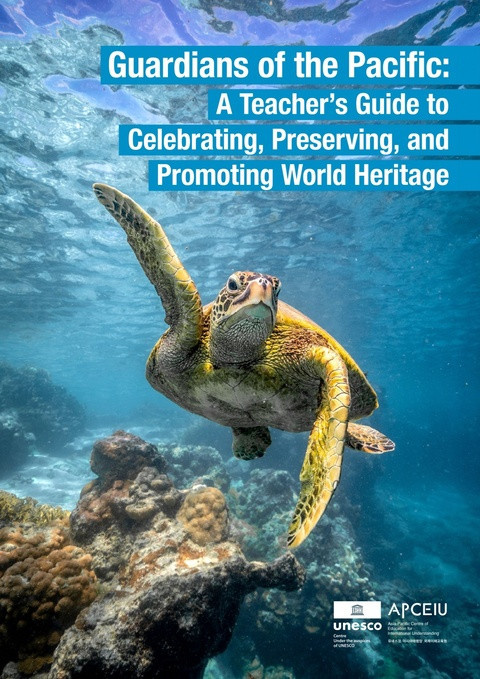 Guardians of the Pacific: A Teacher’s Guide to Celebrating, Preserving, and Promoting World Heritage 발행 연도: 2024 저자: Karena Menzie-Ballantyne | Nanise J. Young Okotai | Adi Meretui Tuvou Ratunabuabua 단체 저자: APCEIU Guardians of the Pacific: A Teacher’s Guide to Celebrating, Preserving, and Promoting World Heritage is an APCEIU initiative dedicated to advancing Global Citizenship Education (GCED) worldwide. Anchored in the principles of the Sustainable Development Goals (SDGs) and UNESCO World Heritage, the guide places a special emphasis on the rich and diverse heritage of the Pacific region. This Guide reflects GCED’s integrative approach, which encompasses three interconnected dimensions of learning: cognitive, socio-emotional, and behavioral. It encourages critical thinking about heritage and sustainability, fosters empathy by deepening understanding of the Pacific's unique cultural and natural environments, and inspires meaningful actions to protect and preserve local heritage. Tailored for educators working with students in upper primary (grades 4–6) and lower secondary (grades 7–9), the Guide provides step-by-step instructions and practical resources for incorporating Pacific World Heritage into classroom lessons and extracurricular activities. It is a valuable tool for nurturing awareness, appreciation, and stewardship of the Pacific region’s irreplaceable heritage in schools worldwide. <Table of Contents>ForewordHow to Use This GuideSection 1. Learning Framework Rationale Section 2. What Makes a Place Special?Section 3. The 2030 Agenda, Five Pillars and SDGsSection 4. Protecting People: Levuka Historical Port Town (Cultural Site)Section 5. Preserving the Planet: Phoenix Islands Protected Area (Natural Site)Section 6. Ensuring Prosperity: Rock Islands Southern Lagoon (Mixed Site)Section 7. Promoting Peace: Bikini Atoll Nuclear Test Site (Cultural Site)Section 8. Partnerships to Protect the Environment: East Rennell (Natural Site)Section 9. Taking Action to Promote and Protect a Special PlaceReferences WorksheetsPhoto Cards
  Re|shaping Policies for Creativity: Addressing Culture as a Global Public Good 발행 연도: 2023 단체 저자: UNESCO The Global Report series monitors the implementation of the 2005 Convention on the Protection and Promotion of the Diversity of Cultural Expressions, as well as progress towards achieving the United Nations 2030 Agenda for Sustainable Development, within and with the cultural and creative sectors. Its 2022 edition revolves around two major questions: What is the state of the cultural and creative sectors? What policy changes to promote sustainable, human rights-based systems of governance for culture and equitable access to cultural opportunities and resources have resulted from stakeholders’ implementation and ownership of the Convention? In line with the 2015 and 2018 editions, this third edition of the Report presents the latest policy developments to support creativity and sheds light on current and future challenges in areas such as the digital environment, media diversity, sustainable development, mobility of artists and cultural professionals, gender equality and artistic freedom. The trends, innovative practices, gaps and recommendations that emerge from the 2022 edition provide valuable evidence to inform the policy dialogue leading up to the UNESCO World Conference on Cultural Policies and Sustainable Development – MONDIACULT 2022. With the mission to contribute to the 2030 Agenda, it feeds into a renewed vision of cultural policies based on a better understanding of what impacts the diversity of cultural expressions and the avenues for anchoring culture and creativity in the broader public policy spectrum. 문화정책의 (재)구성: 전지구적 공공재로서의 문화를 바라보다, 2022 발행 연도: 2023 단체 저자: 유네스코 글로벌 리포트 시리즈는 각 국의 <2005 문화적 표현의 다양성 보호와 증진에 관한 협약> 이행상황과 문화·창의분야가 <UN 2030 지속가능한 개발 어젠다>에 어떻게 기여하고 있는지 그 진행 상황을 모니터링 하고 있다. 2015년과 2018년 발간된 보고서와 같이, 이번 제3판은 창의적 활동을 지원하기 위한 최근의 정책 개발 상황을 소개하고, 디지털 환경, 미디어 다양성, 지속가능발전, 예술가와 문화 분야 종사자의 이동성, 양성 평등 및 예술의 자유와 같은 분야의 현재와 미래의 과제를 조명한다. 2022년 발간되는 본 보고서에 소개되는 트렌드, 우수 사례, 국가 간 격차, 그리고 권고사항은 유네스코의 <문화 정책과 지속가능한 개발에 관한 세계 회의(MONDIACULT 2022)>의 정책 토론에서 다룰만한 중요한 자료를 제공하고 있다. 본 보고서는 <2030 어젠다>에 기여하고자 하는 사명을 가지고, 문화적 표현의 다양성에 영향을 미치는 요인을 분석하며, 공공정책 스펙트럼에서 더 넓게 문화와 창의성을 정착시킬 방안에 대해 더 나은 이해와 새로운 문화정책의 비전을 제시하고자 한다.
  Return to the Origin: Ancient Narratives about Humanity, Time and the World 발행 연도: 2022 저자: Eduardo A. Rueda | Ana María Larrea | Augusto Castro | Óscar Bonilla | Nicolás Rueda | Carlos Guzmán 단체 저자: Latin American Council of Social Sciences (CLACSO) | UNESCO In this brief reflection, only in an introductory way, two questions are addressed. The first has to do with the relevance or impertinence of a program to record the narratives of our original peoples about the origins and trajectories of humanity. In relation to this first point, they are interested in proposing the bases for an emancipatory approach, that is, counter-hegemonic, of the original narratives. The second question asks about the consequences that it has, for the self-understanding of the crises and tensions of current societies, to highlight non-Western conceptions of human origins and trajectories. Retornar al origen: Narrativas ancestrales sobre humanidad, tiempo y mundo 발행 연도: 2022 저자: Eduardo A. Rueda | Ana María Larrea | Augusto Castro | Óscar Bonilla | Nicolás Rueda | Carlos Guzmán 단체 저자: Latin American Council of Social Sciences (CLACSO) | UNESCO En esta breve reflexión se abordan, apenas de modo introductorio, dos cuestiones. La primera tiene que ver con la pertinencia o impertinencia de un programa de registro de las narrativas de nuestros pueblos originarios sobre los orígenes y trayectorias de la humanidad. Les interesa, en relación con este primer punto, proponer las bases para un abordaje emancipatorio, es decir, contrahegemónico, de las narrativas originarias. La segunda cuestión se interroga por las consecuencias que tiene, para la autocomprensión de las crisis y tensiones de las sociedades actuales, poner en evidencia concepciones no occidentales de los orígenes y las trayectorias humanas.
  Culture | 2030 Indicators: Thematic Indicators for Culture in the 2030 Agenda 발행 연도: 2019 단체 저자: UNESCO The Culture|2030 Indicators is a framework of thematic indicators whose purpose is to measure and monitor the progress of culture’s enabling contribution to the national and local implementation of the Goals and Targets of the 2030 Agenda for Sustainable Development (SDGs). The methodology is developed to assist countries and cities with very different capacities regarding the collection of data and cultural statistics. The evidence gathered will inform policies and decisions as well as operational actions enabling greater investments in culture as a sector of activity and a greater recognition of its transversal role across other sectors.