
자료
세계시민교육에 대한 이해를 넓히고 연구, 옹호 활동, 교수, 학습 등을 향상시킬 수 있는 다양하고 유용한 자료를 찾아보세요.
38 건의 결과가 검색되었습니다
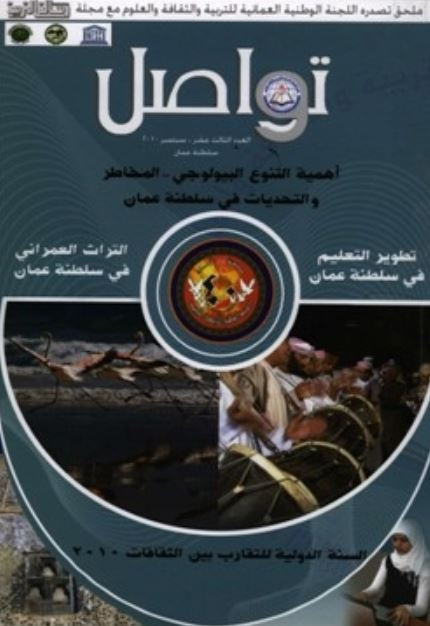 اليونسكو وثقافة السلام 발행 연도: 2008 저자: Ahmed Al-Azri 단체 저자: Oman National Commission for Education, Culture and Science يعرض الكاتب المشاريع التي تقوم بها سلطنة عمان لنشر ثقافة السلام في مؤسساتها التعليمية. ويربط الكاتب هذا الحراك مع ما ترمي إليه اليونسكو في نشر ثقافة السلام حول العالم. The UNESCO and the Culture of Peace 발행 연도: 2008 저자: Ahmed Al-Azri 단체 저자: Oman National Commission for Education, Culture and Science The author presents the projects undertaken by the Sultanate of Oman to spread the culture of peace in its educational institutions. The author links this movement with what UNESCO aims to spread the culture of peace around the world.
  اتّجاهات طلبة الجامعات السّعوديّة نحو ثقافة السّلام 발행 연도: 2019 저자: Rowaidah Abdulhameed Saman 단체 저자: University of Jordan هدفت الدراسة الوقوف على اتجاهات طلبة الجامعات السعودية نحو ثقافة السلام، وتكونت عينة هذه الدراسة من 1643 طالبا وطالبة، واستخدام المنهج الوصفي المسحي، ولتحليل البيانات استخدم التكرارات والنسب المئوية والمتوسط الحسابي واختبار مربع كاي واختبار (ت)، وتوصلت الدراسة إلى نتائج من أهمها: لدى طلاب الجامعات السعودية اتجاه إيجابي نحو (حقوق الإنسان، نزع السلاح، وسائل اكتساب مهارات حل النزاع، وثقافة السلام بوجه عام)، في حين كانت اتجاهاتهم سلبية "نحو نقل خبرة تملك تقنية صنع القنابل، بين البلدان الإسلامية"، وأن الإناث لديهن اتجاهات أكثر إيجابية نحو نزع السلاح، أن الطلاب دائمي السفر لديهم اتجاهات أكثر إيجابية نحو "وسائل مهارات حل النزاع". Saudi University Students’ Attitude Towards a Culture of Peace 발행 연도: 2019 저자: Rowaidah Abdulhameed Saman 단체 저자: University of Jordan The aim of this study is to identify the attitudes of Saudi Universities’ students towards peace culture. The descriptive surveying approach was used on a sample of 1643 students. The frequency, percentages, arithmetic mean, Kay-box test, and T-test were used in the analysis. The results showed that Saudi students have a positive attitude towards (human rights, disarmament, conflict resolution skills, peace culture) while their attitudes were negative towards transferring bomb-making experience to Islamic countries. Also, females had more positive attitudes towards disarmament than male students.
 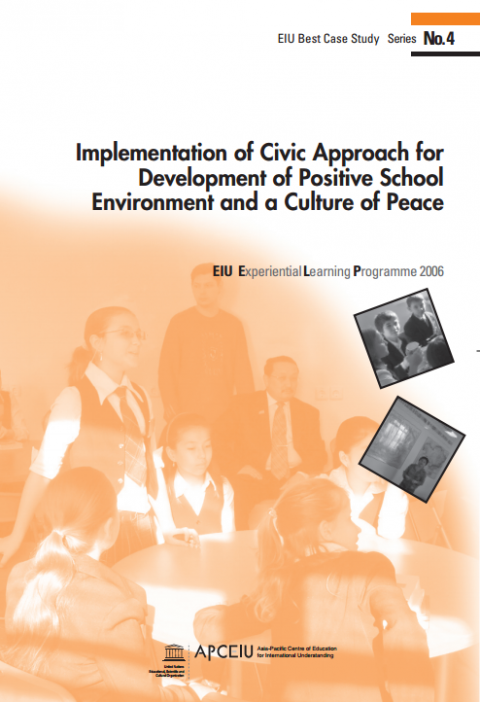 EIU Best Practices Series No. 4: Implementation of Civic Approach for Development of Positive School Environment and a Culture of Peace 발행 연도: 2006 단체 저자: APCEIU This monograph is one of APCEIU's EIU Best Practices Series, which aims to encourage educators, scholars, and activists to implement and share local initiatives on EIU. The Series No.4 is an experimental research conducted by the Information and Research Center to promote culture of peace and teaching and learning outcomes that support positive development of school environment. Three pilot schools in Kazakhstan were analyzed upon implementation of teacher training workshops, instructional materials, and programs in civic and human rights education.
  التعصب وعلاقته بالتطرف والعنف 발행 연도: 2017 저자: Jad Al-Karim Al-Jabaei | Aladdin Zaatari | Karim Abu Halawa 단체 저자: Damascus Center for Research and Studies مجموعة من الأوراق البحثية تناقش التعصب وعلاقته بالتطرف والعنف. حاول الباحثون في هذا الانتاج تسليط الضوء على واحد من القضايا التي تواجه المجتمعات وهو التعصب. Intolerance and Its Relationship to Extremism and Violence 발행 연도: 2017 저자: Jad Al-Karim Al-Jabaei | Aladdin Zaatari | Karim Abu Halawa 단체 저자: Damascus Center for Research and Studies This document is a set of research papers discussing intolerance and its relationship to extremism and violence. In this production, the researchers tried to shed light on one of the issues facing societies, which is intolerance.
 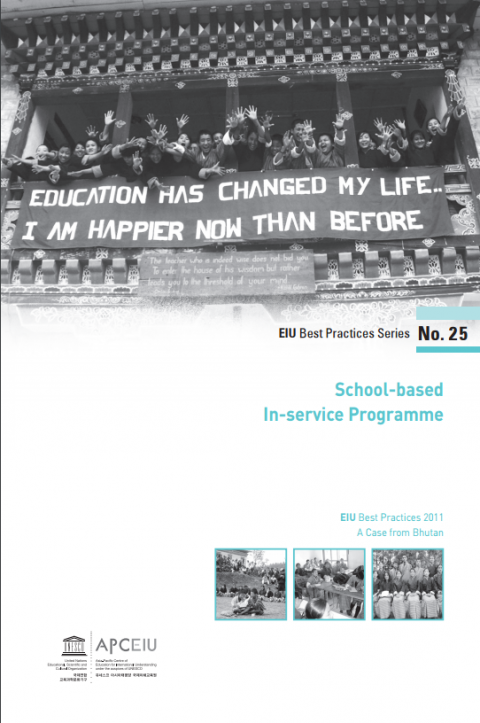 EIU Best Practices Series No. 25: School-based In-service Programme 발행 연도: 2011 저자: Yeshi Pemo 단체 저자: APCEIU This monograph is one of APCEIU's EIU Best Practices Series, which aims to encourage educators, scholars, and activists to implement and share local initiatives on EIU. The Series No.25 introduces the case of the Damphu Lower Secondary School in Bhutan, which carried out a number of initiatives to promote culture of peace and EIU through workshops, literary activities, and contests for students, teachers, parents, and nation-wide UNESCO clubs. The case showcases that the educators’ aspirations toward education for peace can be achieved through the combination of excellent school leadership, strong commitment, high competency, and available resources.