
자료
세계시민교육에 대한 이해를 넓히고 연구, 옹호 활동, 교수, 학습 등을 향상시킬 수 있는 다양하고 유용한 자료를 찾아보세요.
65 건의 결과가 검색되었습니다
 Un mundo diverso 발행 연도: 2023 단체 저자: Entreculturas | European Union (EU) Esta publicación es la propuesta pedagógica de Entreculturas para educar en una ciudadanía global a todas y todos. Con ella pretendemos contribuir a la formación de personas capaces de ejercer una ciudadanía activa y comprometida, de transformar su entorno y de asumir como suyos los retos globales de nuestro tiempo así como el cumplimiento de la Agenda 2030 y de los Objetivos de Desarrollo Sostenible. Esta publicación recoge actividades de anteriores publicaciones, con la diferencia de que se ha adaptado a un modelo de lectura fácil para que sea mucho más sencillo y accesible para personas con diversidad funcional. Las actividades tratan tres grandes temáticas: 1.) Defensa del medio ambiente, 2.) Igualdad de género, Y 3.) Interculturalidad. Con el tratamiento de estos temas buscamos promover la reflexión sobre los diferentes retos globales que nos afectan y conocer las diferentes maneras de contribuir a estas causas.
  Inclusion at the University of Meritorious Students in Situations of Social Vulnerability 발행 연도: 2015 저자: Marcela Orellana | Karla Moreno | Francisco Javier Gil 단체 저자: UNESCO Santiago | UNESCO Chair on Inclusion in Higher Education The first edition of this work was published by the OREALC / UNESCO Santiago for its dissemination among those attending the Education for All Ministerial Meeting in Latin America and the Caribbean: Balance and Challenges post 2015, within the framework of the Regional Education Project for America Latin America and the Caribbean (PRELAC), held in Lima, Peru on October 30 and 31, 2014. In this second edition, we are pleased to add other inclusion mechanisms that arise from the commitment of the UNESCO Chair in Inclusion in Higher Education, the valuable support from non-profit private foundations and the support of OREALC / UNESCO Santiago. The generation of these alliances constitutes a fundamental contribution to the collection of relevant information for the design of public policy proposals aimed at reducing the inequality gaps in higher education, guaranteeing the right to a quality education and to collaborate in the construction of societies with greater social justice. Inclusión a la universidad de estudiantes meritorios en situación de vulnerabilidad social 발행 연도: 2015 저자: Marcela Orellana | Karla Moreno | Francisco Javier Gil 단체 저자: UNESCO Santiago | UNESCO Chair on Inclusion in Higher Education La primera edición de este trabajo fue publicada por la OREALC/UNESCO Santiago para su difusión entre los asistentes a la Reunión Ministerial Educación para Todos en América Latina y el Caribe: Balance y desafíos post 2015, en el marco del Proyecto Regional de Educación para América Latina y el Caribe (PRELAC), realizada en Lima, Perú el 30 y 31 de octubre de 2014. En esta segunda edición, nos complace sumar otros mecanismos de inclusión que surgen del compromiso de la Cátedra UNESCO de Inclusión en la Educación Superior, el valioso apoyo de fundaciones privadas sin fin de lucro y el apoyo de la OREALC/UNESCO Santiago. La generación de estas alianzas constituye un aporte fundamental para el levantamiento de información relevante para el diseño de propuestas de políticas públicas tendientes a disminuir las brechas de desigualdad en la educación superior, a garantizar el derecho a una educación de calidad y a colaborar a la construcción de sociedades con mayor justicia social.
  The Time Period of the Holocaust in the Beliefs of Primary School Children – Children’s Perspectives and the Thematization of the Holocaust and National Socialism in Primary-School Instruction (in General Subjects) 발행 연도: 2012 저자: Andrea Becher The original title: Die Zeit des Holocaust in Vorstellungen von Grundschulkindern – Perspektiven von Kindern und die Thematisierung von Holocaust und Nationalsozialismus im (Sach-)Unterricht der Grundschule(In I. Enzenbach, C. Klätte, & D. Pech, (Eds.). Kinder und Zeitgeschichte: Jüdische Geschichte und Gegenwart, Nationalsozialismus und Antisemitismus, Supplement, 8, pp. 101–120) This is a summary of a study of German primary school children’s beliefs about the Holocaust, based on interviews conducted in two classes in 2005. The author finds that the children almost exclusively focus on Hitler; that one can find “latent anti-Semitic fragments” in their statements; that, even without formal education, the pupils still possess knowledge about the Holocaust; and their main source of information about Nazi Germany seems to be family members. However, the family narratives mainly touch upon everyday-life and avoid the topic of the Holocaust. From these findings, the author argues that one could and should teach the Holocaust already in the German primary school. The above abstract is taken from the International Holocaust Remembrance Alliance Education Research Project. Please also consult the full list of abstracts in 15 languages and the accompanying publication Research in Teaching and Learning about the Holocaust: A Dialogue Beyond Borders. Ed: IHRA, Monique Eckmann, Doyle Stevick, Jolanta Ambrosewicz-Jacobs, 2017, Metropol Verlag.
  Global Security, Religion and Education Development: a Crisis for the Field of Comparative Education? 발행 연도: 2011 저자: Yusuf Sayed | Lynn Davies | Mike Hardy | Abbas Madandar Arani | Lida Kakia | Masooda Bano 단체 저자: Taylor & Francis Building common ground on shared values should be a high priority for a diverse and devout society in an era of religious conflict. Otherwise we might fall into the equally false and far more dangerous illusion that we agree on nothing at all – and perhaps we tend to assume that education helps to do this, which is not necessarily the case. There is a greater concern that education is not just failing to step up effectively to the task of contesting undifferentiated and negative views of religions, but that it might not always be a force for good at all. It may in some cases help reinforce difference and create the conditions for conflict.The relationship, therefore, between religious difference, security and the assumed supportive role of education is far from a simple one. Global security, religion and education development: a crisis for the field of comparative education? 발행 연도: 2011 저자: Yusuf Sayed | Lynn Davies | Mike Hardy | Abbas Madandar Arani | Lida Kakia | Masooda Bano 단체 저자: Taylor & Francis Partager des valeurs communes devrait être une priorité absolue dans une société diversifiée et dévote en cette période de conflits religieux. Autrement, on pourrait tomber dans l’illusion, fausse et dangereuse, que nous sommes d’accord en rien - et on pense, probablement que l'éducation contribue à cet état de choses, alors que ce n’est pas forcément le cas. On est de plus en plus préoccupé par la question suivante : celle de considérer que non seulement l'éducation échoue quand il s’agit de contester d’une manière solide et efficace les points de vues non nuancés et négatifs en matière de religions, mais aussi que l’éducation n’est finalement pas une bonne chose. Dans certains cas, elle peut contribuer à renforcer la différence et créer les conditions d'un conflit. La relation, donc, entre la différence religieuse, la sécurité et le rôle présumé de soutien de l'éducation est loin d'être simple.
 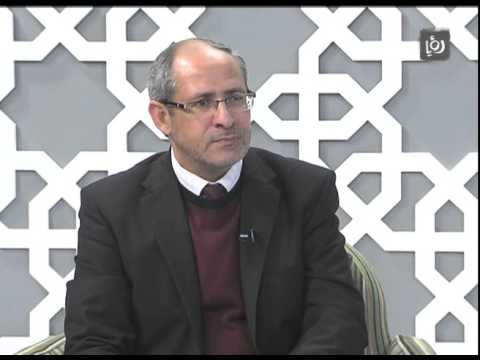 Islam, Diversity and Peacebuilding 발행 연도: 2016 저자: Ramy Atta | Ahmed Naji 단체 저자: Roya TV An interesting dialogue between the speakers about diversity and the extent to which Islam deals with this term. The speakers discuss the wealth of the Islamic religion in the root of diversity and pluralism, and how that leads to peace. الإسلام والتنوع وبناء السلام 발행 연도: 2016 저자: Ramy Atta | Ahmed Naji 단체 저자: Roya TV حوار شيق بين المتحدثين حول التنوع ومدى تعاطي الإسلام مع هذا المصطلح. يناقش المتحدثون ثراء الدين الاسلامي في تأصيل التنوع والتعدد، وكيف ذلك يقود للسلام.
  The National Youth White Paper on Global Citizenship 발행 연도: 2015 단체 저자: Centre for Global Citizenship Education and Research (CGCER) On March 20, 2015, over 400 students from five high schools across Canada, in partnership with the Centre for Global Citizenship Education, The Centre for Global Education and TakingITGlobal, came together to collaborate, through the use of technology, in a Virtual Town Hall to discuss the youth’s vision for Global Citizenship Education. From Alberta to Ontario, downtown Toronto to Yellowknife, the youth of Canada exchanged ideas, debated alternatives, and ultimately created a document that represents their voice on the relationship Canadians should have with the rest of the world. The Virtual Town Hall, an “archetype of grassroots democracy,” (Senator Grant Mitchell) was the culmination of over a month of online teamwork, 2000 hours of student collaboration, over 100 hours of teacher facilitation, and the passion of over 1000 youth to engage in a national conversation and have their voices heard.In the month prior to the Virtual Town Hall, student leaders, systematically chosen from each school to represent Canada’s diverse geographic and demographic population, met on a weekly basis to exchange ideas, work with and listen to experts, and create a common framework. Concurrently, the students were trained to use an arsenal of Web 2.0 tools (YouTube, Twitter, cell phone voting, Google Docs, H.323 Video Conference, discussion boards, blogs, etc.) to collaborate, build consensus, and create community regardless of time or location.Equipped with this knowledge and empowered through online technology, the student leaders facilitated a full-day virtual town hall. In the morning, 400 youth peers engaged in a dialogue with local and international experts. Following this session, the youth participated in breakout groups to address three critical questions: What are our obligations as global citizens? What are the rights and responsibilities that we have? To what extent can well-intentioned global citizenship initiatives reinforce or resist power inequities? What types of policies/practices will enable/facilitate global citizenship? The National Youth White Paper on Global Citizenship, written collaboratively by Canadian students, is the direct result of this full-day, interactive event. The evolution of the document involved equipping leaders with knowledge and technology, having those leaders facilitate a larger conversation among their peers, taking the data generated to their community at large for feedback and direction, and then synthesizing the results in the student white paper. It represents the voices of over one thousand youth, introduced to the complexities of global citizenship education, unified through the power of 21st century technology, and sharing a passion to contribute to the dialogue taking place on the future of Canada and its relationship to the rest of the world. Le Livre blanc de la jeunesse nationale sur la citoyenneté mondiale 발행 연도: 2015 단체 저자: Centre for Global Citizenship Education and Research (CGCER) Le 20 Mars, 2015, plus de 400 élèves de cinq écoles secondaires à travers le Canada, en partenariat avec le Centre d'éducation à la citoyenneté mondiale, le Centre for Éducation globaleet TakingITGlobal, se sont réunis pour collaborer, par l'utilisation de la technologie, dans une salle virtuelle ville pour discuter de la vision de la jeunesse pour l'éducation sur la citoyenneté mondiale. De l'Alberta à l'Ontario, le centre-ville de Toronto à Yellowknife, la jeunesse du Canada a échangé des idées, débattre des solutions de rechange, et, finalement, a créé un document qui représente leur voix sur les relations Canadiens devraient avoir avec le reste du monde. Le Virtual Town Hall, un «archétype de la démocratie de base» (le sénateur Grant Mitchell) est l'aboutissement de plus d'un mois de travail d'équipe en ligne, 2000 heures de la collaboration des élèves, plus de 100 heures de facilitation des enseignants, et la passion de plus de 1000 jeunes engager dans une conversation nationale et faire entendre leurs voix dans le mois précédant l'Hôtel virtuel Ville, les leaders étudiants, systématiquement choisis parmi chaque école pour représenter la diversité population géographique et démographique du Canada, se sont réunis sur une base hebdomadaire pour échanger des idées, travailler avec et écouter les experts, et de créer un cadre commun. En même temps, les étudiants ont été formés à l'utilisation d'un arsenal d'outils Web 2.0 (YouTube, Twitter, téléphone cellulaire vote, Google Docs, H.323 Vidéo Conférence, forums de discussion, les journaux, etc.) pour collaborer, établir un consensus et créer une communauté quelle que soit de temps ou de lieu. Equipé de cette connaissance et le pouvoir grâce à la technologie en ligne, les leaders étudiants ont facilité une mairie virtuelle d'une journée complète. Dans la matinée, 400 pairs de jeunes engagés dans un dialogue avec des experts locaux et internationaux. Suite à cette session, les jeunes ont participé à des groupes de petits groupes pour répondre à trois questions essentielles: 1. Quelles sont nos obligations en tant que citoyens du monde? Quels sont les droits et les responsabilités que nous avons? 2. Pour les initiatives de citoyenneté mondiale dans quelle mesure peut bien intentionnés renforcer ou résister à des inégalités de pouvoir? 3. Quels types de politiques / pratiques permettront / faciliter la citoyenneté mondiale. Le Livre blanc de la jeunesse nationale sur la citoyenneté mondiale, écrite en collaboration par les étudiants canadiens, est le résultat direct de cette journée complète, événement interactif. L'évolution du document impliqué équipant les dirigeants ayant des connaissances et de la technologie, ayant ces dirigeants facilitent une plus grande conversation entre leurs pairs, en prenant les données générées à leur communauté dans son ensemble pour la rétroaction et la direction, et ensuite la synthèse des résultats dans le livre blanc de l'étudiant. Elle représente les voix de plus de mille jeunes, présenter à la complexité de l'éducation à la citoyenneté mondiale, unifiée par la puissance de la technologie du 21e siècle, et le partage de la passion de contribuer au dialogue qui se déroule sur l'avenir du Canada et de sa relation avec le reste du monde.