
자료
세계시민교육에 대한 이해를 넓히고 연구, 옹호 활동, 교수, 학습 등을 향상시킬 수 있는 다양하고 유용한 자료를 찾아보세요.
31 건의 결과가 검색되었습니다
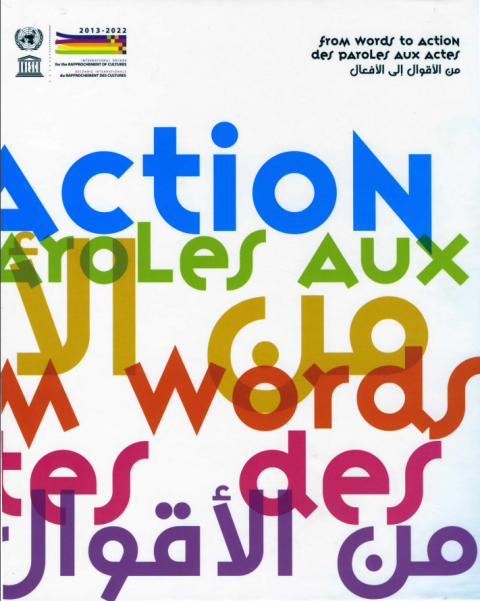 From words to action; Des paroles aux actes 발행 연도: 2014 단체 저자: UNESCO Since its creation in 1945, UNESCO has been working to enhance mutual understanding between peoples, founded on an ever more subtle knowledge of cultures in their rich diversity in order to promote the dignity of all through the affirmation of the principles, rights and values of our common humanity. The era of globalization characterizes our societies, in a cultural landscape which, more than ever, is permeated with diversity because of the mutual influences of peoples, communities, and of their cultural and religious practices. A major issue remains: the need to demonstrate the benefits of promoting both respect for human rights and cultural diversity, recognizing the importance of genuine intercultural dialogue in order to fight against new forms of racism, discrimination, intolerance, extremism and radicalization. UNESCO, with lengthy practical experience as an international laboratory of ideas, monitors respect for universal values, in particular by initiating research and producing various kinds of teaching tools designed for the acquisition of intercultural skills. Which skills should be mobilized or acquired in order to be able not only to respect but also to appreciate the Other in all his or her diversity. How many of these skills can be useful on both a collective level and an individual one in order to protect cultural rights, protect oneself from, or to transcend prejudice? Intercultural sensibility and aptitudes have to be explored since they refer to the willingness and capacity of people to step outside of their own logic and systems of thought in order to engage with others, and appreciate different cultural narratives especially if they are not equally valorized or recognized in a given societal context. This portfolio proposes a basic tool for capacity building in support of exchange, communication and cooperation beyond cultural, religious and national borders, allowing the emergence of a global citizenship in a safer world for all. In this perspective, this set of key resources consists of papers by international experts exploring the linkage between respect for cultural diversity and human rights, with all that that implies. It brings together other publications such asIntercultural Competences, Conceptual and Operational Framework, published by UNESCO in 2013, and documents such as Dire la Tolérance (Defining Tolerance), published in 1997 and translated into English and into Arabic, and, finally, UNESCO’s Programme of Action for a Culture of Peace and Non-Violence, A Vision in Action, published in English in 2012 and in French in 2013. Symbolically released on 10 December 2014, Human Rights Day, this multilingual and evolving publication is designed primarly to be an Open Access tool, a flagship project of the International Decade for the Rapprochement of Cultures (2013-2022). In the same spirit, its content will be enriched and developed in an e-learning format, throughout the Decade.
 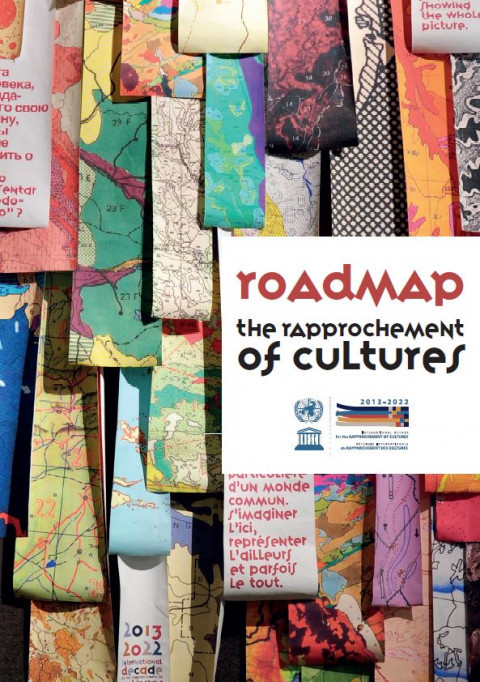 The rapprochement of cultures: roadmap 발행 연도: 2016 단체 저자: UNESCO Today, the sheer compression of the world is bringing people and their cultures into the same space with intense speed, rendering new levels and forms of human interaction and interdependence. Population growth and migration are increasing in scale and complexity, and technology and media are bringing people together in ways never before thought possible. As a result, new creative expressions, innovation and immense opportunities have been generated and developed. While these phenomena have brought people together across geographic spaces, it has concurrently exposed a widening moral gap in our societies and the extent to which our societies are ill-equipped to effectively manage and overcome the challenges that continue to arise. Often in parallel with developmental progress, retrogressive patterns have emerged that present persistent threats to peace-building and social cohesion. Recurrent cycles of deadlock and conflict undermine governance and legislation at international, national and local levels preventing long-term peace and development.The litany of polarization within our societies often defined along the lines of ‘identity’ – religious, cultural, ethnic, or otherwise – are increasingly manifested in prejudice, intolerance, racism, xenophobia, discrimination, radicalization and extreme violence. The challenges are often multidimensional and interrelated, and their impacts cross conventional borders, thus revealing a pervading vulnerability at global level and the accompanying need for a global response. From a policy and governance perspective, this has rendered new levels of complexity in addressing challenges. It has also reinforced the need for a more inclusive and participatory notion of development, including integrated approaches that tackle the issues at hand as well as their foundations.The Decade has come into being in an era marked by increased divisiveness, and learning to live together in the 21st century presents a new frontier for managing cultural diversity. Respect for the inherent dignity of all persons underpins the values of the Decade and is one of the core pillars of the UN system, to ensure that all people have equal rights and opportunities to shape their future. These principles are reflected in the values of many cultures around the world. Intercultural dialogue denotes an open process of exchange and respect between individuals and groups of different cultures, points of view and aspirations. In such a way, the respect for and exercise and enjoyment of human rights and fundamental freedoms are not only key inroads to dialogue, but they are integral to its process. Ultimately they are crucial to sustaining the rapprochement of cultures as the central aspiration of the Decade.
  The Influence of education on conflict and peace building 발행 연도: 2010 저자: Alan Smith 단체 저자: UNESCO The purpose of this paper is to identify aspects of education that may have a positive influence on the dynamics of conflict or make a contribution to peacebuilding. The UN Secretary-General’s (2009) report on peacebuilding identifies a number of recurring priorities in conflict-affected situations, ‘establishing security, building confidence in a political process, delivering initial peace dividends and expanding core national capacity’. These priorities include ‘the provision of basic services, such as water and sanitation, health and primary education’. However, in conflict-affected situations education is also about more than service delivery because it is a means of socialization and identity development through the transmission of knowledge, skills, values and attitudes across generations. Education may therefore be a driver of conflict (fuelling grievances, stereotypes, xenophobia and other antagonisms), but can also be a way of contributing to ‘conflict transformation’ and ‘peacebuilding’.
  Learning: the treasure within; report to UNESCO of the international commission on education for the twenty-first century (highlights) 발행 연도: 1996 저자: Jacques Delors 단체 저자: International Commission on Education for the Twenty-first Century Learning: The Treasure Within, commonly referred to as the 'Delors Report', proposes a holistic and integrated vision of education based on the paradigms of lifelong learning, and the four pillars of learning to be, to know, to do, and to live together.
  Education and Security - a global literature review on the role of education in countering violent religious extremism 발행 연도: 2016 저자: Ratna Ghosh | Ashley Manuel | W.Y. Alice Chan | Maihemuti Dilimulati | Mehdi Babaei This review demonstrates that the impact of the worldwide proliferation of violent attacks motivated by religious extremism threatens both national and personal security irrespective of location or faith. Education has been particularly damaged by direct attacks on institutions, by the removal of educational opportunity, and by the use of education to indoctrinate and recruit young people. This review suggests that more young people today are being radicalized through soft power – extremist ideas, ideology, narratives and propaganda. It questions whether this can be met adequately by hard power responses, as these methods appeal directly to the psychological, intellectual and emotional states of young people.
  ASPnet strategy for 2014-2021 global network of schools addressing global challenges: building global citizenship and promoting sustainable development 발행 연도: 2014 단체 저자: UNESCO Associated Schools Project Network (ASPnet) Over the next 8 years (2014-2021), ASPnet needs to respond to the needs of education in a rapidly changing and increasingly complex world. The following strategy, therefore, has to remain flexible and requires regular re-evaluation in the light of a changing environment. Globalization and growing interconnectedness ask for increased networking and cooperation. ASPnet has proven to have a great potential for global school networking and educational innovations, which remain largely untapped. UNESCO can make much fuller use of ASPnet in its quest for and implementation of a successful Post-2015 Global Education Agenda.
  Comparative study of textbooks: working document in the framework of the Euro-Arab Dialogue; summary report 발행 연도: 2015 저자: Jacqueline Costa-Lascoux | Janine d'Artois Pursuant to the Charter of the United Nations and the Constitution of UNESCO, calling for peace between peoples and respect for cultural diversity, several National Commissions for UNESCO have taken the initiative to create the conditions for a Euro-Arab dialogue in the field of education. The French and Moroccan National Commissions, in particular, have decided to launch studies to highlight stereotypes, misunderstandings and subliminal bias about Arab countries in European textbooks and about European countries in textbooks in the Arab world. First, these studies were conducted by researchers focusing on their own countries' textbooks in order to analyse how the history of the countries on "the other side of the Mediterranean" was represented. Second, a common methodology was developed to allow comoparative approaches favourable to Euro-Arab dialogue. This was to address any mutual bias or misrepresentations that may exist between the two regions and to work togehter to find ways of preventing and combating them. The originality of the approach was to conduct a critical analysis of textbooks published in each country and then underetake a comparative study to be used as the basis for common recommendations. Participants in this project initiated by the National Commissions defined three main objectives: 1. To strengthen dialogue, laying the foundations for learning to live together, based on mutual respect. 2. To help National Commissions for UNESCO, experts, institutions and non-governmental organizations (NGOs) to find ways to work together in areas of research of common interest. 3. To contribute to UNESCO's efforts to develop a stretegy relating to textbooks, to improve the quality of education for peace, human rights, mutual understanding and intercultural dialogue.
  Arts Education for the Children of the Arab World as a Mediator for Development and the Axis of International Understanding: The Child's Song 발행 연도: 2014 저자: Amal Sadiq 단체 저자: Arab Council for Childhood and Development (ACCD) This paper focuses on art education and music in the Arab world and its link to development. The paper goes on critical understanding on how music and art can educate children for international understanding.
  Living in a new world starts with education (SangSaeng no. 37 summer autumn 2013) 발행 연도: 2013 저자: Hans van Ginkel 단체 저자: APCEIU SangSaeng No. 37- How to Foster Global Citizenship? has been published. In order to help our readers better grasp the concept of global citizenship and provide useful information and new ideas, this issue deals with various aspects of global citizenship education.3 Director’s Message4 Special ColumnBuilding True Citizens for a Single Humanity8 Focus: How to Foster Global Citizenship?8 Eliminating World Challenges through Global Citizenship Education 13 Developing Global Citizens with a Global Perspective18 Living in a New World Starts with Education23 GCE in Every Corners of the World28 Best Practices28 Hands-on Hand Print for Environmental Sustainability32 Bhutan Teachers Learn New Models of Education35 Comic Relief: Song of the City36 Special ReportPaving the Way Together for Global Citizenship Education40 InterviewBuilding a Global Community out of the Ashes of Poverty42 LetterCapturing Moments of Living in Harmony44 Peace in My MemoryHow Golf Speaks about Peace47 Understanding the Asia-Pacific RegionDiscovering Locks beyond the Function of Opening and Closing50 APCEIU in Action
  Developing global citizens with a global perspective (SangSaeng no. 37 summer autumn 2013) 발행 연도: 2013 저자: Misato Yamaguchi 단체 저자: APCEIU SangSaeng No. 37- How to Foster Global Citizenship? has been published. In order to help our readers better grasp the concept of global citizenship and provide useful information and new ideas, this issue deals with various aspects of global citizenship education.3 Director’s Message4 Special ColumnBuilding True Citizens for a Single Humanity8 Focus: How to Foster Global Citizenship?8 Eliminating World Challenges through Global Citizenship Education 13 Developing Global Citizens with a Global Perspective18 Living in a New World Starts with Education23 GCE in Every Corners of the World28 Best Practices28 Hands-on Hand Print for Environmental Sustainability32 Bhutan Teachers Learn New Models of Education35 Comic Relief: Song of the City36 Special ReportPaving the Way Together for Global Citizenship Education40 InterviewBuilding a Global Community out of the Ashes of Poverty42 LetterCapturing Moments of Living in Harmony44 Peace in My MemoryHow Golf Speaks about Peace47 Understanding the Asia-Pacific RegionDiscovering Locks beyond the Function of Opening and Closing50 APCEIU in Action