UNESCO CLEARINGHOUSE ON
GLOBAL CITIZENSHIP EDUCATION
HOSTED BY APCEIU
English
Français
Español
Русский
العربية
中文
한국어
소개
세계시민교육
세계시민교육 클리어링하우스
자료
이벤트
뉴스
English
Français
Español
Русский
العربية
中文
한국어
Search
Advanced Search
소개
세계시민교육
세계시민교육 클리어링하우스
자료
이벤트
뉴스
자료
세계시민교육에 대한 이해를 넓히고 연구, 옹호 활동, 교수, 학습 등을 향상시킬 수 있는 다양하고 유용한 자료를 찾아보세요.
검색
Searching...
고급 검색
© APCEIU
1
건의 결과가 검색되었습니다
관련도순
최신순
연도순
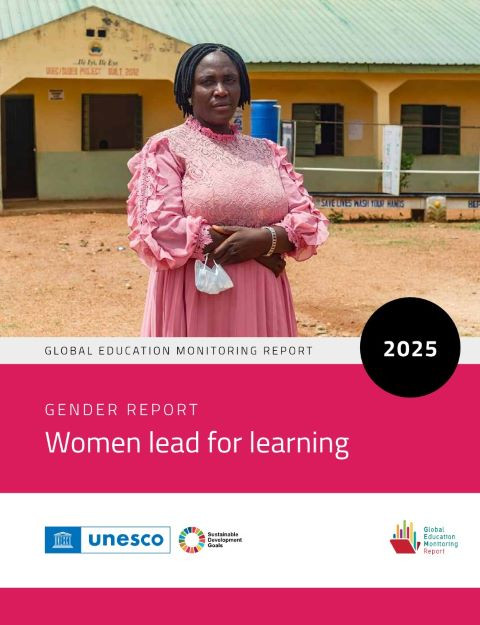
Global Education Monitoring Report 2025: Gender Report: Women Lead for Learning
발행 연도:
2025
단체 저자:
UNESCO
Barriers to gender equality in education leadership positions can and need to be overcome This gender edition, which is part of the 2024/5 Global Education Monitoring Report on leadership in education, addresses the remaining obstacles for women in their efforts to climb up the leadership ladder in education. Although the teaching profession has been feminized, there are considerable gender gaps in school management, education administration and political leadership positions, a situation illuminated in detail with examples from all over the world. Gender disparity in education leadership is the result of entrenched stereotypes and biases – conscious or unconscious – on the one hand and on the other institutional processes or professional development mechanisms that are insufficiently supportive. Research suggests that women leaders display some differences relative to men in their approaches to education leadership, for example the extent to which they emphasize collaboration, build relationships with the community and retain a focus on learning. While there is little to suggest that these differences are universal or immutable, the evidence points to the fact that the lack of equitable opportunities translates to less talent and fewer diverse approaches to leadership, which are a loss to education systems – not to mention the obvious need for equity. This is particularly evident in parts of the world where gender disparities remain large. This gender edition calls on countries to take a much closer look at gender disparity in education leadership and adopt measures to raise awareness, improve mechanisms and strengthen capacities to address discrimination and bias and thus encourage women who aspire to such careers to pursue them. Gender disparity in education leadership is the result of entrenched stereotypes and biases – conscious or unconscious – on the one hand and on the other institutional processes or professional development mechanisms that are insufficiently supportive. Research suggests that women leaders display some differences relative to men in their approaches to education leadership, for example the extent to which they emphasize collaboration, build relationships with the community and retain a focus on learning. While there is little to suggest that these differences are universal or immutable, the evidence points to the fact that the lack of equitable opportunities translates to less talent and fewer diverse approaches to leadership, which are a loss to education systems – not to mention the obvious need for equity. This is particularly evident in parts of the world where gender disparities remain large. This gender edition calls on countries to take a much closer look at gender disparity in education leadership and adopt measures to raise awareness, improve mechanisms and strengthen capacities to address discrimination and bias and thus encourage women who aspire to such careers to pursue them.
본 사이트는 사용자 경험을 향상시키기 위해 쿠키를 사용합니다. 자세한 내용은 아래의 쿠키 정책을 확인하시기 바랍니다.
쿠키정책
.