
자료
세계시민교육에 대한 이해를 넓히고 연구, 옹호 활동, 교수, 학습 등을 향상시킬 수 있는 다양하고 유용한 자료를 찾아보세요.
201 건의 결과가 검색되었습니다
 反思教育:向“全球共同利益”的理念转变? 발행 연도: 2015 단체 저자: UNESCO The changes in the world today are characterized by new levels of complexity and contradiction. These changes generate tensions for which education is expected to prepare individuals and communities by giving them the capability to adapt and to respond. This publication contributes to rethinking education and learning in this context. It builds on one of UNESCO’s main tasks as a global observatory of social transformation with the objective of stimulating public policy debate.It is a call for dialogue among all stakeholders. It is inspired by a humanistic vision of education and development, based on respect for life and human dignity, equal rights, social justice, cultural diversity, international solidarity, and shared responsibility for a sustainable future. These are the fundamentals of our common humanity. This book enhances the vision provided by the two landmark UNESCO publications: Learning to Be: The world of education today and tomorrow (1972), the ‘Faure Report’, and Learning: The treasure within (1996), the ‘Delors Report’. نحو صالح مشـترك عاملي؟ إعـادة التفكير في التـربـيــة والتعليم 발행 연도: 2015 단체 저자: UNESCO The changes in the world today are characterized by new levels of complexity and contradiction. These changes generate tensions for which education is expected to prepare individuals and communities by giving them the capability to adapt and to respond. This publication contributes to rethinking education and learning in this context. It builds on one of UNESCO’s main tasks as a global observatory of social transformation with the objective of stimulating public policy debate.It is a call for dialogue among all stakeholders. It is inspired by a humanistic vision of education and development, based on respect for life and human dignity, equal rights, social justice, cultural diversity, international solidarity, and shared responsibility for a sustainable future. These are the fundamentals of our common humanity. This book enhances the vision provided by the two landmark UNESCO publications: Learning to Be: The world of education today and tomorrow (1972), the ‘Faure Report’, and Learning: The treasure within (1996), the ‘Delors Report
 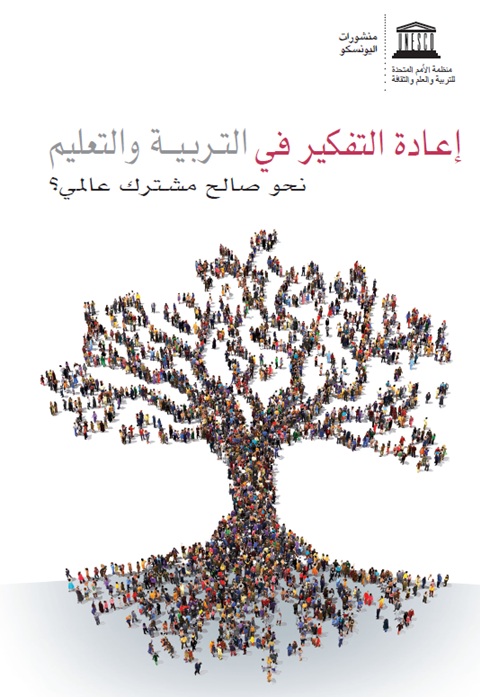 إعادة التفكير في التربية والتعليم: نحو صالح عام عالمي؟ 발행 연도: 2015 단체 저자: UNESCO ات، ّرات توتّد هذه التغيّولُات جديدة من التعقيد والتناقض. وتّتتسم تغيرات عالم اليوم بسويئا لها الأفراد والجماعات، من خلال تزويدهم بالمقدرة على ِّتهينتظر من التربية والتعليم أن ُيتي التعليم ّعمليف والاستجابة. وفي هذا السياق يسهم هذا المطبوع في النظر مجددا في ّالتكيم. إذ إنه يؤسس على دور رئيسي تؤديه اليونسكو، دور مرصد عالمي للتحولات الاجتماعية، ّوالتعلبهدف حفز نقاش السياسات العامة.م من رؤية إنسانية َمستلهل هذا المطبوع دعوة إلى الحوار بين جميع الجهات المعنية.فهو ّويمثللتعليم والتنمية، مبنية على احترام الحياة وكرامة الإنسان، وعلى التساوي في الحقوق، والعدالة الاجتماعية، والتنوع الثقافي، والتضامن الدولي، والتشارك في المسؤولية من أجل مستقبل مها مطبوعا ّقدد الرؤية التي ّمستدام. تلك هي أساسيات إنسانيتنا المشتركة. إن هذه الوثيقة تؤيم: ذلك ّ، «تقرير فور»؛ و التعل(١97٢)ًوغدام لتكون: عالم التربية اليوم ّمان: تعلَلْاليونسكو المع، «تقرير ديلور».(١996)الكنز المكنو.
 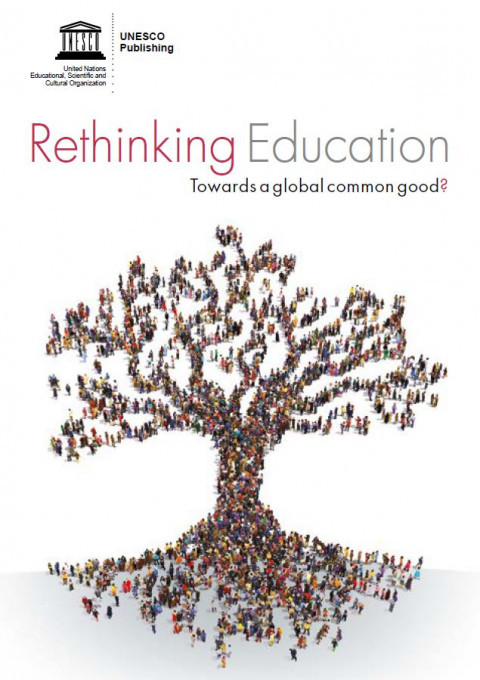 Rethinking Education: Towards a Global Common Good? 발행 연도: 2015 단체 저자: UNESCO The changes in the world today are characterized by new levels of complexity and contradiction. These changes generate tensions for which education is expected to prepare individuals and communities by giving them the capability to adapt and to respond. This publication contributes to rethinking education and learning in this context. It builds on one of UNESCO’s main tasks as a global observatory of social transformation with the objective of stimulating public policy debate.It is a call for dialogue among all stakeholders. It is inspired by a humanistic vision of education and development, based on respect for life and human dignity, equal rights, social justice, cultural diversity, international solidarity, and shared responsibility for a sustainable future. These are the fundamentals of our common humanity. This book enhances the vision provided by the two landmark UNESCO publications: Learning to Be: The world of education today and tomorrow (1972), the ‘Faure Report’, and Learning: The treasure within (1996), the ‘Delors Report’.
 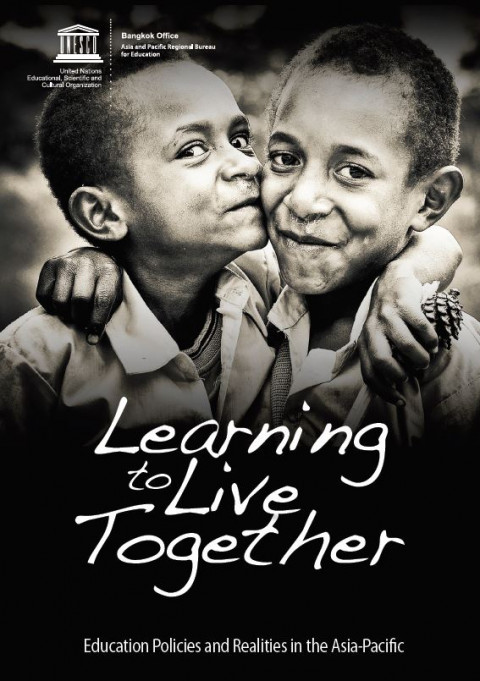 Learning to live together 발행 연도: 2014 단체 저자: UNESCO Bangkok The importance of LTLT has increased in recent years. Indeed, relevant competencies appear to be gaining focus in international frameworks and educational initiatives across countries. This is all the more necessary as Voogt and Roblin (2012) argue, given the demands of our increasingly knowledge-based society in which “ideas and knowledge function as commodities” (p. 299 –300) and to which effective social and emotional skills are critical. It is perhaps all the more critical given the multivariate global challenges in the 21st Century and the need for unified global commitment to effectively combat these challenges. In this context, the significance of LTLT is reflected in both the rise of and growing interest in Global Citizenship Education (GCE), Education for Sustainable Development (ESD), Education for International Understanding (EIU) as well as peace and human rights education. The UN Secretary-General’s Global Education First Initiative, which lists ‘Fostering Global Citizenship’ as one of its three global priorities, also implicitly recognizes the significance of LTLT as a precursor to the building of a more peaceful society, one in which discrimination is intolerable and common challenges such as climate change and abject poverty are tackled together.Yet despite the significance of LTLT in the 21st Century, and despite numerous international initiatives to foster LTLT competencies, there is a large gap of evidence identifying how this supposition is translated into effective policy and curricula, and eventually into the reality of schools, teachers and learners. This report is a response to this gap, and attempts to understand how ten selected countries in the Asia-Pacific region – Afghanistan, Australia, Indonesia, Malaysia, Myanmar, Nepal, The Philippines, Republic of Korea, Sri Lanka and Thailand – have reflected and integrated LTLT into their education policies and initiatives. This variety of countries aims to reflect their diverse experiences in terms of reflecting LTLT through their education systems. By exploring a number of areas, namely policy, curricula, teachers and assessment, this study aims to identify what has so far been achieved in education systems of the Asia-Pacific region in the area of LTLT.This report is therefore targeted predominantly at education policy makers, researchers, academics as well as education practitioners of the Asia-Pacific region. Given its connection to Global Citizenship Education and other relevant international initiatives around sustainability and peace education, this report is also relevant to UNESCO’s partner organizations and the broader educational development community.This report will first present the research framework for the study, before exploring the social and economic contexts in the ten selected countries and wider regional factors in the Asia-Pacific in relation to global challenges in Chapter Two. Chapter Three will then examine national policy frameworks, including the vision of those policies in defining LTLT in education. Chapter Four focuses on the national curriculum in selected countries and the extent to which they incorporate learning objectives, subjects, and extra-curricular activities reflecting the concept of LTLT and related skills and competencies. In Chapter Five, teaching practices are examined, including the role of teachers and teacher education, as well as teaching methods and application of media and information literacy (MIL) in the classroom. Chapter Six then looks at assessment, and how far countries have attempted to develop assessment frameworks that measure the skills and competencies related to LTLT. Finally, Chapter Seven provides reflections and conclusions based on the main findings of the study, while also identifying trends across policy domains, shortcomings and some policy considerations.
  Preventing Violent Extremism through Education: A guide for policy-makers 발행 연도: 2017 단체 저자: UNESCO This publication offers technical guidance for education professionals (policy-makers, teachers and various education stakeholders) on how to address the concrete challenges posed by violent extremism. The Guide particularly aims to help policy-makers within ministries of education to prioritize, plan and implement effective preventive educationrelated actions, contributing to national prevention efforts. La Prévention de l'extrémisme violent par l'éducation 발행 연도: 2017 단체 저자: UNESCO Cette publication propose un guide technique pour les professionnels de l’éducation (décideurs, enseignants et autres acteurs du domaine) sur les façons d’adresser les défis posés par l’extrémisme violent. Le Guide vise particulièrement à assister les décideurs au sein des ministères de l’Éducation pour prioriser, planifier et instaurer des actions préventives en milieu scolaire complémentaires aux mesures préventives nationales. Preventing Violent Extremism through Education: A guide for policy-makers 발행 연도: 2017 단체 저자: UNESCO 该出版物在如何处理暴力极端主义带来的具体挑战的问题上为教育领域人员(政策制定者、教师以及各类教育利益相关者)提供了技术性的指导。该指导手册特别旨在帮助教育相关教育部门的政策制定者从教育方面入手优先考虑、规划并采取有效的预防性的相关行动,为国家预防工作做出贡献。 Guide pour l'évaluation d'un plan sectoriel d'éducation 발행 연도: 2015 단체 저자: UNESCO International Institute for Educational Planning (IIEP) | Global Partnership for Education (GPE) At the World Education Forum, in Dakar in 2000, the international community pledged that no country with a credible plan to achieve the Education for All goals would be thwarted by a lack of resources. Since then, the development of an education sector plan (ESP) has become a priority in many countries. ESPs present the policies and strategies for national education reform, and are a powerful tool for coordinating partners and for mobilizing additional domestic and external resources. They have become a critical instrument for governments to signal to all potential investors that their education policies are credible, sustainable, and worthy of investment.The consensus on the need for credible ESPs is strong. However, what does a credible plan require in terms of government leadership, knowledge and data, institutional and human capacities, and dialogue among the education stakeholders? What are the criteria that establish the credibility of a plan? The purpose of these guidelines is to assist education stakeholders in appraising the soundness, relevance, and coherence that form the credibility of ESPs. The primary objective of an appraisal report is to support the finalization of a credible ESP. It provides a fair review of the ESP strengths and areas in need of improvement before the endorsement by partners which signifies their commitment to support the implementation of the ESP. These guidelines are meant to be adapted to national contexts and needs. The stakeholders should discuss the scope and the methodology of the appraisal to be used, and develop a common vision of the whole process. The appraisal process should be participatory, and grounded in the political and technical dialogue for ESP development. It should involve consultations, interviews with key stakeholders, and field visits, in addition to a desk review of the ESP and any other relevant documents. It is good practice to organize a validation workshop of the appraisal report’s findings, conclusions, and recommendations to feed into the ESP finalization. The appraisal process should occur early enough in the ESP development process to allow time for decision-makers to open consultations on these conclusions and recommendations in order to improve the final version of the ESP.
  تطوير سياسات التعليم والتدريب لتعليم الكبار من أجل تنمية مستدامة: دراسة حالة دولة الكويت 발행 연도: 2017 저자: Sabika Hussain Bursli 단체 저자: Tanta University في هذه المقالة ، يعرض المؤلف حالة الكويت فيما يتعلق بتعليم الكبار. يحلل المقال السياسات الكويتية الحالية المتعلقة بتعليم الكبار في ضوء متطلبات التنمية المستدامة.