
자료
세계시민교육에 대한 이해를 넓히고 연구, 옹호 활동, 교수, 학습 등을 향상시킬 수 있는 다양하고 유용한 자료를 찾아보세요.
103 건의 결과가 검색되었습니다
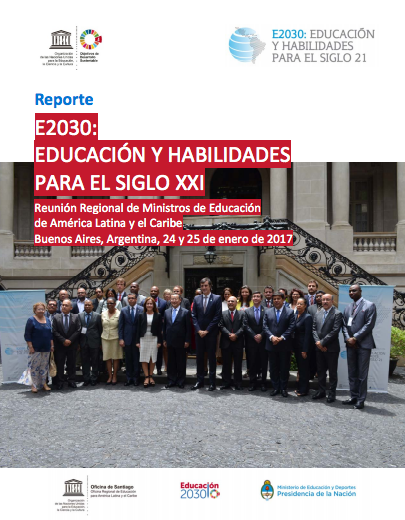 E2030: education and skills for the 21st century, report 발행 연도: 2017 단체 저자: UNESCO Santiago The UNESCO Regional Bureau for Education in Latin America and the Caribbean, OREALC/UNESCO Santiago, in collaboration with the Ministry of Education and Sport of the Republic of Argentina, organized the Regional Meeting of Ministers of Education of Latin America and the Caribbean – “E2030: Education and skills for the 21st century”. Ministers of Education and high-level representatives of the education sector of the Member States of LAC; bilateral, regional and multilateral organizations; United Nations agencies; representatives of civil society; stakeholders and UNESCO experts participated in the meeting, which was held on 24-25 January 2017 in Buenos Aires, Argentina. This was the first ministerial meeting to be organized within the framework of the 2030 Agenda for Sustainable Development and its 17 Sustainable Development Goals (SDGs), in particular SDG 4 – “Ensure inclusive and quality education for all and promote lifelong learning”. It provided a space for dialogue between ministers of education and other stakeholders to debate SDG 4 in the context of the 2030 SDG Agenda. Discussions and information sharing on various topics related to the SDG 4 targets, and on the coordination mechanisms and monitoring instruments conducive to the achievement of E2030 enabled LAC Member States to reach a common vision and understanding of E2030 in the region. This joint approach on E2030 for the region is laid down in the Declaration of Buenos Aires, which ministers adopted at the end of the meeting.
  املبادرة العاملية للتعليم أوا: مبادرة األمني العام لألمم املتحدة 발행 연도: 2012 단체 저자: United Nations (UN) أطلق الأمين العام للأمم المتحدة مبادرة التعليم أولاً العالمية (GEFI) لمدة خمس سنوات في سبتمبر 2012 لتسريع التقدم نحو تحقيق أهداف التعليم للجميع والأهداف الإنمائية للألفية المتعلقة بالتعليم. وتهدف المبادرة إلى: حشد مجموعة واسعة من الجهات الفاعلة للدفعة النهائية نحو عام 2015؛ وضع التعليم الجيد والملائم والتحويلي في قلب جداول الأعمال الاجتماعية والسياسية والتنموية؛ توليد تمويل إضافي وكاف للتعليم من خلال جهود الدعوة العالمية المستمرة. وقد حددت هذه المبادرة المجالات الثلاثة ذات الأولوية؛ إدخال كل طفل إلى المدرسة، وتحسين جودة التعلم، وتعزيز المواطنة العالمية. Iniciativa Mundial La Educación ante Todo: una Iniciativa del Secretario General de las Naciones Unidas 발행 연도: 2012 단체 저자: United Nations (UN) The United Nations Secretary-General launched the five-year Global Education First Initiative (GEFI) in September 2012 to accelerate progress towards the Education for All goals and the education-related Millennium Development Goals. The Initiative aims to: Rally together a broad spectrum of actors for the final push to 2015; Put quality, relevant and transformative education at the heart of the social, political and development agendas; Generate additional and sufficient funding for education through sustained global advocacy efforts. This initiative outlined the three priority areas; Put every child in school, Improve the quality of learning, and Fostering global citizenship. L'Initiative Mondiale pour l'Education Avant tout: une Initiative du Secrétaire Général de l'Organisation des Nations Unies 발행 연도: 2012 단체 저자: United Nations (UN) The United Nations Secretary-General launched the five-year Global Education First Initiative (GEFI) in September 2012 to accelerate progress towards the Education for All goals and the education-related Millennium Development Goals. The Initiative aims to: Rally together a broad spectrum of actors for the final push to 2015; Put quality, relevant and transformative education at the heart of the social, political and development agendas; Generate additional and sufficient funding for education through sustained global advocacy efforts. This initiative outlined the three priority areas; Put every child in school, Improve the quality of learning, and Fostering global citizenship. Global Education First Initiative: An Initiative of the United Nations Secretary-General 발행 연도: 2012 단체 저자: United Nations (UN) The United Nations Secretary-General launched the five-year Global Education First Initiative (GEFI) in September 2012 to accelerate progress towards the Education for All goals and the education-related Millennium Development Goals. The Initiative aims to: Rally together a broad spectrum of actors for the final push to 2015; Put quality, relevant and transformative education at the heart of the social, political and development agendas; Generate additional and sufficient funding for education through sustained global advocacy efforts. This initiative outlined the three priority areas; Put every child in school, Improve the quality of learning, and Fostering global citizenship. Global Education First Initiative: An Initiative of the United Nations Secretary-General 발행 연도: 2012 단체 저자: United Nations (UN) Le Secrétaire Général de l’ONU a lancé l’Éducation Globale Première Initiative (EGPI) pour les cinq ans en Septembre 2012 pour accélérer les progrès vers l'Éducation pour Tous et les Objectifs du Millénaire pour le Développement liés à l'éducation. L'initiative vise à: Rassemblement d' un large éventail d'acteurs pour la poussée finale à 2015; Mettre de qualités, de pertinence et d’éducation transformatrice au cœur des agendas sociaux, politiques et de développement; Générer des fonds supplémentaires et suffisants pour l'éducation grâce à des efforts de sensibilisation mondiale soutenue. Cette initiative a décrit les trois domaines prioritaires; Mettez tous les enfants à l'école, Améliorer la qualité de l'apprentissage, et Favoriser la citoyenneté mondiale. 글로벌 교육 우선 구상: 유엔 사무총장의 구상 발행 연도: 2012 단체 저자: United Nations (UN) 유엔 사무총장은 교육과 관련된 ‘모두를 위한 교육 목표(Education for All Goals)’와 ‘새천년개발목표(Millennium Development Goals)’의 진행을 가속화 시키기 위하여 2012년 9월 5개년 ‘글로벌교육우선구상(GEFI)’을 출범시켰다. 이 구상의 목표는 2015년 최종 추진을 위한 광범위한 활동의 스펙트럼을 함께 이어가며, 그 중심에 사회·정치적 개발 의제와 관련된 양질의 변화된 교육을 두고, 지속적인 글로벌 지지 노력을 통해 교육을 위한 충분한 추가적 펀딩을 확보한다. 본 사업은 세가지 우선 순위의 영역을 두는데, 그 첫 번째로는 모든 어린이를 학교에 입학시키는 것, 두 번째는 학습의 질을 향상시키는 것, 세 번째는 세계 시민을 육성하는 것이다.
 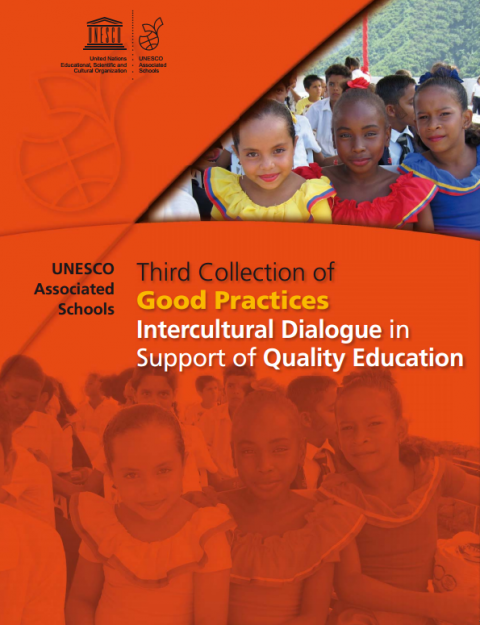 Third collection of good practices: intercultural dialogue in support of quality education 발행 연도: 2013 단체 저자: UNESCO Associated Schools Project Network (ASPnet) The UNESCO Associated Schools Project Network (ASPnet) conducts pilot projects aimed at reinforcing the humanistic and ethical principles of UNESCO in school curricula and throughout the learning process, often within the framework of UN and UNESCO International Day, Years and Decades, Promoting intercultural dialogue is thus an ASPnet priority. The initiatives presented in this Third Collection of ASPnet Good Practices were carried out by ASPnet schools and their partner institutions in the context of the International Year for the Rapprochement of Cultures (2010). The selected projects illustrate both multicultural education and intercultural education in action. Troisième recueil de bonnes pratiques: le dialogue interculturel à l'appui de l'éducation de qualité 발행 연도: 2013 단체 저자: UNESCO Associated Schools Project Network (ASPnet) Les écoles associées de l'UNESCO (réSEAU) mènent des projets pilotes visant à renforcer les principes humanistes et éthiques de l'UNESCO dans les programmes scolaires et tout au long du processus d'apprentissage, souvent dans le cadre de l'ONU et de la Journée internationale de l'UNESCO, années et décennies, la promotion du dialogue interculturel est donc une priorité Reseau. Les initiatives présentées dans ce troisième Collection de Reseau bonnes pratiques ont été réalisées par les écoles Reseau et leurs institutions partenaires dans le cadre de l'Année internationale du rapprochement des cultures (2010). Les projets sélectionnés illustrent à la fois l'éducation multiculturelle et l'éducation interculturelle dans l'action. Securitisation, Counterterrorism and the Silencing of Dissent: The Educational Implications of Prevent 발행 연도: 2016 저자: Aislinn O'Donnell 단체 저자: Society for Educational Studies | Taylor & Francis This paper outlines some of the implications of counterterrorist legislation, including Prevent, for the pedagogical relationship and for educational institutions. The concept of ‘radicalization’, central to the Prevent Strategy, is one that is contested in the field of counterterrorism, yet educators are now expected to identify and refer students ‘at risk of radicalization’. Based on the experience of teaching IRA and INLA prisoners in the Republic of Ireland, the author outlines a set of philosophical and ethical principles that ought to underpin education. It is argued that education must not be subordinated to security and intelligence agendas on pragmatic, educational and ethical grounds.