
자료
세계시민교육에 대한 이해를 넓히고 연구, 옹호 활동, 교수, 학습 등을 향상시킬 수 있는 다양하고 유용한 자료를 찾아보세요.
170 건의 결과가 검색되었습니다
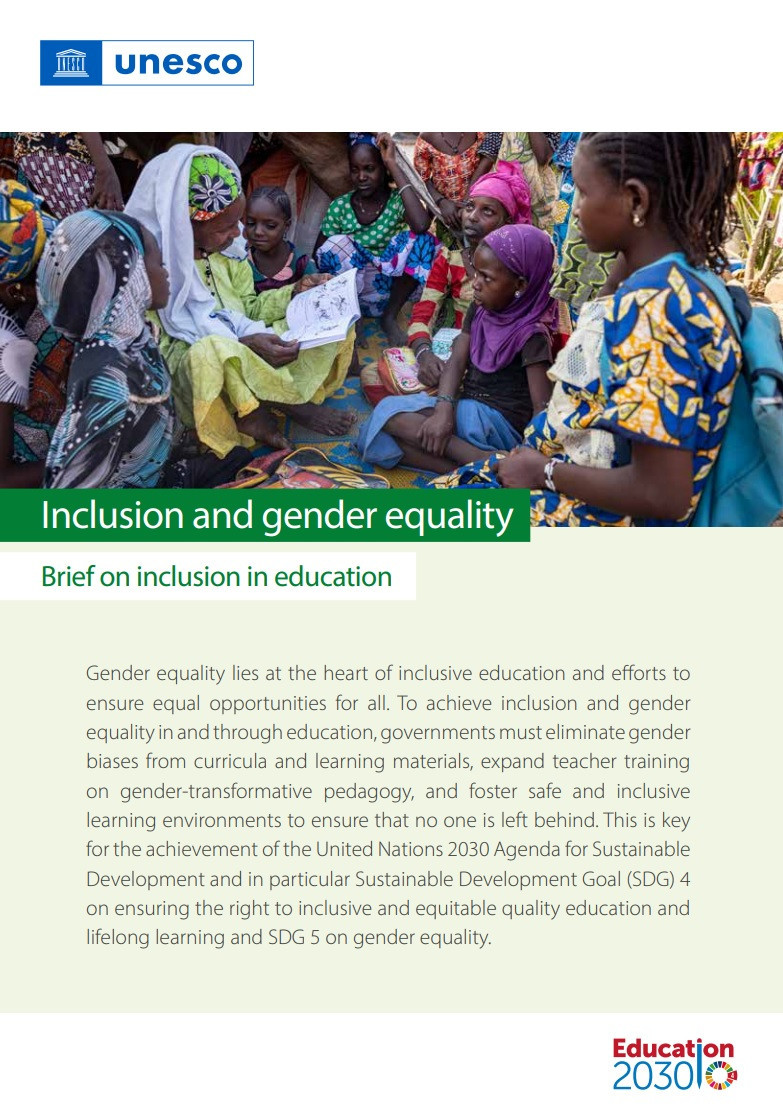 Inclusion and gender equality: brief on inclusion in education 발행 연도: 2023 단체 저자: UNESCO <Brief on inclusion in education>Gender equality lies at the heart of inclusive education and efforts to ensure equal opportunities for all. To achieve inclusion and gender equality in and through education, governments must eliminate gender biases from curricula and learning materials, expand teacher training on gender-transformative pedagogy, and foster safe and inclusive learning environments to ensure that no one is left behind. This is key for the achievement of the United Nations 2030 Agenda for Sustainable Development and in particular Sustainable Development Goal (SDG) 4 on ensuring the right to inclusive and equitable quality education and lifelong learning and SDG 5 on gender equality.<Introduction>Gender refers to the socially constructed roles and relationships, personality traits, attitudes, behaviours, values, relative power and influence that society ascribes to the two sexes on a differential basis. Gender affects people’s lives every day in myriad ways. Gendered expectations, whether of oneself or of others, impact the choices people make. They structure people’s relationships and have the power to shape what people believe they can and should accomplish. Gendered power structures distribute and influence power, often resulting in systemic inequalities (UNESCO, 2021).Gender also intersects with other characteristics which can exacerbate education exclusion, such as age, geography, poverty, disability, ethnicity, indigeneity, language, religion, and migration or displacement status. Addressing the overlapping differences that create disadvantage and marginalization can help to build more inclusive and equitable education systems.Achieving gender equality in and through education is essential for inclusive education and inclusive societies. It is key to the achievement of the United Nations 2030 Agenda for Sustainable Development and in particular Sustainable Development Goal (SDG) 4 on ensuring the right to inclusive and equitable quality education and lifelong learning and SDG 5 on gender equality. In any country’s context, this means ensuring all learners have equal access to all levels of education, equal educational pathways and equal opportunities to apply the outcomes of their education. A world where inclusion and gender equality in and through education is achieved allows girls and boys, women and men and non-binary people to have equal rights and opportunities to education and the power and agency to shape their lives and futures.This brief discusses how gender equality impacts learners’ inclusion and the ways in which gender equality and inclusion are interconnected in education.
 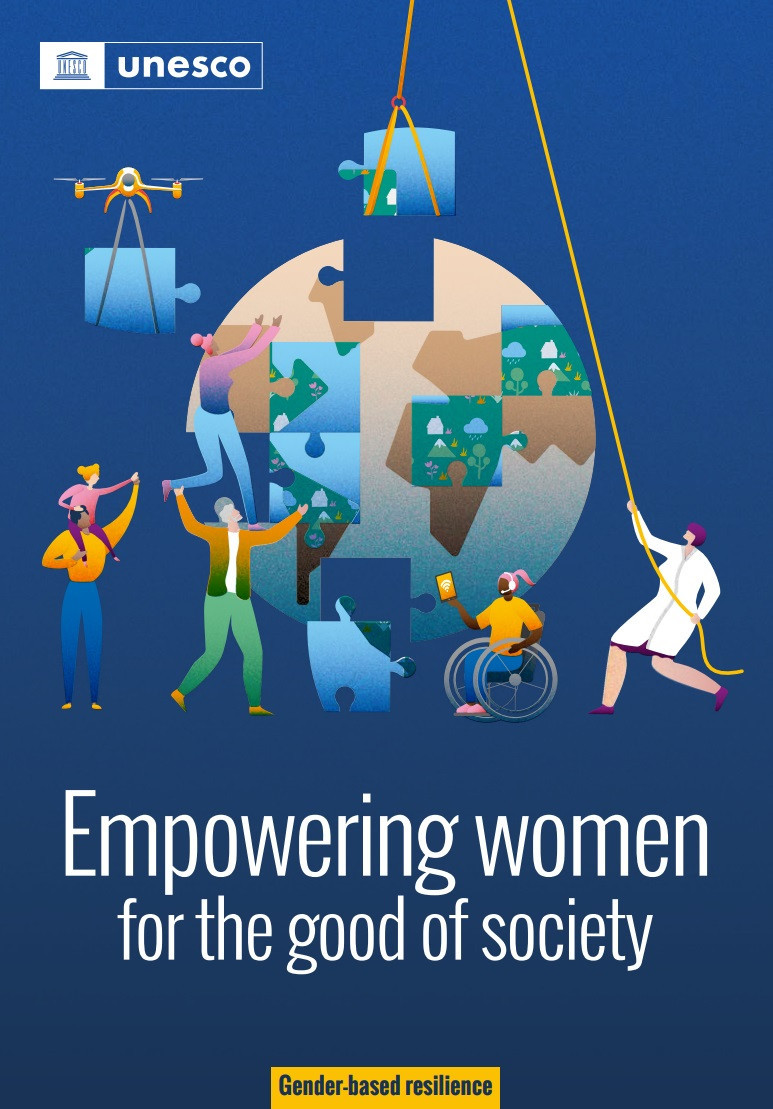 Empowering women for the good of society: gender-based resilience 발행 연도: 2023 저자: Squicciarini, Mariagrazia | Sarlat, Garance | Manca, Anna Rita 단체 저자: UNESCO <Short Summary> Let’s change the resilience paradigmWhat are the root causes and drivers of resilience? Societal resilience is shaped by the unique roles that individuals play and their ability to respond to shocks, gender-based expectations and discriminations hinder women’s and girls’ ability to participate in, and contribute to, society. In times of crises, their vulnerability intensifies resulting in a weakened response that ripples throughout society.In response, UNESCO designed the first Gender-Based Resilience Framework. As a compass for inclusive policymaking, this report analyzes how differences in opportunities, needs and constraints impact resilience and proposes a measurement Framework based on: (1) fundamental human rights; (2) socioeconomic characteristics, such as health, education, work, political engagement, and climate justice; (3) contextual factors, such as values and perceptions.Moving beyond the standard approach of coping with and recovering from shocks; UNESCO calls for a gender-transformative resilience, which leverages the interrelations between individuals and institutions. Decision- and policy-makers, researchers, and gender equality advocates are invited to use and add to this Framework to effectively navigate through current and future crises.It is only by empowering all women and girls, and people of all genders, that we will be able to face the challenges ahead.
  The right to higher education and gender equality: briefing note compendium 발행 연도: 2023 단체 저자: UNESCO International Institute for Higher Education in Latin America and the Caribbean (IESALC) The right to higher education and gender equality Table of ContentsForeword ................................................................................................................................................................................4Introduction ..........................................................................................................................................................................5UNESCO and the right to higher education ..............................................................................................................5Aim of this compendium..................................................................................................................................................6Key findings...........................................................................................................................................................................7Gender equality in Higher Education - Maximising impacts– Gillian Cowell................................................8Gender equality and higher education: The Afghan case – Aisha Khurram............................................... 12An analysis of gender equality policies and practices in higher education institutions and their effectiveness in promoting gender equity – Angel Mbuthia........................................................ 14Gender identity and access to higher education – Martin Perea.................................................................... 16What can be done to ensure the right to higher education? – Bhavani Rao.............................................. 18Gender equality in higher education still a pending issue in Peru – Patricia Ruiz Bravo ....................... 22Gender equality in higher education: state of play and implications across OECD countries, and reflections on potential responses for policy and practice – François Staring.................................. 24
  SDG In the Republic of Korea: Progress Report 2023 발행 연도: 2023 저자: Woohyun Chung | Haesik Jung | Yunjae Hwang | Dawoon Jung | Hyojung Han | Dokyun Kim | Jongho Ahn | Sangyoup Lee | Soeun Ahn | Jungwook Kim | Sangyun Lee | Jiyoung Lee | Sora Yi | Jewoo Hong | Miju Kim | Junghee Cho | Kyungah Koo | Yul Kwon 단체 저자: Korea R. Statistics Research Institute | Statistics Korea It has been eight years since the Sustainable Development Goals (SDG) were adopted at the UN General Assembly, and nations began to work toward achieving them. Now we are halfway through the 2030 target period. As an authorized national focal point of SDG data, the Statistics Research Institute has been publishing a 『Sustainable Development Goals in the Republic of Korea: Progress Report』 annually, in keeping with their vision of providing support for ‘eviꠓdence-based decision-making’.『SDG in the Republic of Korea: Progress Report 2023』, released this, was designed as a compass identifying goals to be prioritized in policy implementation during the remaining period until 2030 to keep pace for achieving the SDGs. It is hoped that the report will help to point out the direction for policies responding to the crises and changes we are facing amid the COVID pandemic, the climate crisis, and war, through relevant indicators. 한국의 SDG 이행보고서 2023 발행 연도: 2023 저자: Woohyun Chung | Haesik Jung | Yunjae Hwang | Dawoon Jung | Hyojung Han | Dokyun Kim | Jongho Ahn | Sangyoup Lee | Soeun Ahn | Jungwook Kim | Sangyun Lee | Jiyoung Lee | Sora Yi | Jewoo Hong | Miju Kim | Junghee Cho | Kyungah Koo | Yul Kwon 단체 저자: Statistics Research Institute 지속가능발전목표(SDG)가 유엔총회에서 채택되고 그 시작을 알린 지 올해 8년 차로, 2030년 목표 시점까지 절반의 시간이 지났습니다. 통계개발원은 한국의 SDG 데이터 책임기관으로 ‘증거 기반 의사결정 지원’이라는 비전하에 『한국의 SDG 이행보고서』를 매년 발간하고 있습니다. 올해 발간된 『한국의 SDG 이행보고서 2023』은 2030년까지 남은 기간 동안 어떤 목표에 우선순위를 두어 정책을 실행해야 SDG 달성이 가능한지를 보여 주는 나침반 역할로 기획되었습니다. 코로나19, 기후위기, 전쟁 등 격변의 시대에 우리가 직면한 위기와 변화를 지표로 보여 줌으로써 관련 정책의 방향을 제시해주리라 기대합니다. 본 저작물은 통계청 통계개발원에서 2023년 작성하여 공공누리 제3유형으로 개방한 '한국의 SDGs 이행보고서 2023(작성자:정우현)'을 이용하였으며, 해당 저작물은 통계청 통계개발원 홈페이지(https://kostat.go.kr/)에서 무료로 내려받으실 수 있습니다.
 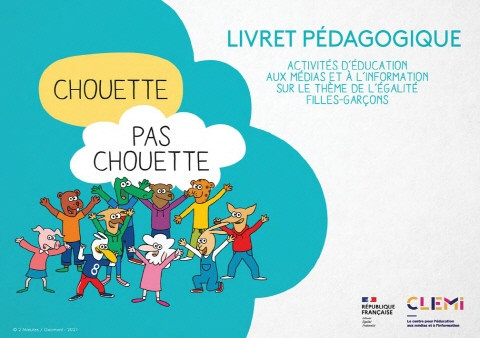 Chouette, pas chouette, déconstrure les stéréotypes sexistes, ça s'apprend ! 발행 연도: 2021 저자: Anne Lechaudel | Séverine Poncet-Ollivier | Séverin Ledru-Milon 단체 저자: Centre pour l’éducation aux médias et à l’information (CLEMI) Ce livret propose des activités pédagogiques sur le thème de l’égalité filles/garçons, pour apprendre à questionner et déconstruire les stéréotypes sexistes.Il est réalisé dans l’univers graphique et avec les personnages de la série Chouette, pas chouette ! une série de 16 programmes courts animés pour sensibiliser les 4-6 ans aux stéréotypes sexistes. Les activités proposées dans le livret permettent de soutenir l’expression des élèves, d’aborder le quotidien des relations filles - garçons, et plus largement du vivre-ensemble, de manière concrète et créative. Trois entrées thématiques par niveau et des pistes d’activités adaptées en éducation aux médias et à l’information sont proposées:- L’apparence. « À quoi doit ressembler une fille ou un garçon ? » (cycle 1, 4-5 ans)- Le comportement. « Fais-le comme une fille, comme un garçon » (cycle 2, 6-7-8 ans)- Le devenir et les désirs d’orientation. C ’est quoi un "métier de femme", un "métier d’homme" ? (cycle 3, 9-10 ans)Des épisodes de la série « Chouette, pas chouette ! » ont été identifiés pour chacune des entrées thématiques.Le livret est accompagné de ressources pédagogiques pour aller plus loin. This booklet offers educational activities on the theme of equality between girls and boys, to help children question and deconstruct sexist stereotypes.It is based on the graphics and characters of Chouette, pas chouette! a series of 16 short animated programs designed to raise awareness of sexist stereotypes among 4-6 year-olds. The activities in the booklet are designed to support pupils' self-expression, and address the day-to-day issues of boy-girl relationships and, more broadly, living together, in a concrete, creative way. The booklet features three thematic entries for each grade level, along with suggestions for activities adapted to media and information literacy:- Appearance. "What should a boy or a girl look like?" (cycle 1, 4-5 years old)- Behavior. "Do it like a girl, do it like a boy" (cycle 2 6-7-8 years old)- Becoming and career aspirations. What's a "woman's job", what's a "man's job"? (cycle 3, 9-10 years old)Episodes from the "Chouette, pas chouette!" series have been identified for each of these themes.The booklet is accompanied by teaching resources for further reading.
  Central Asia, the South Caucasus, Eastern Europe and Mongolia: Mapping of Women’s Resource Centres and Other Integrated Service Providers for Survivors of Gender-Based Violence 발행 연도: 2022 단체 저자: Организация по безопасности и сотрудничеству в Европе (ОБСЕ) The Gender Issues Programme of the OSCE Office of the Secretary General conducted a comprehensive mapping of Women’s resource centres and other integrated service providers for survivors of gender-based violence (GBV) in Central Asia, the South Caucasus, Eastern Europe and Mongolia as part of the WIN Project. The mapping aimed to collect extensive information on existing services and mechanisms for direct assistance to and protection of survivors of GBV, to assess the main gaps and the need for capacity-building and knowledge-sharing in counteracting GBV, and to identify promising approaches and good practices across the OSCE region. Сопоставительный Анализ Женских Ресурсных Центров и Других Поставщиков Комплексных Услуг для Потерпевших от Гендерного Насилия 발행 연도: 2022 단체 저자: Организация по безопасности и сотрудничеству в Европе (ОБСЕ) Отдел Секретариата ОБСЕ по гендерным вопросам провел всесторонний сопоставительный анализ женских ресурсных центров и других поставщиков комплексных услуг для потерпевших от гендерного насилия (GBV) в странах Центральной Азии, регионов Южного Кавказа, Восточной Европы и в Монголии, в рамках проекта WIN. Целью анализа был сбор подробной информации о существующих услугах и механизмах прямой помощи и защиты потерпевших от гендерного насилия, оценка основных недочетов и необходимости в укреплении потенциала и обмене знаниями по противодействию гендерному насилию, выявление перспективных подходов и передовых практик во всем регионе ОБСЕ.
  Comprehensive Sex Education 발행 연도: 2021 단체 저자: Ministry of Education, Argentina What are we talking about when we say Comprehensive Sex Education? What challenges does integrality take on? In this issue of the Human Rights, Gender and CSE at school collection you will find a series of activities to work in the classroom and a theoretical framework to think about CSE. Educación Sexual Integral 발행 연도: 2021 단체 저자: Ministry of Education, Argentina ¿De qué hablamos cuando decimos Educación Sexual Integral? ¿Qué desafíos asume la integralidad? En este número de la colección Derechos Humanos, Género y ESI en la escuela encontrarán una serie de actividades para trabajar en el aula y un marco teórico para pensar ESI.