
자료
세계시민교육에 대한 이해를 넓히고 연구, 옹호 활동, 교수, 학습 등을 향상시킬 수 있는 다양하고 유용한 자료를 찾아보세요.
169 건의 결과가 검색되었습니다
 Education à la citoyenneté et de la coexistence: mon corps, mon premier territoire; cycle initial (pré-maternelle, jardin et transition) 발행 연도: 2014 단체 저자: Secretaría de Educación del Distrito (SED) | Fe y Alegría Ces douze modules font référence à une série d'activités qui mettent l'accent sur la façon dont les enfants de toutes les classes éducatives comprennent et vivent la citoyenneté, en renforçant et en facilitant les processus d'apprentissage basés sur l'autonomie. Ces matériels éducatifs, qui visent à être mis en œuvre dans les salles de classe, tentent de servir de ressources pour les éducateurs et autres agents qui travaillent ou sont intéressés à travailler avec l'éducation à la citoyenneté et la coexistence. L'objectif global est de fournir une éducation de qualité. Educación para la ciudadanía y la convivencia: construimos paz a nuestra medida; ciclo inicial (prejardín, jardín y transición) 발행 연도: 2015 단체 저자: Secretaría de Educación del Distrito (SED) | Fe y Alegría These twelve modules make reference to a series of activities that focus on how children from all the educative grades understand and live citizenship, strengthening and facilitating the learning processes based on autonomy. This educative materials, which are aimed at being implemented inside the classrooms, attempt to serve as input resources for educators and other agents that work on or are interested in working with citizenship education and coexistence. The overall objective is to provide quality education. Citizenship education and coexistence: guides for citizenship and coexistence from the colective construction of meaning and networks; diversity and gender 발행 연도: 2015 단체 저자: Centro de Investigación y Educación Popular (CINEP) | Secretaría de Educación del Distrito (SED) Cultural diversity education is one of the main topis related to education for citizenship and coexistence. Therefore, this manual identifies three areas of reflection: 1) Diversity and Gender: identities and imaginaries, 2) Relations and tensions : diversity, gender and power, 3) Being together and respecting the differences. Each one of these areas is accompanied by didactic tools that allow to deepen into the contents that are based on fundamental theoretical and practical elements, which could be useful in the pedagogical process leaded by the participants of the project. Educación para la ciudadanía y la convivencia:manual de ciudadanía y convivencia desde la construcción colectiva de sentidos y redes; diversidad y género 발행 연도: 2015 단체 저자: Centro de Investigación y Educación Popular (CINEP) | Secretaría de Educación del Distrito (SED) Cultural diversity education is one of the main topis related to education for citizenship and coexistence. Therefore, this manual identifies three areas of reflection: 1) Diversity and Gender: identities and imaginaries, 2) Relations and tensions : diversity, gender and power, 3) Being together and respecting the differences. Each one of these areas is accompanied by didactic tools that allow to deepen into the contents that are based on fundamental theoretical and practical elements, which could be useful in the pedagogical process leaded by the participants of the project. Education à la citoyenneté et de la coexistence: citoyenneté manuelle et la coexistence de construction collective du sens et de réseaux; la diversité et l'égalité 발행 연도: 2015 단체 저자: Centro de Investigación y Educación Popular (CINEP) | Secretaría de Educación del Distrito (SED) L’éducation à la diversité culturelle est l'un des principaux topis liés à l'éducation à la citoyenneté et à la coexistence. Par conséquent, ce manuel identifie trois domaines de réflexion: 1) la diversité et l'égalité: identités et Imaginaires, 2) Relations et tensions: la diversité, genre et de pouvoir, 3) étant ensemble et en respectant les différences. Chacun de ces domaines est accompagné d'outils didactiques qui permettent d'approfondir dans le contenu qui sont basés sur des éléments théoriques et pratiques fondamentales, qui pourraient être utiles dans le processus pédagogique mené par les participants du projet. Citizenship education and coexistence: guides for citizenship and coexistence from the colective construction of meaning and networks; care and self-care 발행 연도: 2015 단체 저자: Centro de Investigación y Educación Popular (CINEP) | Secretaría de Educación del Distrito (SED) Care and self-care is one of the main topics related to education for citizenship and coexistence. Therefore, this manual identifies three areas of reflection: 1) self-care, 2) caring for others: people with whom I interact, 3)Care of the ones I don't know and things that surround me. Each one of these areas is accompanied by didactic tools that allow deepening into the contents that have been created, proposing theoretical and practical fundamental elements, which could be useful in the pedagogical process leaded by the participants of the project. . Educación para la ciudadanía y la convivencia: manual de ciudadanía y convivencia desde la construcción colectiva de sentidos y redes; cuidado y autocuidado 발행 연도: 2015 단체 저자: Centro de Investigación y Educación Popular (CINEP) | Secretaría de Educación del Distrito (SED) Care and self-care is one of the main topics related to education for citizenship and coexistence. Therefore, this manual identifies three areas of reflection: 1) self-care, 2) caring for others: people with whom I interact, 3)Care of the ones I don't know and things that surround me. Each one of these areas is accompanied by didactic tools that allow deepening into the contents that have been created, proposing theoretical and practical fundamental elements, which could be useful in the pedagogical process leaded by the participants of the project. . Education à la citoyenneté et de la coexistence: citoyenneté manuelle et la coexistence de construction collective du sens et de réseaux; soins et auto-soins 발행 연도: 2015 단체 저자: Centro de Investigación y Educación Popular (CINEP) | Secretaría de Educación del Distrito (SED) Les soins et l'autonomie sont l'un des principaux thèmes liés à l'éducation à la citoyenneté et à la coexistence. Par conséquent, ce manuel identifie trois domaines de réflexion: 1) le soin de soi, 2) le soin des autres: les personnes avec qui j'interagis, 3) le soin de ceux que je ne connais pas et les choses qui m'entourent. Chacun de ces domaines s'accompagne d'outils didactiques permettant d'approfondir les contenus qui ont été créés, proposant des éléments théoriques et pratiques fondamentaux qui pourraient être utiles dans le processus pédagogique mené par les participants du projet.
  Centre Hubertine Auclert 발행 연도: 2010 저자: Marie-Pierre Badré 단체 저자: Centre Hubertine Auclert (CHA) L'Égalithèque est une banque de donnée unique en France recensant des milliers de guides, expositions, ouvrages, affiches, vidéos, spectacles vivants, diaporamas, formations, quiz, etc. sur l'égalité femmes-hommes et la lutte contre les violences de genre. Elle propose à la fois les ressources créées par le Centre Hubertine Auclert - publications, campagnes de sensibilisation, malles virtuelles et expositions - ainsi que de nombreuses autres ressources créées par des structures oeuvrant pour l'égalité. Enrichie et actualisée régulièrement par l'équipe du Centre, l'Égalithèque sera très prochainement participative : les membres du Centre pourront soumettre un outil qui sera contrôlé avant d'être référencé. The Égalithèque is a database unique in France, containing thousands of guides, exhibitions, books, posters, videos, live shows, slide shows, training courses, quizzes, etc. on gender equality and the fight against gender violence. It includes resources created by the Centre Hubertine Auclert - publications, awareness-raising campaigns, virtual trunks and exhibitions - as well as many other resources created by structures working for equality. Enriched and updated on a regular basis by the Centre's team, the Égalithèque will soon be participative: Centre members will be able to submit a tool, which will be checked before being referenced.
 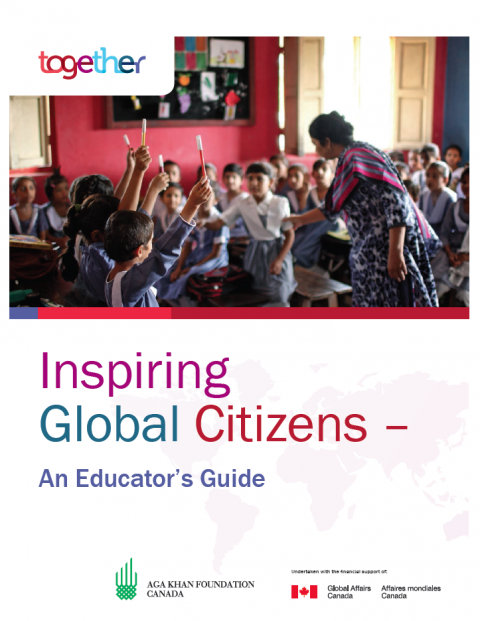 Inspiring Global Citizens - An Educator's Guide 발행 연도: 2017 단체 저자: AGA Khan Foundation Canada This resource is intended for use by teachers of intermediate and secondary school grades to support education about global development and related themes such as global citizenship. The activities included in the resource are designed to assist students in increasing their understanding of the interconnectedness of the world, of the factors contributing to global inequalities, and of some effective and sustainable ways to help reduce global poverty. It is hoped that students will be inspired to take action to make their own contribution to improving lives everywhere.