
자료
세계시민교육에 대한 이해를 넓히고 연구, 옹호 활동, 교수, 학습 등을 향상시킬 수 있는 다양하고 유용한 자료를 찾아보세요.
9 건의 결과가 검색되었습니다
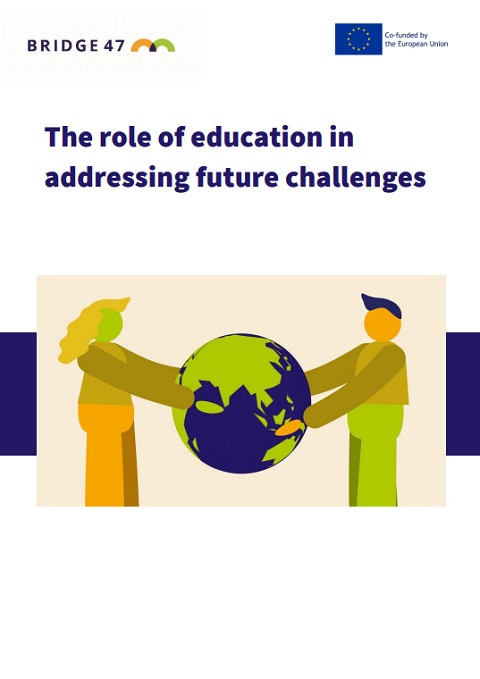 The Role of Education in Addressing Future Challenges 발행 연도: 2020 단체 저자: Bridge 47 In response to UNESCO’s Futures of Education consultation, Bridge 47 has released the following report on the power that transformative education has to address future challenges, including those linked to inequalities, climate change and health.Through the consultation process UNESCO raises questions about the importance and purpose of education by 2050. In a fast-evolving world, Bridge 47 supports the idea that education should foster the kind of education that helps learners of all ages to become active global citizens and thus contribute to building a more just and sustainable report world for all.The report, ‘The Role of Education in Addressing Future Challenges’, further emphasises the importance of measuring and monitoring the progress towards achieving the transformative vision of education as outlined in Sustainable Development Goal Target 4.7. It is hoped that the overall Future of Education report will encourage a measuring framework for SDG 4.7 that acknowledges the connection between non-formal and formal education as well as supporting dialogue between key actors that the reflect any conceptual shifts within the fields of Education for Sustainable Development and Global Citizenship Education.
 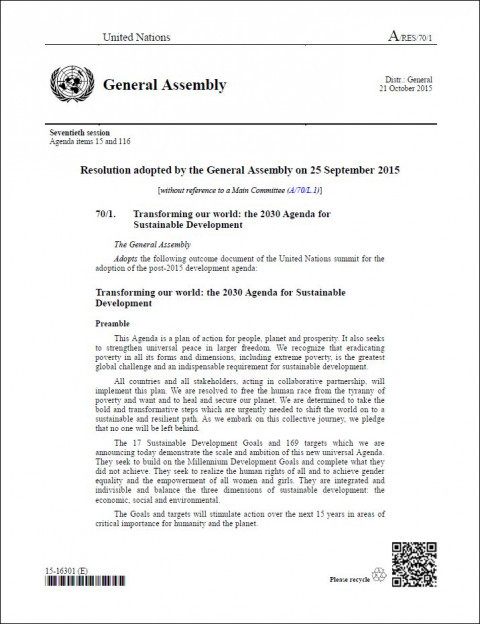 Transforming our world: the 2030 Agenda for Sustainable Development 발행 연도: 2015 단체 저자: United Nations (UN) This Agenda is a plan of action for people, planet and prosperity. It also seeks to strengthen universal peace in larger freedom. We recognize that eradicating poverty in all its forms and dimensions, including extreme poverty, is the greatest global challenge and an indispensable requirement for sustainable development. All countries and all stakeholders, acting in collaborative partnership, will implement this plan. We are resolved to free the human race from the tyranny of poverty and want and to heal and secure our planet. We are determined to take the bold and transformative steps which are urgently needed to shift the world on to a sustainable and resilient path. As we embark on this collective journey, we pledge that no one will be left behind.The 17 Sustainable Development Goals and 169 targets which we are announcing today demonstrate the scale and ambition of this new universal Agenda. They seek to build on the Millennium Development Goals and complete what they did not achieve. They seek to realize the human rights of all and to achieve gender equality and the empowerment of all women and girls. They are integrated and indivisible and balance the three dimensions of sustainable development: the economic, social and environmental. The Goals and targets will stimulate action over the next 15 years in areas of critical importance for humanity and the planet.
 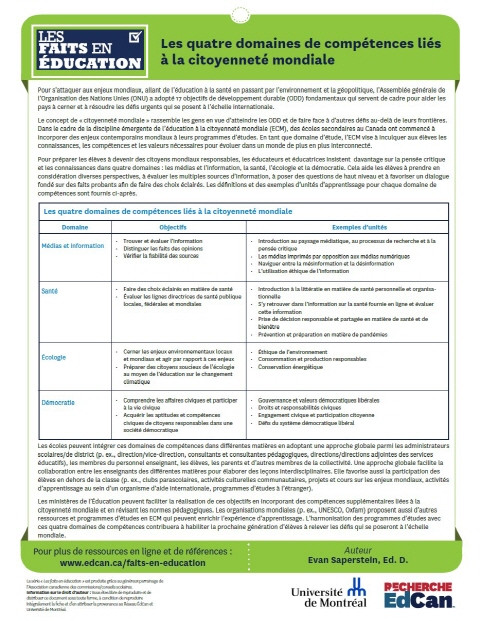 The Four Areas of Competence Linked to Global Citizenship 발행 연도: 2023 저자: Evan Saperstein 단체 저자: Université de Montréal | Association Canadienne d'Education Ce document présente les quatre domaines de compétences liées à la citoyenneté, et comment les intégrer à l'éducation des élèves. Pour préparer les élèves à devenir des citoyens mondiaux responsables, les éducateurs et éducatrices insistent davantage sur la pensée critique et les connaissances dans quatre domaines : les médias et l’information, la santé, l’écologie et la démocratie. This document presents the four areas of competency linked to citizenship, and how to integrate them into pupils' education. To prepare students to become responsible global citizens, educators are placing greater emphasis on critical thinking and knowledge in four areas: media and information, health, ecology and democracy. Les quatre domaines de compétences liés à la citoyenneté mondiale 발행 연도: 2023 저자: Evan Saperstein 단체 저자: Université de Montréal | Association Canadienne d'Education Ce document présente les quatre domaines de compétences liées à la citoyenneté, et comment les intégrer à l'éducation des élèves. Pour préparer les élèves à devenir des citoyens mondiaux responsables, les éducateurs et éducatrices insistent davantage sur la pensée critique et les connaissances dans quatre domaines : les médias et l’information, la santé, l’écologie et la démocratie. This document presents the four areas of competency linked to citizenship, and how to integrate them into pupils' education. To prepare students to become responsible global citizens, educators are placing greater emphasis on critical thinking and knowledge in four areas: media and information, health, ecology and democracy.
 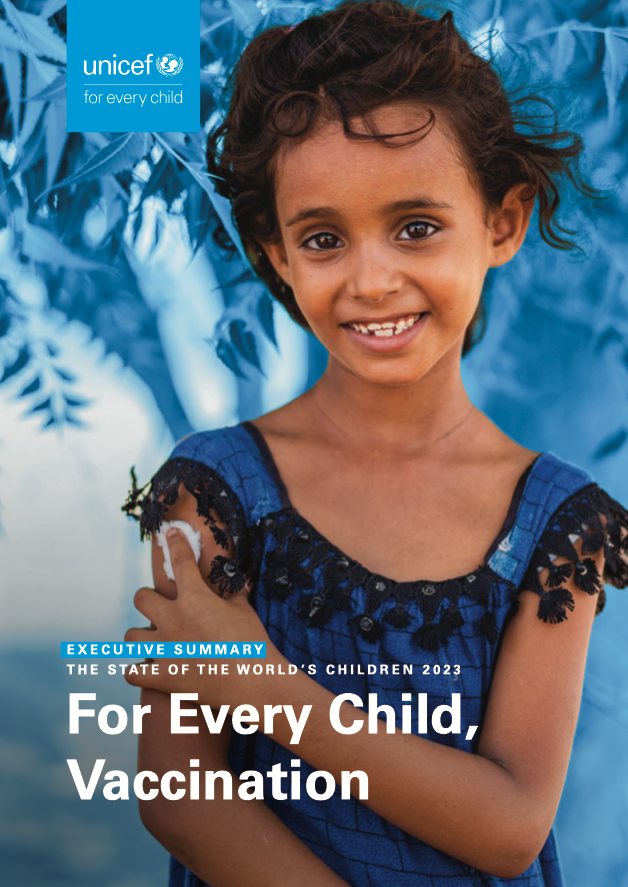 The State of the World’s Children 2023 Executive Summary 발행 연도: 2023 단체 저자: United Nations Children's Fund (UNICEF) The world is facing a red alert for children’s health: Vaccination coverage dropped sharply during the COVID-19 pandemic, leaving millions more children unprotected against some of childhood's most serious diseases. In addition, many millions of children from some of the world's most marginalized communities have long missed out on life-saving vaccination. Catch-up and recovery are needed urgently to vaccinate the children missed and to avoid further backsliding. And greater effort is needed to reach the children historically left behind.The State of the World’s Children 2023 examines what needs to happen to ensure that every child, everywhere is protected against vaccine-preventable diseases. In the wake of the COVID-19 pandemic, which set back progress in childhood immunization globally, it focuses on the role of poverty, marginalization and gender in determining whether or not children are vaccinated. Drawing on lessons learned during the pandemic and from UNICEF's decades-long expertise and experience in vaccinating children, the report examines the ways in which primary health care can be strengthened to better support immunization services. It looks, too, at concerns around trust in vaccines. And it examines a range of innovations in vaccine development and delivery and in financing. 《2023年世界儿童状况》执行摘要 발행 연도: 2023 단체 저자: United Nations Children's Fund (UNICEF) 全球的儿童健康工作正在拉响红色警报:在2019冠状病毒病(COVID-19)大流行期间,疫苗接种率急剧下降,使大量儿童无法得到疫苗的保护,从而难以预防部分最严重的儿童疾病。此外,世界上部分最边缘化社区的大量儿童长期以来一直无法获得能挽救生命的免疫接种。因此,我们迫切需要追赶进度,为错过接种的儿童补种疫苗,并避免形势出现进一步倒退。同时,我们还需要实施更多的工作来帮助那些已掉队多时的儿童。《2023年世界儿童状况》报告探讨了需要采取哪些措施,才能确保世界各地每一名儿童都能避免患上疫苗可预防的疾病。2019冠状病毒病大流行使全球儿童免疫接种工作的进展出现倒退,本报告将重点关注贫困、边缘化和性别等因素在决定儿童是否接种疫苗方面的作用。参考2019冠状病毒病大流行期间所积累的经验教训以及联合国儿童基金会数十年来在儿童免疫接种方面所积累的专业知识和经验,本报告还探讨了如何加强初级卫生保健体系,以提供更高质量的免疫接种服务,并提升公众对疫苗的信心等问题。此外,本报告还对疫苗研发、交付以及筹资等方面所涌现出来的一系列创新举措进行了研究。
 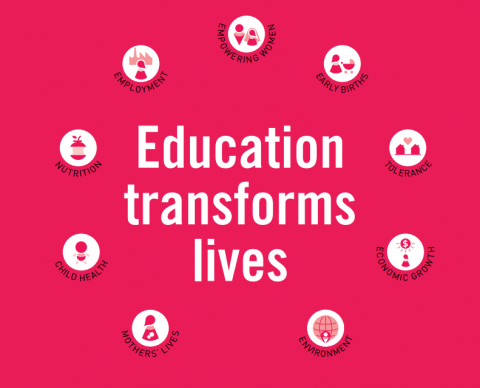 Education Transforms Lives 발행 연도: 2013 단체 저자: UNESCO Education lights every stage of the journey to a better life, especially for the poor and the most vulnerable. Education’s unique power to act as a catalyst for wider development goals can only be fully realized, however, if it is equitable. That means making special efforts to ensure that all children and young people – regardless of their family income, where they live, their gender, their ethnicity, whether they are disabled – can benefit equally from its transformative power. Education empowers girls and young women, in particular, by increasing their chances of getting jobs, staying healthy and participating fully in society – and it boosts their children’s chances of leading healthy lives. To unlock the wider benefits of education, all children need the chance to complete not only primary school but also lower secondary school. And access to schooling is not enough on its own: education needs to be of good quality so that children actually learn. Given education’s transformative power, it needs to be a central part of any post-2015 global development framework. L'Education transforme nos existences 발행 연도: 2013 단체 저자: UNESCO Education lights every stage of the journey to a better life, especially for the poor and the most vulnerable. Education’s unique power to act as a catalyst for wider development goals can only be fully realized, however, if it is equitable. That means making special efforts to ensure that all children and young people – regardless of their family income, where they live, their gender, their ethnicity, whether they are disabled – can benefit equally from its transformative power. Education empowers girls and young women, in particular, by increasing their chances of getting jobs, staying healthy and participating fully in society – and it boosts their children’s chances of leading healthy lives. To unlock the wider benefits of education, all children need the chance to complete not only primary school but also lower secondary school. And access to schooling is not enough on its own: education needs to be of good quality so that children actually learn. Given education’s transformative power, it needs to be a central part of any post-2015 global development framework. La Educación transforma la vida 발행 연도: 2013 단체 저자: Organización de las Naciones Unidas para la Educación, la Ciencia y la Cultura (UNESCO) Education lights every stage of the journey to a better life, especially for the poor and the most vulnerable. Education’s unique power to act as a catalyst for wider development goals can only be fully realized, however, if it is equitable. That means making special efforts to ensure that all children and young people – regardless of their family income, where they live, their gender, their ethnicity, whether they are disabled – can benefit equally from its transformative power. Education empowers girls and young women, in particular, by increasing their chances of getting jobs, staying healthy and participating fully in society – and it boosts their children’s chances of leading healthy lives. To unlock the wider benefits of education, all children need the chance to complete not only primary school but also lower secondary school. And access to schooling is not enough on its own: education needs to be of good quality so that children actually learn. Given education’s transformative power, it needs to be a central part of any post-2015 global development framework.