
자료
세계시민교육에 대한 이해를 넓히고 연구, 옹호 활동, 교수, 학습 등을 향상시킬 수 있는 다양하고 유용한 자료를 찾아보세요.
276 건의 결과가 검색되었습니다
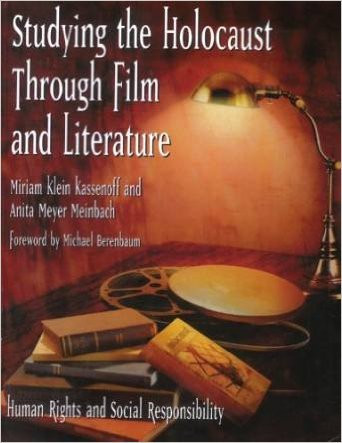 Studying the Holocaust Through Film and Literature: Human Rights and Social Responsibility Through film and literature, this book shows students the moral and ethical lessons that have evolved from the Holocaust so they can connect them with the moral dilemmas they face in their own lives. The authors focus on 3 main lessons of the Holocaust ‒ thou shalt not be a victim, thou shalt not be a perpetrator and thou shalt not be a bystander ‒ and address the issues of courage, compassion, character and civility. (By the author)
  Toolkit on the Holocaust and Human Rights Education in the EU Responding to a practical need expressed by teachers and students with a view toward examining the connections between Holocaust and Human Rights Education, the Fundamental Rights Agency (FRA) and Yad Vashem have developed this Toolkit to provide first insights into Holocaust and Human Rights Education content and methodologies, which can be used for teaching about and from the Holocaust and human rights. The Toolkit is a practical guide for teachers and educators who wish to develop teaching projects, by linking Holocaust and human rights. In addition, some examples of teaching projects and learning activities of Holocaust Education and Human Rights Education are provided in the Toolkit.
 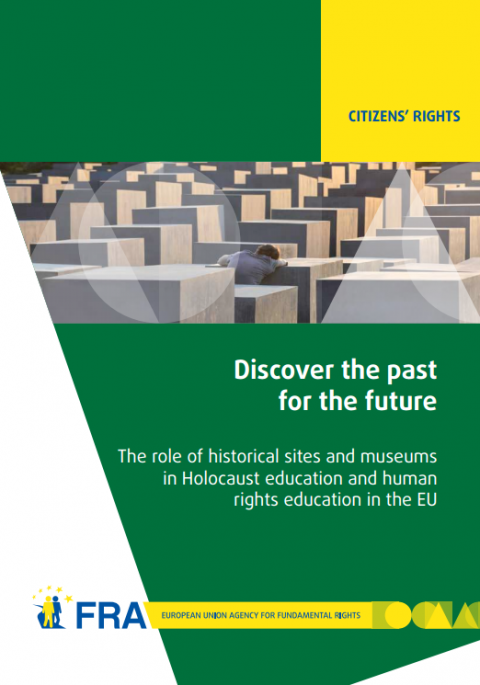 Discover the past for the future: The role of historical sites and museums in Holocaust education and human rights education in the EU The Holocaust has rightfully become an integral part of the collective cultural memory of Europe and the world. This report outlines the findings of the first EU-wide research on the role of Holocaust-related sites and exhibitions in educating young Europeans about the Holocaust and human rights. With this research, the European Union Agency for Fundamental Rights (FRA) brings the two fields of Holocaust education and human rights education together and suggests how the merging of the two could develop into a new knowledge of past and present. The report highlights that attempts to expand knowledge of human rights and to establish links between Holocaust education and human rights education need a broader focus than the memorial sites or museums can offer. Much of the work on linking Holocaust education and human rights education needs to be accomplished in schools. This requires teachers to have opportunities to gain a better understanding of human rights education, and human rights education to be better integrated into school curricula in the EU. Visits to memorial sites and museums can stimulate, support and supplement such work. (By the publisher) ‘We saw inhumanity close up’. What is gained by school students from Scotland visiting Auschwitz? As the education for citizenship agenda continues to make an impact on schools in the UK, and with the Holocaust Educational Trust (HET) in conjunction with the Scottish Government introducing its Lessons From Auschwitz (LFA) project for students and teachers in Scotland, this article focuses on the Scottish context and investigates the school processes by which students are chosen to participate in the LFA project, the impact the LFA project has on student personal growth, and the range of follow‐up activities in their schools and communities. The methodology employed online questionnaires and face‐to‐face interviews, which were designed to ascertain student perceptions of the LFA project and the impact that this project had on student participants, their schools, and their communities. Findings demonstrate that the student cohort were highly academic students who took their responsibilities on return to their schools very seriously and organized a wide range of events, both in their schools and in their communities. There was clear evidence that the LFA project had led to extra teaching and awareness of the Holocaust, racism and human rights; and that students’ citizenship values had been enhanced. (By the publisher) The Holocaust and Education for Citizenship: the teaching of history, religion and human rights in England The importance of the Holocaust is undeniable. It seems that this truism has long been accepted by teachers and education policy makers. A superficial prediction would be that the Holocaust will continue to have both a high profile and a high status in the schools and colleges of England and Wales. However, on the basis of small‐scale work using data from teachers’ perceptions, we draw attention to certain problems in learning about the Holocaust and begin to suggest issues which should be investigated further. The issues which need further investigation are related to the possibilities that there may be too little time devoted to teaching about the Holocaust; the events of the Holocaust may sometimes be used as a mere context for understanding World War Two; teachers may not perceive the Holocaust as being significantly unique; teachers may not collaborate effectively; there may be a lack of clarity about the nature of the affective and cognitive aims of such work. (By the author)
 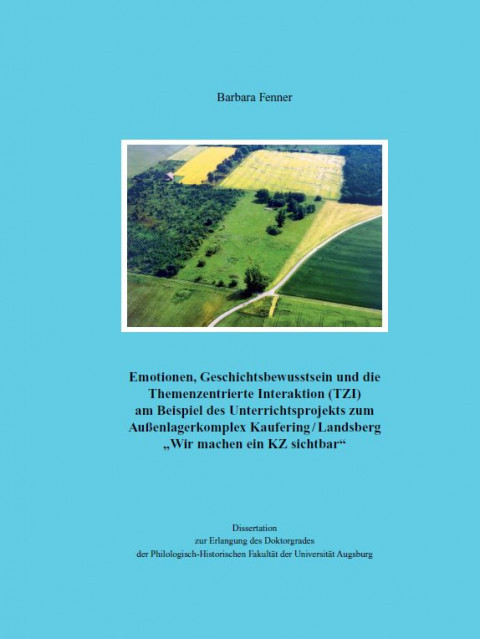 Emotionen, Geschichtsbewusstsein und die Themenzentrierte Interaktion (TZI) am Beispiel des Unterrichtsprojekts zum Außenlagerkomplex Kaufering/Landsberg: “Wir machen ein KZ sichtbar” 발행 연도: 2012 저자: B. Fenner 단체 저자: University of Ausgsburg Based on theme-centred interaction theory, the authors analyse a project in which a group of German 9th and 10th grade students participate in a project, “We make a Concentration Camp visible,” aimed at recreating the history of the so called Lager XI, one of the eleven satellite camp complexes of Dachau concentration camp, and make an exhibition about the camp. The above abstract is taken from the International Holocaust Remembrance Alliance Education Research Project. Please also consult the full list of abstracts in 15 languages and the accompanying publication Research in Teaching and Learning about the Holocaust: A Dialogue Beyond Borders. Ed: IHRA, Monique Eckmann, Doyle Stevick, Jolanta Ambrosewicz-Jacobs, 2017, Metropol Verlag at http://www.holocaustremembrance.com/publications.
  Jugendliche aus Einwandererfamilien und die Geschichte des Nationalsozialismus 발행 연도: 2003 저자: V. B. Georgi Based on 55 interviews with young Germans with immigrant family background from the age of 15–20, Giorgi constructs a typology of how they position themesleves to the German Nazi past.
  Nationalsozialismus im Geschichtsunterricht: Beobachtungen unterrichtlicher Kommunikation 발행 연도: 2002 단체 저자: Johann Wolfgang Goethe University This is a pilot study about the potential of history education about Nazism and the Holocaust. The aim is, 1) to establish whether it is possible to conduct empirical analysis about “Education after Auschwitz,” and 2) based on empircal observation improve the theoretical assumptions about the relationship between education and the specific theme of Nazism and the Holocaust. The empirical part consists of five case studies about different aspects of “Holocaust education” in two Upper Secondary schools in Frankfurt.The above abstract is taken from the International Holocaust Remembrance Alliance Education Research Project. Please also consult the full list of abstracts in 15 languages and the accompanying publication Research in Teaching and Learning about the Holocaust: A Dialogue Beyond Borders.Ed: IHRA, Monique Eckmann, Doyle Stevick, Jolanta Ambrosewicz-Jacobs, 2017, Metropol Verlag at http://www.holocaustremembrance.com/publications.
  Trauerimperativ: Jugendliche und ihr Umgang mit dem Holocaust (-Denkmal) 발행 연도: 2013 저자: M. Klein 단체 저자: Bundeszentrale für politische Bildung The author analyzes German student’s visit at the memorial for the murdered Jews in Berlin. Empirical qualitative study.The above abstract is taken from the International Holocaust Remembrance Alliance Education Research Project. Please also consult the full list of abstracts in 15 languages and the accompanying publication Research in Teaching and Learning about the Holocaust: A Dialogue Beyond Borders.Ed: IHRA, Monique Eckmann, Doyle Stevick, Jolanta Ambrosewicz-Jacobs, 2017, Metropol Verlag at http://www.holocaustremembrance.com/publications.
  Zwischen Vermittlungsanspruch und emotionaler Wahrnehmung: Die Gestaltung neuer Dauerausstellungen in Gedenkstätten für NS-Opfer in Deutschland und deren Bildungsanspruch 발행 연도: 2009 저자: Thomas Lutz Over the last decade, as part of the federal concept for memorial sites, twenty new permanent exhibitions were developed. This dissertation undertakes to examine exhibitions created at memorial sites for victims of the Nazi regime from an educational and museological viewpoint. Expert interviews with exhibition curators serve as the basis for the empirical study. The author has worked for many years in the field of memorial museums education. He applied “action research,” developed in German-speaking countries under the term “Handlungsforschung.” The study analyzes the specific characteristics of the work conducted in museums, memorial sites and educational centres and also addresses the strained connection between commemoration and learning in the educational work of the memorial museums for the Nazi victims. The study also evaluates the practical impact of these aims. The very intense form of commemorative work that is conducted in Germany is justified by the nature of its subject matter: the stigmatization of specific victim groups during the Nazi era according to a system of political, racist-biological and social characteristics and the vast dimensions of the genocide. The socially and politically explosive nature of this task is manifested by the commemoration of the “other” victims as well as by the responsibility that Germany bears for addressing its “own” perpetrators in society. The central findings of the study show that the new exhibitions embrace a much more comprehensive foundation of historical material (historical knowledge, building history and archeological significance of the crime sites, written and audio-visual survival testimony and artifacts) as was previously the case. The professionalization of the “field of memorial museums” has led to a more intensively reflected and sensitive approach to handling documents, illustrations and objects on display in a museum. In particular, the significance of the relationship between the artifacts and their location, their sources, an appreciation for their origins and a critical reflection of what it is they convey is achieved. This also applies to photography. (Written by author) The above abstract is taken from the International Holocaust Remembrance Alliance Education Research Project. Please also consult the full list of abstracts in 15 languages and the accompanying publication Research in Teaching and Learning about the Holocaust: A Dialogue Beyond Borders.Ed: IHRA, Monique Eckmann, Doyle Stevick, Jolanta Ambrosewicz-Jacobs, 2017, Metropol Verlag at http://www.holocaustremembrance.com/publications.