
자료
세계시민교육에 대한 이해를 넓히고 연구, 옹호 활동, 교수, 학습 등을 향상시킬 수 있는 다양하고 유용한 자료를 찾아보세요.
451 건의 결과가 검색되었습니다
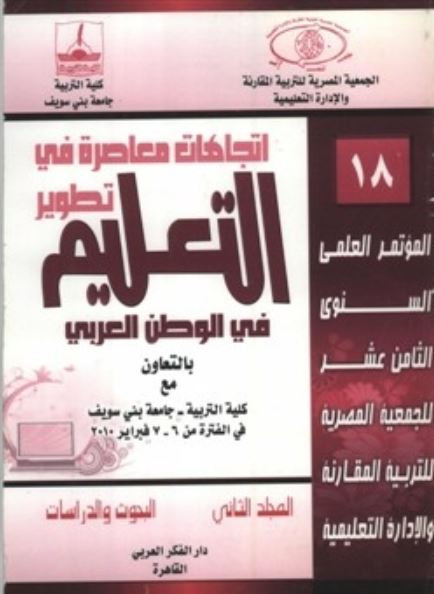 رؤية عالمية لمعايير المواطنة في التعليم : النموذج الأوروبي 발행 연도: 2010 저자: Mohammed Lashin | Rania Algmal 단체 저자: Egyptian Society of Comparative Education and Educational Administration (ESCEEA) يقدم الباحثين رؤية عالمية للتربية من أجل المواطنة، وذلك من خلال الاستناد لبعض النماذج من أوروبا. حيث يستعرض الباحثان التجارب والنماذج من مؤسسات أوربية، وكيف يمكن لمؤسسات التعليم في الوطن العربي الاستفادة منها. A Global Vision for Citizenship Education: The European Model 발행 연도: 2010 저자: Mohammed Lashin | Rania Algmal 단체 저자: Egyptian Society of Comparative Education and Educational Administration (ESCEEA) The researchers provide a global vision of education for citizenship, drawing on some examples from Europe. The researchers review the experiences and models from European institutions, and how educational institutions in the Arab world can benefit from them.
 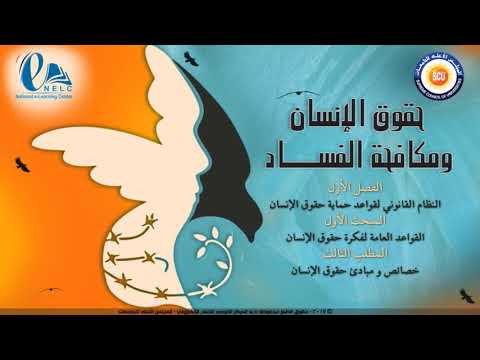 خصائص ومبادىء حقوق الانسان 발행 연도: 2018 단체 저자: Monwa3at يقدم الفيديو شرح لمنهج حقوق الانسان الذى اقرته وزارة التعليم العالى على جميع كليات ومعاهد جمهورية مصر العربيه. ويتكون الفيديو من 3 فصول وهي كالتالي: النظام القانونى لقواعد حماية حقوق الانسان، القواعد العامه لفكرة حقوق الانسان والخصائص. The Characteristics and Basics of Human Rights 발행 연도: 2018 단체 저자: Monwa3at The video provides an explanation of the human rights curriculum approved by the Ministry of Higher Education on all colleges and institutes of the Arab Republic of Egypt. The video consists of 3 chapters which are as follows: the legal system of the rules for the protection of human rights, the general rules of the idea of human rights and finally the characteristics.
  Educación para la ciudadanía y la convivencia: manual de ciudadanía y convivencia desde la construcción colectiva de sentidos y redes; derechos humanos y paz 발행 연도: 2015 단체 저자: Centro de Investigación y Educación Popular (CINEP) | Secretaría de Educación del Distrito (SED) Human rights and peace is one of the main themes related with education for citizenship and coexistence. Therefore, identifies three areas of reflection: 1) Human rights as an ongoing and unfinished process, 2) Recognizing the diversities, 3) The generations of peace. Each one of these areas is accompanied by didactic tools that allow to deepen into the contents that are based on fundamental theoretical and practical elements, which could be useful in the pedagogical process leaded by the participants of the project. COMPASS: a manual on human rights education with young people 발행 연도: 2012 저자: Patricia Brander 단체 저자: Council of Europe Compass was first published in 2002 within the framework of the Human Rights Education Youth Programme of the Directorate of Youth and Sport of the Council of Europe. The programme was created because human rights education – meaning educational programmes and activities that focus on promoting equality in human dignity – was and remains of incalculable value in shaping a dimension of democratic citizenship for all young people and in promoting a culture of universal human rights.Compass has become a reference manual for many young people involved in value-based youth work and non-formal education. It is currently available in more than 30 languages, ranging from Arabic and Japanese to Icelandic and Basque. In some countries it has become part of the resources for human rights education in schools and in some others it is not possible to use it in schools. The adventures of Compass across Europe often mirror the contrasted reality of human rights education: promoted here and combated there, praised by some and despised by others.The success of Compass has been followed by its younger sibling, Compasito – a manual for human rights education with children is already available in several languages and on the way to becoming another bestseller for human rights education. More importantly, Compass and its publication in various language versions has been the medium through which human rights education has been brought onto the agenda of youth work and into the programme of many schools. National networks for human rights education have been created in several countries, where they reinforce the work done by human rights organisations and educational professionals in making the right to human rights education a reality to more children and young people across Europe. The forum on human rights education with young people, Living, Learning, Acting for Human Rights, held in Budapest in 2009, stressed the importance of human rights education today. COMPASS: un manuel sur l'éducation aux droits de l'homme avec les jeunes 발행 연도: 2012 저자: Patricia Brander 단체 저자: Council of Europe Compass a été publiée en 2002 dans le cadre du Programme Jeunesse d'Éducation aux Droits de l'Homme de la Direction de la Jeunesse et du Sport du Conseil de l'Europe. Le programme a été créé parce que l'éducation aux droits de l'homme - à savoir les programmes et les activités qui mettent l'accent sur la promotion de l'égalité dans la dignité humaine éducation - a été et reste d'une valeur inestimable dans l'élaboration d'une dimension de la citoyenneté démocratique pour tous les jeunes et à promouvoir une culture des droits humains universels. Compass est devenu un manuel de référence pour de nombreux jeunes impliqués dans le travail de la jeunesse fondée sur des valeurs et de l'éducation non formelle. Il est actuellement disponible dans plus de 30 langues, allant de l'arabe et le japonais à l'islandais et le basque. Dans certains pays, il est devenu une partie des ressources pour l'éducation aux droits de l'homme dans les écoles et dans certains autres, il est impossible de l'utiliser dans les écoles. Les aventures de Compass en Europe reflètent souvent la réalité contrastée de l'éducation aux droits de l'homme: promotion ici et là combattu, loué par les uns et méprisé par les autres. Le succès de Compass a été suivi par son frère cadet, Compasito - un manuel pour l'éducation aux droits de l'homme avec les enfants est déjà disponible en plusieurs langues et sur la façon de devenir un autre best-seller pour l'éducation aux droits de l'homme. Plus important encore, Compass et sa publication dans différentes versions linguistiques a été le moyen par lequel l'éducation aux droits de l'homme a été mis sur l'ordre du jour du travail de jeunesse et dans le programme de nombreuses écoles. Les réseaux nationaux pour l'éducation aux droits de l'homme ont été créés dans plusieurs pays, où ils renforcent le travail accompli par les organisations des droits humains et professionnels de l'éducation à faire du droit à l'éducation des droits de l'homme une réalité à plus d'enfants et de jeunes à travers l'Europe. Le forum sur l'éducation aux droits de l'homme avec les jeunes, la vie, l'apprentissage, agir pour les droits de l'homme, tenue à Budapest en 2009, a souligné l'importance de l'éducation aux droits de l'homme aujourd'hui.
 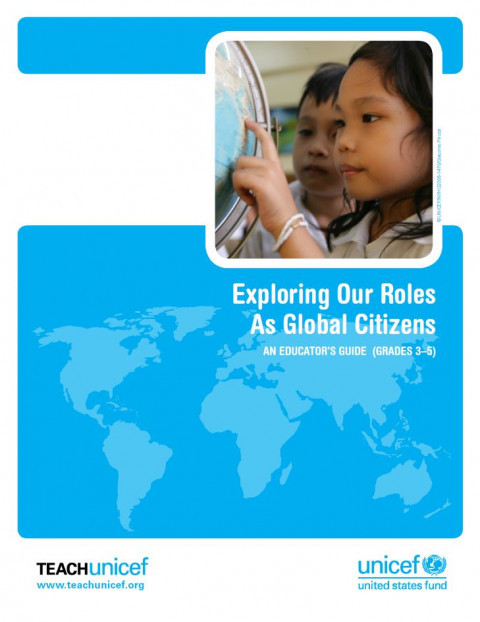 Exploring our roles as global citizens: an educator's guide (grades 3-5) 발행 연도: 2013 저자: Elizabeth O. Crawford 단체 저자: TeachUNICEF ‘Exploring Our Roles as Global Citizens’ is a four-lesson unit with extension activities and a student-led inquiry project that is designed to introduce the concept of global citizenship, including relevant knowledge, skills, values, and civic actions; to educate students about universal human rights outlined in the Convention on the Rights of the Child (CRC) and what their responsibilities are to ensure these rights are protected; to foster students’ skills in developing perspectives, critical and creative thinking, research, and decision-making about a chosen global issue using a student-led inquiry model; and to empower students to recognize and use their individual strengths to make a positive difference in their local communities. Lesson 1: What Is Global Citizenship? This lesson engages students in reflecting upon what it means to be a global citizen. Although students are often taught the concepts of citizenship and the characteristics of good citizenship during the elementary years, students may not have considered previously their roles as citizens in a global society. Using authentic examples of global citizenship among youth as a springboard for discussion, students determine how they are citizens at various levels. Afterward, students begin their inquiry of a chosen global issue about which they will take informed action at the end of the unit. Lesson 2: We Are Citizens of the World and We Have Rights! Building upon their prior learning about citizenship, students are introduced to human rights, or those rights to which all persons are entitled. Students learn about the Convention on the Rights of the Child (CRC) and create a concept map outlining categories and examples of human rights. Afterward, students relate human rights to contemporary global issues and how it is our responsibility to take action when the rights of others are violated. Lesson 3: Global Citizens Take Responsibility In this lesson, students learn about their individual and collective responsibility to protect human rights. Through analysis of authentic photographs depicting responsible citizenship, students explore the idea that global citizens are proactive when the rights of others are threatened. To demonstrate their learning, students role-play characteristics of global citizenship. Subsequently, in cooperative groups, students continue their global issue research and begin to consider how they will take informed action as global citizens. Lesson 4: Global Change Begins With Me In this culminating lesson, students reflect upon their learning about global citizenship and how they can be positive change agents in their communities. Students first explore how individuals take action to solve a problem or to improve conditions for others. Using these examples as inspiration, students determine how they, too, can be “changemakers.” As a final assessment, students synthesize what they have learned by creating a comprehensive definition of global citizenship, and develop an action plan to address the global issue they have researched. Exploring our roles as global citizens: an educator's guide (grades 3-5) 발행 연도: 2013 저자: Elizabeth O. Crawford 단체 저자: TeachUNICEF La définition se fonde sur le travail séminal dans les états et un large éventail d'organisations de travail pour faire avancer les connaissances mondiales et de la pensée critique. Un processus d'articulation minutieuse et vetting a abouti à la définition de la compétence globale proposée ici: la compétence globale est la capacité et la disposition pour comprendre et agir sur les questions d'importance mondiale. Globalement les personnes compétentes sont au courant, curieux et intéressés à en apprendre sur le monde et comment il fonctionne. Ils peuvent utiliser les grandes idées, des outils, des méthodes et des langues qui sont au cœur de toutes les disciplines (mathématiques, la littérature, l'histoire, la science et les arts) pour engager les questions pressantes de notre temps. Ils déploient et développer cette expertise comme ils enquêtent sur ces questions, reconnaissent de multiples points de vue, de communiquer leurs points de vue de manière efficace, et prendre des mesures pour améliorer les conditions. Eduquer pour Global Competence: Préparer les jeunes d'engager le monde est destiné aux enseignants, administrateurs, éducateurs informels, les décideurs, les leaders communautaires, les chercheurs, les parents, les étudiants et toutes les autres parties intéressées à préparer nos jeunes pour le 21e siècle. Devenir meilleur à l'éducation pour la compétence globale implique de repenser les pratiques et en reconnaissant qu'il n'y a pas de recettes simples pour le succès. En tant que tel, ce livre est destiné à être utilisé avec souplesse - parcourir, faire des liens, et de se concentrer sur les chapitres que vous trouverez les plus pertinents pour votre travail. Expérience avec des idées, des concepts de défi, et de partager avec des collègues. En fin de compte ce livre doit travailler pour vous. Il est destiné à être lu de la manière qui répond le mieux à vos besoins, inspire votre curiosité, et prouve fructueuse dans la salle de classe. Le premier chapitre offre un rationnel pour l'éducation mondiale dans notre pays et dans le monde. Le deuxième chapitre présente un cadre conceptuel pour la compétence globale et explique le rôle clé des fondations disciplinaires et interdisciplinaires dans l'apprentissage des élèves. Chapitre trois, quatre, cinq et six focus, respectivement, sur quatre capacités essentielles associées à la compétence mondiale: enquête dans le monde, reconnaissant les perspectives, communiquer des idées, et de prendre des mesures. Le chapitre sept considère les principes de base de l'enseignement pour l'enseignement de la compétence globale. Chapitre huit examine ce que les étudiants et les établissements d'enseignement peuvent faire pour promouvoir la compétence globale - et comment ils pourraient créer une culture de compétence globale pour les jeunes et les adultes. Enfin, le chapitre neuf places compétence globale dans le cadre plus large des systèmes d'éducation du public dans et au-delà des États-Unis.
 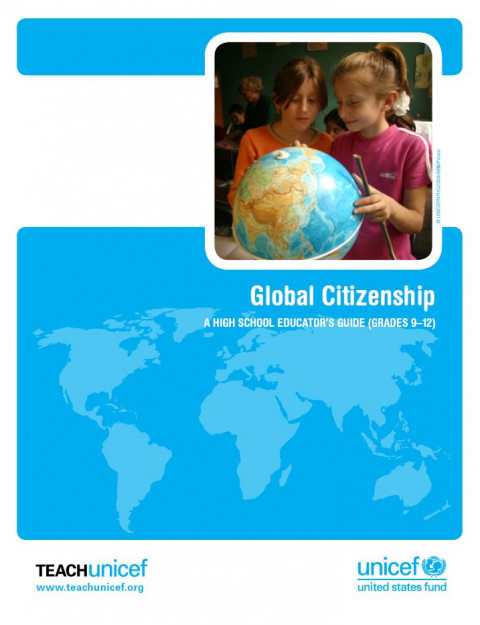 Global citizenship: a high school educator's guide (grades 9-12) 발행 연도: 2013 단체 저자: TeachUNICEF Global Citizenship is a unit of four lessons designed to introduce the concept of global citizenship and place it in the context of international human rights; to engage students in a guided inquiry into the meaning of global citizenship and its relationship to national citizenship; to educate about how the United Nations has framed global rights and responsibilities for the 21st century and is acting on them via the Millennium Development Goals (MDGs); and to investigate how the U.S. Fund for UNICEF has engaged individuals in support of global citizenship as well as to engage students in designing and implementing a plan to act locally in support of global issues.