
자료
세계시민교육에 대한 이해를 넓히고 연구, 옹호 활동, 교수, 학습 등을 향상시킬 수 있는 다양하고 유용한 자료를 찾아보세요.
6 건의 결과가 검색되었습니다
 Quality Adult Education Benchmarks for Indigeneous Education 발행 연도: 2011 저자: Sandra L. Morrison | Timote Vaioleti 단체 저자: Asia South Pacific Association for Basic and Adult Education (ASPBAE) In November 2010, in Indonesia, Asia South Pacific Association for Basic and Adult Education(ASPBAE) brought together a number of educators from across its region to discuss benchmarking quality adult education for indigenous peoples. Educators came from across the ASPBAE region including the Philippines, India, Nepal, New Zealand, Australia, Thailand, Indonesia and Uzbekistan to share experiences and to build a collective understanding of what constitutes a good quality adult education program for indigenous peoples. Discussions were informed by a broader ASPBAE Quality Adult Education Framework, which had its origins in discussions held in 2009. The Core of the Framework is grounded on ASPBAE’s commitment to education as a right, adult education for transformation, and adult and basic education as integral and inter‐connected components of the vision of lifelong learning (Guevara, 2010). Other frameworks promoted by ASPBAE for education to be empowering, pro‐poor, gender just and sustainable were also important considerations. The 2010 gathering served as a nodal point to discuss the ASPBAE framework more deeply and to reaffirm or create a set of benchmarks for indigenous education which can be validated through a subsequent national and regional consultation process. Intercultural Multilingual Education in Latin America: Mexico, Guatemala, Colombia, Brazil, Ecuador, Peru, Bolivia and Paraguay, and Norway 발행 연도: 2011 단체 저자: Internacional de la Educación para Latinoamerica This document deals with Intercultural Bilingual Education (IBE), its current status and the concepts and processes driving it today – and in a certain way the conflicts encompassing it. It contains information on Mexico, Guatemala, Colombia, Brazil, Ecuador, Peru, Bolivia and Paraguay, and includes some data and comments on Norway. Certainly all Latin America is involved in the topic, one way or another, but for now this is the geographical scope of the paper. It seeks to give an overview of the whole and profile a few specific aspects by country. Educación Multilingüe e Intercultural en América Latina: México, Guatemala, Colombia, Brazil, Ecuador, Perú, Bolivia y Paraguay y Noruega 발행 연도: 2011 단체 저자: Internacional de la Educación para Latinoamerica This document deals with Intercultural Bilingual Education (IBE), its current status and the concepts and processes driving it today – and in a certain way the conflicts encompassing it. It contains information on Mexico, Guatemala, Colombia, Brazil, Ecuador, Peru, Bolivia and Paraguay, and includes some data and comments on Norway. Certainly all Latin America is involved in the topic, one way or another, but for now this is the geographical scope of the paper. It seeks to give an overview of the whole and profile a few specific aspects by country. Multilingue et éducation interculturelle en Amérique latine: le Mexique, le Guatemala, la Colombie, le Brésil, l'Équateur, le Pérou, la Bolivie et le Paraguay et la Norvège 발행 연도: 2011 단체 저자: Internacional de la Educación para Latinoamerica Ce document traite de l'éducation interculturelle bilingue (BIE), son état actuel et les concepts et les processus de conduite aujourd'hui - et d'une certaine manière les conflits englobant elle. Il contient des informations sur le Mexique, le Guatemala, la Colombie, le Brésil, l'Équateur, le Pérou, la Bolivie et le Paraguay, et comprend quelques infomations et commentaires sur la Norvège. Certes, toute l'Amérique Latine est impliqué dans le sujet, d'une façon ou d'une autre, mais pour l'instant c'est la portée géographique du papier. Il vise à donner un aperçu de l'ensemble et le profil de quelques aspects spécifiques par pays.
 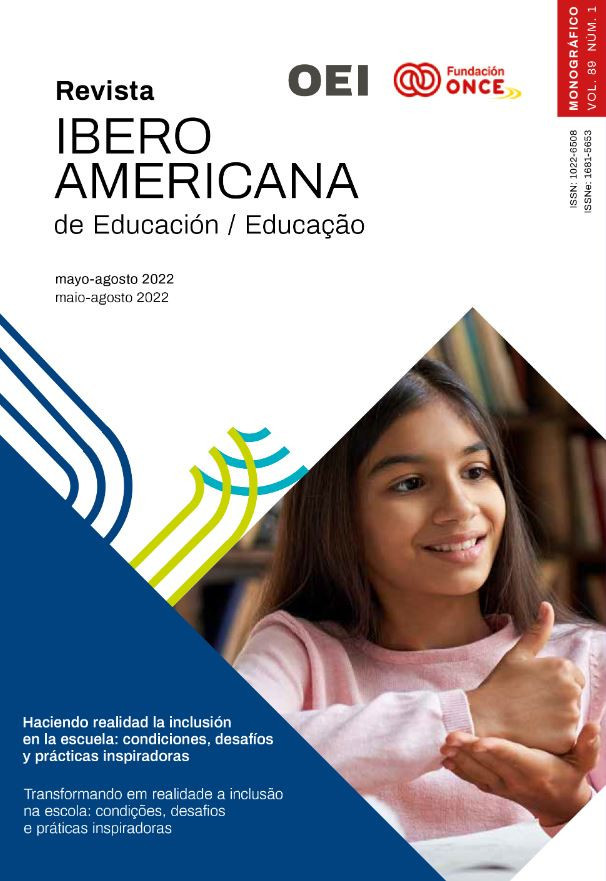 Educational Contexts, Feminism and Gender identities of Adolescents from a Rural Mayan Town in Yucatan (Iberoamerican Journal of Education; vol. 89, no. 1) 발행 연도: 2022 저자: Silvia Montejo Murillo 단체 저자: Organization of Ibero-American States for Education, Science and Culture (OEI) The purpose of this article is to compare and explore the gender identity of adolescent women from a rural Mayan locality, from two of their educational contexts: the telesecundaria school and daily life in the community. Interviews and participant observation were used to obtain qualitative primary data. Among the main findings, it stands out that the institutional structure and rigidity of the school limits adolescents from being able to act at certain times from social attributes different from those offered by their locality. Likewise, the school contributed to the individualization of the participants and trained them to have foreign values as a desirable representation of “development”, aspects that do not necessarily contribute to the idea of “community”. Contextos educativos, educación e identidades de género de adolescentes de una localidad rural maya en Yucatán (Revista Ibero-americana de Educação; vol. 89, núm. 1) 발행 연도: 2022 저자: Silvia Montejo Murillo 단체 저자: Organización de Estados Iberoamericanos para la Educación, la Ciencia y la Cultura (OEI) El propósito de este artículo es comparar y explorar la identidad de género de mujeres adolescentes de una localidad rural maya, desde dos de sus contextos educativos: la escuela telesecundaria y la vida cotidiana en la comunidad. Se utilizaron entrevistas y observación participante para obtener los datos primarios cualitativos. Entre los principales hallazgos se destaca, que la estructura y rigidez institucional de la escuela, limita a las adolescentes poder actuar en ciertos momentos desde atributos sociales distintos a los que les ofrece su localidad. Asimismo, la escuela contribuyó a la individualización de las participantes y las formó para tener como representación deseable del “desarrollo” los valores del exterior, aspectos que no contribuyen necesariamente a la idea de “comunidad”.