
자료
세계시민교육에 대한 이해를 넓히고 연구, 옹호 활동, 교수, 학습 등을 향상시킬 수 있는 다양하고 유용한 자료를 찾아보세요.
371 건의 결과가 검색되었습니다
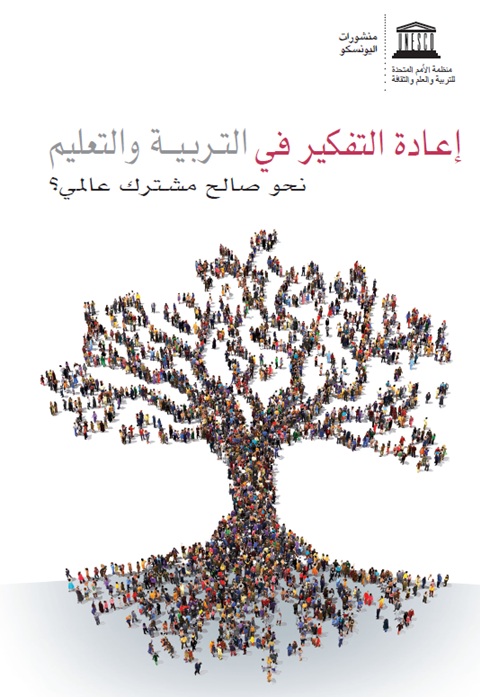 إعادة التفكير في التربية والتعليم: نحو صالح عام عالمي؟ 발행 연도: 2015 단체 저자: UNESCO ات، ّرات توتّد هذه التغيّولُات جديدة من التعقيد والتناقض. وتّتتسم تغيرات عالم اليوم بسويئا لها الأفراد والجماعات، من خلال تزويدهم بالمقدرة على ِّتهينتظر من التربية والتعليم أن ُيتي التعليم ّعمليف والاستجابة. وفي هذا السياق يسهم هذا المطبوع في النظر مجددا في ّالتكيم. إذ إنه يؤسس على دور رئيسي تؤديه اليونسكو، دور مرصد عالمي للتحولات الاجتماعية، ّوالتعلبهدف حفز نقاش السياسات العامة.م من رؤية إنسانية َمستلهل هذا المطبوع دعوة إلى الحوار بين جميع الجهات المعنية.فهو ّويمثللتعليم والتنمية، مبنية على احترام الحياة وكرامة الإنسان، وعلى التساوي في الحقوق، والعدالة الاجتماعية، والتنوع الثقافي، والتضامن الدولي، والتشارك في المسؤولية من أجل مستقبل مها مطبوعا ّقدد الرؤية التي ّمستدام. تلك هي أساسيات إنسانيتنا المشتركة. إن هذه الوثيقة تؤيم: ذلك ّ، «تقرير فور»؛ و التعل(١97٢)ًوغدام لتكون: عالم التربية اليوم ّمان: تعلَلْاليونسكو المع، «تقرير ديلور».(١996)الكنز المكنو.
  Rapport de synthèse sur l'application par les États membres de la Recommandation de 1974 sur l'éducation pour la compréhension, la coopération et la paix internationales et l'éducation relative aux droits de l'homme et aux libertés fondamentales 발행 연도: 2013 단체 저자: UNESCO Background: In accordance with 34 C/Resolution 87, 177 EX/Decision 35 (I) and 184 EX/Decision 20, the Executive Board has monitored the implementation of the 1974 Recommendation concerning Education for International Understanding, Cooperation and Peace and Education relating to Human Rights and Fundamental Freedoms. Pursuant to 192 EX/Decision 20 (III), the Director-General hereby submits the consolidated report on the implementation by Member States of the Recommendation.Purpose: This document reports on the results of the Fifth Consultation on the Implementation of the Recommendation concerning Education for International Understanding, Cooperation and Peace and Education relating to Human Rights and Fundamental Freedoms (covering the period 2009-2012). The analysis was prepared on the basis of 55 national reports from Member States received by the Secretariat. Informe de síntesis sobre la aplicación por los Estados Miembros de la Recomendación de 1974 sobre la Educación para la Comprensión, la Cooperación y la Paz Internacionales y la Educación relativa a los Derechos Humanos y las Libertades Fundamentales 발행 연도: 2013 단체 저자: UNESCO Background: In accordance with 34 C/Resolution 87, 177 EX/Decision 35 (I) and 184 EX/Decision 20, the Executive Board has monitored the implementation of the 1974 Recommendation concerning Education for International Understanding, Cooperation and Peace and Education relating to Human Rights and Fundamental Freedoms. Pursuant to 192 EX/Decision 20 (III), the Director-General hereby submits the consolidated report on the implementation by Member States of the Recommendation.Purpose: This document reports on the results of the Fifth Consultation on the Implementation of the Recommendation concerning Education for International Understanding, Cooperation and Peace and Education relating to Human Rights and Fundamental Freedoms (covering the period 2009-2012). The analysis was prepared on the basis of 55 national reports from Member States received by the Secretariat. Сводный доклад о выполнении Рекомендации 1974 г. о воспитании в духе международного взаимопонимания, сотрудничества и мира и о воспитании в духе уважения прав человека и основных свобод 발행 연도: 2013 단체 저자: UNESCO Background: In accordance with 34 C/Resolution 87, 177 EX/Decision 35 (I) and 184 EX/Decision 20, the Executive Board has monitored the implementation of the 1974 Recommendation concerning Education for International Understanding, Cooperation and Peace and Education relating to Human Rights and Fundamental Freedoms. Pursuant to 192 EX/Decision 20 (III), the Director-General hereby submits the consolidated report on the implementation by Member States of the Recommendation.Purpose: This document reports on the results of the Fifth Consultation on the Implementation of the Recommendation concerning Education for International Understanding, Cooperation and Peace and Education relating to Human Rights and Fundamental Freedoms (covering the period 2009-2012). The analysis was prepared on the basis of 55 national reports from Member States received by the Secretariat. التقرير الجامع عن تنفيذ توصية عام ١٩٧٤ بشأن التربية من أجل التفاهم والتعاون والسلام على الصعيد الدولي والتربية في مجال حقوق الإنسان وحرياته الأساسية 발행 연도: 2013 단체 저자: UNESCO Background: In accordance with 34 C/Resolution 87, 177 EX/Decision 35 (I) and 184 EX/Decision 20, the Executive Board has monitored the implementation of the 1974 Recommendation concerning Education for International Understanding, Cooperation and Peace and Education relating to Human Rights and Fundamental Freedoms. Pursuant to 192 EX/Decision 20 (III), the Director-General hereby submits the consolidated report on the implementation by Member States of the Recommendation.Purpose: This document reports on the results of the Fifth Consultation on the Implementation of the Recommendation concerning Education for International Understanding, Cooperation and Peace and Education relating to Human Rights and Fundamental Freedoms (covering the period 2009-2012). The analysis was prepared on the basis of 55 national reports from Member States received by the Secretariat. 关于1974年《关于促进国际了解、合作与和平的教育以及关于人权与基本自由的教育的建议书》执行情况的综合报告 발행 연도: 2013 단체 저자: UNESCO Background: In accordance with 34 C/Resolution 87, 177 EX/Decision 35 (I) and 184 EX/Decision 20, the Executive Board has monitored the implementation of the 1974 Recommendation concerning Education for International Understanding, Cooperation and Peace and Education relating to Human Rights and Fundamental Freedoms. Pursuant to 192 EX/Decision 20 (III), the Director-General hereby submits the consolidated report on the implementation by Member States of the Recommendation.Purpose: This document reports on the results of the Fifth Consultation on the Implementation of the Recommendation concerning Education for International Understanding, Cooperation and Peace and Education relating to Human Rights and Fundamental Freedoms (covering the period 2009-2012). The analysis was prepared on the basis of 55 national reports from Member States received by the Secretariat.
 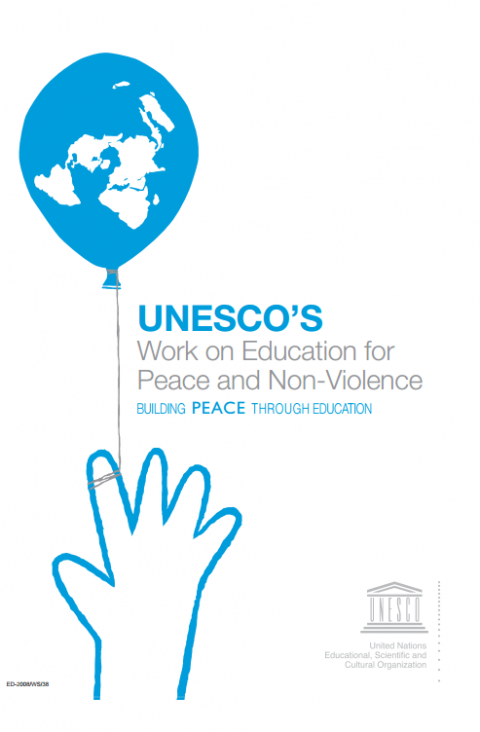 UNESCO's work on education for peace and non-violence: building peace through education 발행 연도: 2008 단체 저자: UNESCO The promotion of peace through education is at the heart of UNESCO’s mission. As stated in its constitution of 1945, UNESCO advances international peace and the common welfare of humanity through educational, scientific and cultural relations between peoples of the world. Though the world has changed over the past sixty years and continues to change at an ever increasing rate, UNESCO’s mission - a commitment to promoting universal values of peace and nonviolence, human rights and social justice, intercultural dialogue and mutual understanding – persists with growing urgency. UNESCO’s approach to educating for peace is multidimensional, in that it links education with a range of activities that address the root causes of violence, from human security to sustainable development. The goal of UNESCO’s education programmes and partnerships is the development of comprehensive systems of education that embrace the values of human rights, intercultural understanding and tolerance. Education for peace and non-violence promotes the knowledge, skills, attitudes and behaviours that reflect and inspire these values. As the lead agency within the UN system for the International Decade for a Culture of Peace and Non-Violence for the Children of the World, 2001- 2010, UNESCO is responsible for coordinating and directly implementing activities that promote the objectives of the Decade through education, the sciences, culture, communication and information. The culture of peace is defined as a set of values, attitudes, modes of behaviour and ways of life that reject violence and aim to prevent conflicts by tackling their root causes through dialogue and negotiation between individuals, groups and nations. UNESCO promotes the culture of peace through an intersectoral platform. This platform involves all five sectors of UNESCO: education, natural sciences, social and human sciences, culture, and communication and information. It seeks to mainstream intercultural dialogue in policies and actions with the aim of promoting mutual understanding, tolerance and respect, all of which are considered to be creative forces for a sustainable future. The intersectoral platform will also develop tools based on good practices in intercultural dialogue. UNESCO's work on education for peace and non-violence: building peace through education 발행 연도: 2008 단체 저자: UNESCO La promotion de la paix par l'éducation est au cœur de la mission de l'UNESCO. Comme indiqué dans sa constitution de 1945, l'UNESCO fait avancer la paix internationale et le bien-être commun de l'humanité à travers les relations éducatives, scientifiques et culturelles entre les peuples du monde. Bien que le monde a changé au cours des soixante dernières années et continue de changer à un rythme de plus en plus élevé, la mission de l'UNESCO - un engagement à la promotion des valeurs universelles de paix et de non-violence, les droits de l’homme et la justice sociale, le dialogue interculturel et la compréhension mutuelle - persiste avec une urgence croissante . L'approche de l'UNESCO à l'éducation pour la paix est multidimensionnelle, en ce qu'il lie l'éducation avec une gamme d'activités qui abordent les causes profondes de la violence, de la sécurité humaine au développement durable. L'objectif des programmes et des partenariats de l'éducation de l'UNESCO est le développement de systèmes complets d'éducation qui embrassent les valeurs des droits de l'homme, de la compréhension interculturelle et la tolérance. L'éducation pour la paix et la non-violence favorise les connaissances, les compétences, les attitudes et les comportements qui reflètent et inspirent ces valeurs. En tant qu'organisme responsable au sein du système de l’ONU pour la Décennie internationale pour une culture de la paix et de la non-violence pour les enfants du monde, 2001- 2010, l'UNESCO est chargée de coordonner et mettre en œuvre directement des activités qui favorisent les objectifs de la Décennie par l'éducation , les sciences, la culture, la communication et de l'information. La culture de la paix est définie comme un ensemble de valeurs, attitudes, modes de comportement et des modes de vie qui rejettent la violence et visant à prévenir les conflits à leurs causes profondes par le dialogue et la négociation entre les individus, les groupes et les nations. L'UNESCO promeut la culture de la paix à travers une plate-forme intersectorielle. Cette plate-forme comprend les cinq secteurs de l'UNESCO: l'éducation, les sciences naturelles, les sciences sociales et humaines, la culture et la communication et de l'information. Il cherche à intégrer le dialogue interculturel dans les politiques et les actions dans le but de promouvoir la compréhension mutuelle, la tolérance et le respect, qui sont tous considérés comme des forces créatives pour un avenir durable. La plate-forme intersectorielle développera également des outils basés sur les bonnes pratiques dans le dialogue interculturel.
  Education for 'global citizenship': a framework for discussion 발행 연도: 2013 저자: Sobhi Tawil 단체 저자: UNESCO La notion de ‘citoyenneté mondiale’ a récemment pris de l'importance dans le discours du développement international avec la Première Initiative Éducation Modiale adoptée récemment du Secrétaire Général de l’ONU(2012). Parmi les trois domaines prioritaires énoncés dans cette initiative mondiale, la troisième vise à ‘favorsier citoyenneté mondiale'. L'éducation doit assumer pleinement son rôle central en aidant les gens à forger plus justes, des sociétés pacifiques, tolérantes et inclusives. Il faut donner aux gens la compréhension, les compétences et les valeurs dont ils ont besoin de coopérer pour résoudre les défis interdépendants du 21ème siècle. La notion de ‘citoyenneté mondiale’, cependant, reste très large, sinon contestée, et par conséquent difficile à appliquer dans l'éducation. Il y a deux raisons possibles pour cela. Tout d'abord, il est difficile de savoir si la notion même de ‘citoyenneté mondiale’ est une métaphore, une contradiction dans les termes, ou un oxymore (Davies, 2006). Qu'est-ce que la ‘citoyenneté mondiale’ implique peut-être à la fois d'un point de vue juridique, ainsi que de celle de l'identité collective, le sentiment d'appartenance et l'engagement civique? Deuxièmement, lorsqu'il est appliqué à l'éducation, la notion de ‘citoyenneté mondiale’ implique un certain degré de confusion. Est-ce que 'éducation à la citoyenneté mondiale’(ou ‘éducation pour la citoyenneté mondiale’) est seulement une expression d'un objectif fondamental des systèmes éducatifs? Est-ce qu'il se réfère également à un large domaine de l'enseignement et l'apprentissage? Si oui, quels sont les contours de ce domaine? Comment est-elle liée à d'autres domaines qui se recoupent souvent de l'apprentissage associés à la socialisation civique et politique?
  Reflexiones Sobre el Progreso, el Desarrollo Sostenible y la Ciudadanía Mundial 발행 연도: 2013 저자: Georges Haddad 단체 저자: UNESCO Los argumentos desarrollados en esta breve ponencia ponen de manifiesto que el desarrollo sostenible, el progreso y la ciudadanía mundial sólidamente arraigados en la Sociedad del Conocimiento contribuyen indudablemente a construir este Nuevo Humanismo promovido por la Directora General de la UNESCO, y que todos coincidimos en considerar esencial para la riqueza y la prosperidad de la Humanidad, en un entorno común grato, pacífico y cordial.