
자료
세계시민교육에 대한 이해를 넓히고 연구, 옹호 활동, 교수, 학습 등을 향상시킬 수 있는 다양하고 유용한 자료를 찾아보세요.
371 건의 결과가 검색되었습니다
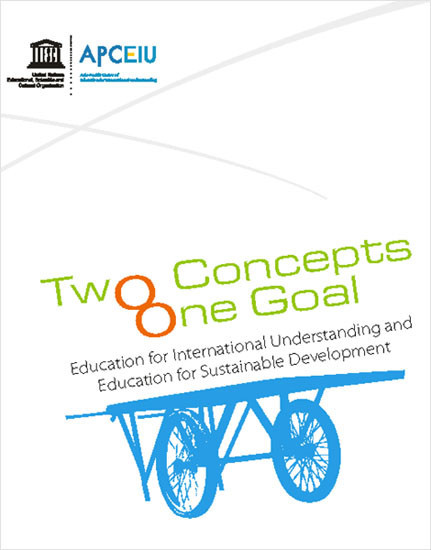 두 개념들, 하나의 목표: EIU와 ESD 발행 연도: 2007 단체 저자: 유네스코 아시아태평양 국제이해교육원 | UNESCO Bangkok 본 책자는 2007년, 아시아태평양 국제이해교육원(APCEIU)과 아시아태평양지역 발전을 위한 교육혁신 프로그램(UNESCO APEID)에서 함께 제작하였으며 EIU와 ESD의 개념과 핵심교육 분야를 설명하고, 그들 간의 시너지 효과를 강조하기 위해 만들어졌다. 크게 다섯 파트로 나눠져 있는 본 책자는 각각 EIU와 ESD, 인권교육, 환경교육, 평화교육 그리고 양성 평등 교육에 대해서 그들의 등장배경, 의의, 목표 등을 설명하고 있다. 그리고 각 파트 끝에는 더 심도 있는 정보를 얻을 수 있는 자료 리스트를 제공하고 있다. 또한 이 교육들과 EIU, ESD가 어떻게 맞닿아 있는지를 서술하고 있어 독자들은 EIU와 ESD라는 큰 개념과 그 하위 교육들이 어떻게 연결되는지 쉽게 파악할 수 있을 것이다
  EIU Best Practice Series No. 5: Peace and human rights education through education for sustainable development: lessons from four case studies in the Philippines 발행 연도: 2007 단체 저자: APCEIU The four case studies showed that EIU through peace and human rights education in the context of education for sustainable development can build a critical mass of Filipinos who will reject wars and promote social security. Education can play a role to direct the children, youth, and adults toward peace building and better understanding of cultural differences. It should also be noted that when institutions adopt a peace culture, establishing local and international organizations and putting up resources for various peace-building initiatives become possible. Educational intervention can effect changes in the minds of men and build a lasting and substantive foundation for peace based on justice and respect for human rights. La paix et les droits de l'éducation par l'éducation pour le développement durable: les leçons de quatre études de cas aux Philippines (Meilleure série ECI de cas d'étude no. 5) 발행 연도: 2007 단체 저자: APCEIU Les quatre études de cas ont montré que ECI par l'éducation de la paix et les droits de l'homme dans le contexte de l'éducation pour le développement durable peut constituer une masse critique de Philippins qui rejettent les guerres et promouvoir la sécurité sociale. L'éducation peut jouer un rôle pour diriger les enfants, les jeunes et les adultes vers la construction de la paix et une meilleure compréhension des différences culturelles. Il convient également de noter que lorsque les institutions adoptent une culture de la paix, la création d'organisations locales et internationales et de mettre en place des ressources pour diverses initiatives de consolidation de la paix deviennent possibles. L'intervention éducative peut effectuer des changements dans l'esprit des hommes et de construire une base durable et de fond pour la paix fondée sur la justice et le respect des droits de l'homme. EIU Best Practice Series No. 5: Peace and human rights education through education for sustainable development: lessons from four case studies in the Philippines 발행 연도: 2007 단체 저자: 유네스코 아시아태평양 국제이해교육원 The four case studies showed that EIU through peace and human rights education in the context of education for sustainable development can build a critical mass of Filipinos who will reject wars and promote social security. Education can play a role to direct the children, youth, and adults toward peace building and better understanding of cultural differences. It should also be noted that when institutions adopt a peace culture, establishing local and international organizations and putting up resources for various peace-building initiatives become possible. Educational intervention can effect changes in the minds of men and build a lasting and substantive foundation for peace based on justice and respect for human rights.
 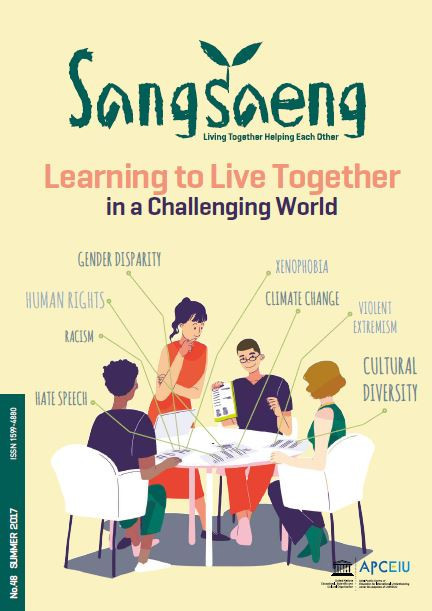 Learning to Live Together in a Challenging World (SangSaeng no. 48 summer 2017) 발행 연도: 2017 단체 저자: APCEIU The 48th issue of SangSaeng, “Learning to Live Together in a Challenging World,” has been published. With nationalism on the rise and support for populist perspectives, this edition of SangSaeng emphasizes the global community’s efforts for tolerance and learning to live together. It contains articles reminding us of the importance of empowering learners to assume active roles to face and resolve global challenges. 3 Director’s Message4 Special Column4 Education of Harmony, Peace and Happiness8 We Must Educate Global Citizens to Sustain Peace in the World11 Focus: Learning to Live Together in a Challenging World11 Access to Equitable Quality Education.14 How Business Helps People Learn to Live and Work Together17 Challenges in the Horn of Africa and Desire for Human Dignity20 Ethnic Identity in the Era of Minority Recognition 23 Special ReportShrinking Spaces: A Perspective from Iraq26 Best Practices26 Free2Choose-Create30 Strengthening Literacy Learning in Lesotho35 Youth NetworkGCED & Youth: An Open Forum in Jeju38 InterviewThe Power of Music: An Agent of Transformation42 Understanding the Asia-Pacific Region42 Naadam: A Celebration of Culture46 Bomena in Bhutan50 APCEIU in Action 더불어 살아가기 위한 교육이 직면한 도전 (상생 제48호 2017년 여름호) 발행 연도: 2017 단체 저자: 유네스코 아시아태평양 국제이해교육원 48호 <상생>이 “더불어 살아가기 위한 교육이 직면한 도전”이라는 주제로 발간되었다. 이번 호는 국가이기주의와 포퓰리즘 등 도전적인 상황 속에서 관용과 더불어 살아가기 위한 교육(Learning to Live Together)을 지켜나가는 국제사회의 노력을 살펴보고, 학습자들이 도전적인 상황을 직면하고 적극적인 역할을 수행하도록 역량을 키우는 것이 얼마나 중요한지 일깨워준다. 3 발간사4 스페셜 칼럼4 공존과 평화, 행복을 위한 교육8 우리는 세계평화를 지속시키기 위해 세계시민교육을 해야 한다11 포커스: 더불어 살아가기 위한 교육이 직면한 도전11 질적 교육에 평등하게 접근하기14 비즈니스가 함께 살고 일하도록 가르치는 방법17 아프리카 북동부 지역의 인간존엄을 향한 열망과 도전20 소수자 인정 시대의 종족 정체성 23 스페셜 리포트축소되는 공간: 이라크의 관점26 국제이해교육 모범사례26 안네프랑크하우스 Free2Choose-Create30 레소토 리터러시 교육 강화35 유스네트워크세계시민교육과 청년: 제주포럼38 인터뷰음악의 힘: 변혁의 주체42 아시아태평양 지역 이해하기42 나담: 축하의 문화46 부탄 보메나50 교육원 활동
  1st International Conference on GCED (SangSaeng no. 47 winter 2016) 발행 연도: 2017 단체 저자: APCEIU The 47th issue of SangSaeng, a special edition dedicated to the successful hosting of the 1st International Conference on GCED, has been released. This winter edition introduces how the Conference served as a platform for sharing GCED ideas. This issue also covers the various sessions conducted at the Conference and highlights some of the important moments. 3 Director’s Message4 Introduction to the Conference5 Outside the Sessions6 Opening CeremonyThe Rise of GCED and APCEIU’s Role in Promoting GCED Worldwide10 Focus10. [Keynote Session] GCED for Sustainable and Peaceful Societies: What Practices and Pedagogies? 16 Panel Discussion] What Does It Mean to Be a Global Citizen22 [GCED Talks] Learning to Live Together28 Concurrent Session IActors of GCED32 Concurrent Session IIThematic Approaches to GCED36 Concurrent Session IIILearning Process and Assessment 40 After the Conference42 Best Practices42. Planting the Seeds of Bhutan’s Agricultural Progress46 Little Circle for Embracing Diversity, Bridging Differences50 LetterCJK Youths as Global Citizens: Sharing Perspectives, Extending Identities 제1회 세계시민교육 국제회의 (상생 제47호 2016년 겨울호) 발행 연도: 2017 단체 저자: 유네스코 아시아태평양 국제이해교육원 47호 <상생>이 제 1회 세계시민교육 국제회의의 성공적 개최를 소개하는 특집호로 발간되었다. 이번 겨울호는 이번 국제회의가 어떤 방식으로 세계시민교육에 대한 경험과 활동을 공유하는 장을 제공하였는지 살펴보고, 회의를 구성한 각 섹션에서 다루어진 내용들을 소개한다. 3 발간사4 국제회의 소개5 회의장 밖에는 (기타행사)6 개회사세계시민교육의 부상과 아태교육원의 역할10 포커스[기조세션] 지속가능하고 평화로운 사회를 만들기 위한 세계시민교육: 어떤 실천과 페다고지가 필요한가? 16 [패널토크] 내가 생각하는 세계시민이란?22 [GCED Talks] 더불어 살기 위한 교육28 분과세션 I세계시민교육 실천가32 분과세션 II세계시민교육의 주제별 접근36 분과세션 III세계시민교육의 학습과정 및 평가 40 국제회의를 마치며참가자들의 후기42 국제이해교육 모범사례42 부탄의 농업 발전에 싹을 틔우기46 차이를 받아들이고 다양성을 육성하는 NGO, Little Circle50 APCEIU에 보내는 편지세계시민이 된 한·중·일 대학생, 관점을 나누고 경계를 허물다
 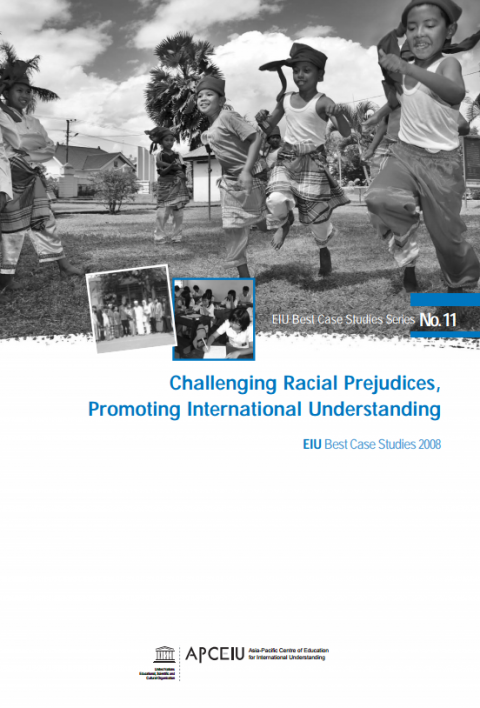 EIU Best Practices Series No. 11: Challenging Racial Prejudices, Promoting International Understanding 발행 연도: 2008 단체 저자: APCEIU This monograph is one of APCEIU's EIU Best Practices Series, which aims to encourage educators, scholars, and activists to implement and share local initiatives on EIU. The Series No.11 introduces a case study of the SMA Taman Harapan High School in Indonesia, conducted to explore prevalent issues of racial prejudices and devise methods to reduce racism. Research revealed that students held a degree of racist perception against people of certain heritage. Activities were conducted thenceforth, allowing participants to have direct and extended interactions with people of different cultures. Despite the short timeframe of the activity, perception on stereotypes did not change altogether, yet progress was evident in students’ understanding of the severity of the issue. As educators also learned ways to help alleviate the problem of racism, the case is an exemplary example of increasing cultural awareness and international understanding.
 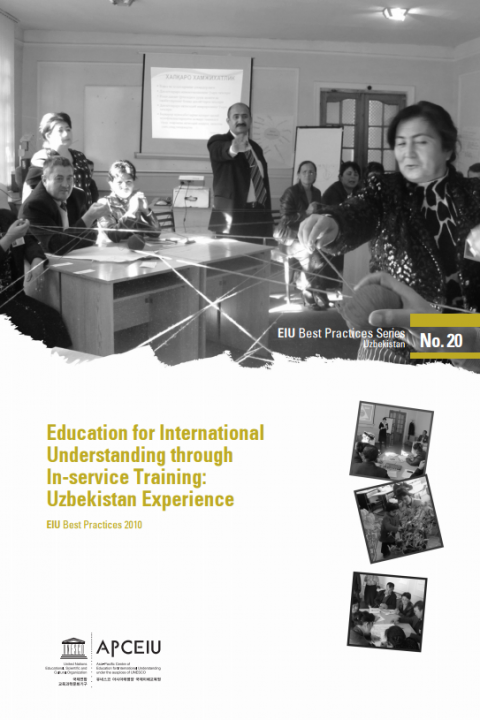 EIU Best Practices Series No. 20: Education for International Understanding through In-service Training: Uzbekistan Experience 발행 연도: 2010 저자: Mukhamadjon Aliyev 단체 저자: APCEIU This monograph is one of APCEIU's EIU Best Practices Series, which aims to encourage educators, scholars, and activists to implement and share local initiatives on EIU. The Series No.20 introduces EIU projects undertaken by the Avloni In-Service Teacher Training Institute in Uzbekistan. The programme integrates EIU concepts into the public education through in-service training programs, promotes EIU concepts in different subjects and projects, and broadcasts good practices in the field of global citizenship education nationwide. Although it is still in the process of improvement, the programme is expected to raise awareness of EIU and empower education managers, principals and teachers in Uzbekistan.