
자료
세계시민교육에 대한 이해를 넓히고 연구, 옹호 활동, 교수, 학습 등을 향상시킬 수 있는 다양하고 유용한 자료를 찾아보세요.
18 건의 결과가 검색되었습니다
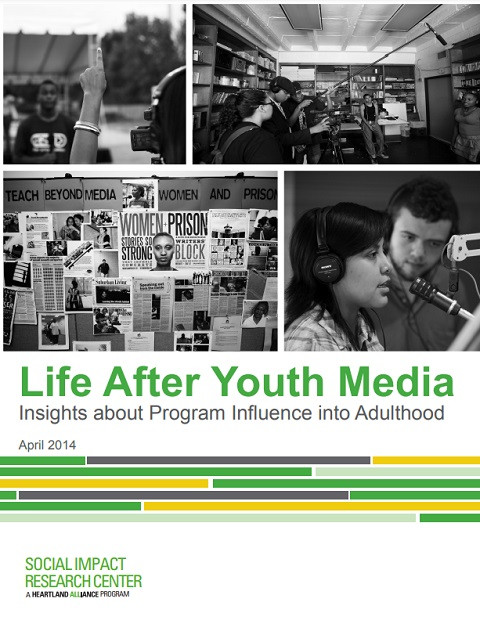 Life After Youth Media: Insights About Program Influence Into Adulthood 발행 연도: 2014 저자: Suniya Farooqui | Amy Terpstra 단체 저자: Social IMPACT Research Center * Do the skills, attitudes, and behaviors imparted in youth programs "stick" into adulthood? * If they do, how do they manifest in career, education, and life decisions? * How do the skills, attitudes, and behaviors that youth programs try to impart differ based on program intensity or levels of engagement? * Do these elements look different for people who went through youth media programs versus people who went through other types of youth programs? These are common questions that youth program providers, funders, public officials, and other leading thinkers regularly wrestle with. This report tells the story of a group in Chicago committed to providing quality youth media programming in the city and how, through a collective evaluation, they were able to begin to answer these critical questions.
  Periodismo e inteligencia artificial en América Latina 발행 연도: 2023 저자: Natalia Zuazo 단체 저자: UNESCO Montevideo En un contexto de crecimiento exponencial de la inteligencia artificial (IA) y predominancia tecnológica en todas las esferas de la vida –económica, social, cultural, ambiental y política-, este Cuaderno explora el impacto de la IA en el periodismo desde una perspectiva crítica y ética, con especial atención a América Latina. Se abordan desigualdades y desafíos inherentes a la implementación de la IA en la región. Con ello, se busca ofrecer una herramienta útil en la formación continua de estudiantes y profesionales de medios de comunicación. Journalism and Artificial Intelligence in Latin America 발행 연도: 2023 저자: Natalia Zuazo 단체 저자: UNESCO Montevideo In a context of exponential growth of artificial intelligence (AI) and technological dominance in all spheres of life — economic, social, cultural, environmental, and political —, this Paper explores the impact of AI on journalism from a critical and ethical perspective, with special attention to Latin America. It addresses inequalities and challenges inherent in the implementation of AI in the region. The aim is to offer an useful tool in the continuous training of students and media professionals.
  Introductory News Literacy: Adapted from High Five 2012; The Integrated Language Arts and Journalism Curriculum for Middle School Students 발행 연도: 2013 단체 저자: American Press Institute The American Press Institute’s Introductory News Literacy Units are lightweight general usage lesson plans for introducing middle school students to how to read and understand news media and current events. While the Institute offers more specific and in-depth materials and ideas for promoting news literacy, these new units provide a resource for the time-pressed teacher working with students at an important age. Split into three units of one-to-two weeks each, the curriculum briefly overviews critical elements in news understanding and healthy processes for determining source information and bias. Individual lessons can be adapted and used to fit specific classroom needs.
  Do You Speak MIL?: Media and Information Literacy; A Handbook for Jordanian CSOs 발행 연도: 2020 저자: Milica Pesic | Lucien Michael Steinberg | Anoud Al-Zou’bi 단체 저자: Media Diversity Institute | UNESCO | UN. Office of Counter-Terrorism (UNOCT) This publication, “Do You Speak MIL?: Media and Information Literacy – A Handbook for Jordanian CSOs,” provides civil society organizations (CSOs) with practical tools to integrate Media and Information Literacy (MIL) into their training programs. Each chapter includes a technical introduction, thought-provoking questions, and real-life examples to guide trainers. Published in 2020, this handbook is a valuable resource for promoting MIL within Arab countries, intending to empower communities to navigate the evolving media landscape.
  Enhancing Jordanian Media’s Ability to Combat Extremism and Terrorism Through Media Literacy, Quality of Content, and Media Performance: Training Guide (2020) 발행 연도: 2020 저자: Amani Jarrar 단체 저자: Jordan Media Institute This training toolkit has been developed by the Jordan Media Institute in the frame of the project “Improving Jordan’s Media Capacity to Counter Violent Extremism and terrorism: Media Literacy and Performance & Content Quality Perspective”. The guide means to be a reference for journalists to enhance journalists media literacy, fact checking and news verification skills when covering stories of extremism and terrorism.This project has been implemented since December 2019 under the STRIVE Global Program, funded by the European Union, at Hedayah.
  Keeping Girls in the Picture: Community Radio Toolkit 발행 연도: 2020 단체 저자: UNESCO | Global Education Coalition This toolkit is to help you to get stories and messages about this vital issue out to your audience. We want it to make an impact on people’s lives. We hope this toolkit will support you in creating exciting and memorable content for community radio programmes wherever you are.This toolkit contains the messages and facts from the global campaign. It has not been tailored for any specific region, country or area. We count on you to consider how to make this campaign most relevant to your audiences - drawing on local data and voices from your communities.The toolkit suggests several types of shows that community radio stations can create. If you want to include specific facts and statistics about your country, area or community, please work with organizations in your local network that can help.
  Journalism, Fake News & Disinformation: Handbook for Journalism Education and Training 발행 연도: 2018 저자: Julie Posetti | Cherilyn Ireton | Claire Wardle | Hossein Derakhshan | Alice Matthews | Magda Abu-Fadil | Tom Trewinnard | Fergus Bell | Alexios Mantzarlis 단체 저자: UNESCO This handbook seeks to provide an internationally-relevant model curriculum, open to adoption or adaptation, which responds to the emerging global problem of disinformation that confronts societies in general, and journalism in particular. Serving as a model curriculum, the publication is designed to give journalism educators and trainers a framework and lessons to help students and practitioners of journalism to navigate the issues associated with ‘fake news’.The contents draw together the input of leading international journalism educators, researchers and thinkers who are helping to update journalism method and practice to deal with the challenges of misinformation and disinformation. The lessons are contextual, theoretical and in the case of online verification, extremely practical. Used together as a course, or independently, they can help refresh existing teaching modules or create new offerings.It is part of the “Global Initiative for Excellence in Journalism Education”, which is a focus of UNESCO’s International Programme for the Development of Communication (IPDC). The Initiative seeks to engage with teaching, practising and researching of journalism from a global perspective, including sharing international good practices.
  دليل معلمي الصحافة: تقرير حول الذكاء الاصطناعي 발행 연도: 2023 저자: Maarit Jaakkola 단체 저자: UNESCO يؤثر تطور الذكاء االصطناعي والتحكم فيه على المجتمع بأثره، وبالتالي البد أن تتولى التغطية اإلعالمية القائمة على الذكاء االصطناعي توعية الجمهور بشأن اآلثار المترتبة على التكنولوجيا نفسها، بغض النظر عن الجانب الصحفي. فعلى سبيل المثال، إعداد تقارير بخصوص القوى الديناميكية في العالقة المتغيرة ما بين الشركات والسلطات والمواطنين والرقائق الحاسوبية، وبين البيانات والخوارزميات. على الرغم من أن العديد من تطبيقات الذكاء االصطناعي تخدم مصلحة الجمهور، إال أن الصحفيين بحاجة إلى بصيرة وخبرة بشأن جوانب مثل اإلقصاء، وعدم المساواة في المزايا والمنافع، وانتهاك حقوق اإلنسان . كجزء من سلسلة التعليم الصحفي، عمل برنامج اليونسكو الدولي لتنمية االتصاالت على دعم مجلس التعليم العالمي للصحافة في التكليف بإعداد هذا الدليل، وذلك بهدف تحفيز معلمو الصحافة وتمكينهم حتى تسنى يتسنى لهم مساعدة طلبة الصحافة والصحفيين العاملين على الوصول إلى العدالة في واحدة من أهم قضايا عصرنا. مشتمالت الدليل يغطي هذا الكتيب الجوانب التالية : • فهم آلية الذكاء االصطناعي والتعرف على أنواع الذكاء االصطناعي المختلفة• استكشاف إمكانيات الذكاء االصطناعي، باإلضافة إلى نقاط قوته وضعفه .• تخيل مستقبل يتسم بالتنوع باستخدام الذكاء االصطناعي من خالل التعرف على الخطابات الشائعة التي تشكل وعي الجمهور . • فهم دور الصحافة في توسيط وتشكيل الحوار حول الذكاء االصطناعي• لبحث عن وسائل لتقديم إلعداد تقارير حول الذكاء االصطناعي بطريقة متنوعة وواقعية ومسؤولة.• إقامة صالت عالقات مع أساليب أنواع الصحافة الموجودة بالفعل، من تقارير األخبار العامة إلى صحافة البيانات . يمثل تعزيز التعليم الصحفي أحد النتائج الرئيسية التي يسعى إليها البرنامج الدولي لتنمية االتصاالت، وهو برنامج حكومي دولي فريد ضمن نظام األمم المتحدة متخصص في تنمية وسائل اإلعالم . Reporting on Artificial Intelligence: A Handbook for Journalism Educators 발행 연도: 2023 저자: Maarit Jaakkola 단체 저자: UNESCO The rise and control of artificial intelligence (AI) is impacting society as a whole. It follows that AI coverage must inform audiences about the implication of the technology itself, beyond journalism. For instance, reporting on the power dynamics in the changing relationship between companies, authorities, citizens and computer chips, and between data and algorithms. While many AI deployments serve public interest, journalists also need insight and expertise to alert about aspects like exclusions, unequal benefits, and violations of human rights. As part of its journalism education series, UNESCO’s International Programme for the Development of Communication (IPDC) has supported the World Journalism Education Council in commissioning this handbook. The aim is to inspire and empower so that journalism educators can help both journalism students and working journalists do justice to one of the major issues of our times. The handbook covers:• Understanding machine intelligence and identifying different types of AI• Exploring AI’s potential, as well as its strengths and weaknesses• Imagining diverse futures with AI by recognising pervasive popular narratives that inform public consciousness• Understanding journalism’s role in mediating and shaping AI discourse• Finding ways of reporting about AI in a nuanced, realistic and accountable manner• Making connections to existing genres of journalism, ranging from general news reporting to data journalism. Strengthening journalism education is one of the key results sought by IPDC, a unique intergovernmental programme within the UN system that specializes in media development.