
자료
세계시민교육에 대한 이해를 넓히고 연구, 옹호 활동, 교수, 학습 등을 향상시킬 수 있는 다양하고 유용한 자료를 찾아보세요.
67 건의 결과가 검색되었습니다
 미디어 문해력(Media Literacy) 향상을 위한 교실수업 개선 방안 연구 발행 연도: 2015 저자: 박유선 | 전경란 | 박한철 단체 저자: 대한민국 교육부 우리가 살고 있는 지식기반사회에서는 다양한 미디어와 정보 기술을 통해 쏟아지는 방대한 양과 형태의 정보에 체계적으로 접근하여, 이를 비판적으로 분석하고 평가하여 활용할 수 있는 ‘미디어 리터러시(Media Literacy)’가 현대적 의사소통 및 지식정보처리 역량으로서 중요하게 부각 되고 있습니다.과거의 학교 교육에서는 ‘리터러시’가 주로 문자로 표현된 글이나 책의 내용을 읽고 쓸 수 있는 능력에 한정되어 모국어 과목에서 다루어졌습니다. 그러나 현대사회에는 ‘리터러시’가 글과 책의 범위를 넘어서 다양한 형태로 된 미디어의 의미를 이해하고 생산하는 것으로 확대되었습니다. 이에 따라 주요 국제기구, 교육단체 및 세계 여러 나라의 국가 교육과정에서는 미디어 리터러시와 관련된 학습을 중요하게 다루고 있습니다.본 보고서는 “미디어 문해력 향상을 위한 교실수업 개선 방안 연구”의 최종보고서로서 미디어 리터러시 교육의 이론적 배경과 연구 동향, 국내와 해외 교육과정의 미디어 리터러시 반영 상황, 우리나라 어린이와 청소년들의 미디어 이용 실태 등을 검토하고, 초·중·고 교사들의 인식 조사 결과 및 국내와 해외 전문가들의 견해를 바탕으로 하여, 미디어 리터러시 교육의 개념과 목표, 내용 체계를 도출하였습니다.
  장애 청소년(농아인) 미디어교육 프로그램 개발: 연구결과 보고서 발행 연도: 2022 저자: 최상배 | 김병련 | 오인혜 | 고은지 단체 저자: 시청자미디어재단 최근 들어 모든 사람을 위한 미디어리터러시가 강조되면서 청각장애인을 대상으로 한 미디어교육의 필요성이 대두되고 있다. 이 연구에서는 청각장애 청소년의 미디어교육 현황을 분석하여 청각장애인의 특성을 반영한 미디어교육 프로그램을 개발하고자 하였다.
 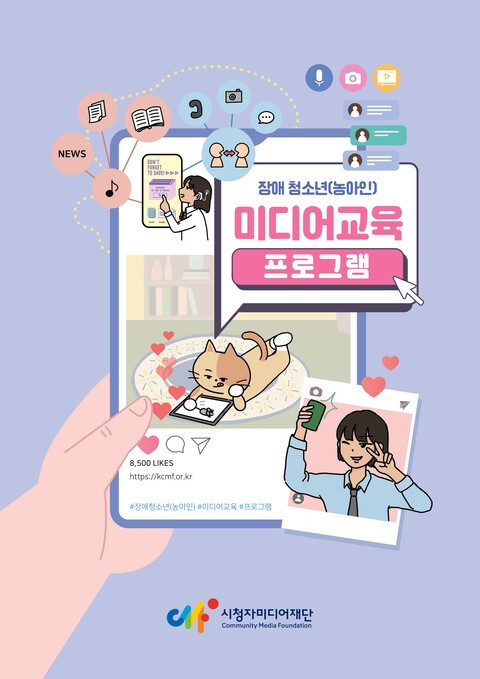 장애 청소년(농아인) 미디어교육 프로그램: 교육프로그램 발행 연도: 2022 저자: 최상배 | 김병련 | 오인혜 | 고은지 단체 저자: 시청자미디어재단 최근 들어 모든 사람을 위한 미디어리터러시가 강조되면서 청각장애인을 대상으로 한 미디어교육의 필요성이 대두되고 있다. 이 연구에서는 청각장애 청소년의 미디어교육 현황을 분석하여 청각장애인의 특성을 반영한 미디어교육 프로그램을 개발하고자 하였다.청각장애학습자의 교육적 요구를 반영할 수 있도록 지도시 유의사항, 지도 팁, 참고자료, 교구 제작과 활용, 수어 영상 자료 등을 제시하였다. 미디어 관련 수어 표현은 국립국어원의 한국수어사전 자료를 기초로 표현하였으며, 한국수어사전에 제시되지 어휘는 미국수어 표현을 참고하여 청각장애학교 교사와 농인에게 검토를 받아 표현하였다. 수어 자료는 QR코드를 제시하여 쉽게 동영상을 확인할 수 있도록 하였다.
 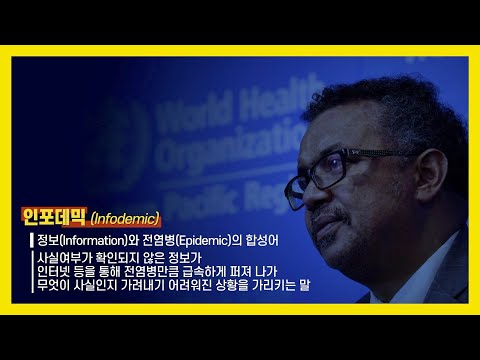 인포데믹을 이기는 미디어 리터러시 발행 연도: 2020 단체 저자: 서울특별시교육청 교육연구정보원 본 영상은 코로나19시대에 우리가 고민해야 할 중요한 이슈인 미디어리터러시를 강조하면서, 팩트체크 사이트 및 가짜뉴스 판별법 10가지 적용하기 등을 통해 비판적 사고력을 길러 인포데믹을 이기는 방법을 소개한다.
  Balancing Act: Countering Digital Disinformation While Respecting Freedom of Expression 발행 연도: 2020 저자: Kalina Bontcheva | Julie Posetti 단체 저자: UNESCO | Broadband Commission for Sustainable Development. Working Group on AI Capacity Building | International Telecommunication Union (ITU) This report provides stakeholders with a rich suite of sector-specific recommendations, as well as a helpful 23-point framework that can be used for assessing any particular response to disinformation in the context of freedom of expression challenges. This research will help the widest range of key actors to better understand this phenomenon, and especially the way the world is responding to it, and where the gaps are.At the heart of this knowledge product is the need to balance responses to disinformation with respect for freedom of expression. The research shows us that this can be done.
  Media Literacy in the Library: A Guide for Library Practitioners 발행 연도: 2020 단체 저자: American Library Association (ALA) | Institute of Museum and Library Services As information providers and hubs for lifelong learning, libraries have always been resources for helping communities develop media literacy skills. Now, in the midst of a global pandemic, and in an age when we increasingly rely on digital media for information and communication, these critical thinking skills are more important than ever. The American Library Association (ALA), working with talented thought leaders across the library and media literacy sectors, has created Media Literacy in the Library: A Guide for Library Practitioners to help library workers prepare for day-to-day interactions like the imagined reference desk one above.In this guide, we offer resources and ideas to plan programs and activities to teach media literacy skills to adults and also to integrate these skills into programming you already offer at your library. This guide has been created for out-of-school adult audiences, who library workers will generally meet in a public library context.
  What is Media Literacy? 발행 연도: 2017 단체 저자: Media Literacy Now Intended as a tool for advocates, the video introduces the concept of media literacy as a key that unlocks meaning behind the messages that we see, and allows us to be more thoughtful and deliberate as we create our own messages such as those we create and share on social media.
 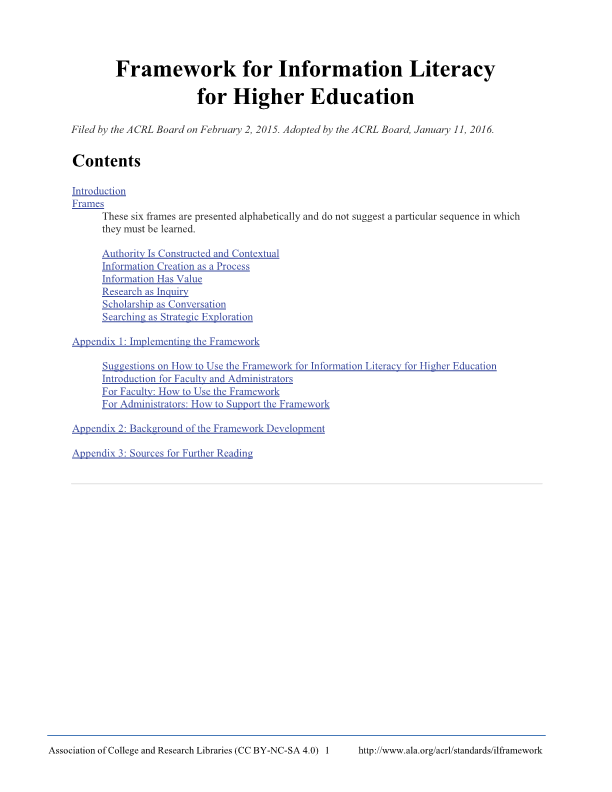 Framework for Information Literacy for Higher Education 발행 연도: 2015 단체 저자: Association of College and Research Libraries (ACRL) Information literacy is the set of integrated abilities encompassing the reflective discovery of information, the understanding of how information is produced and valued, and the use of information in creating new knowledge and participating ethically in communities of learning. This Framework sets forth these information literacy concepts and describes how librarians as information professionals can facilitate the development of information literacy by postsecondary students.
  Introductory News Literacy: Adapted from High Five 2012; The Integrated Language Arts and Journalism Curriculum for Middle School Students 발행 연도: 2013 단체 저자: American Press Institute The American Press Institute’s Introductory News Literacy Units are lightweight general usage lesson plans for introducing middle school students to how to read and understand news media and current events. While the Institute offers more specific and in-depth materials and ideas for promoting news literacy, these new units provide a resource for the time-pressed teacher working with students at an important age. Split into three units of one-to-two weeks each, the curriculum briefly overviews critical elements in news understanding and healthy processes for determining source information and bias. Individual lessons can be adapted and used to fit specific classroom needs.
  Do You Speak MIL?: Media and Information Literacy; A Handbook for Jordanian CSOs 발행 연도: 2020 저자: Milica Pesic | Lucien Michael Steinberg | Anoud Al-Zou’bi 단체 저자: Media Diversity Institute | UNESCO | UN. Office of Counter-Terrorism (UNOCT) This publication, “Do You Speak MIL?: Media and Information Literacy – A Handbook for Jordanian CSOs,” provides civil society organizations (CSOs) with practical tools to integrate Media and Information Literacy (MIL) into their training programs. Each chapter includes a technical introduction, thought-provoking questions, and real-life examples to guide trainers. Published in 2020, this handbook is a valuable resource for promoting MIL within Arab countries, intending to empower communities to navigate the evolving media landscape.