
자료
세계시민교육에 대한 이해를 넓히고 연구, 옹호 활동, 교수, 학습 등을 향상시킬 수 있는 다양하고 유용한 자료를 찾아보세요.
121 건의 결과가 검색되었습니다
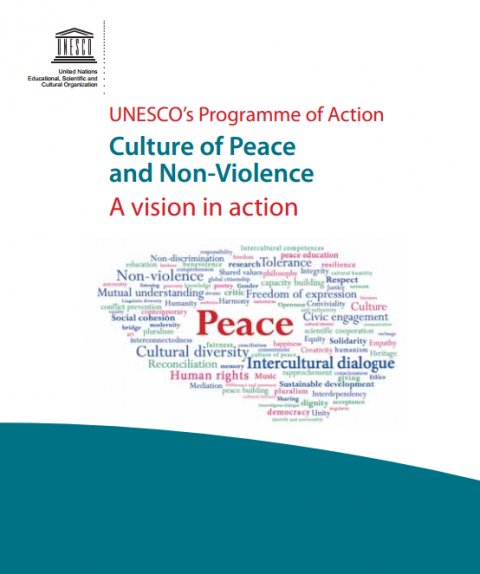 UNESCO's programme of action: culture of peace and non-violence, a vision in action 발행 연도: 2013 단체 저자: UNESCO Ce document se fonde sur l'expérience et les ressources de la plate-forme intersectorielle pour une Culture de la Paix et la non-violence et a bénéficié de la contribution du Professeur Arjun Appadurai. Ce document montre la mission de l'UNESCO; Buidling Construire les défenses de la paix dans l'esprit des hommes et des femmes et la culture de la paix et de non-violence qui est des valeurs positives, les attitudes et les comportements pour la paix tous les jours. Ce document a souligné multiples crises d'aujourd'hui, et a ensuite présenté le programme d'action sur une culture de paix et de non-violence. Après les stratégies de l'UNESCO, les activités de paix de l'UNESCO ont été suivies.
  تعلم العيش معا: برنامج التواصل بين الثقافات والأديان لتعليم الأخلاق 발행 연도: 2008 단체 저자: Interfaith Council on Ethics Education for Children | Arigatou Foundation (Switzerland) Learning to Live Together has been developed for use in different religious and secular contexts as a resource for everyone concerned with promoting ethics and values. The objective has been to develop a resource that is relevant on a global level and yet flexible enough to be interpreted within different cultural and social contexts. The resource has been tested in many different regions and cultural contexts to assure that it is relevant in regional and local contexts (see ‘We did it like this’, p.187). Test workshops have been held in 10 different countries, where the GNRC was able to bring together various religious and secular organisations working with children. During the test workshops, this resource manual was used to the benefit of more than 300 children and youth, representing African Traditional Religions, Bahá’í Faith, Buddhism, Christianity, Hinduism, Islam, Judaism, members of Brahma Kumaris and a number of people of secular thinking. Test workshops as well as input and comments from experts in the area of education, ethics, spirituality, intercultural and interfaith learning and child rights have contributed important experiences and opportunities for learning for the development of this resource. Learning to Live Together is already having an impact. In a GNRC programme in Israel, the resource material was used during a six-day journey made by a group of Jewish, Christian, and Muslim youth to the historical sites of Israel and Palestine, all of which have symbolic relevance to the conflict in their region. At each stop, youth participants discussed their values and their differing perceptions of their shared history. Learning to Live Together is an adaptable resource that can be used with children from many different cultural, religious and social contexts to nurture common values and a mutual respect for different backgrounds and traditions. The resource provides space for enhancing children’s innate potential for spirituality and hope for a better world, as a contribution to changing the situation for children worldwide. The Users Guide provides all necessary information for its use. UNESCO and UNICEF have been closely involved in developing Learning to Live Together and have endorsed the material as an important contribution to a quality education, which takes a multicultural and multi-religious society into consideration. UNESCO’s Guidelines for Intercultural Education underpin the philosophy and the approach of the resource: “Religious education can be described as learning about one’s own religion or spiritual practices, or learning about other religions or beliefs. Interfaith education, in contrast, aims to actively shape the relations between people from different religions”. Aprender a vivir juntos: un programa intercultural e interreligioso para la educacion ética 발행 연도: 2008 단체 저자: Arigatou Foundation (Switzerland) | Interfaith Council on Ethics Education for Children Learning to Live Together has been developed for use in different religious and secular contexts as a resource for everyone concerned with promoting ethics and values. The objective has been to develop a resource that is relevant on a global level and yet flexible enough to be interpreted within different cultural and social contexts. The resource has been tested in many different regions and cultural contexts to assure that it is relevant in regional and local contexts (see ‘We did it like this’, p.187). Test workshops have been held in 10 different countries, where the GNRC was able to bring together various religious and secular organisations working with children. During the test workshops, this resource manual was used to the benefit of more than 300 children and youth, representing African Traditional Religions, Bahá’í Faith, Buddhism, Christianity, Hinduism, Islam, Judaism, members of Brahma Kumaris and a number of people of secular thinking. Test workshops as well as input and comments from experts in the area of education, ethics, spirituality, intercultural and interfaith learning and child rights have contributed important experiences and opportunities for learning for the development of this resource. Learning to Live Together is already having an impact. In a GNRC programme in Israel, the resource material was used during a six-day journey made by a group of Jewish, Christian, and Muslim youth to the historical sites of Israel and Palestine, all of which have symbolic relevance to the conflict in their region. At each stop, youth participants discussed their values and their differing perceptions of their shared history. Learning to Live Together is an adaptable resource that can be used with children from many different cultural, religious and social contexts to nurture common values and a mutual respect for different backgrounds and traditions. The resource provides space for enhancing children’s innate potential for spirituality and hope for a better world, as a contribution to changing the situation for children worldwide. The Users Guide provides all necessary information for its use. UNESCO and UNICEF have been closely involved in developing Learning to Live Together and have endorsed the material as an important contribution to a quality education, which takes a multicultural and multi-religious society into consideration. UNESCO’s Guidelines for Intercultural Education underpin the philosophy and the approach of the resource: “Religious education can be described as learning about one’s own religion or spiritual practices, or learning about other religions or beliefs. Interfaith education, in contrast, aims to actively shape the relations between people from different religions”. Apprendre à vivre ensemble: un programme interculturel et interreligieux pour l'enseignement de l'éthique 발행 연도: 2008 단체 저자: Arigatou Foundation (Switzerland) | Interfaith Council on Ethics Education for Children Learning to Live Together has been developed for use in different religious and secular contexts as a resource for everyone concerned with promoting ethics and values. The objective has been to develop a resource that is relevant on a global level and yet flexible enough to be interpreted within different cultural and social contexts. The resource has been tested in many different regions and cultural contexts to assure that it is relevant in regional and local contexts (see ‘We did it like this’, p.187). Test workshops have been held in 10 different countries, where the GNRC was able to bring together various religious and secular organisations working with children. During the test workshops, this resource manual was used to the benefit of more than 300 children and youth, representing African Traditional Religions, Bahá’í Faith, Buddhism, Christianity, Hinduism, Islam, Judaism, members of Brahma Kumaris and a number of people of secular thinking. Test workshops as well as input and comments from experts in the area of education, ethics, spirituality, intercultural and interfaith learning and child rights have contributed important experiences and opportunities for learning for the development of this resource. Learning to Live Together is already having an impact. In a GNRC programme in Israel, the resource material was used during a six-day journey made by a group of Jewish, Christian, and Muslim youth to the historical sites of Israel and Palestine, all of which have symbolic relevance to the conflict in their region. At each stop, youth participants discussed their values and their differing perceptions of their shared history. Learning to Live Together is an adaptable resource that can be used with children from many different cultural, religious and social contexts to nurture common values and a mutual respect for different backgrounds and traditions. The resource provides space for enhancing children’s innate potential for spirituality and hope for a better world, as a contribution to changing the situation for children worldwide. The Users Guide provides all necessary information for its use. UNESCO and UNICEF have been closely involved in developing Learning to Live Together and have endorsed the material as an important contribution to a quality education, which takes a multicultural and multi-religious society into consideration. UNESCO’s Guidelines for Intercultural Education underpin the philosophy and the approach of the resource: “Religious education can be described as learning about one’s own religion or spiritual practices, or learning about other religions or beliefs. Interfaith education, in contrast, aims to actively shape the relations between people from different religions”.
  Learning to live together: an intercultural and interfaith programme for ethics education 발행 연도: 2008 단체 저자: Interfaith Council on Ethics Education for Children | Arigatou Foundation (Switzerland) Learning to Live Together has been developed for use in different religious and secular contexts as a resource for everyone concerned with promoting ethics and values. The objective has been to develop a resource that is relevant on a global level and yet flexible enough to be interpreted within different cultural and social contexts. The resource has been tested in many different regions and cultural contexts to assure that it is relevant in regional and local contexts (see ‘We did it like this’, p.187).Test workshops have been held in 10 different countries, where the GNRC was able to bring together various religious and secular organisations working with children. During the test workshops, this resource manual was used to the benefit of more than 300 children and youth, representing African Traditional Religions, Bahá’í Faith, Buddhism, Christianity, Hinduism, Islam, Judaism, members of Brahma Kumaris and a number of people of secular thinking. Test workshops as well as input and comments from experts in the area of education, ethics, spirituality, intercultural and interfaith learning and child rights have contributed important experiences and opportunities for learning for the development of this resource. Learning to Live Together is already having an impact. In a GNRC programme in Israel, the resource material was used during a six-day journey made by a group of Jewish, Christian, and Muslim youth to the historical sites of Israel and Palestine, all of which have symbolic relevance to the conflict in their region. At each stop, youth participants discussed their values and their differing perceptions of their shared history.Learning to Live Together is an adaptable resource that can be used with children from many different cultural, religious and social contexts to nurture common values and a mutual respect for different backgrounds and traditions. The resource provides space for enhancing children’s innate potential for spirituality and hope for a better world, as a contribution to changing the situation for children worldwide. The Users Guide provides all necessary information for its use. UNESCO and UNICEF have been closely involved in developing Learning to Live Together and have endorsed the material as an important contribution to a quality education, which takes a multicultural and multi-religious society into consideration. UNESCO’s Guidelines for Intercultural Education underpin the philosophy and the approach of the resource: “Religious education can be described as learning about one’s own religion or spiritual practices, or learning about other religions or beliefs. Interfaith education, in contrast, aims to actively shape the relations between people from different religions”.
 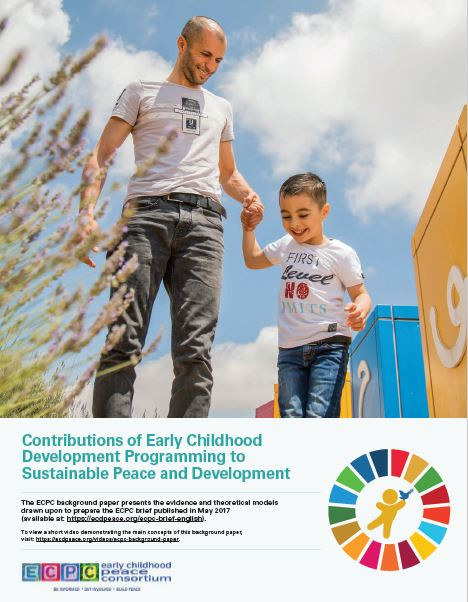 Contributions of Early Childhood Development Programming to Sustainable Peace and Development 발행 연도: 2018 저자: Chelsea K. Donaldson | Friedrich W. Affolter | Liliana Angelica Ponguta | Rima Salah | Pia R. Britto | James Leckman | Paul Connolly | Siobhan Fitzpatrick | Pauline Walmsley By intervening early and engaging with children’s families, ECD services offer a unique opportunity to make a cost-effective and sustainable impact on interrupting cycles of poverty and violence. Given that efforts towards sustainable peace must encompass all sectors and address all societal levels, there is a crucial need for implementing “multi-level ECD services” that center on the whole child and engage his or her surrounding ecological context. These comprehensive ECD services can not only improve child development outcomes, but also strengthen competencies in caregivers, address stressors and conflict drivers in the community and build institutional capacities to reduce structural violence. The purpose of this background paper is to merge insights from both micro and macro-level perspectives to demonstrate how ECD services can be leveraged to sustainable peace and development. While peacebuilding experts have traditionally focused on macro-level strategies such as government reform or economic rehabilitation interventions, ECD practitioners have focused primarily on micro-level interventions of individual children and families without much exploration of how ECD services can be leveraged to mitigate risks of conflict and transform relationships across communities and regions.
  70 quotes for peace: UNESCO's 70th anniversary celebrations 발행 연도: 2015 저자: Guila Clara Kessous 단체 저자: UNESCO This book, created to mark the 70th anniversary of the United Nations Educational Scientific and Cultural Organization (UNESCO), features 70 quotes from artists, intellectuals, activists, politicians and statesmen. The quotes all testify to a strong conviction that peace, in order to be sustainable, must be built upon a mutual understanding between people and the intellectual solidarity of humankind. But they also demonstrate that each person bears within himself a huge capacity for tolerance and dignity that he can choose to use to achieve this ideal. 70 citations pour la paix: celebrations du 70e anniversaire de l'UNESCO 발행 연도: 2015 저자: Guila Clara Kessous 단체 저자: UNESCO This book, created to mark the 70th anniversary of the United Nations Educational Scientific and Cultural Organization (UNESCO), features 70 quotes from artists, intellectuals, activists, politicians and statesmen. The quotes all testify to a strong conviction that peace, in order to be sustainable, must be built upon a mutual understanding between people and the intellectual solidarity of humankind. But they also demonstrate that each person bears within himself a huge capacity for tolerance and dignity that he can choose to use to achieve this ideal.
 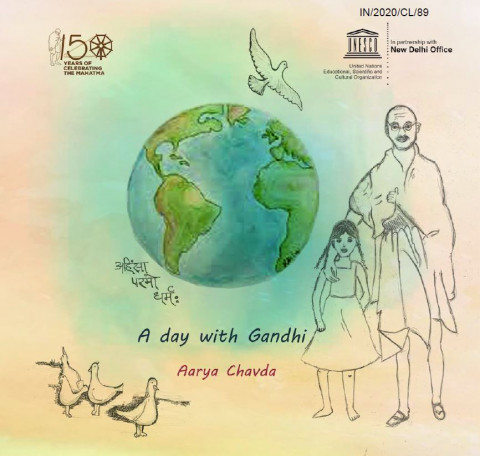 A Day with Gandhi 발행 연도: 2020 저자: Aarya Chavda At an age of 10, author and illustrator of her 2 books, Aarya Chavda extends her support by donating her art proceeds to fundraise for the welfare of underpriviledge Cancer patients.Through her campaign on 'Preservation of Cultural Heritage', She also demonstrates her commitment and contributes in spreading awareness through her programs at government and private institutions.In this series of narrative illustrations, she pays her tributes to commemorate 150th birth anniversary of Gandhi. This shows her inclination to portray ideologies of 'The Mahatma' on the pursuit of liberation and tranquility.
 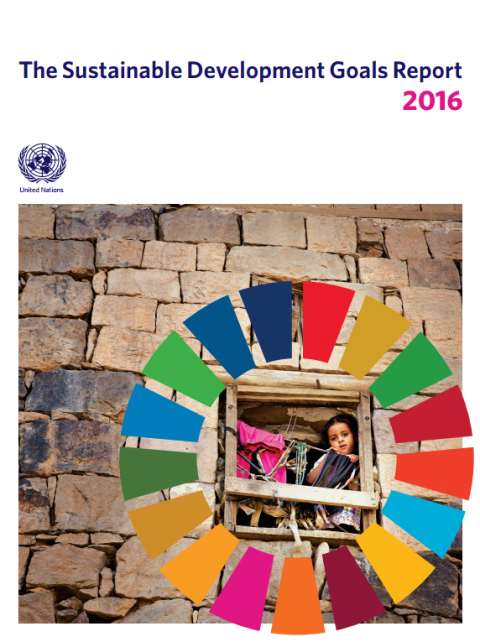 The Sustainable development goals report 2016 발행 연도: 2016 단체 저자: United Nations (UN) This inaugural report on the global Sustainable Development Goals (SDGs) is a first accounting of where the world stands at the start of our collective journey to 2030. The report analyses selected indicators from the global indicator framework for which data are available as examples to highlight some critical gaps and challenges. The list of SDG indicators agreed upon by the UN Statistical Commission in March 2016 will be subject to refinements and improvements as methods and data availability improve. Every journey has a beginning and an end. Plotting that journey and establishing key milestones along the way requires accessible, timely and reliable disaggregated data. The data requirements for the global indicators are almost as unprecedented as the SDGs themselves and constitute a tremendous challenge to all countries. Nevertheless, fulfilling these requirements through building national statistical capacity is an essential step in establishing where we are now, charting a way forward and bringing our collective vision closer to reality